Amrita Sher-Gil
1913–1941 · British Raj · Modernism
The story
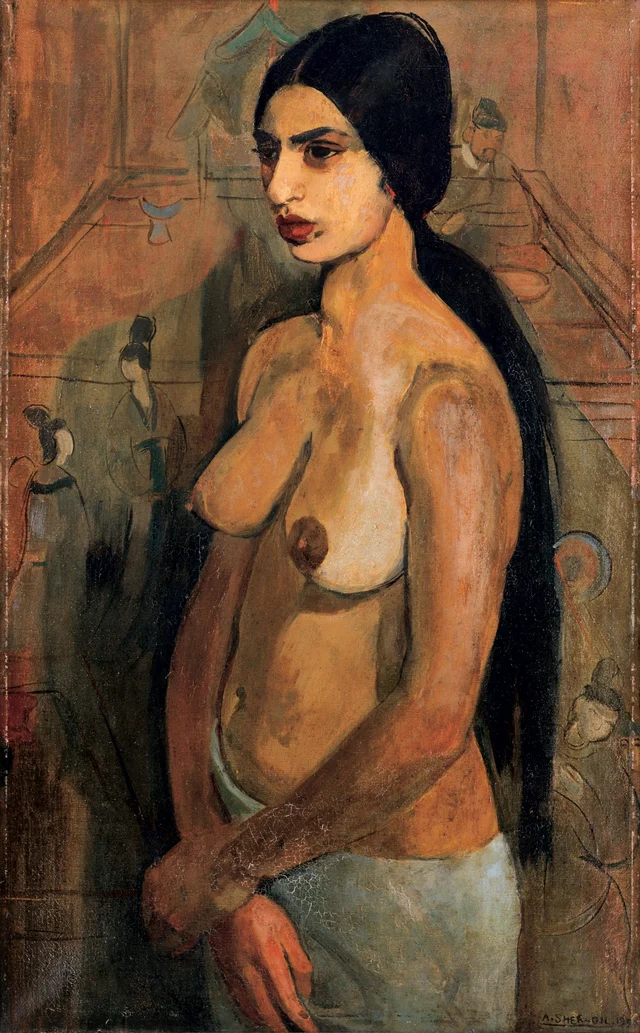
Sher-Gil was born in Budapest to a Sikh aristocrat father and a Hungarian opera-singer mother, grew up between Hungary and India, and enrolled at the École des Beaux-Arts in Paris at sixteen. She painted obsessively there, mostly herself and the people around her, leaving nineteen self-portraits from her Paris years alone, absorbing Cézanne, Gauguin, and Modigliani along the way.
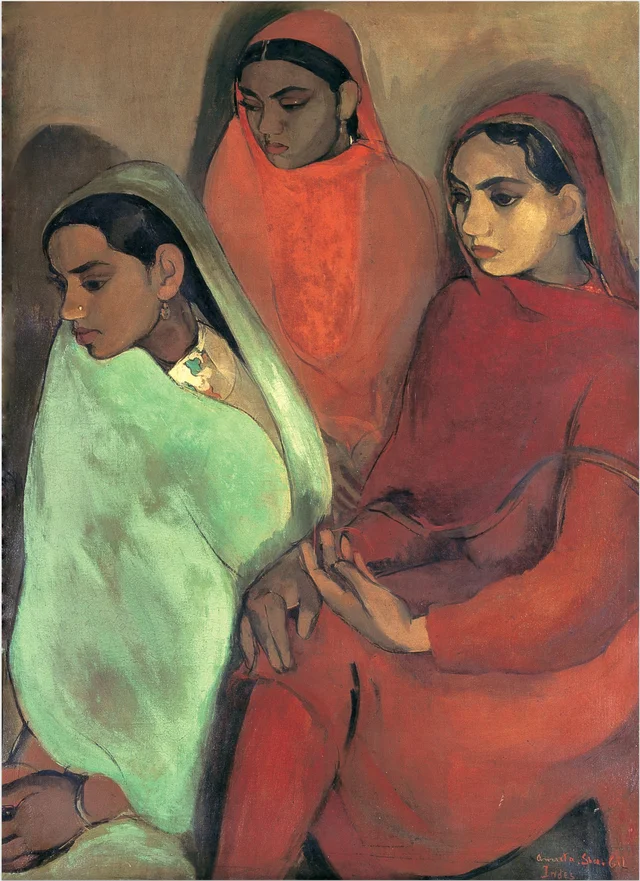
She returned to India in 1934 already convinced her real subject was there, and spent her last years painting village women, laborers, and rural scenes in a stripped-down style that borrowed from Indian miniature and Ajanta cave painting rather than the European academy she'd just left. She wrote at the time that she felt she could only truly paint again once she was back among "the semi-nude dark bodied men and women of Southern India."
She died suddenly in Lahore in December 1941, five days before a solo exhibition she'd been preparing, at 28 and under circumstances still disputed by biographers. About a hundred of her paintings were later given to the Indian government as a gift to the nation and now hang in the National Gallery of Modern Art in New Delhi.