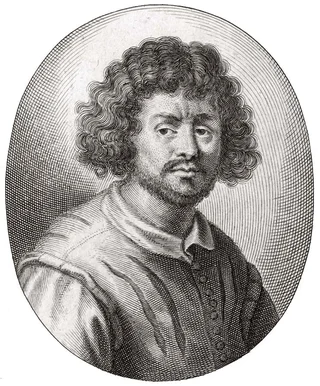
Claude Lorrain
1600–1682 · Duchy of Lorraine · Classicism
The story
In the Rome of the mid-1600s, a painter from the duchy of Lorraine had become so sought-after that other men were faking his work to cash in. Claude Gellée, known simply as Claude Lorrain, painted luminous harbours and pastoral landscapes bathed in a soft rising or setting sun, and Europe's cardinals and aristocrats paid heavily for them.
His answer to the forgers was a book. From about 1635 he kept the Liber Veritatis, the Book of Truth, a bound album in which he drew a careful copy of nearly every finished painting as it left his studio, often noting the buyer's name and the date. It ran to some 200 drawings, and it let a genuine Claude be told from a fake.
He was really a painter of light more than of places. The mythological or biblical figures in his scenes are often small, tucked into a corner, while the eye travels back toward a hazy sun on the horizon. That effect fixed the European idea of the ideal landscape for close to two centuries, and the English painter Turner, more than a hundred years later, asked in his will to have two of his own canvases hung beside Claude's in London.
Works
34 works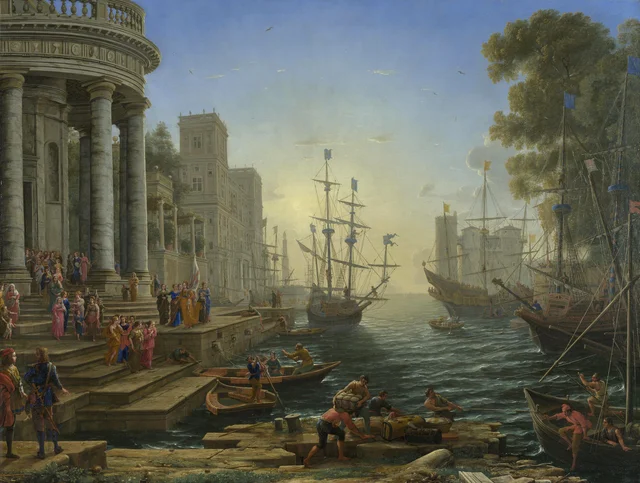 Seaport with the Embarkation of Saint UrsulaClaude Lorrain, 1641
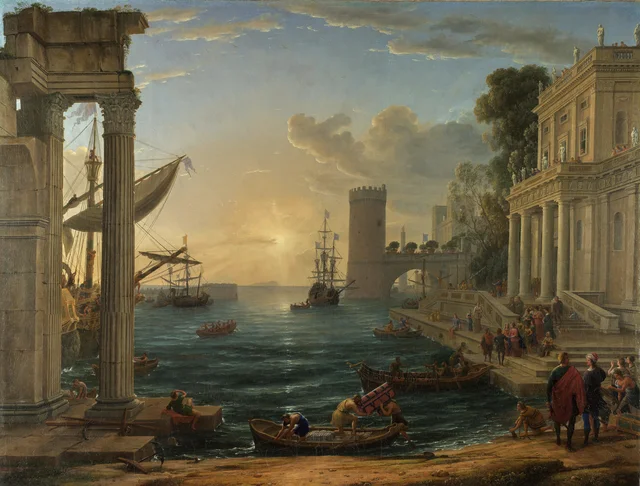 The Embarkation of the Queen of ShebaClaude Lorrain, 1648
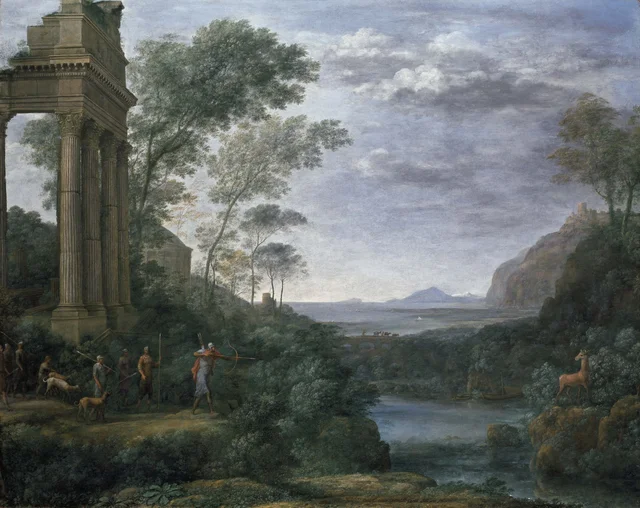 Ascanius Shooting the Stag of SylviaClaude Lorrain, 1682
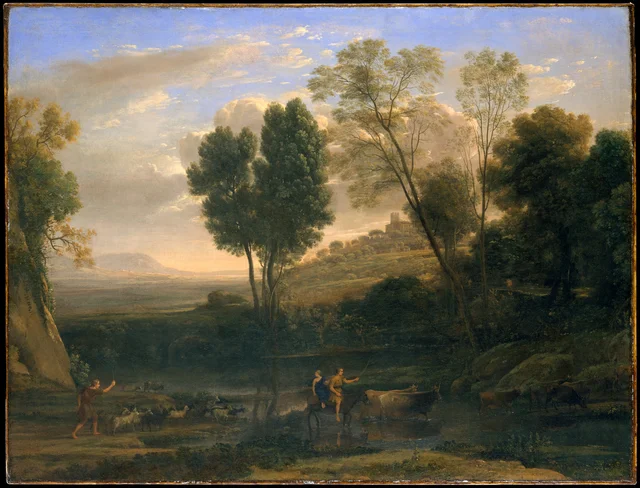 SunriseClaude Lorrain, 1646
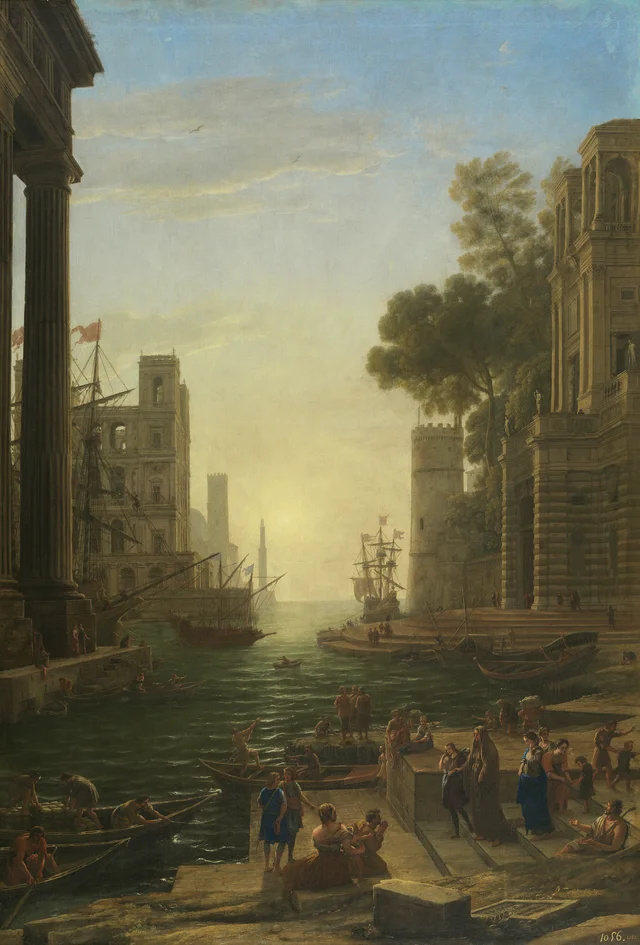 Landscape with the Embarkation of Saint Paula Romana at OstiaClaude Lorrain, 1639
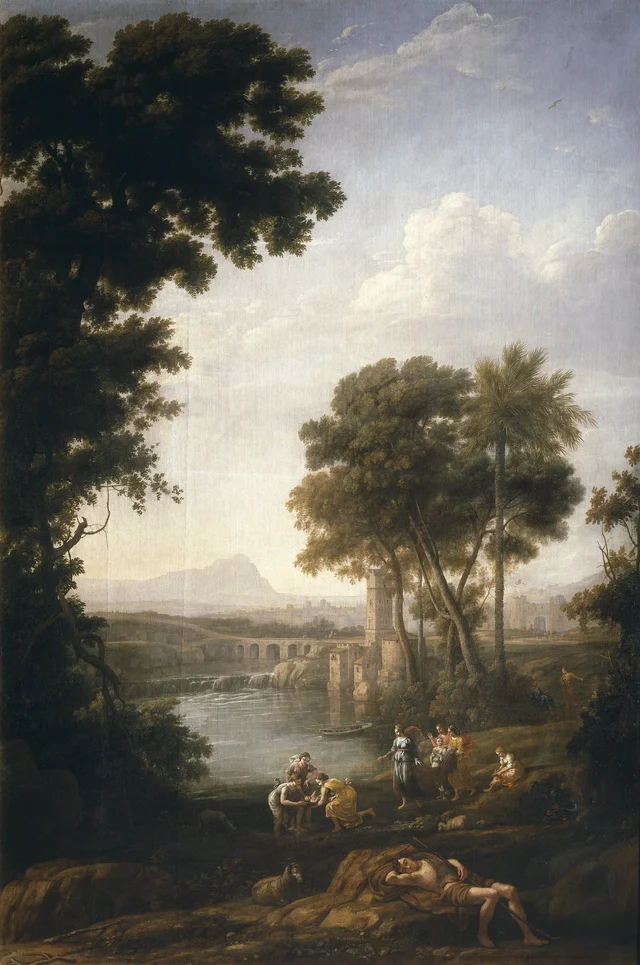 Landscape with the Finding of MosesClaude Lorrain, 1639
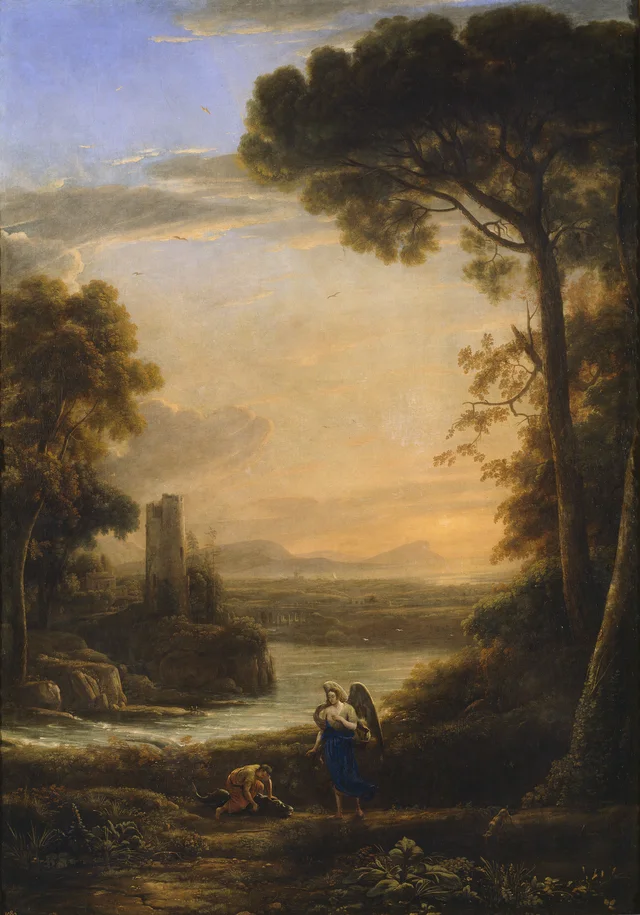 Landscape with Tobias and the AngelClaude Lorrain, 1639
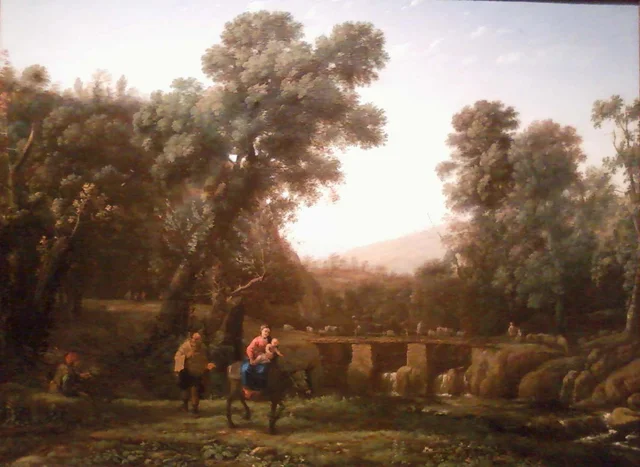 The Flight into EgyptClaude Lorrain, 1635
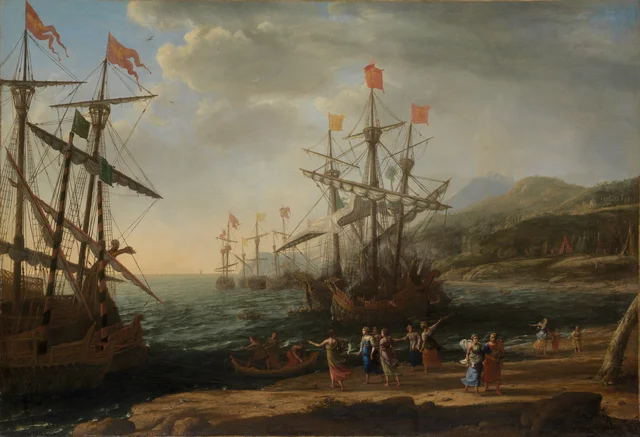 The Trojan Women Setting Fire to Their FleetClaude Lorrain, 1643
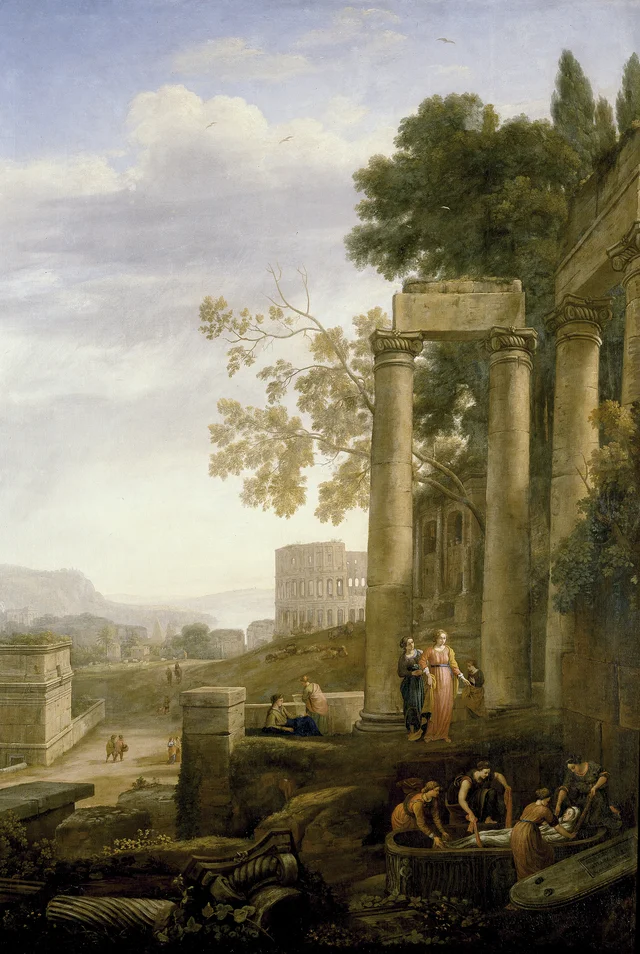 Landscape with the Burial of Saint SerapiaClaude Lorrain, 1639
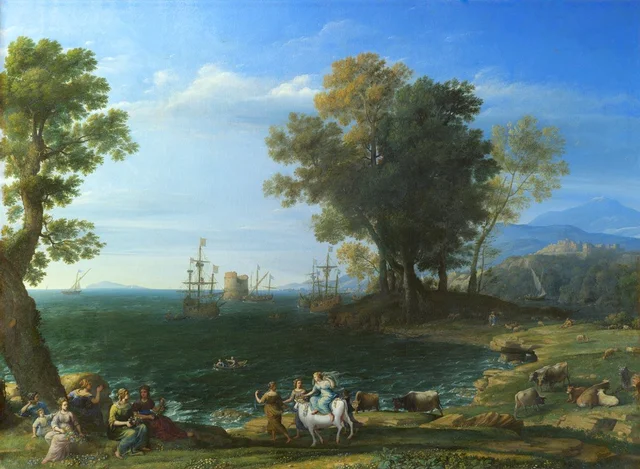 The Abduction of EuropaClaude Lorrain, 1655
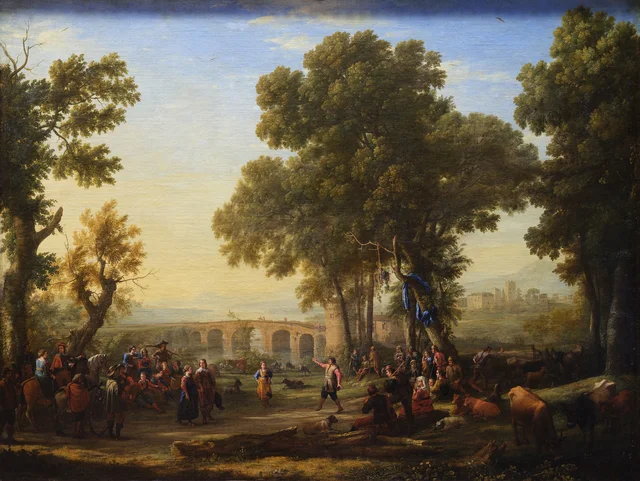 Village FêteClaude Lorrain, 1639
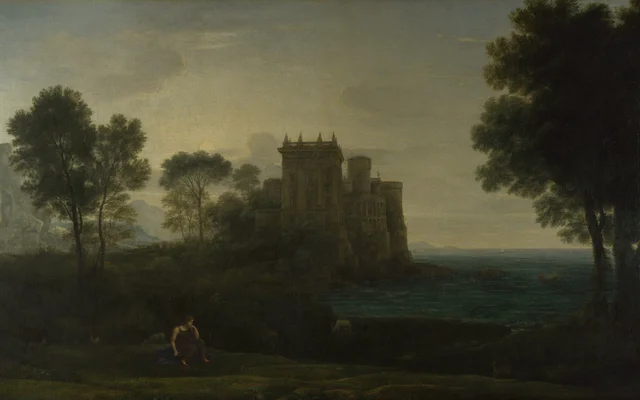 Landscape with Psyche Outside the Palace of CupidClaude Lorrain, 1664
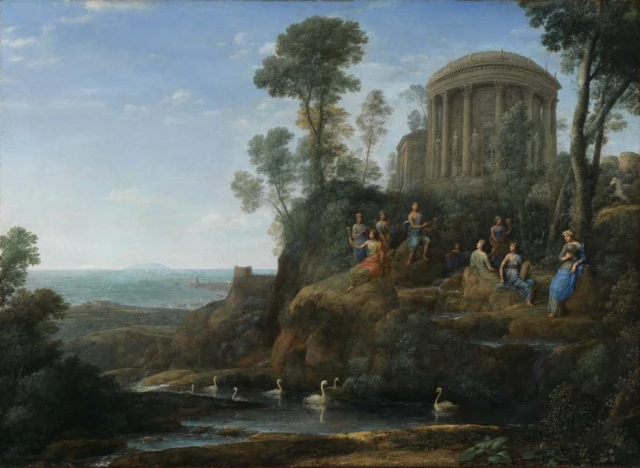 Apollo and the Muses on Mount HeliconClaude Lorrain, 1680
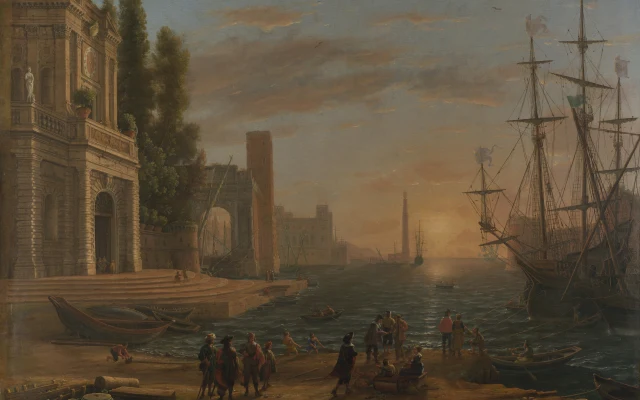 A SeaportClaude Lorrain, 1644
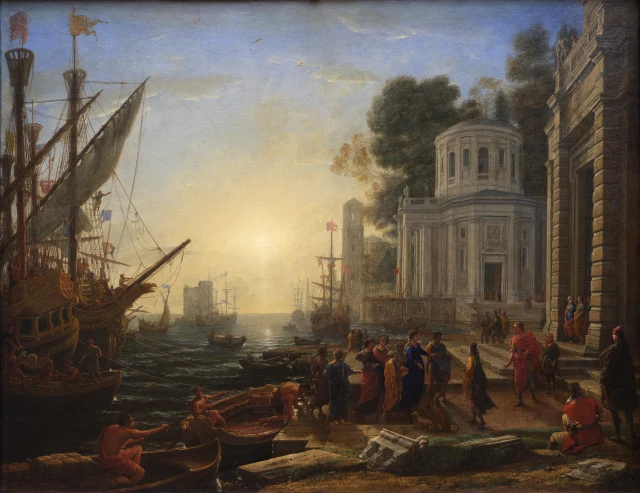 Cleopatra Disembarking at TarsusClaude Lorrain, 1642
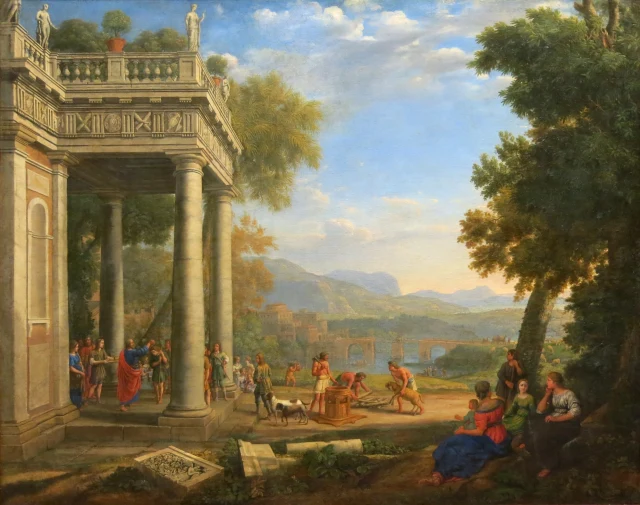 David Anointed King by SamuelClaude Lorrain, 1647
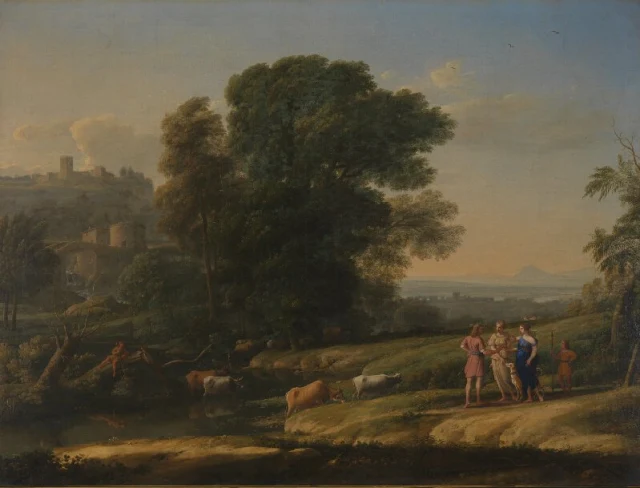 Landscape with Cephalus and Procris reunited by DianaClaude Lorrain, 1645
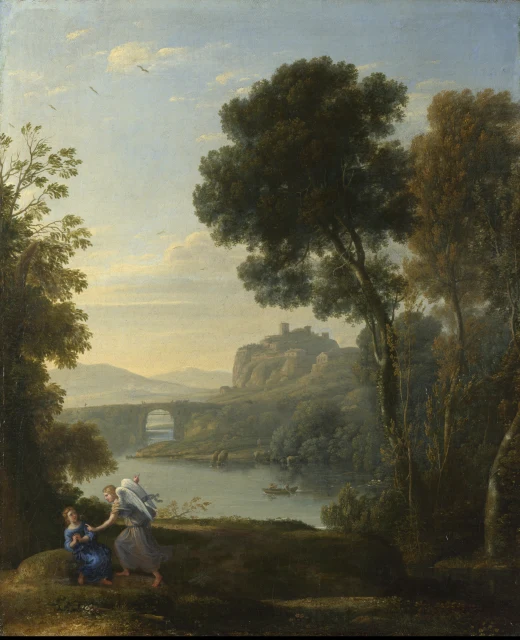 Landscape with Hagar and the AngelClaude Lorrain, 1646
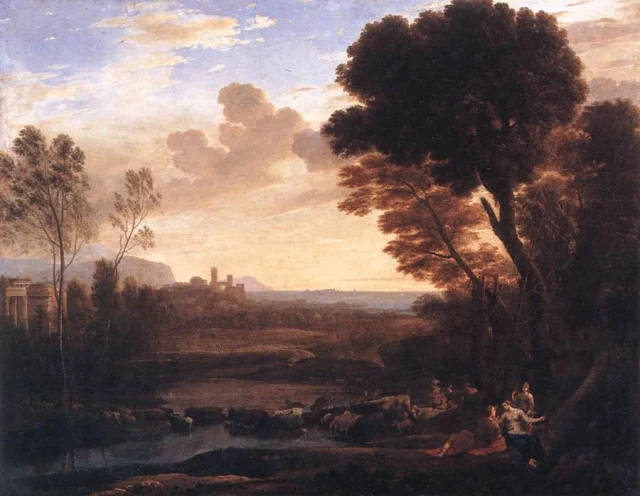 Landscape with Paris and Oenone ('The Ford')Claude Lorrain, 1648
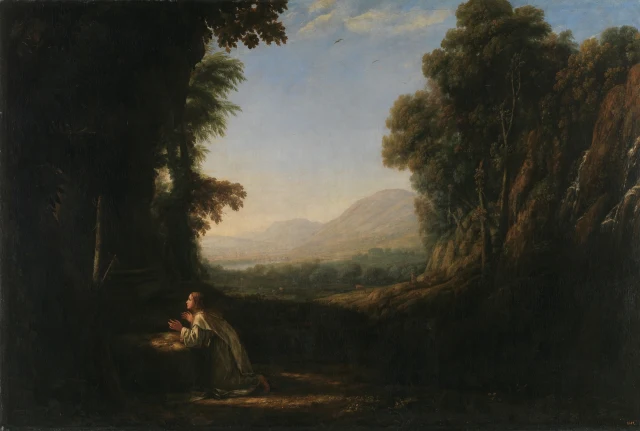 Landscape with Saint Mary of CervellóClaude Lorrain, 1637
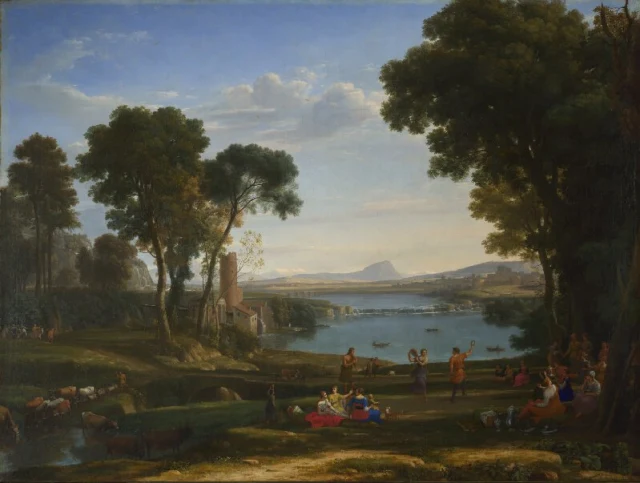 Landscape with the Marriage of Isaac and Rebekah ('The Mill')Claude Lorrain, 1648
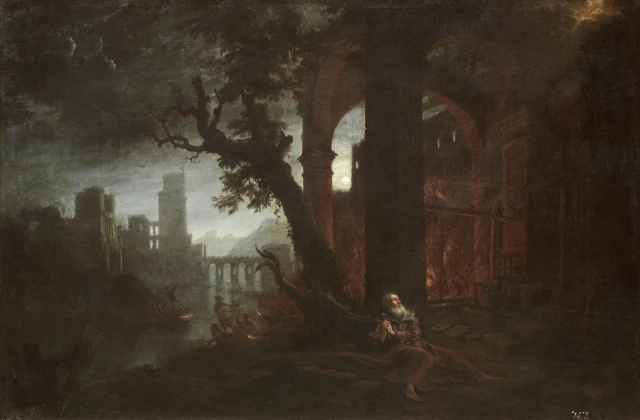 Landscape with the Temptations of Saint AnthonyClaude Lorrain, 1638
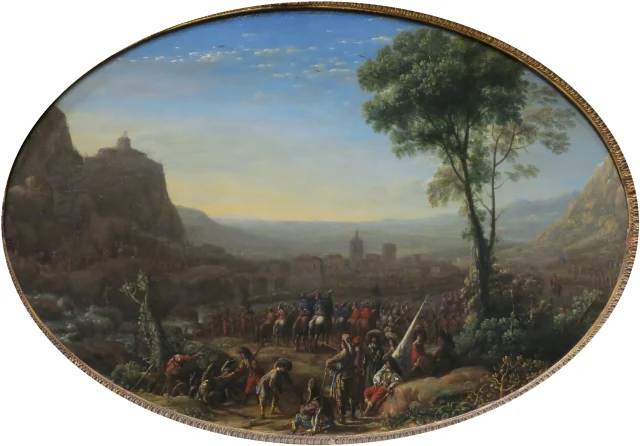 Louis XIII Forcing the Pass of SusaClaude Lorrain, 1632