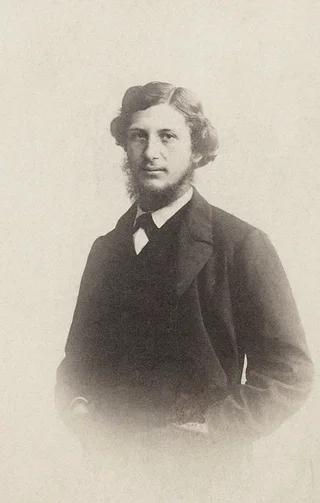
Frédéric Bazille
1841–1870 · France · Impressionism
The story
In the summer of 1870, France went to war with Prussia, and Frédéric Bazille, twenty-eight years old and already one of the steadiest presences among the young painters gathered around Claude Monet, joined a Zouave infantry regiment within weeks of the declaration.
He had spent the previous decade quietly making that generation possible. Trained as the son of a wealthy Montpellier wine family who abandoned medicine for painting, Bazille shared his Paris studio with Monet and Pierre-Auguste Renoir, bought their canvases when almost no one else would, and covered Monet's rent more than once. At well over six feet tall, unusually so for the period, he also turned up as a model in his friends' own paintings whenever they needed a tall figure in a crowd. His own most ambitious work, 'Family Reunion,' a group portrait of his relatives gathered on a terrace, was shown at the 1868 Paris Salon and remains his best-known painting.
On November 28, 1870, at the Battle of Beaune-la-Rolande, his commanding officer was wounded and Bazille took charge of the assault himself. He was shot twice and died on the field. None of the eight Impressionist exhibitions that followed in the years after included his work.
Works
15 works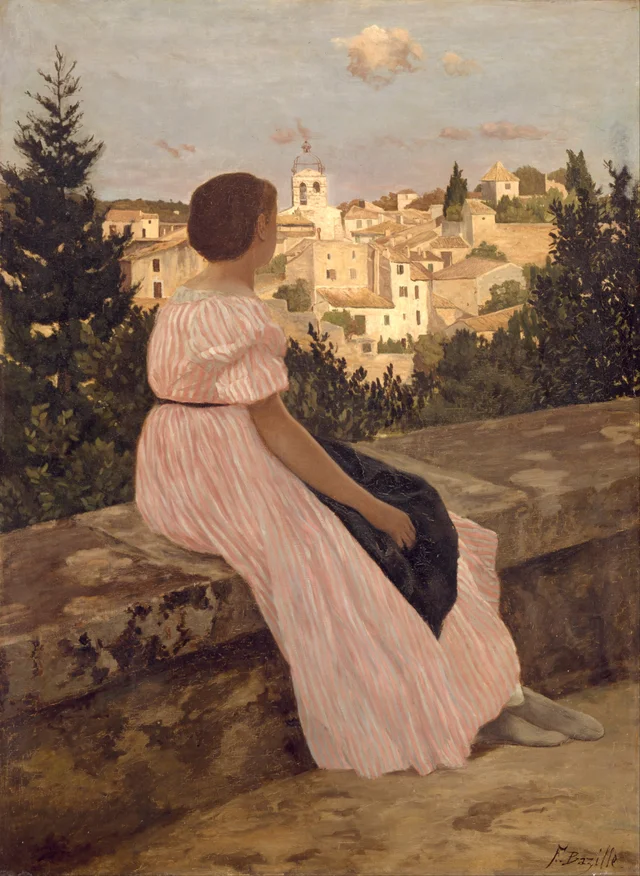 The Pink DressFrédéric Bazille, 1864
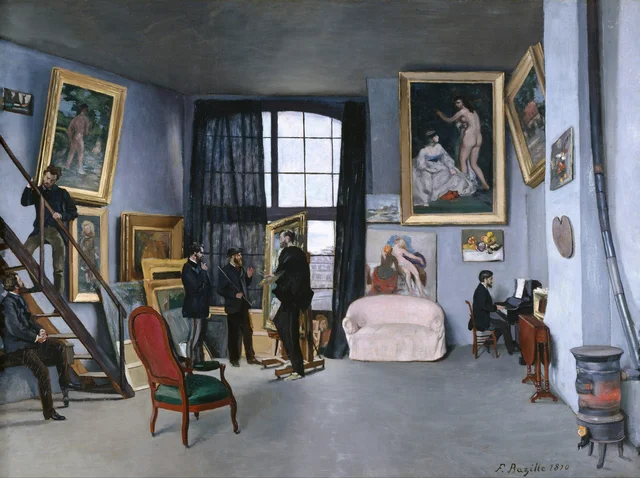 Bazille's StudioFrédéric Bazille, 1870
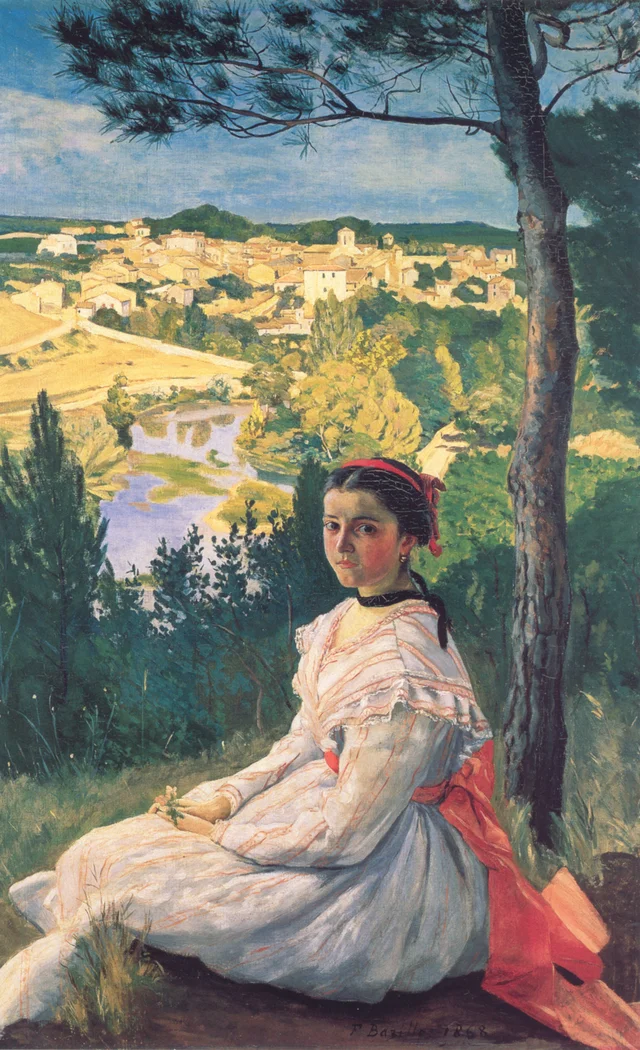 View of the VillageFrédéric Bazille, 1868
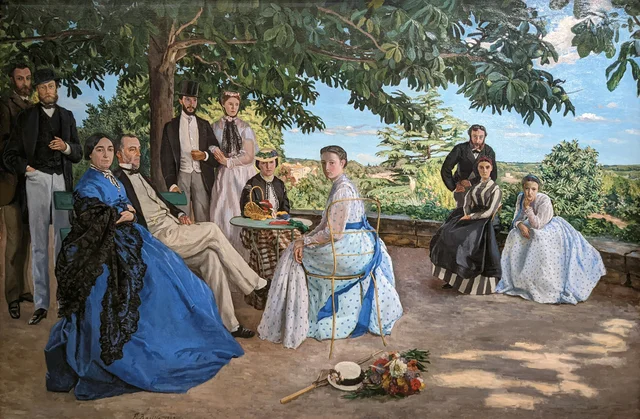 Réunion de familleFrédéric Bazille, 1867
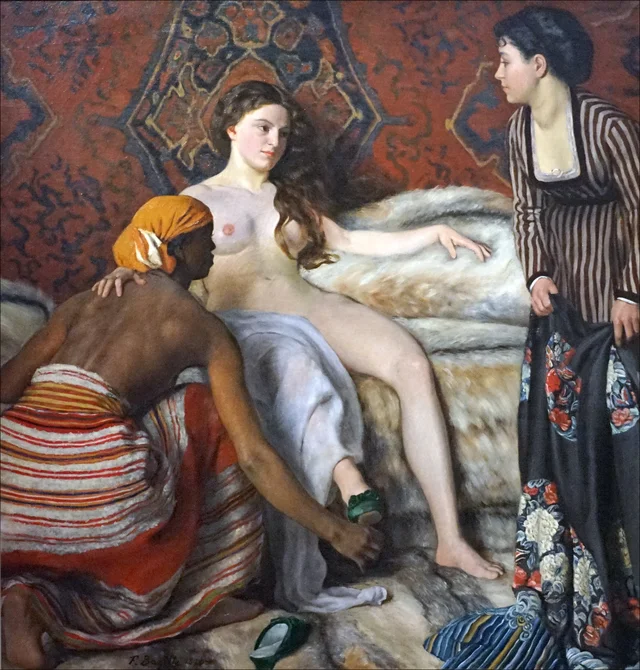 La ToiletteFrédéric Bazille, 1870
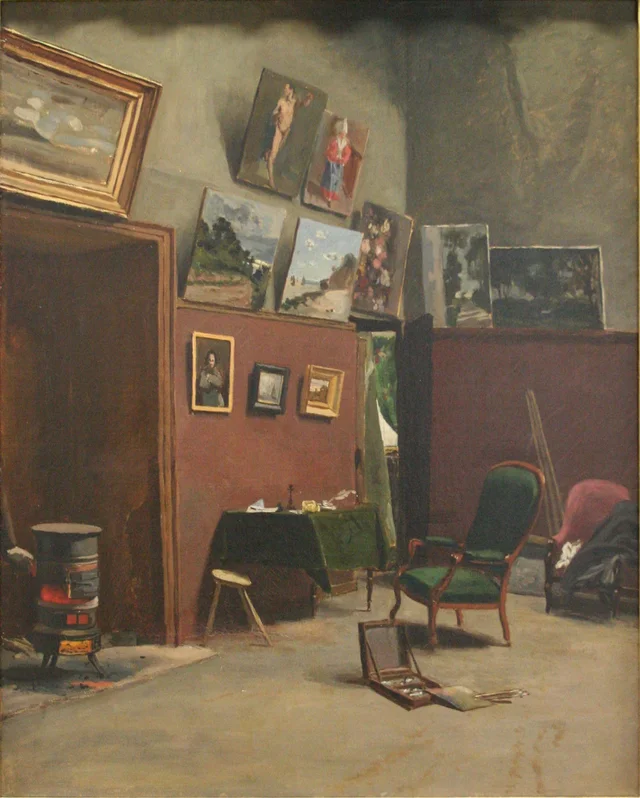 Studio in the Rue de FurstembergFrédéric Bazille, 1865
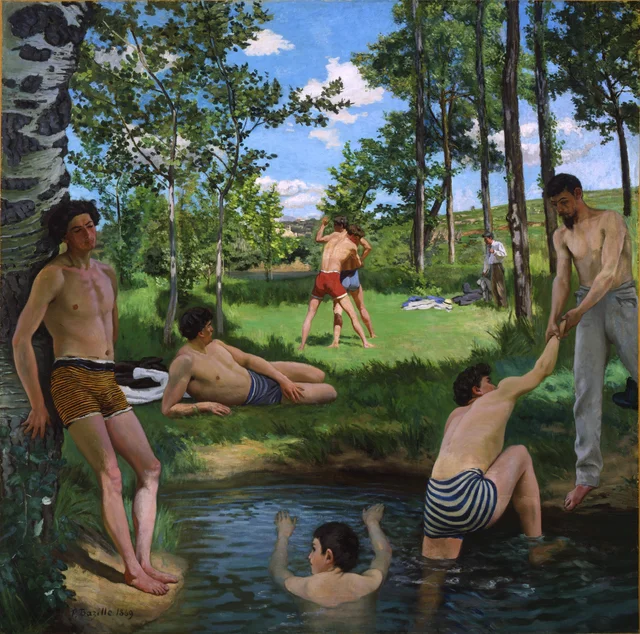 Summer SceneFrédéric Bazille, 1869
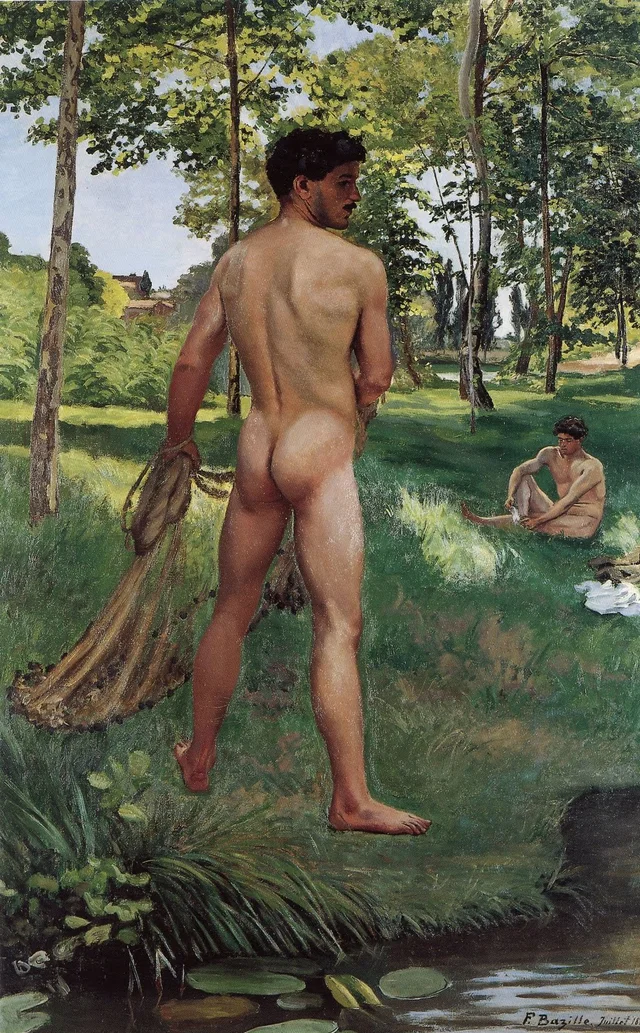 Fisherman with a NetFrédéric Bazille, 1868
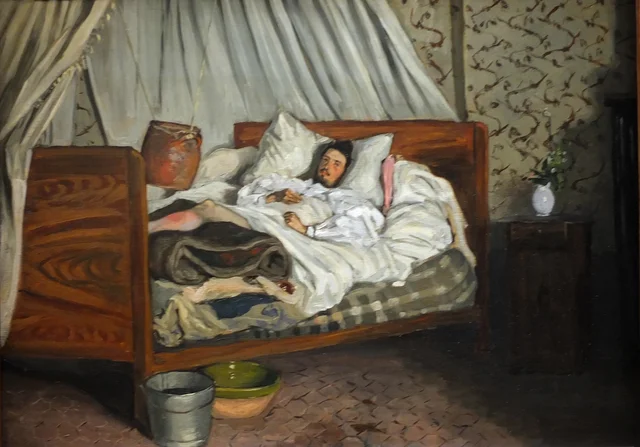 L'Ambulance improviséeFrédéric Bazille, 1865
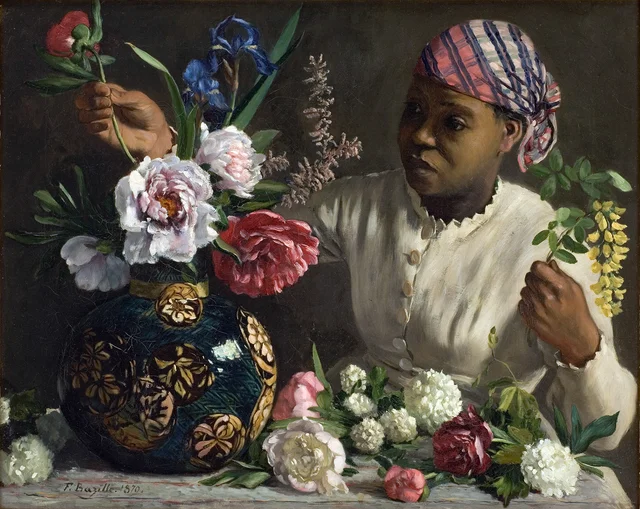 Black Woman with PeoniesFrédéric Bazille, 1870
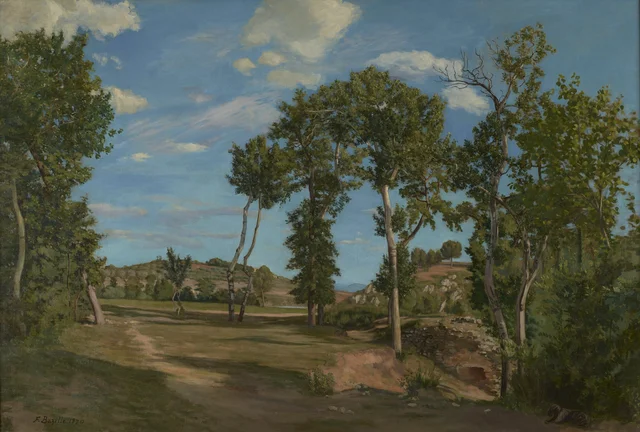 Landscape by the Lez RiverFrédéric Bazille, 1870
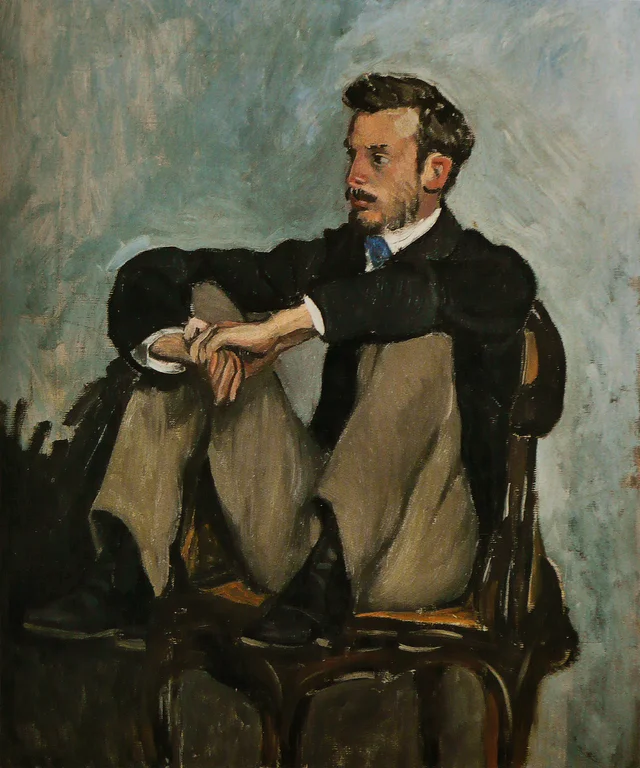 Auguste RenoirFrédéric Bazille, 1867
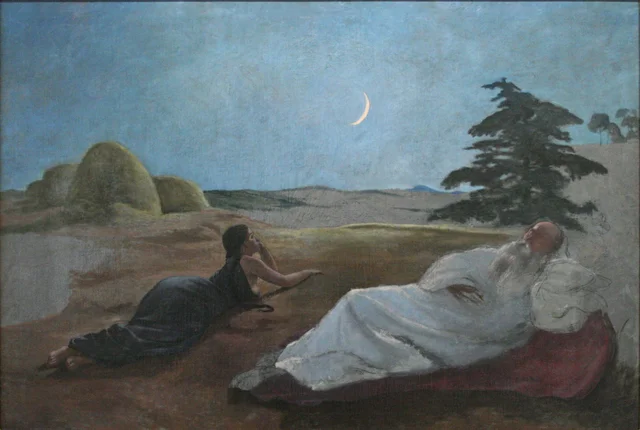 Ruth et BoozFrédéric Bazille, 1870
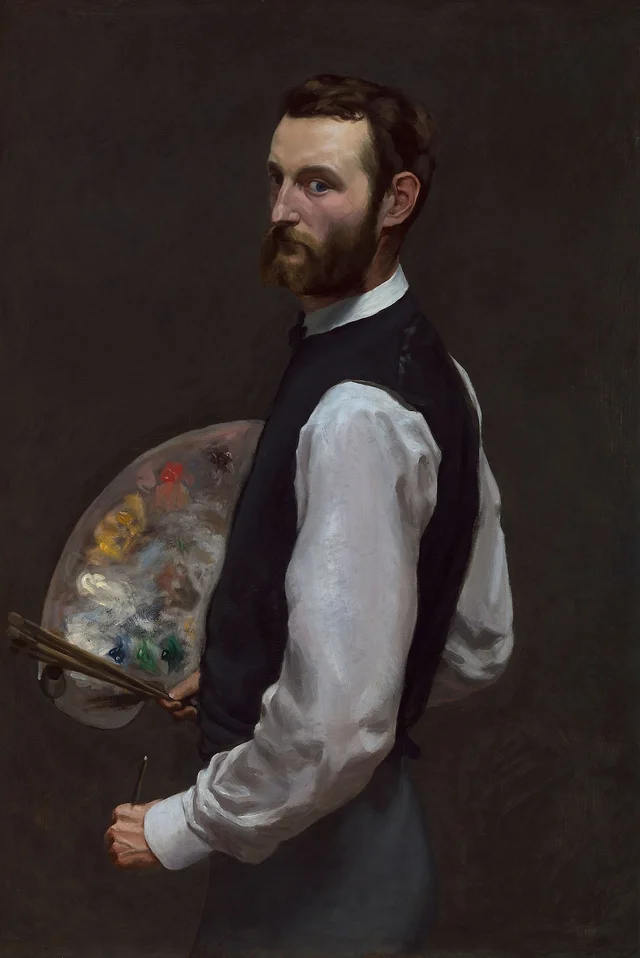 Self-PortraitFrédéric Bazille, 1865
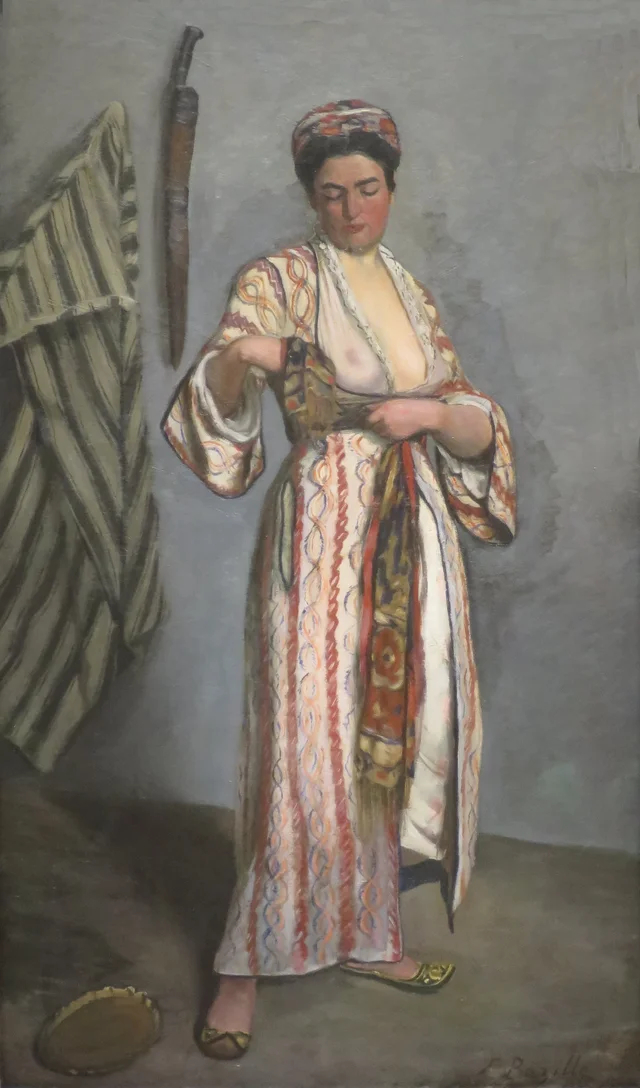 Woman in Moorish CostumeFrédéric Bazille, 1869