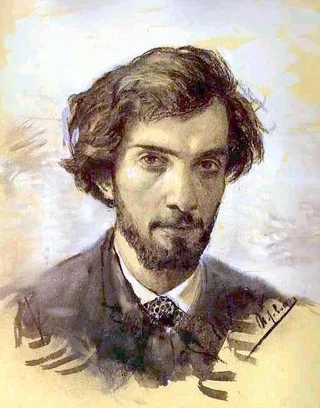
Isaac Levitan
1860–1900 · Russian Empire · Realism
The story
In 1892 the painter Isaac Levitan was ordered out of Moscow. He was already famous, his work collected by Pavel Tretyakov, the city's leading art patron, but he was Jewish, and a decree expelling Jews from Moscow made no exception for a celebrated artist. He left for the countryside and wrote to a friend about feeling like the Wandering Jew of the old legend.
That friend was the writer Anton Chekhov, who had known him since their student days. They were close for years, until Chekhov published a story, The Grasshopper, about a woman's affair with a painter, and Levitan recognised his own life in it and broke off contact. It took them three years to make up.
Levitan is the great painter of the Russian mood landscape, where an empty river bend or a low grey sky can carry a whole state of feeling. One of his best-known canvases shows the Vladimirka, the wide dirt road along which convicts were marched east to Siberia, painted as a plain empty track under a heavy sky. He died in 1900, not yet 40, with dozens of unfinished studies still in his studio.
Works
13 works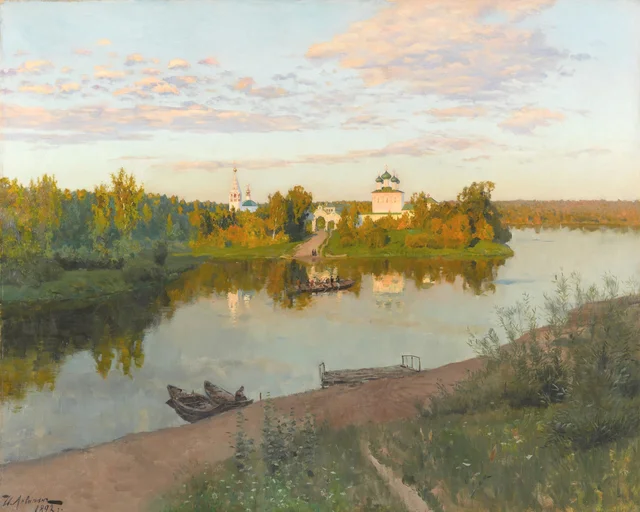 Evening BellsIsaac Levitan, 1892
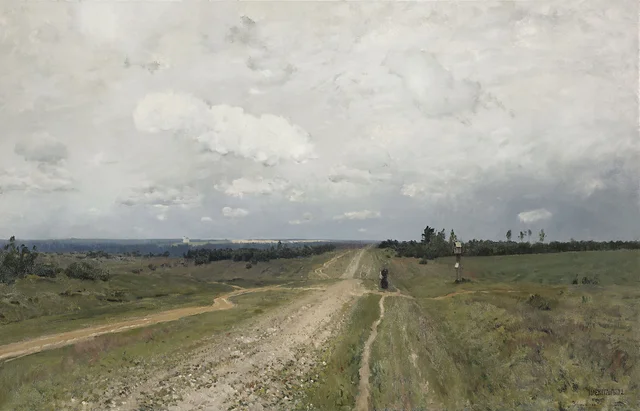 The VladimirkaIsaac Levitan, 1892
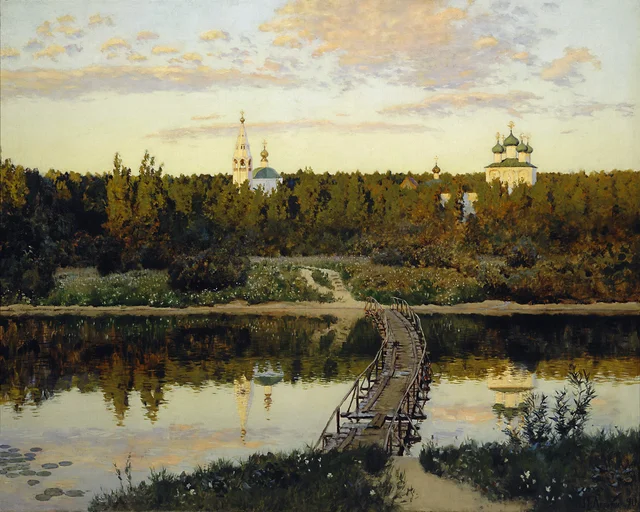 A Quiet MonasteryIsaac Levitan, 1890
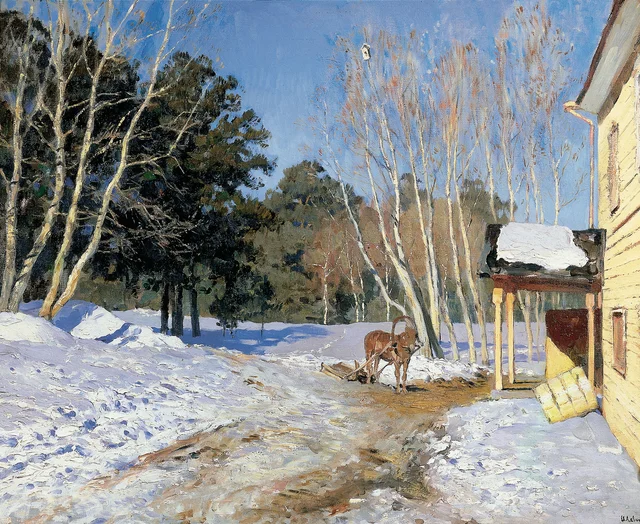 MarchIsaac Levitan, 1895
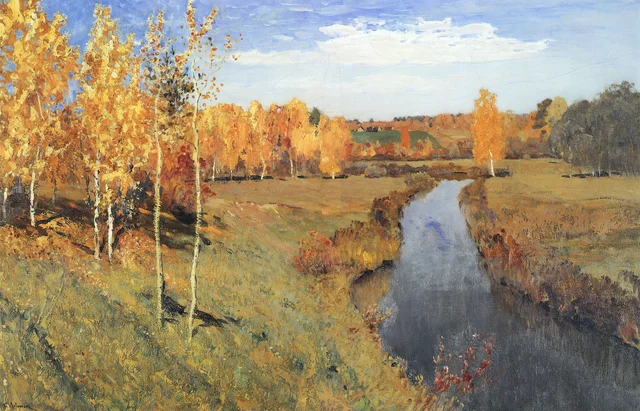 Golden AutumnIsaac Levitan, 1895
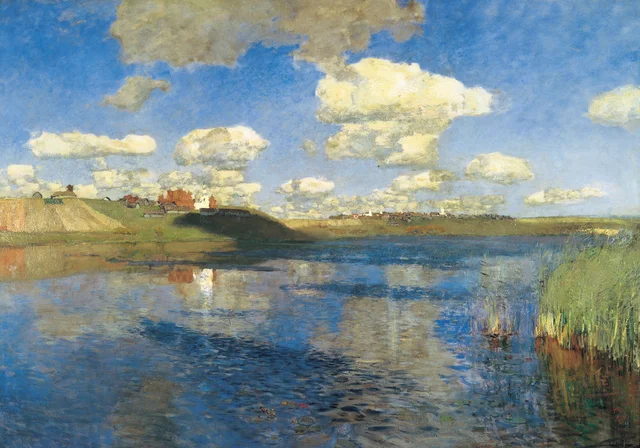 Lake. RussiaIsaac Levitan, 1899
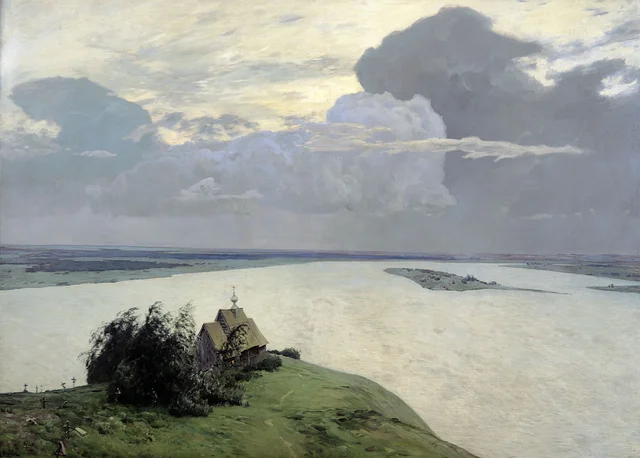 Over Eternal QuietIsaac Levitan, 1894
 Fresh Wind. VolgaIsaac Levitan, 1895
 Sokolniki. AutumnIsaac Levitan, 1879
 Spring. High waterIsaac Levitan, 1897
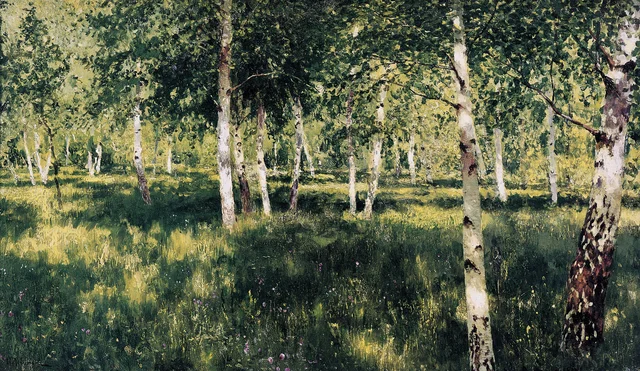 Birch groveIsaac Levitan, 1889
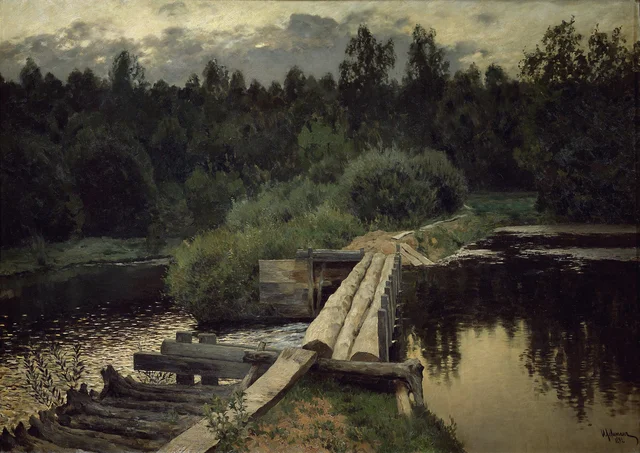 By the PoolIsaac Levitan, 1892
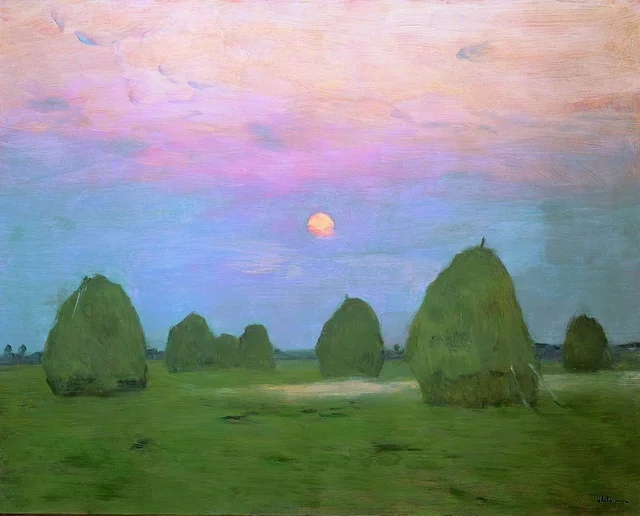 Dusk. HaystacksIsaac Levitan, 1899