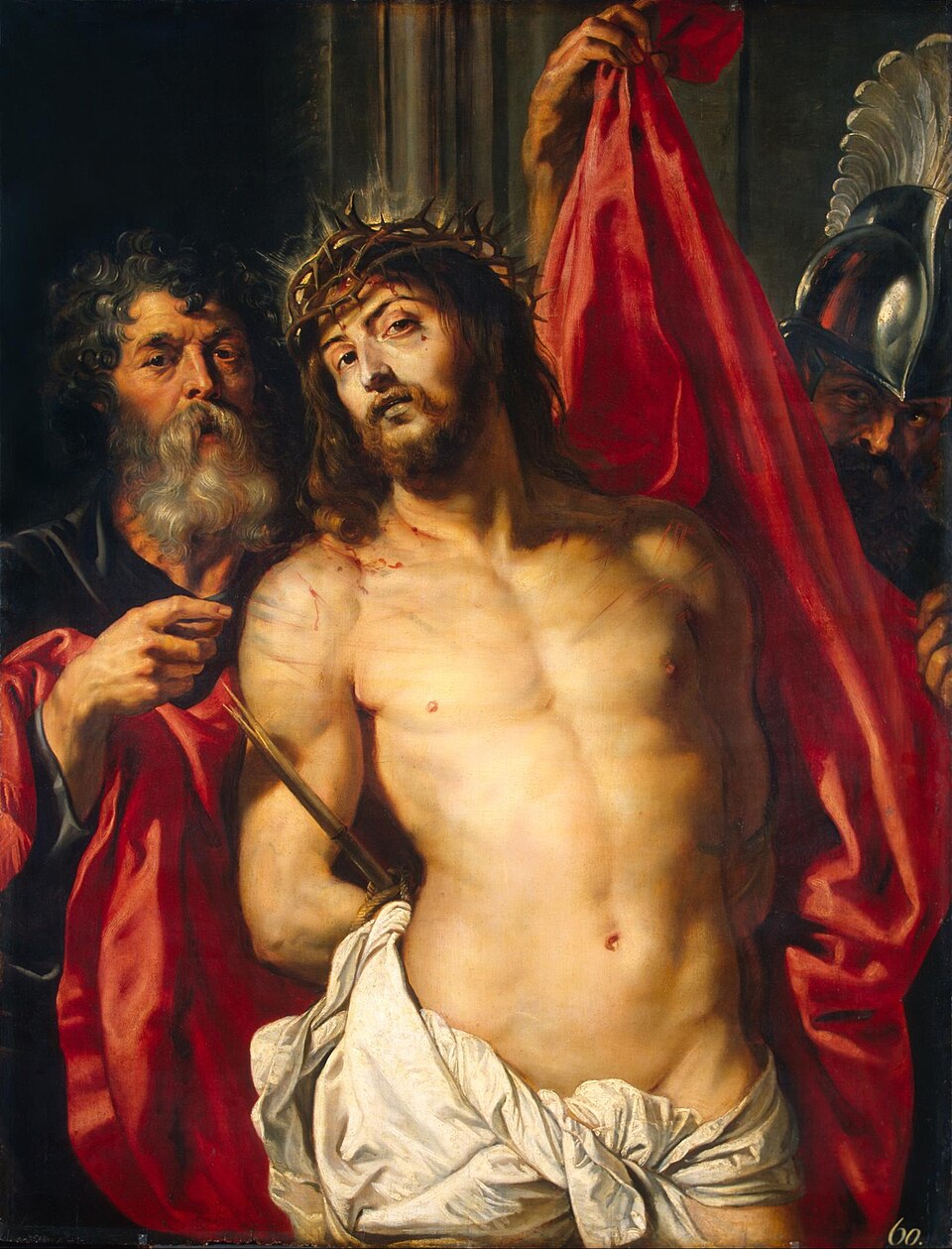
Peter Paul Rubens, Crown of Thorns, 1612. Wikimedia Commons. · PD
Crown of Thorns
Details
The story
Rubens spent eight years in Italy soaking up antiquity and the great Venetians, then returned to Antwerp in 1608 and quickly became the busiest painter in northern Europe. He made this Ecce Homo — Christ shown to the crowd after his scourging — around 1612, and it carries Italy home with him. The pose is not invented. Rubens had stood in the Galleria Borghese in Rome and drawn a famous ancient statue of a centaur, arms wrenched behind its back and torso thrust forward, and he lifted that straining body for the figure of Christ. The mock crown of thorns and the deep red robe are the soldiers' cruel joke about kingship. By the end of the 18th century the panel had reached Saint Petersburg, in the collection of a Russian prince, and there it stayed.