Andrea Mantegna · PD
Death of the Virgin
Details
The story
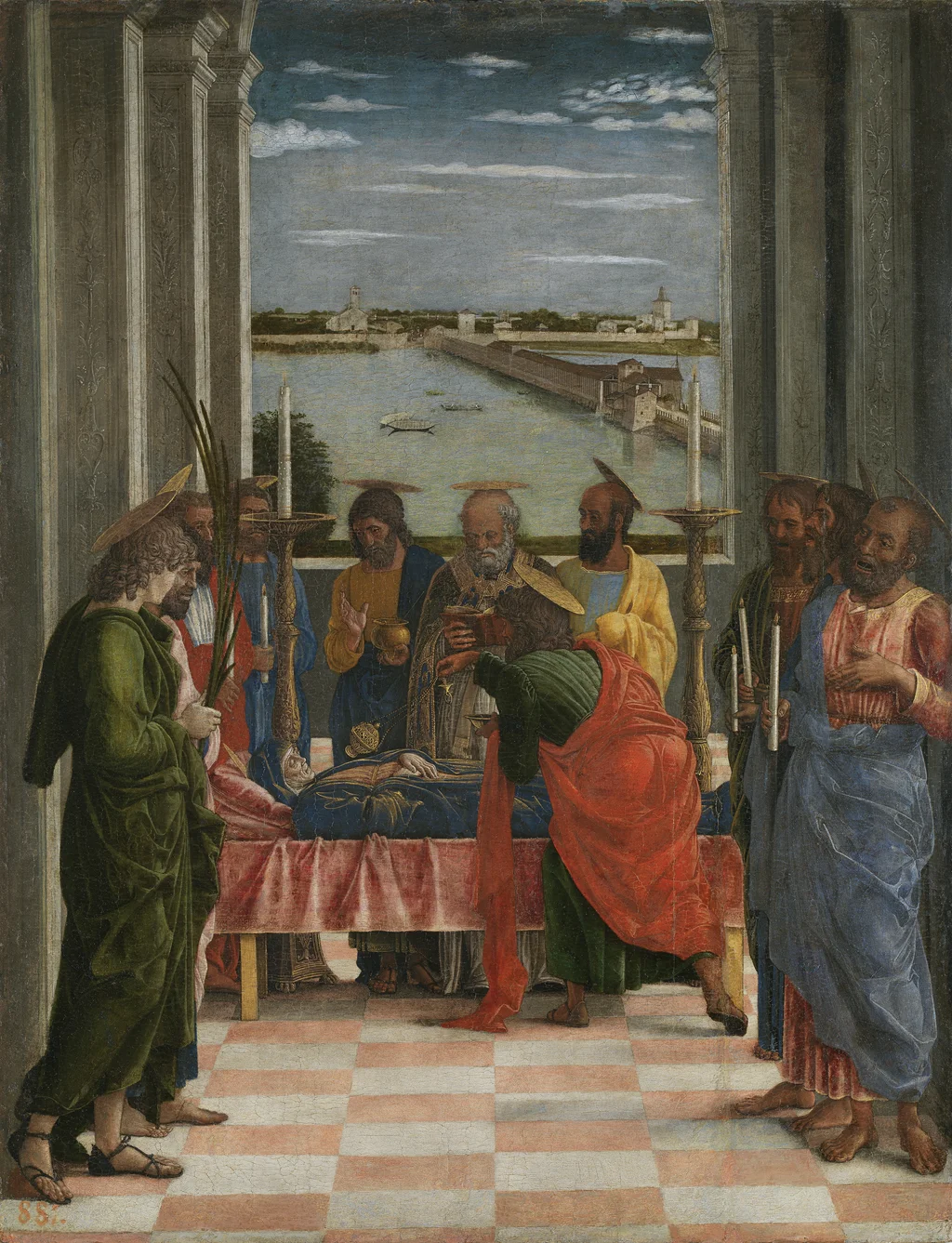
Look past the mourning apostles to the window at the back, and you are looking at a real place. That stretch of water, the long bridge, the little town beyond, is the lake and causeway of Mantua, the city where Mantegna worked for the Gonzaga family who ruled it. He painted this small panel around 1462 for the chapel of their castle, and dropped the actual view from their windows straight into a sacred scene. It is one of the earliest topographical portraits of a specific place in Italian painting. The rest is built on his obsession with perspective, the tiled floor rushing toward the deathbed, the apostle swinging a censer forward so he seems to lean out of the picture. The panel looks cut down at the top, its painted pilasters ending unfinished, so it was once taller than what hangs in the Prado now.