Gustave Courbet · PD
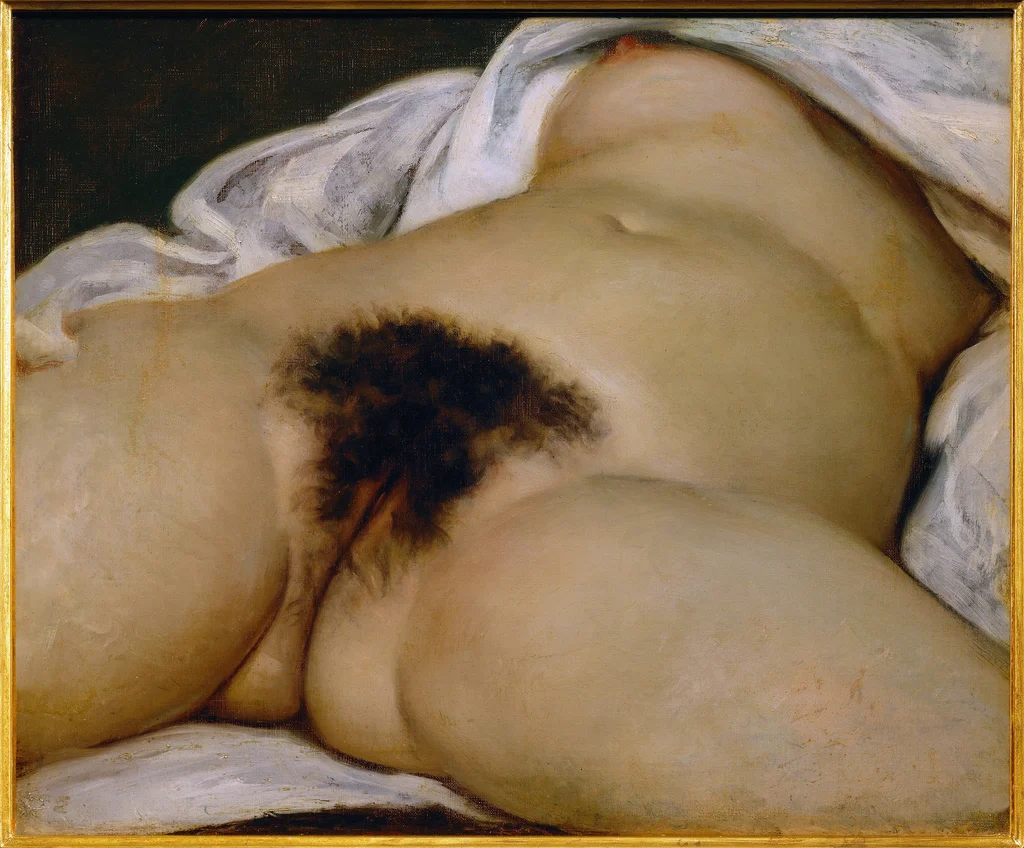
L'Origine du monde
Details
The story
Courbet painted this frank close-up of a woman's body in 1866, and for almost the whole of its life it was made to be hidden. It was not for a gallery. The first owner was a wealthy Ottoman diplomat in Paris named Khalil-Bey, who collected pictures of the female nude and kept this one behind a green curtain, drawing it back only for chosen guests. When he gambled away his fortune, the painting slipped from owner to owner, usually out of sight. In the 20th century it ended up with Jacques Lacan, the famous French psychoanalyst, who hung it at his country house behind a sliding wooden panel. On the outside of that panel his artist relative André Masson had painted a soft, abstract version of the same landscape of the body, so a visitor saw only the tame picture until the panel slid away. For well over a century, then, this was a celebrated painting that almost no one had actually seen. That only changed in 1995, when it came to the Musée d'Orsay to settle Lacan's estate against an inheritance tax bill, and for the first time it hung openly on a public wall.