Wassily Kandinsky · PD
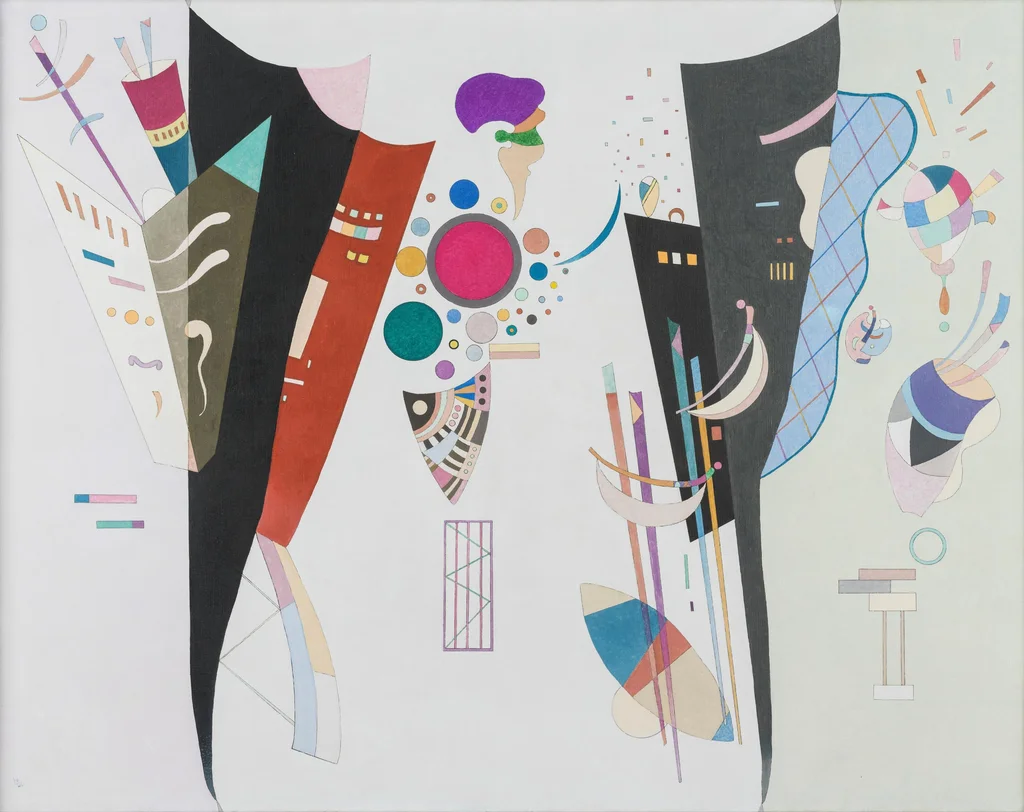
Reciprocal Accords
Details
The story
By January 1942 Paris had been under German occupation for more than a year, and abstract art like Kandinsky's had been condemned in Germany as degenerate. He was in his seventies, living quietly in Neuilly on the edge of the city, short of canvas and proper paint. This picture is partly done in Ripolin, an ordinary household enamel, and it sets two large triangular shapes against each other over grey-white and deep black. It was among the last things he ever finished on canvas. When he died at the end of 1944, still under occupation, his widow Nina placed this painting and one earlier work beside his open coffin in the studio.