Cimabue · PD
Santa Trinita Maestà
Details
The story
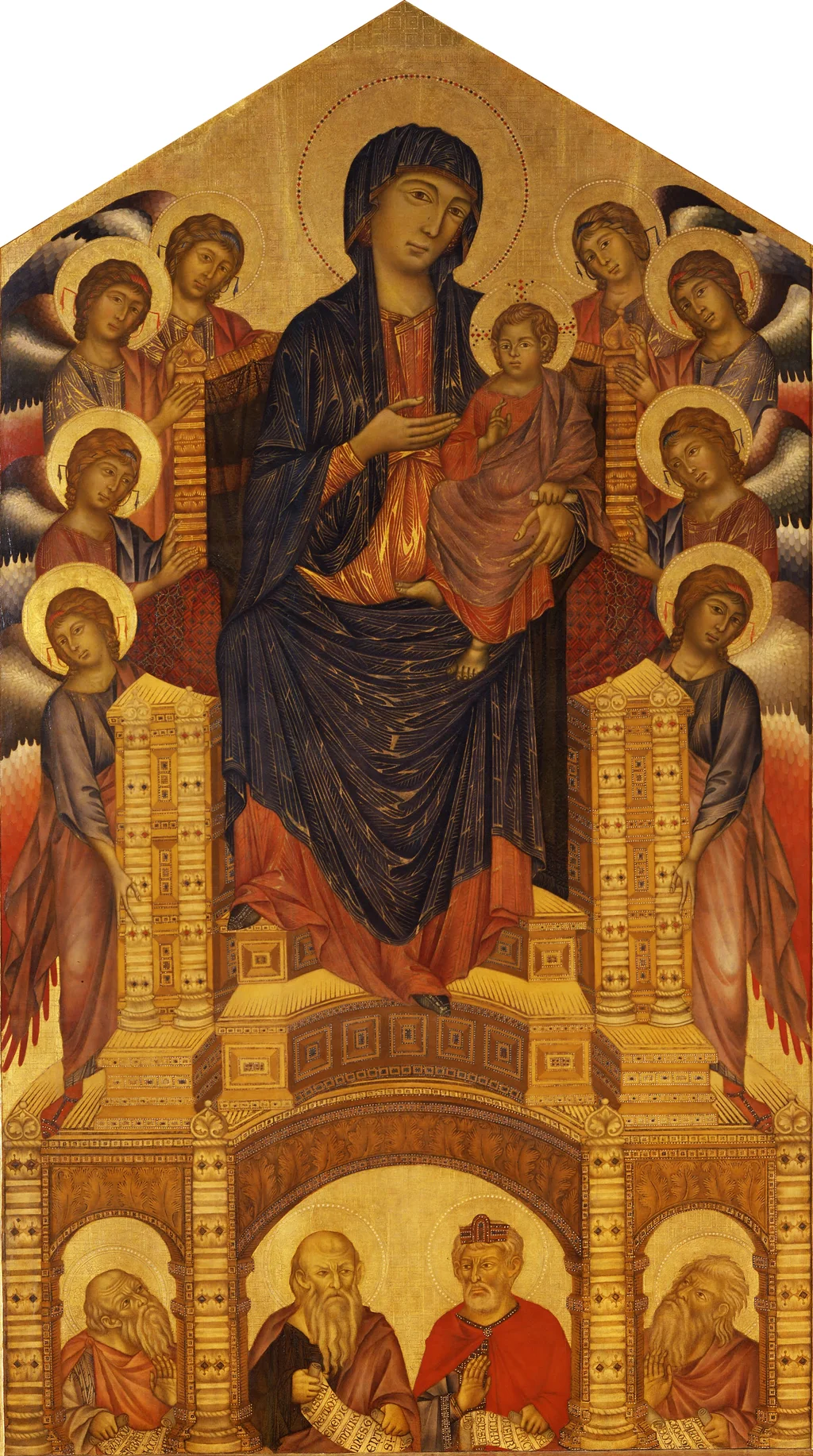
Around 1290 in Florence, painting the Madonna still meant working in the old Byzantine way: a gold ground, a flat throne, faces built from fixed patterns handed down for centuries. Cimabue was the last great master of that tradition, and this enormous panel, nearly thirteen feet tall, was made for the church of Santa Trinita. Look at the throne. Instead of the usual flat gold bench, Cimabue opens it into a deep architectural structure, with arches beneath where four Old Testament prophets stand, holding scrolls. The eight angels framing the Virgin are stacked in careful rows, yet their robes have begun to fall in real folds. Within a few years a young painter who trained near him, Giotto, would break the gold-ground world open for good. This panel stayed in Santa Trinita until 1471, then moved from chapel to gallery over the centuries, reaching the Uffizi in 1919.