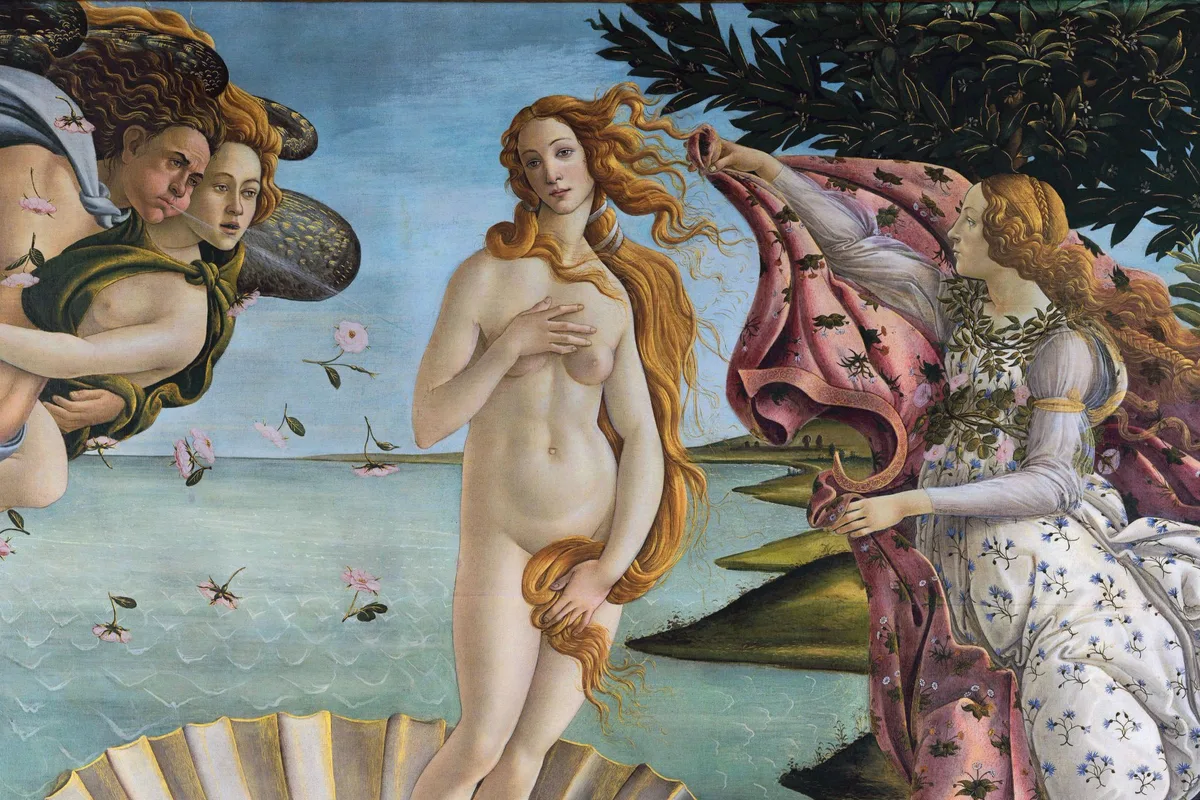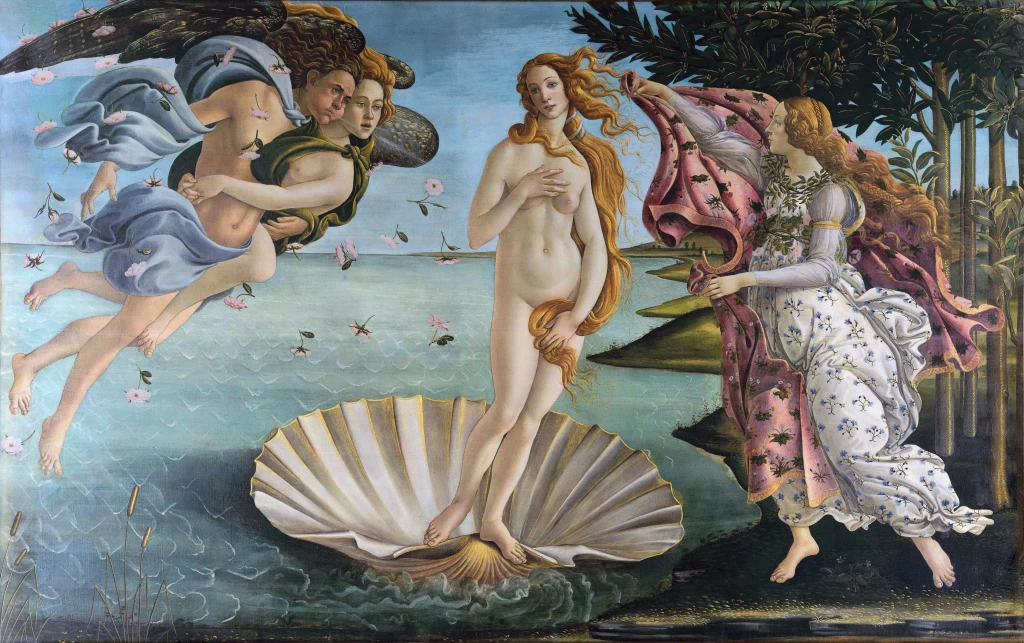
Sandro Botticelli, The Birth of Venus, 1480. Wikimedia Commons. · PD
The Birth of Venus
Details
The story
In Florence in the 1480s, a grown woman standing naked at the centre of a large painting was close to unheard of. For a thousand years, Christian Europe had shown the nude mostly as Adam and Eve in shame or sinners in hell. Botticelli, working for a younger cousin of Lorenzo de' Medici who effectively ran the city, put a full-length goddess in the middle of a canvas and made her the whole point. This is often called the first great nude since the ancient world, and it was meant to be read that way. The Medici circle was steeped in a fashionable blend of Christianity and Greek philosophy, and in that reading Venus is not just desire but a kind of divine love, beauty that lifts the mind toward the heavens. There is a craft story here too. Instead of a wooden panel, Botticelli painted on canvas, still rare in Tuscany then, using tempera thinned with egg so the colours stay pale and almost transparent, like fresco. Notice how little the picture cares about solid weight. Venus barely stands on her shell, the wind gods blow her ashore from the left, and a figure on the right rushes to wrap her in a flowered cloak, everything drifting rather than pressing down.