Jacques-Louis David · CC0
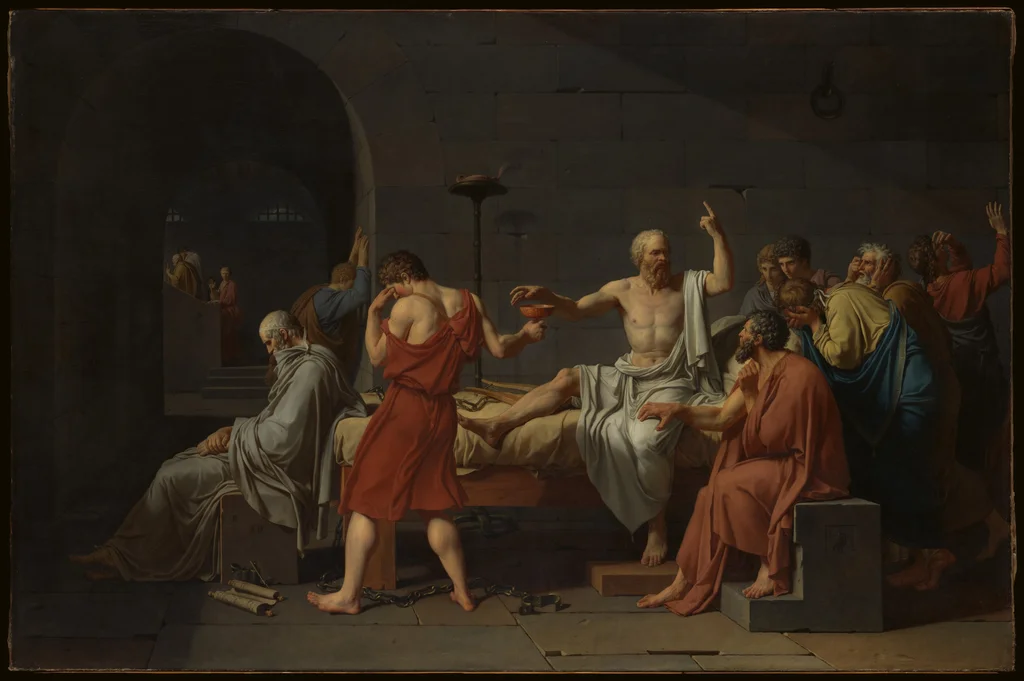
The Death of Socrates
Details
The story
David finished this in 1787, two years before the fall of the Bastille, and to a Paris audience already restless with its own rulers the subject would not have felt like distant history. He paints the last moment of Socrates, the Athenian philosopher condemned to death for questioning the city's gods and corrupting its youth, offered a way out and refusing it. Rather than flee, Socrates takes the cup of hemlock, the poison, and keeps talking. David shows him reaching for the cup almost without looking at it, one hand still raised mid-argument, calm among friends who cannot keep their composure. The old man on the end of the bed, folded in on himself, is Plato, the pupil who would later write the account David worked from, though he would have been too young to be present. Thomas Jefferson, then the American envoy in Paris, saw it at the Salon and called it the best thing there. A story of a man choosing principle over his own life, hung on a public wall as France was about to come apart, needed very little help to be read as a warning.