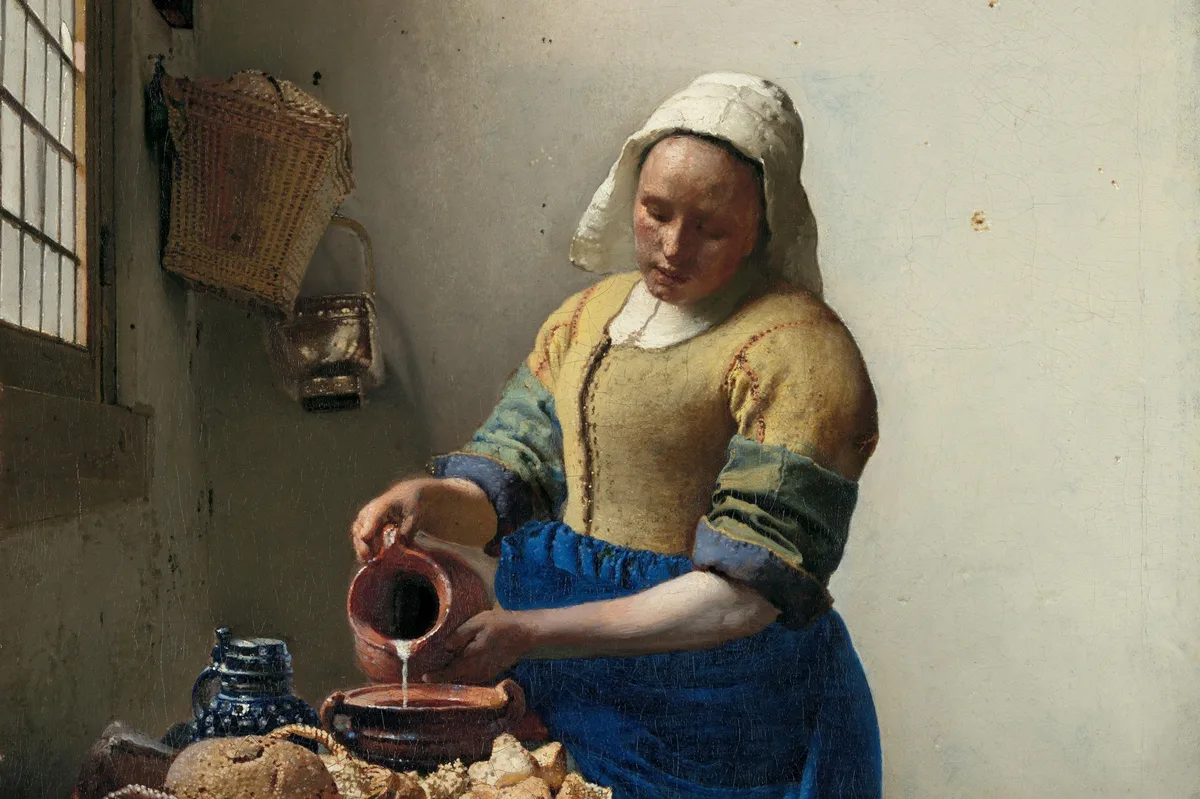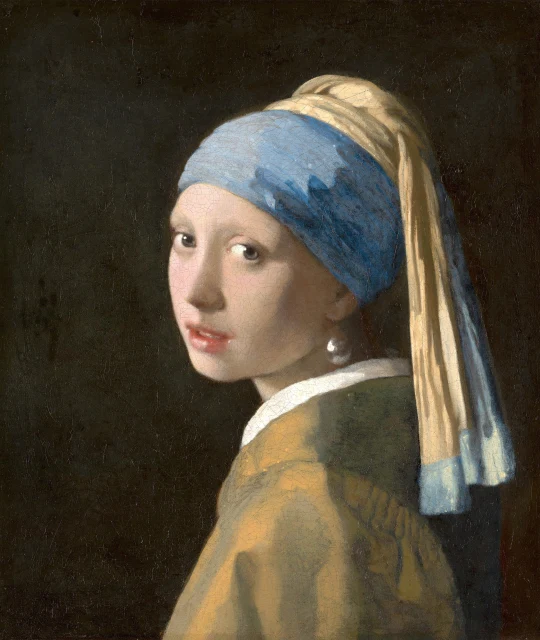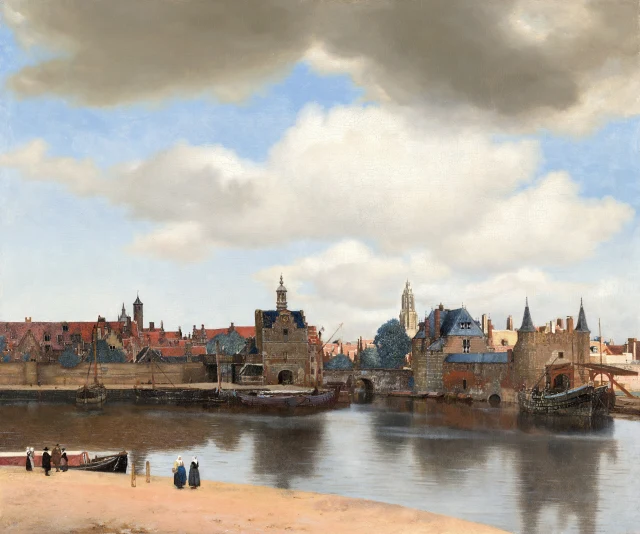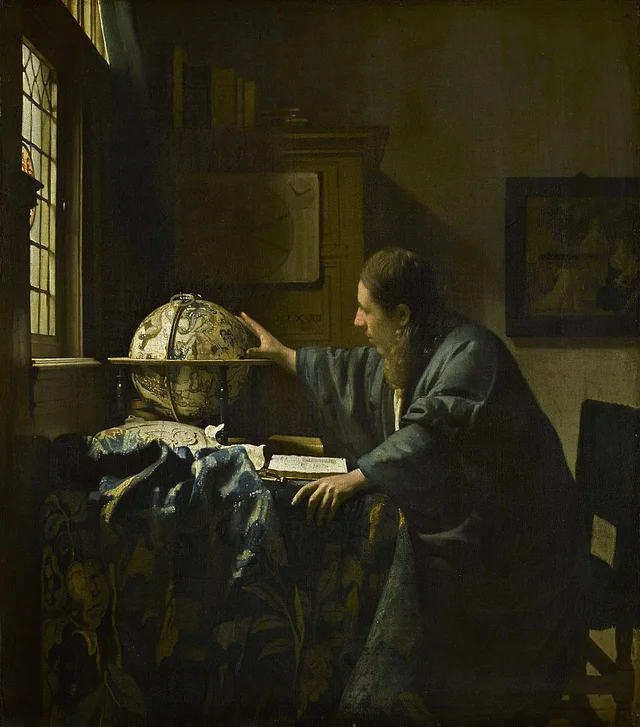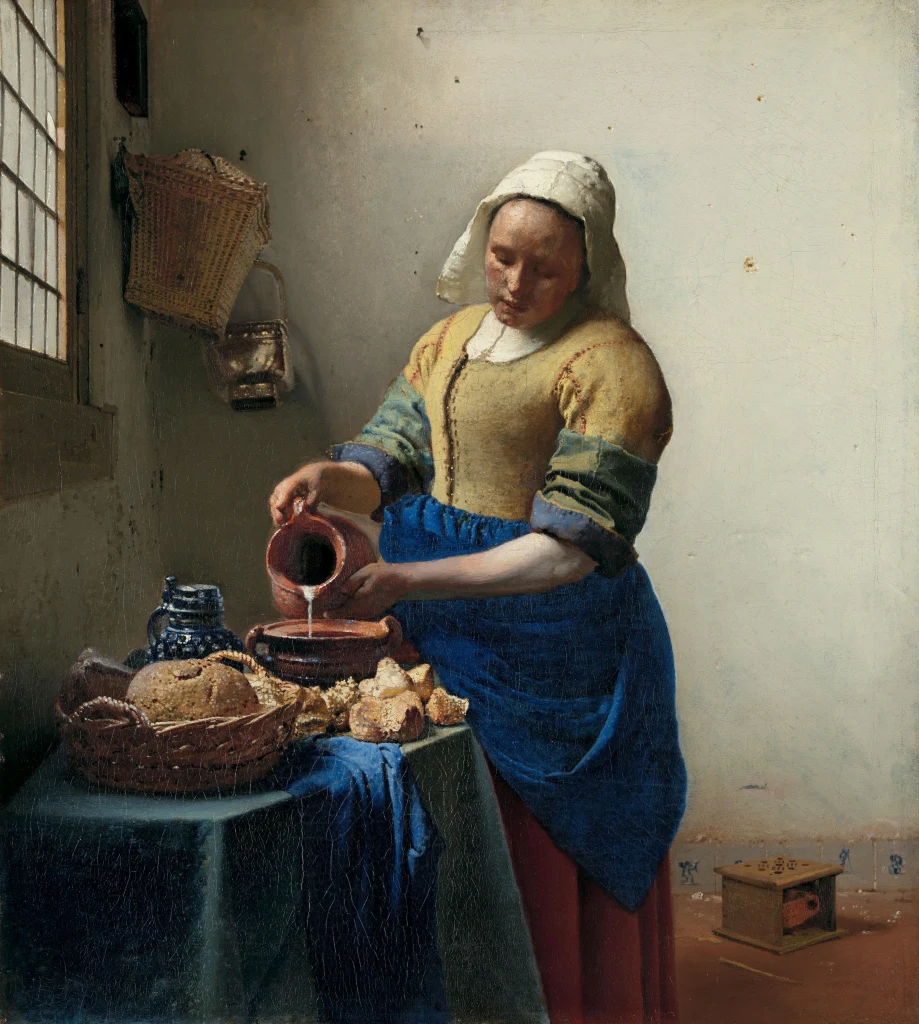
Johannes Vermeer, The Milkmaid, 1660. Wikimedia Commons. · PD
The Milkmaid
Details
The story
Vermeer painted this in Delft around 1658, and its subject could hardly be plainer, a kitchen servant pouring milk from a jug into a bowl. What he did with it was not plain at all. This is a moment most painters would not have bothered to record, a working woman in a bare corner, yet Vermeer gives her the still weight of a statue and pours light across her from the window on the left. Look at the wall behind her, dented and nail-marked, and at the crust of bread on the table, built up from tiny bright dots of paint so that it seems to catch the light grain by grain. Down at floor level, near her feet, are small blue-and-white Delft tiles, and one of them shows Cupid, a quiet hint of love tucked into an otherwise sober scene. She is caught in mid-pour, the thin stream of milk frozen in the air, the one thing moving in a room where everything else has gone completely still. Delft was a modest Dutch town living well off trade, and this is what its ordinary prosperity looked like from the kitchen.