Théodore Géricault · PD
The Raft of the Medusa
Details
The story
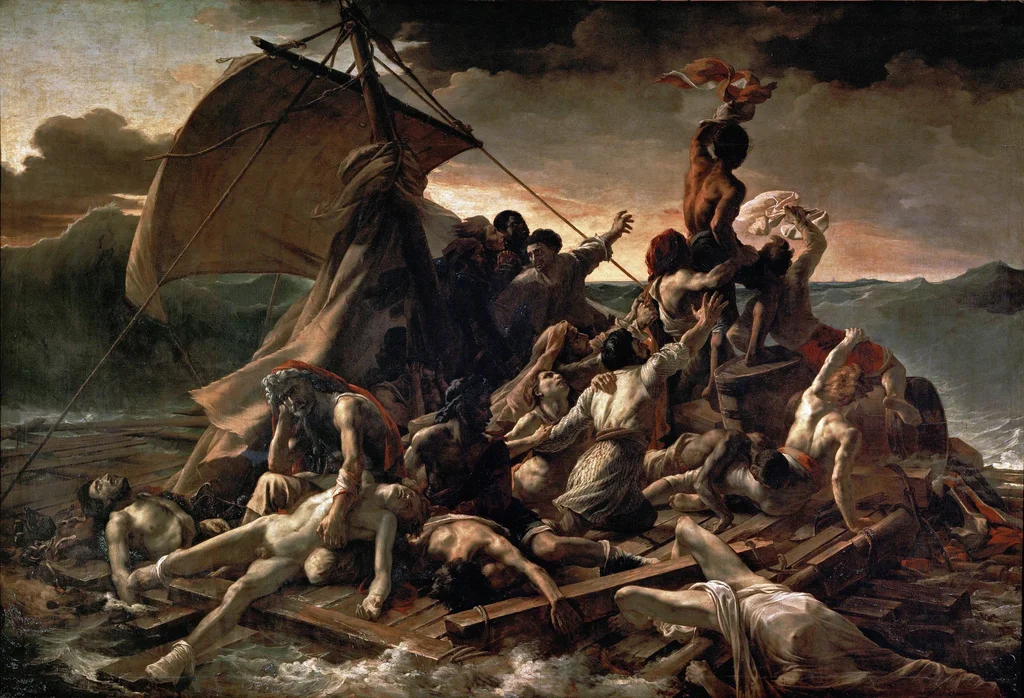
In July 1816 a French naval frigate, the Meduse, ran aground off the coast of West Africa, and its captain, a returned royalist who had barely sailed in twenty years, owed his command to court favour rather than skill. There were not enough boats, so at least a hundred and fifty people were put onto a hastily lashed raft and towed, then cut loose. Thirteen days later fifteen were still alive, having survived through starvation, madness and cannibalism. The wreck became a national scandal, and Gericault, then in his late twenties, chose it deliberately over the noble ancient subjects painters were expected to use. He interviewed survivors, had a model of the raft built, and studied real corpses to get the flesh right. What he painted, finished in 1819, is the moment the survivors first spot a ship on the horizon, a tiny smudge in the distance, and strain to be seen. The pile of bodies in the foreground and the desperate reaching arms build up toward that faint speck. The Louvre bought the enormous canvas soon after Gericault died, at the age of thirty-two.