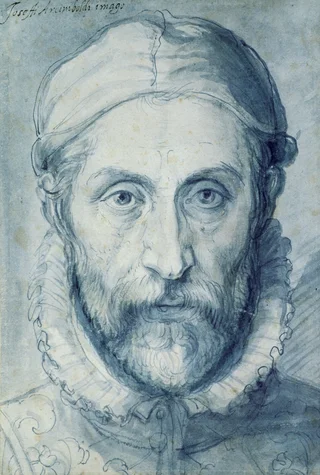
Giuseppe Arcimboldo
1527–1593 · Ducado de Milán · Manierismo
La historia
En 1562 Giuseppe Arcimboldo dejó una carrera diseñando vidrieras y frescos para la catedral de Milán, en Italia, y viajó al norte, a Viena, en Austria, para convertirse en retratista de corte del emperador del Sacro Imperio Romano Fernando I. Permaneció al servicio imperial unos 25 años, primero en Viena y más tarde en Praga, hoy capital de la República Checa, bajo el hijo de Fernando, Maximiliano II, y luego su nieto Rodolfo II.
El puesto no consistía solo en pintar semblanzas. Arcimboldo diseñaba desfiles, torneos y fiestas cortesanas, y construía artilugios mecánicos para diversión de los emperadores, un trabajo que corría paralelo a las pinturas por las que se le recuerda hoy: retratos construidos por entero con objetos, un rostro ensamblado a partir de frutas, verduras, peces o libros, dispuestos de modo que la composición se lee como una persona a la distancia. Su serie de Las cuatro estaciones, hecha hacia 1563 para Maximiliano II, convirtió el paso del año en cuatro de esos rostros compuestos.
El más célebre de ellos, Vertumno, pintado hacia 1591, representaba al propio Rodolfo II como el dios romano de las estaciones, formado con uvas, peras, mazorcas de maíz y otros frutos de la cosecha, un retrato del emperador como fuente de la abundancia del imperio. Arcimboldo regresó a su Milán natal en 1587 y murió allí seis años después.
Más artículos
Obras
15 obras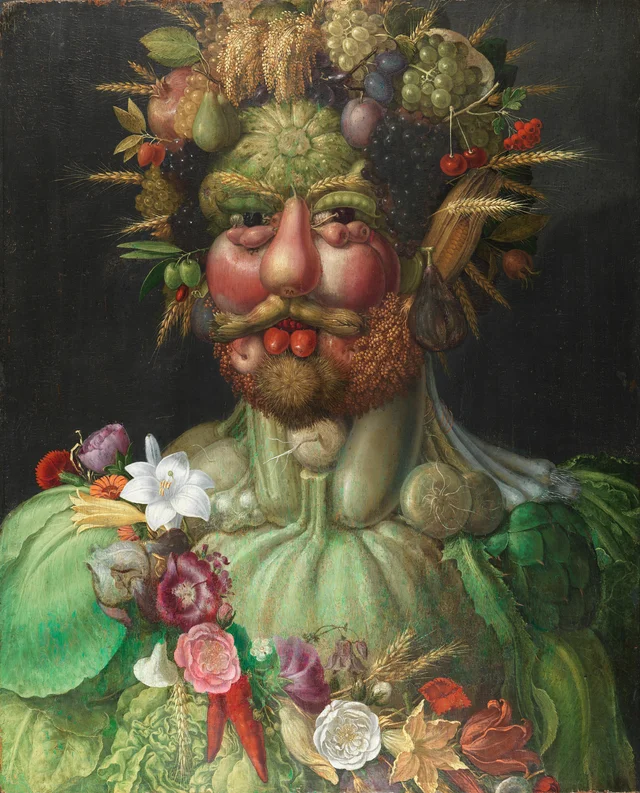 Rodolfo II como VertumnoGiuseppe Arcimboldo, 1591
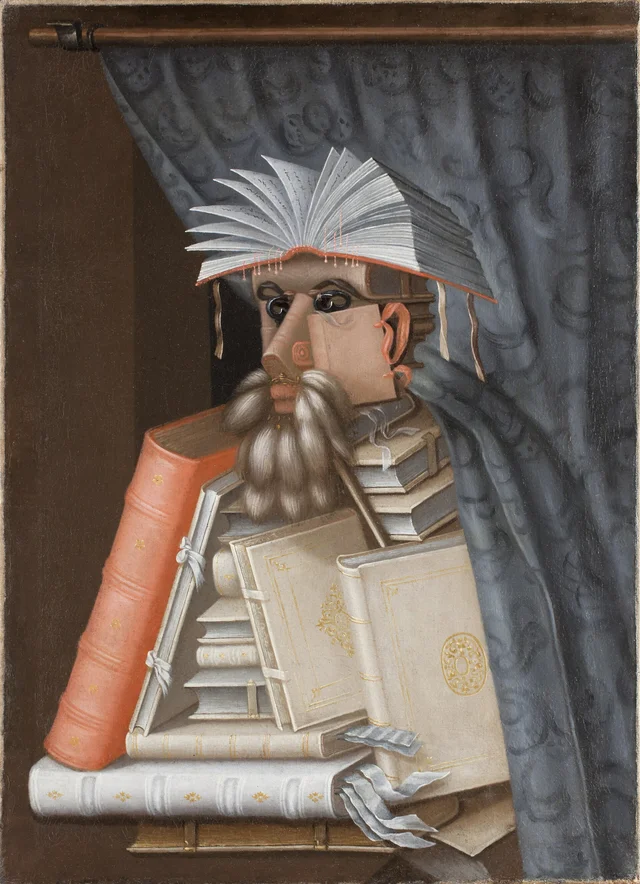 El bibliotecarioGiuseppe Arcimboldo, 1566
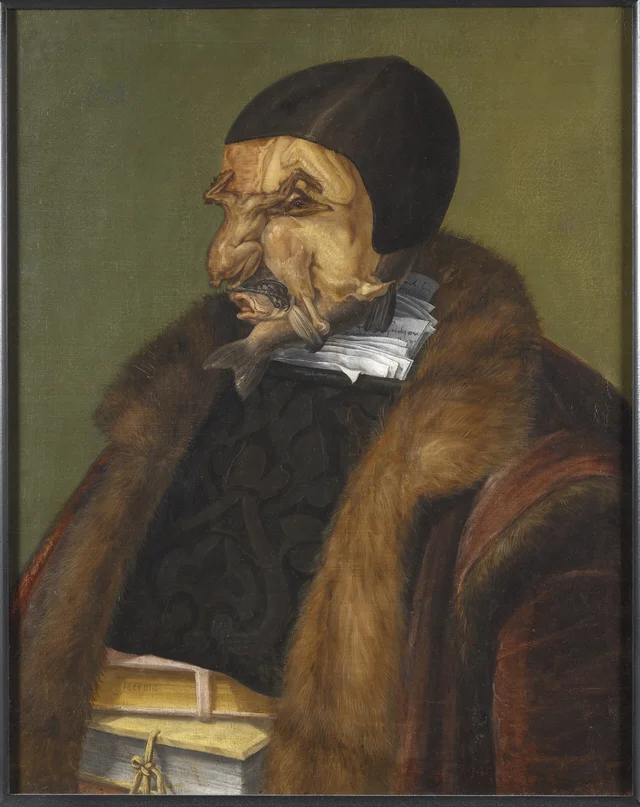 El juristaGiuseppe Arcimboldo, 1566
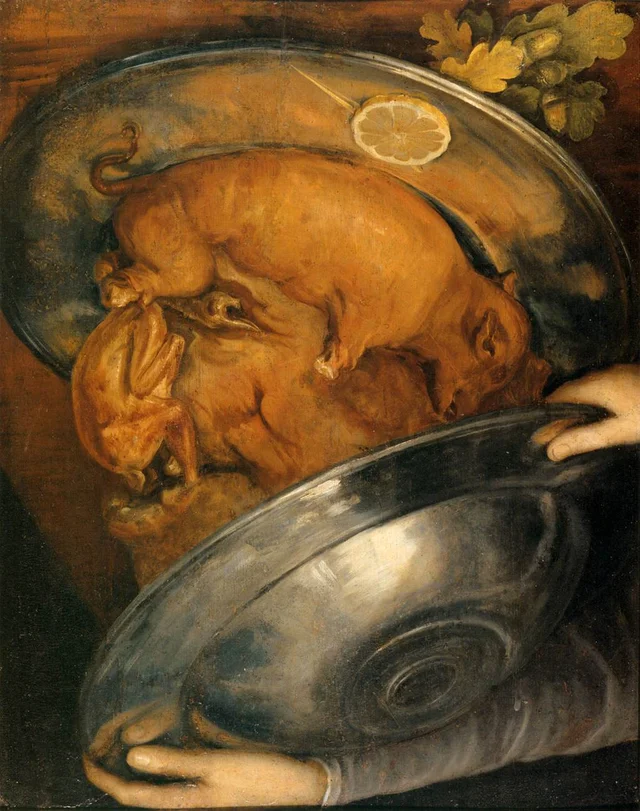 El cocineroGiuseppe Arcimboldo, 1570
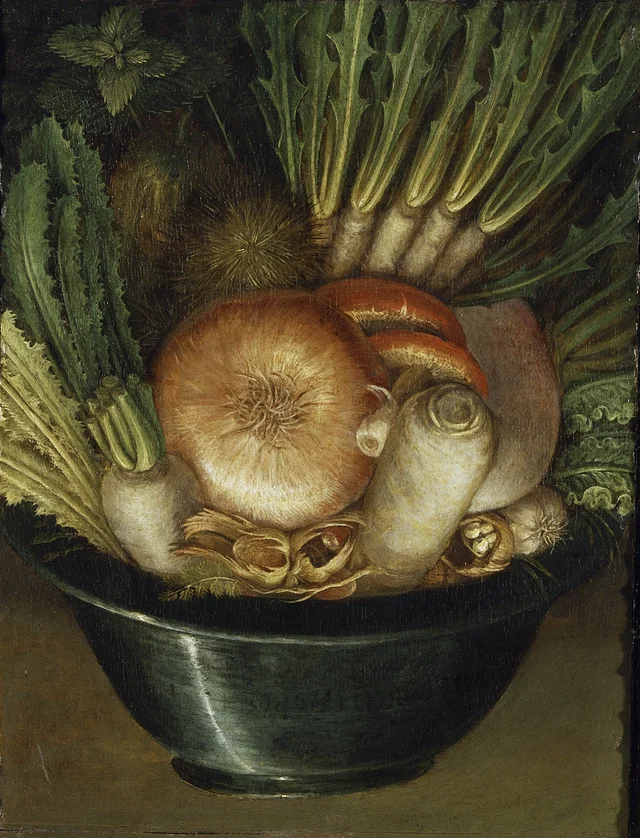 El hortelanoGiuseppe Arcimboldo, 1587
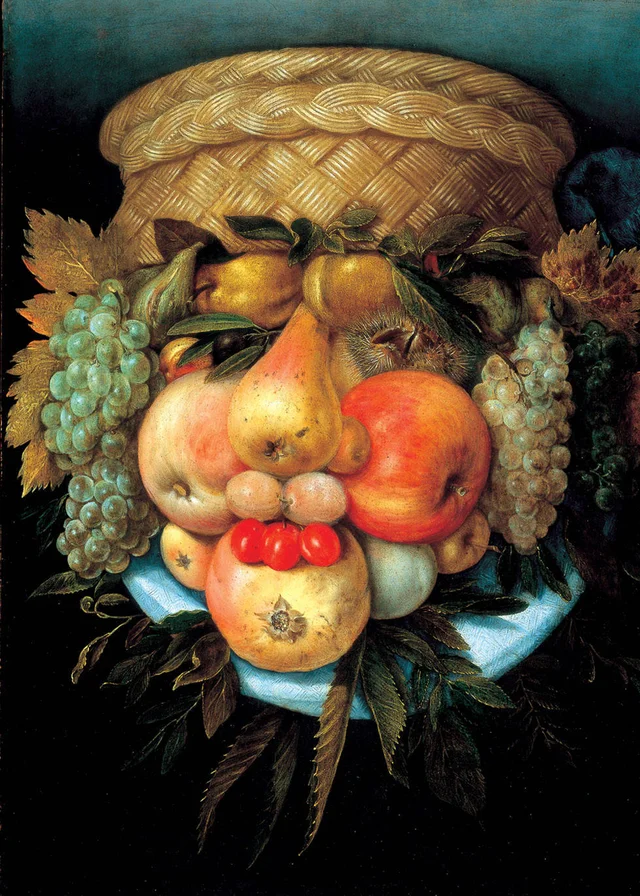 La cesta de frutaGiuseppe Arcimboldo, 1590
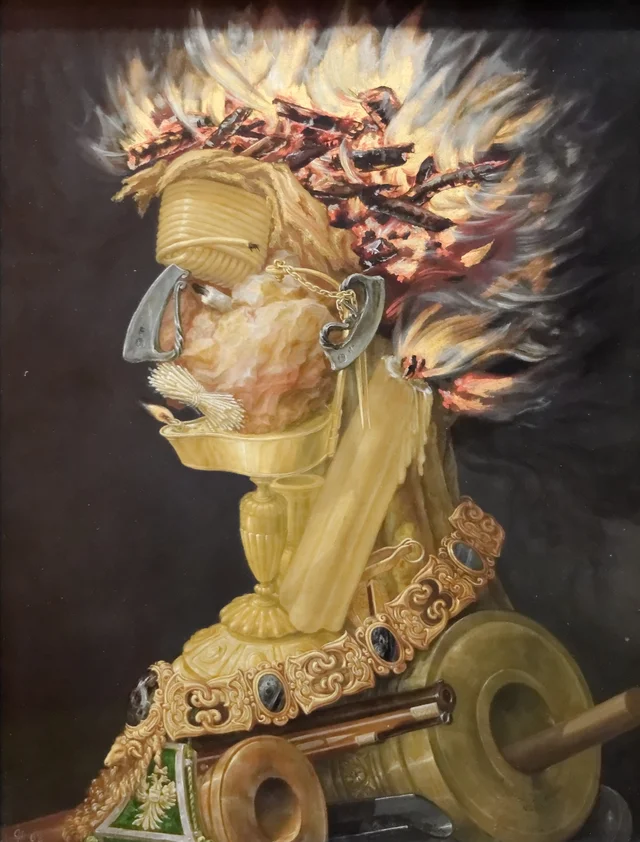 FuegoGiuseppe Arcimboldo, 1566
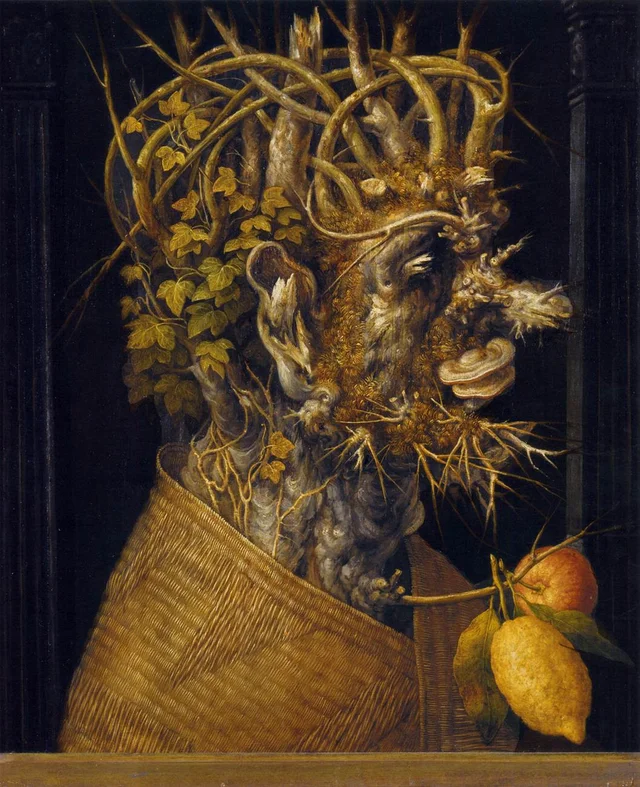 Alegoría del inviernoGiuseppe Arcimboldo, 1557
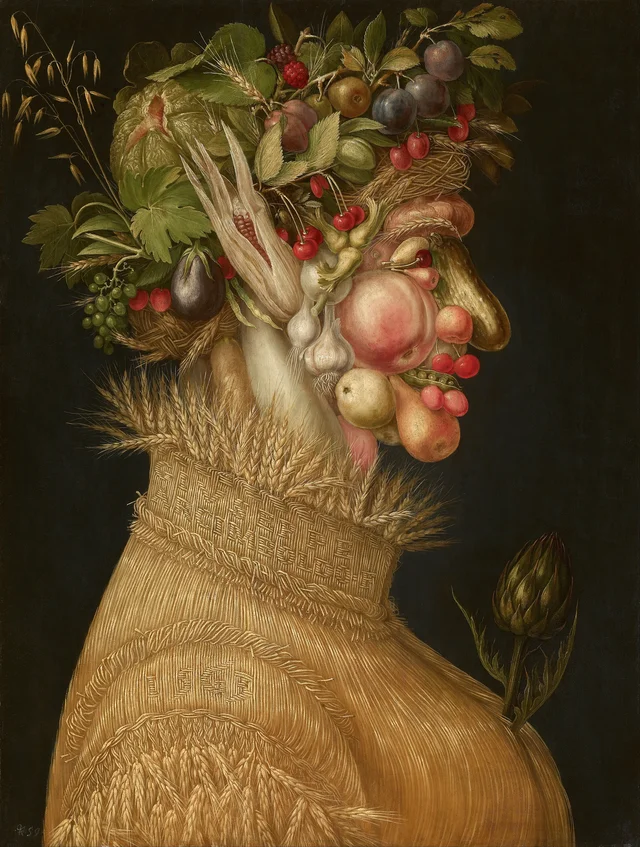 VeranoGiuseppe Arcimboldo, 1563
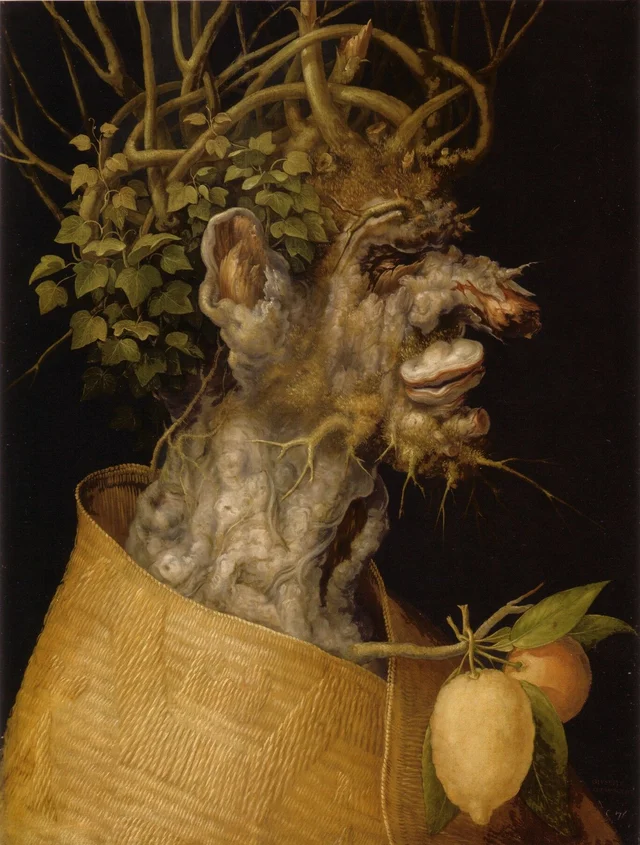 InviernoGiuseppe Arcimboldo, 1563
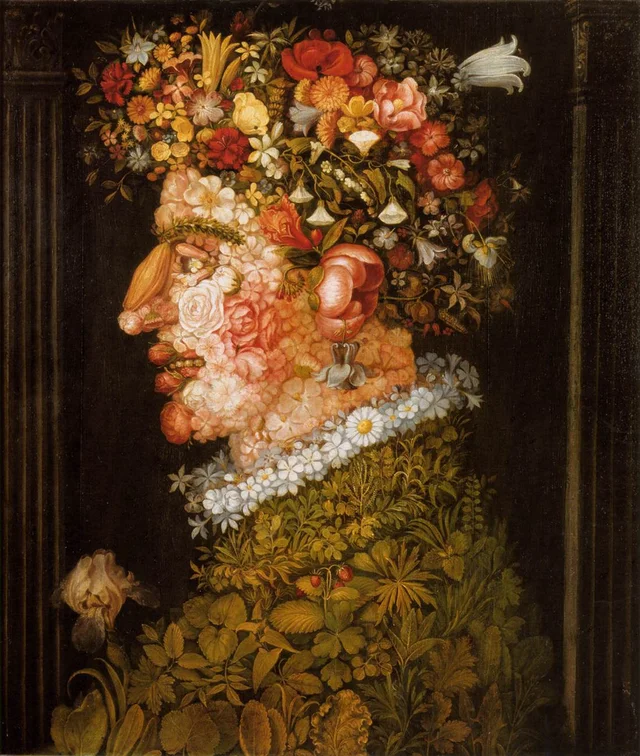 Alegoría de la PrimaveraGiuseppe Arcimboldo, 1557
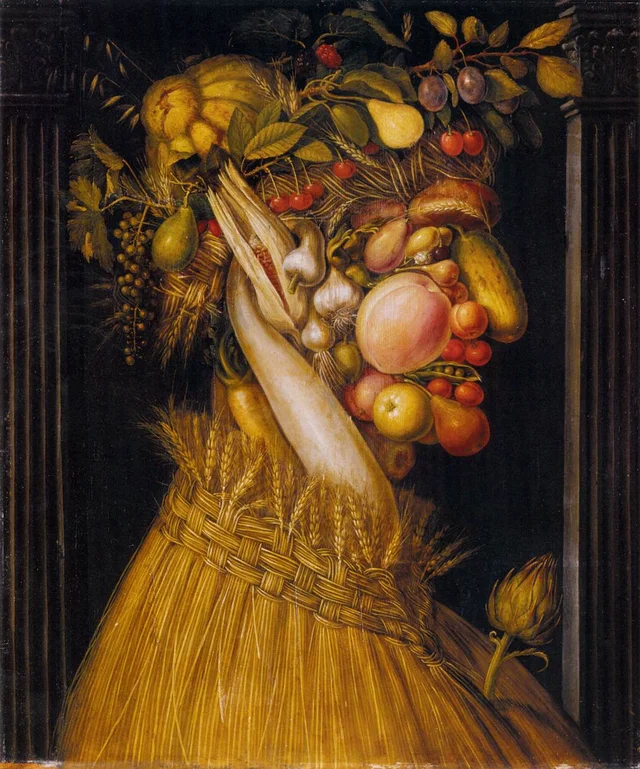 Alegoría del veranoGiuseppe Arcimboldo, 1557
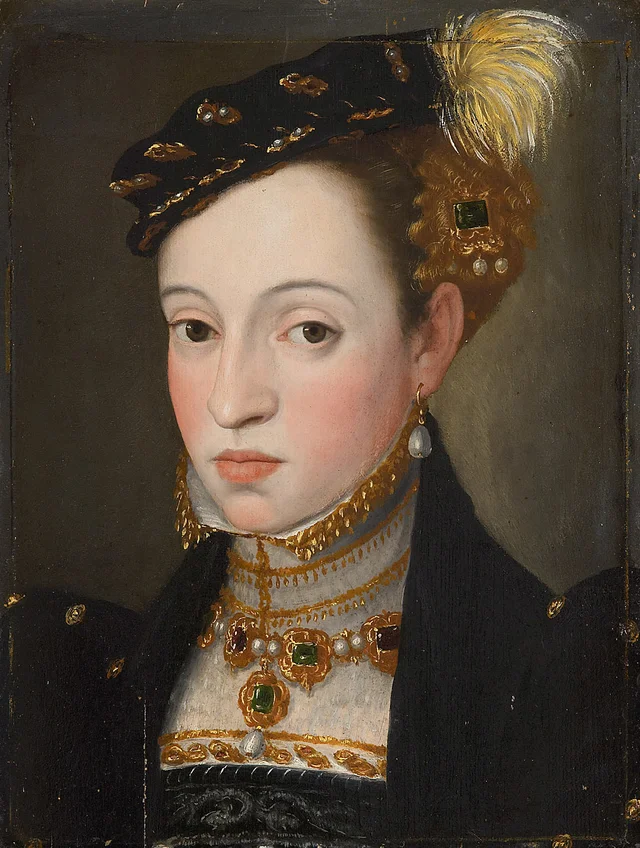 Archiduquesa Magdalena (1532-1590)Giuseppe Arcimboldo, 1563
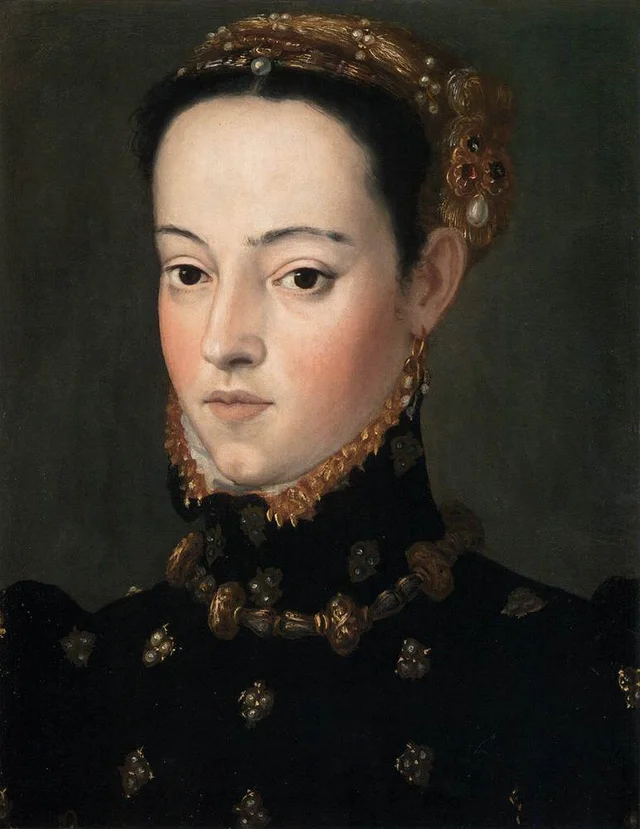 Retrato de una archiduquesa (¿archiduquesa Helena o Bárbara?)Giuseppe Arcimboldo, 1563
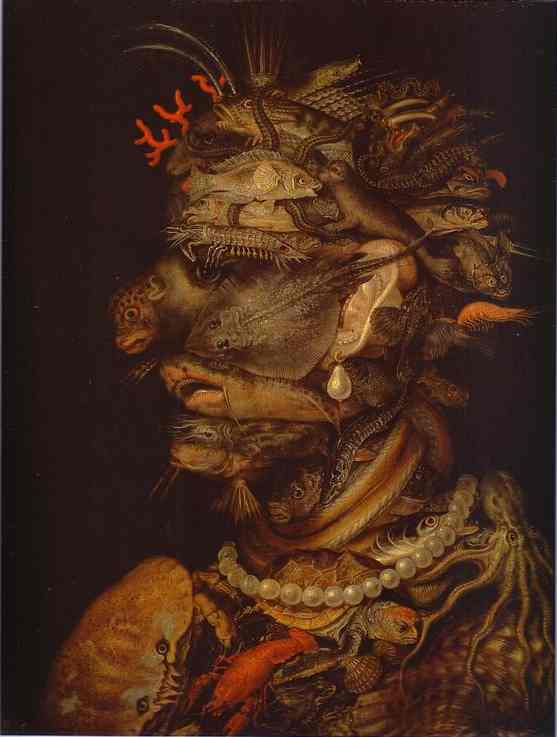 AguaGiuseppe Arcimboldo, 1566