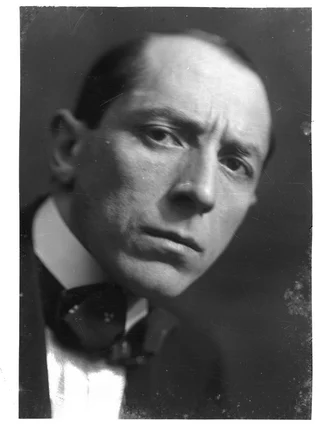
Umberto Boccioni
1882–1916 · Reino de Italia · Futurismo
La historia
La obra más conocida de Umberto Boccioni es una figura de bronce a grandes zancadas titulada 'Formas únicas de continuidad en el espacio', de 1913. No tiene rostro ni miembros definidos, con las superficies estiradas y abiertas como si el cuerpo se remodelara por su propia velocidad. Quería mostrar un cuerpo en el acto de moverse, el movimiento mismo hecho sólido.
Boccioni fue el motor del futurismo, el movimiento italiano que veneraba las máquinas, la velocidad y la ciudad moderna y quería barrer los viejos museos. Pintó multitudes, tráfico y luz eléctrica, y un gran lienzo, 'La ciudad que asciende' de 1910, se construye en torno a un enorme caballo de tiro rojo que se lanza hacia delante mientras unos hombres pugnan por retenerlo.
En 1915 se alistó como voluntario en la guerra. En agosto de 1916, durante unas maniobras de caballería cerca de Verona, su caballo se desbocó y lo derribó, y murió al día siguiente a los 33 años. Había llamado a aquel caballo Vermiglia, bermellón, por el caballo rojo de su propio cuadro. Su figura de bronce a zancadas está hoy acuñada en la moneda italiana de 20 céntimos de euro.
Más artículos
Obras
8 obras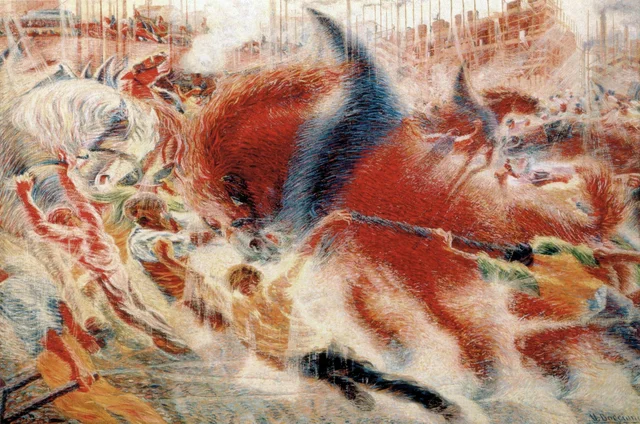 La ciudad se levantaUmberto Boccioni, 1910
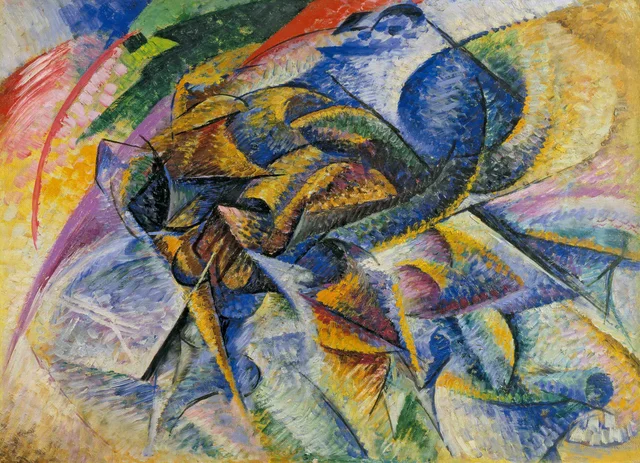 Dinamismo de un ciclistaUmberto Boccioni, 1913
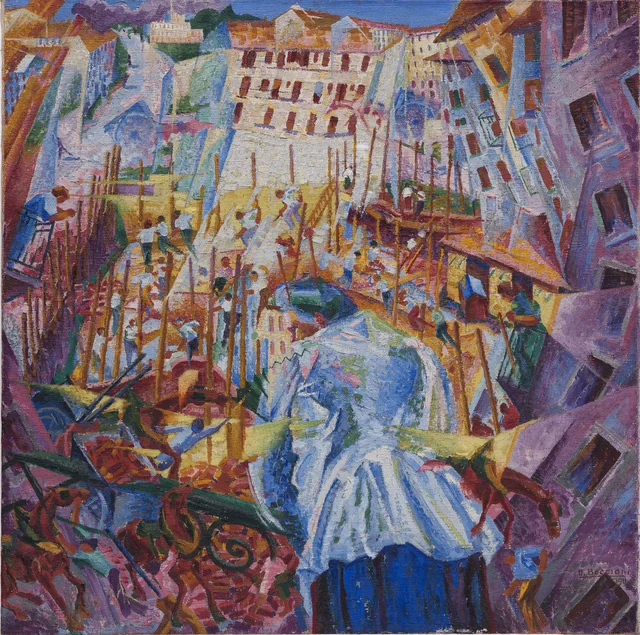 La calle entra en la casaUmberto Boccioni, 1911
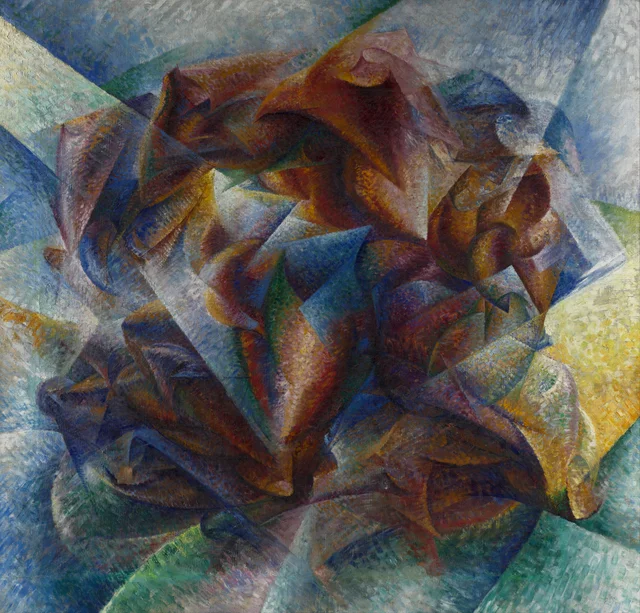 Dinamismo de un jugador de fútbolUmberto Boccioni, 1913
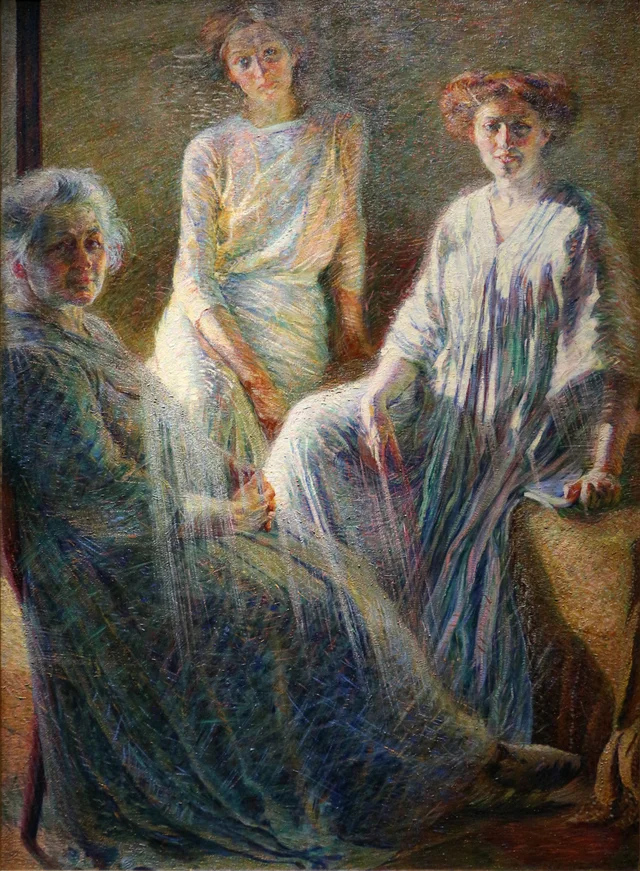 Tres mujeresUmberto Boccioni, 1909
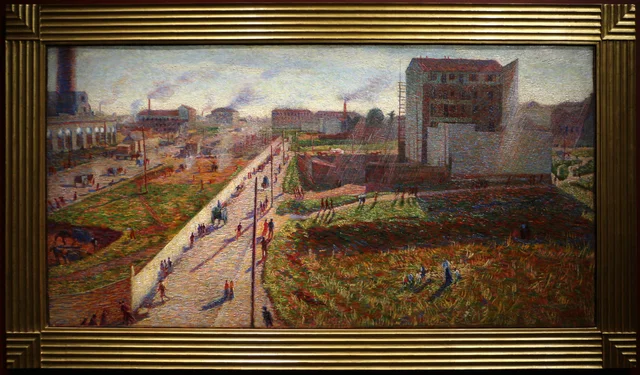 Talleres en Porta RomanaUmberto Boccioni, 1909
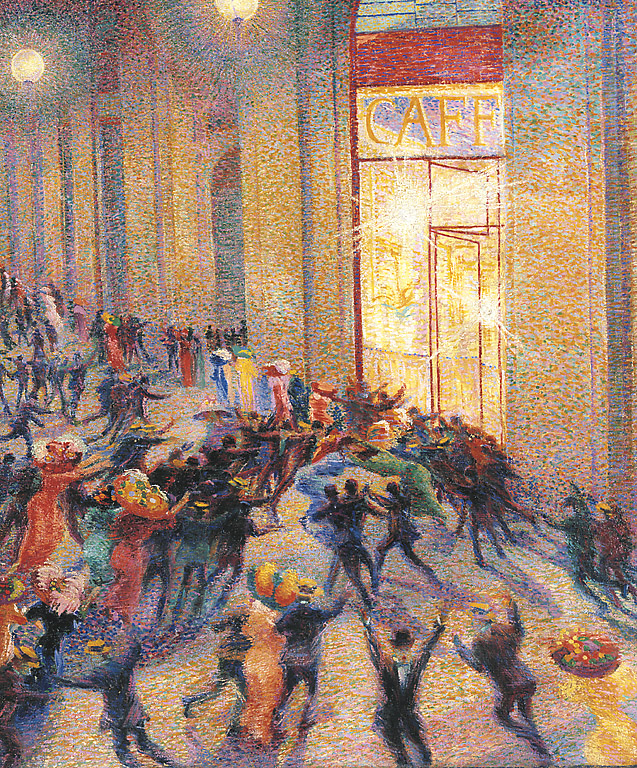 Riña en la galeríaUmberto Boccioni, 1910
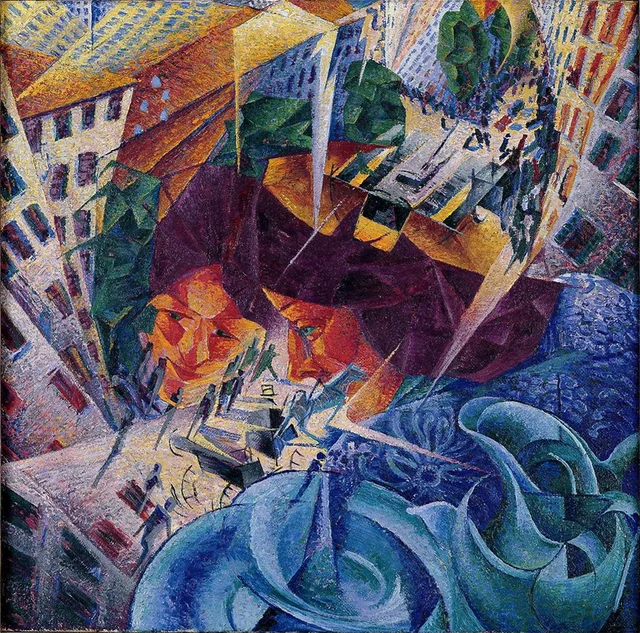 Visiones simultáneasUmberto Boccioni, 1912