Umberto Boccioni · PD
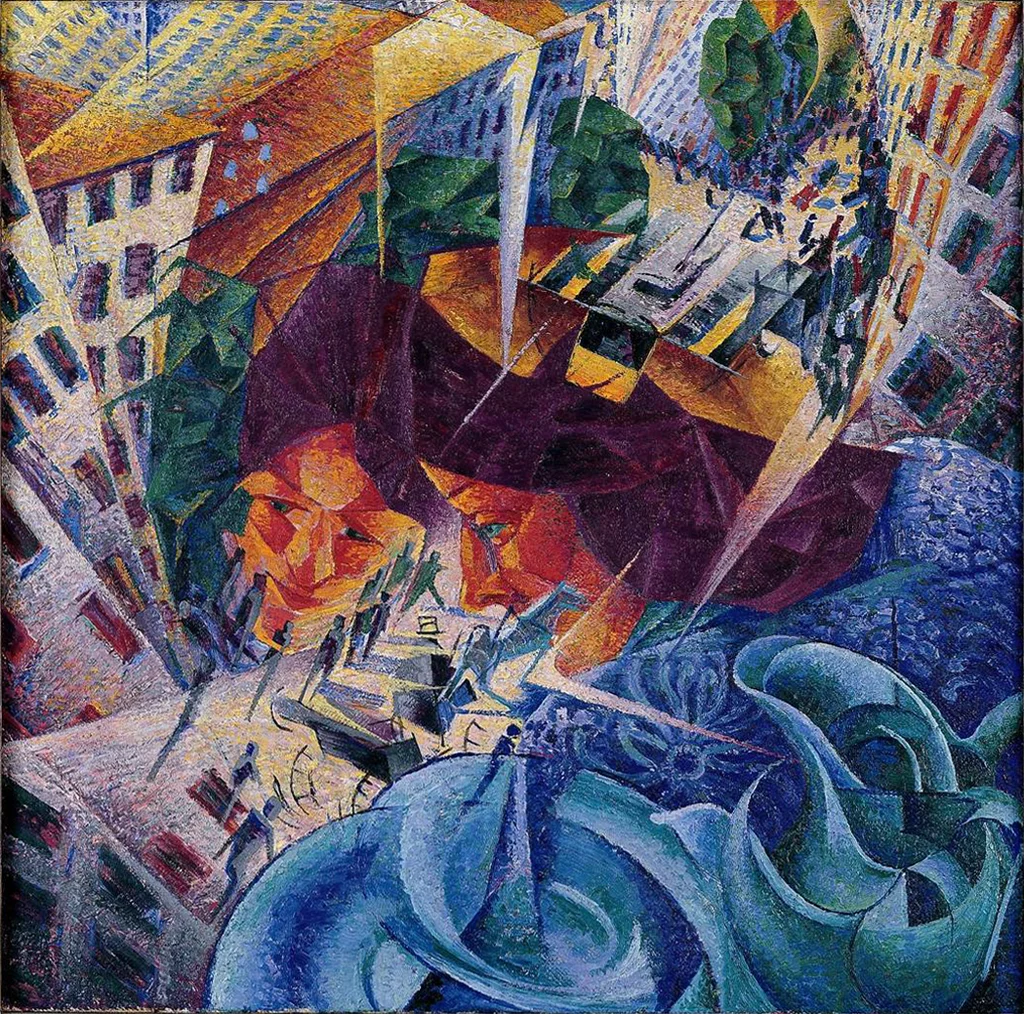
Visions simultanées
Détails
L'histoire
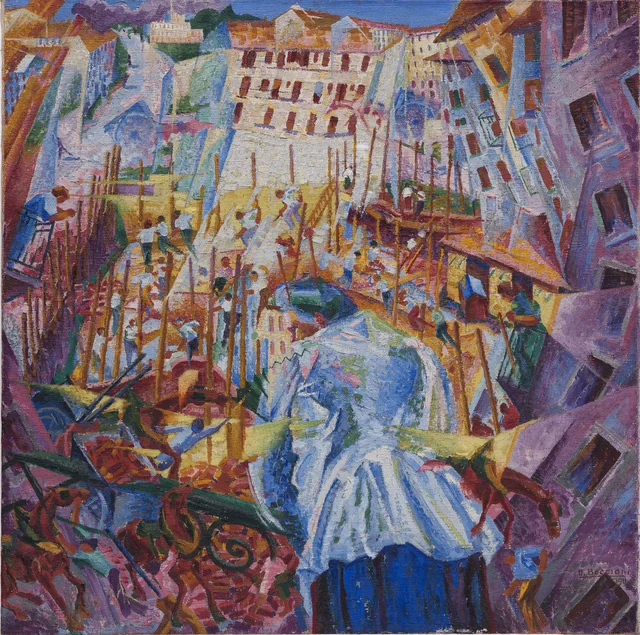
En février 1912, les futuristes italiens débarquent à Paris avec leur première grande exposition, résolus à imposer leur art de la vitesse et de la ville moderne. Boccioni peint cette même année cette toile carrée d'à peine 60 centimètres de côté. Une femme, vue de dos, se penche à la rambarde d'un balcon, et de là la ville tout entière semble fondre sur elle. Les maisons, une rue, la rumeur de la place se fragmentent et se chevauchent, et les verticales se tordent. C'est ce que les futuristes appelaient la simultanéité: réunir dans une seule image tout ce qui se voit, se remémore et se ressent en même temps. Boccioni, la tête théoricienne du groupe, mourra peu après, en 1916, à seulement 33 ans. L'œuvre est conservée au Von der Heydt Museum de Wuppertal.