ルイ・ダゲール
1787–1851 · フランス · 写真, ロマン主義, 舞台美術
ストーリー
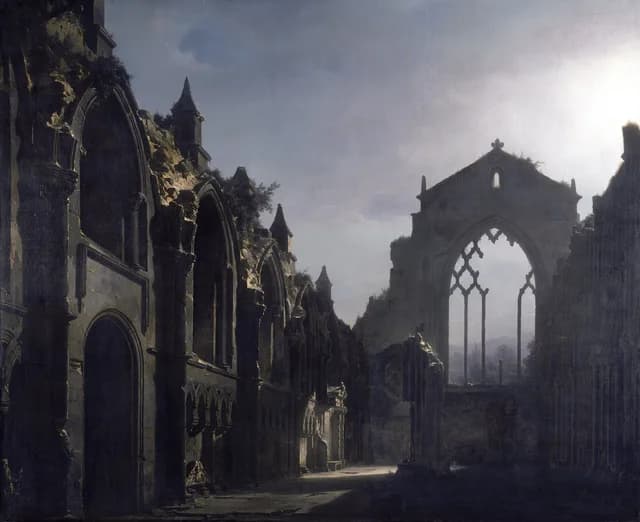
Louis Daguerre spent the first half of his career as a scene painter for the Paris Opera and as co-inventor, with the painter Charles-Marie Bouton, of the diorama, a theatre built around giant painted canvases lit from different angles to simulate sunrise, fire, or moonlight for a paying public seated on a slowly rotating platform. It opened in 1822 and made him famous in Paris 17 years before the invention that eclipsed it.
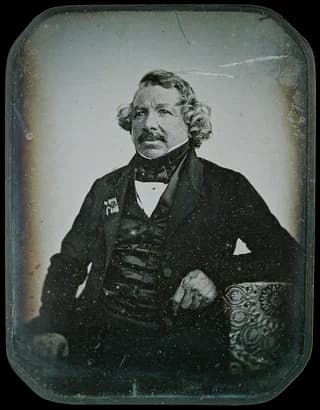
That skill with light and illusion is what pulled him toward photography. In 1829 he partnered with Nicéphore Niépce, who had already produced a crude permanent image on a pewter plate but needed about eight hours of exposure to do it. After Niépce died in 1833, Daguerre kept refining the chemistry alone and, by treating a silver-coated copper plate with iodine vapor and developing it in mercury fumes, cut the exposure time to around 20 or 30 minutes, short enough to photograph a person who could sit still.
The French government bought the process outright in 1839 and released it to the world for free, in exchange for a lifetime pension for Daguerre. He had by then largely left painting behind, though in his last decade, retired to the village of Bry-sur-Marne outside Paris, he returned to it, painting diorama-style scenes for the local church until his death in 1851.