ロベール・ドローネー
1885–1941 · フランス · オルフィスム
ストーリー
By 1909, the Eiffel Tower had stood over Paris for twenty years, an iron intruder city planners had once meant to tear down once its temporary building permit expired. Robert Delaunay, twenty-four and just settling back into the city after a term of military service spent as a regimental librarian, chose it as the subject of a series of paintings that would occupy him on and off for the rest of his career.
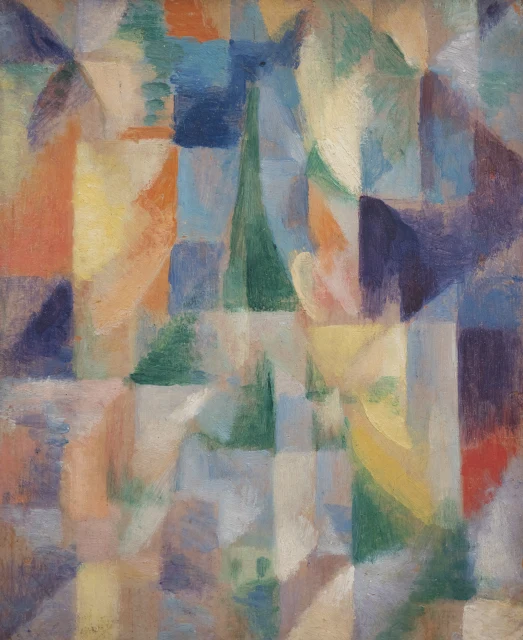
He and the painter Sonia Terk, who had left an unhappy marriage to a German art dealer to be with him, married in 1910 and worked out together the style critics later named Orphism, a branch of Cubism built from pure, singing color rather than the muted browns and greys of Picasso's and Braque's version. Where a Cubist tower fractures into flat planes, Delaunay's leans, buckles and glows red against fragments of sky, closer to a memory of the structure than a view of it.
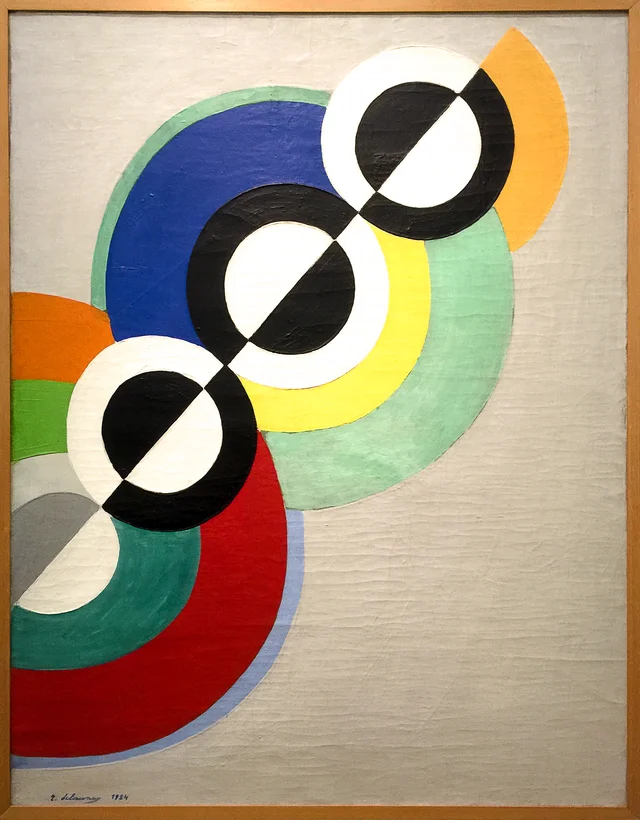
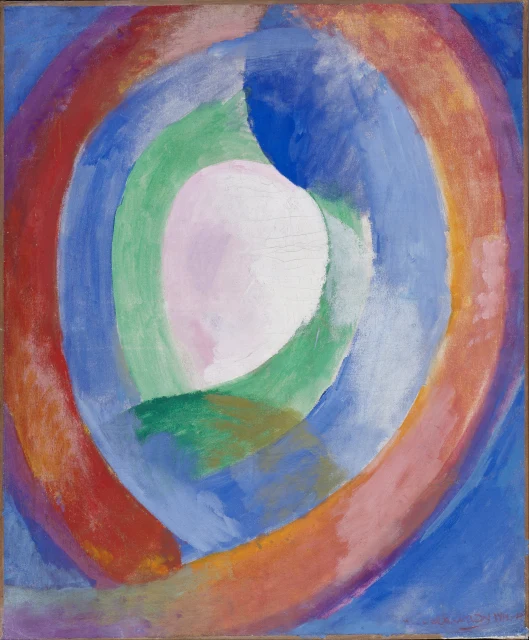
He kept returning to the tower into the 1920s, and in his later versions it dissolves into overlapping discs of color he called simultaneous contrasts, a color theory borrowed from the chemist Michel-Eugène Chevreul that Delaunay used for the rest of his career. He and Sonia fled Paris again after the German invasion of 1940, and Delaunay died the following year in the south of France, at 56.