August Strindberg
1849–1912 · Suécia · Naturalismo
A história
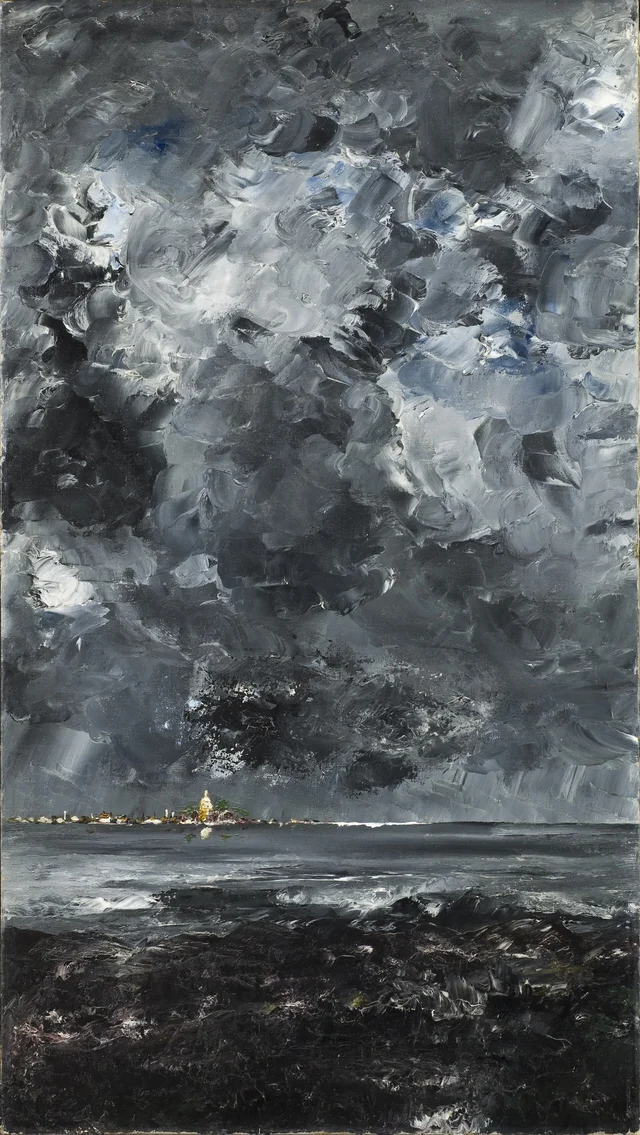
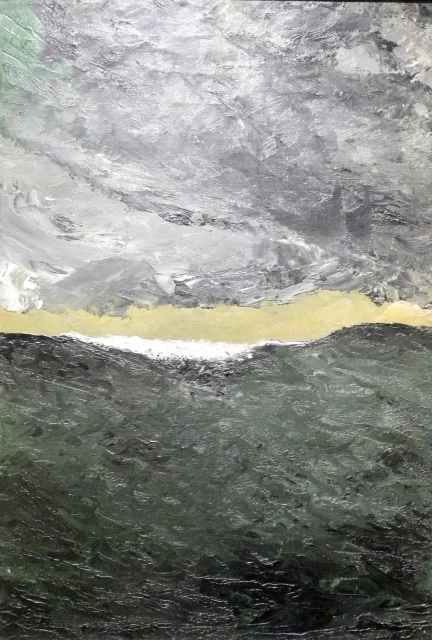
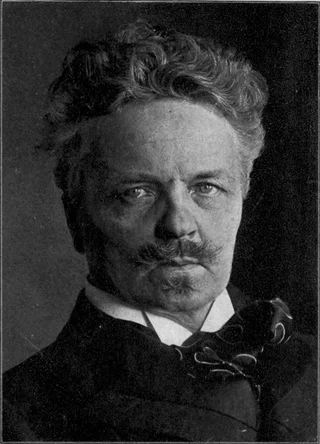
August Strindberg é conhecido sobretudo como escritor, o sueco que escreveu Senhorita Júlia e O Pai, peças que arrastaram o teatro europeu para uma crua guerra psicológica entre marido e mulher. No entanto, também foi pintor, e são as suas telas que estão penduradas aqui. Nunca teve formação, nunca aceitou uma encomenda e quase nada pintou além do mar e do céu sobre ele.
Pintava em surtos, e sempre em apuros. Quando um casamento desabava, quando a escrita secava ou quando sua mente cedia em Paris nos anos 1890, durante a crise que mais tarde relatou como seus anos "Inferno", largava a pena e pegava a espátula. Trabalhava depressa, raspando grossas camadas de tinta direto sobre a tábua e deixando o acaso compor metade do quadro. Num ensaio de 1894 fez disso um método: começar mais ou menos ao acaso e depois deixar que a própria inclinação da natureza para a forma terminasse o quadro.
O que saía eram pequenas marinhas violentas, em geral uma única onda ou um rochedo solitário sob uma parede de nuvens de tempestade, sem barcos e sem pessoas. Seus contemporâneos as trataram como o curioso passatempo de um autor célebre e em geral as ignoraram. Pintores que olharam para trás a partir do século seguinte viram um homem aplicando tinta com a faca e confiando no acaso, décadas antes de a arte abstrata fazer disso um movimento. Seus pequenos painéis tempestuosos, outrora quase invendáveis, hoje são vendidos por milhões e estão em museus como a Tate, em Londres, e o Museu d'Orsay, em Paris.