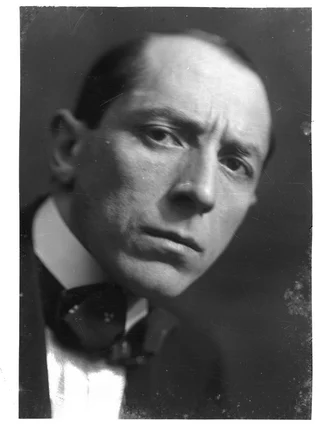
Umberto Boccioni
1882–1916 · Reino da Itália · Futurismo
A história
A obra mais conhecida de Umberto Boccioni é uma figura de bronze em passada larga chamada Formas Únicas de Continuidade no Espaço, feita em 1913. Não tem rosto nem membros nítidos, com as superfícies puxadas e abertas como se o corpo estivesse sendo remodelado pela própria velocidade. Ele queria mostrar um corpo no ato de se mover, o próprio movimento tornado sólido.
Boccioni foi a força motriz do Futurismo, o movimento italiano que idolatrava as máquinas, a velocidade e a cidade moderna e queria varrer os velhos museus. Pintava multidões, tráfego e luz elétrica, e uma grande tela, A Cidade que Sobe, de 1910, se organiza em torno de um enorme cavalo de tração vermelho que avança com força enquanto homens lutam para contê-lo.
Em 1915 alistou-se para a guerra. Em agosto de 1916, durante um treino de cavalaria perto de Verona, seu cavalo disparou e o derrubou, e ele morreu no dia seguinte, aos 33 anos. Havia batizado aquele cavalo de Vermiglia, vermelhão, em homenagem ao cavalo vermelho de sua própria pintura. Sua figura de bronze em passada larga está hoje cunhada na moeda italiana de 20 centavos de euro.
Mais artigos
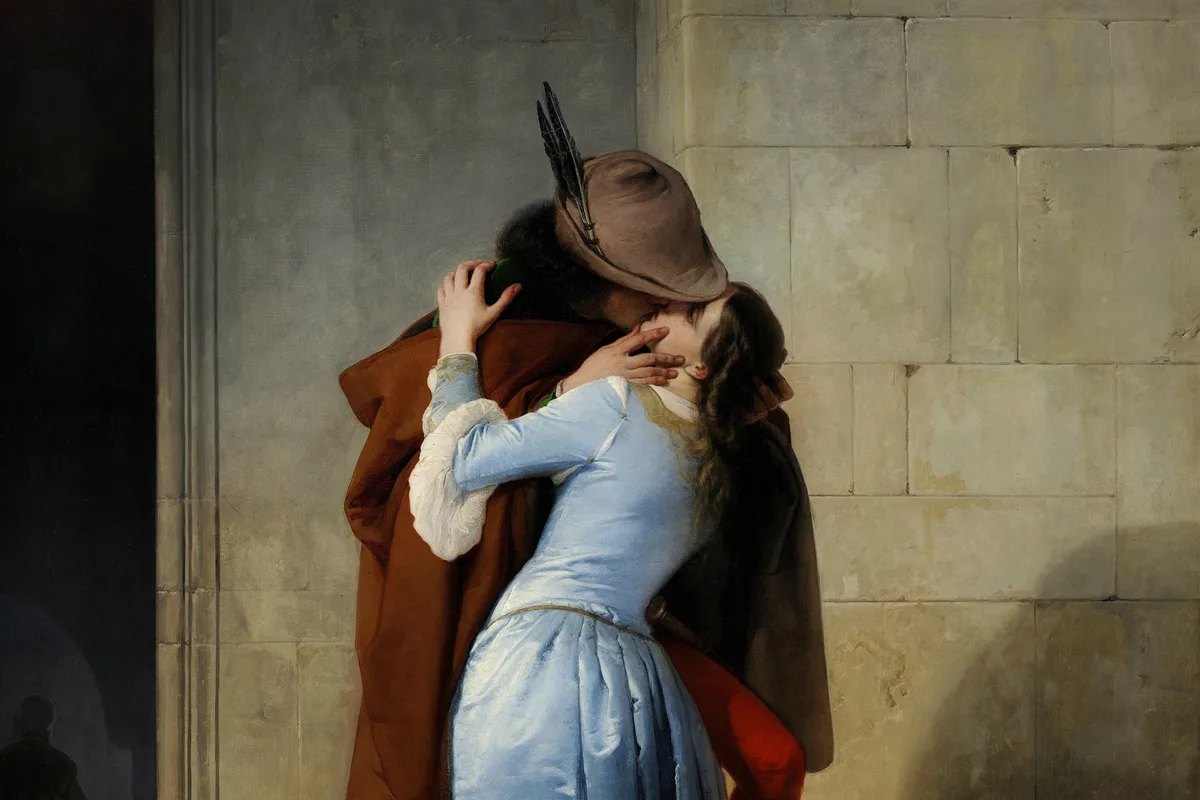
Obras
8 obras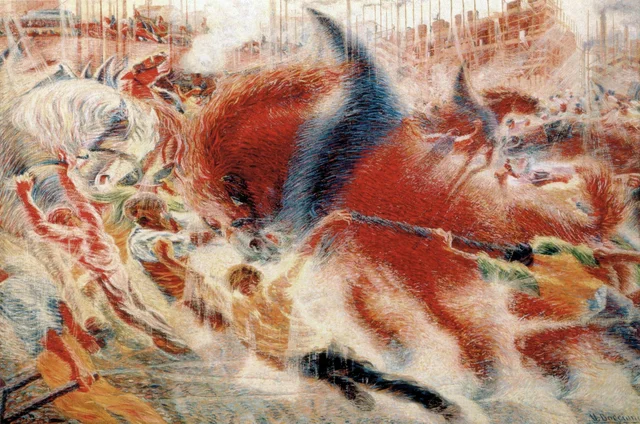 A Cidade que SobeUmberto Boccioni, 1910
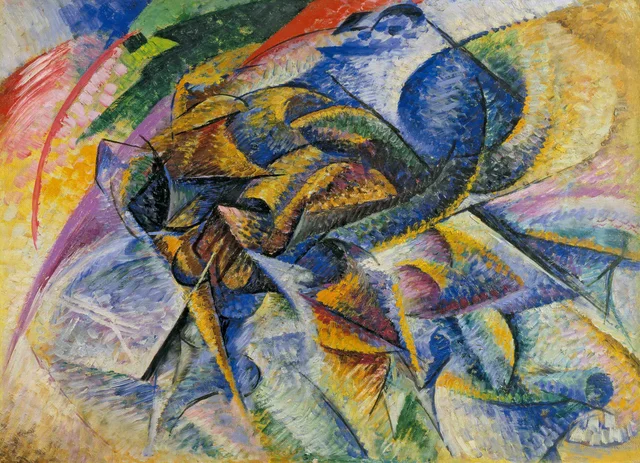 Dinamismo de um CiclistaUmberto Boccioni, 1913
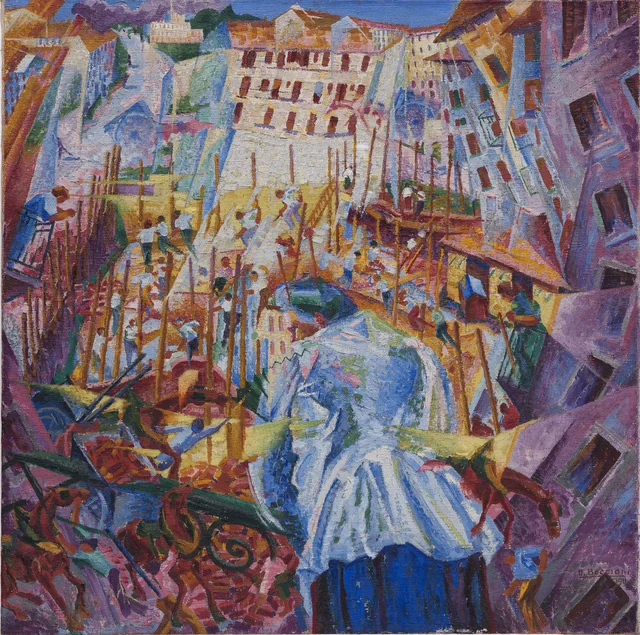 A Rua Entra na CasaUmberto Boccioni, 1911
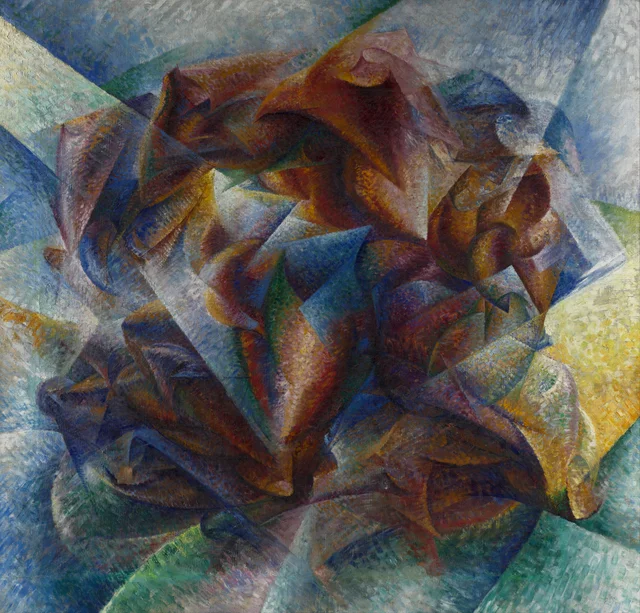 Dinamismo de um Jogador de FutebolUmberto Boccioni, 1913
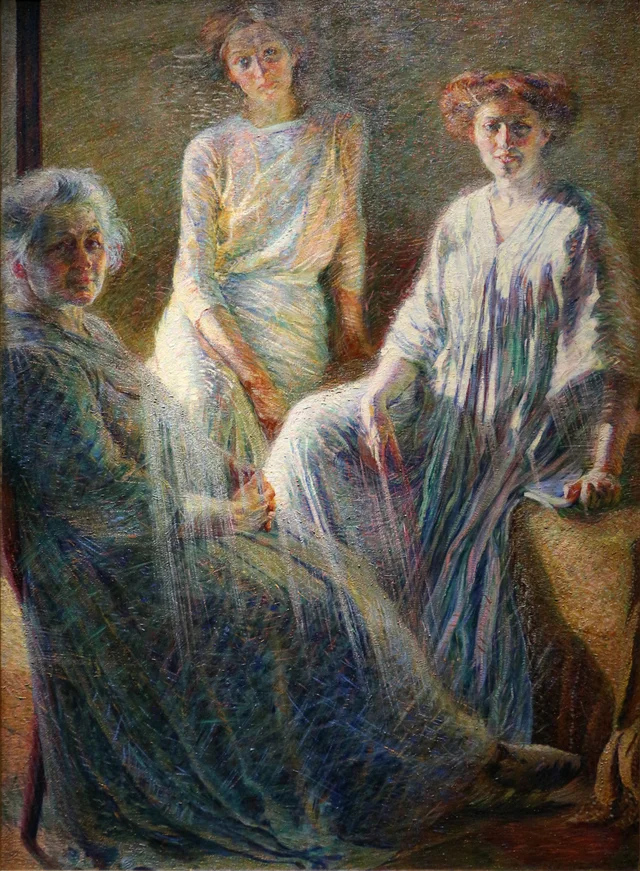 Três MulheresUmberto Boccioni, 1909
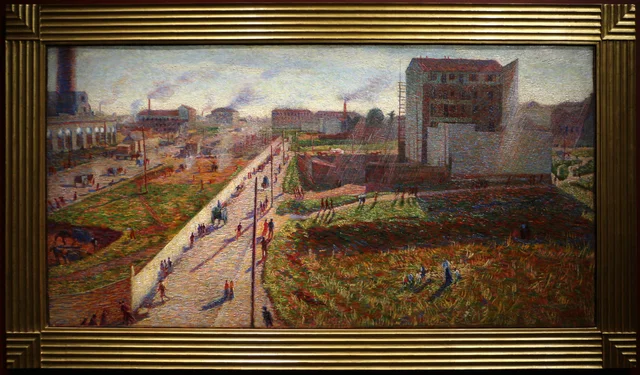 Fábricas na Porta RomanaUmberto Boccioni, 1909
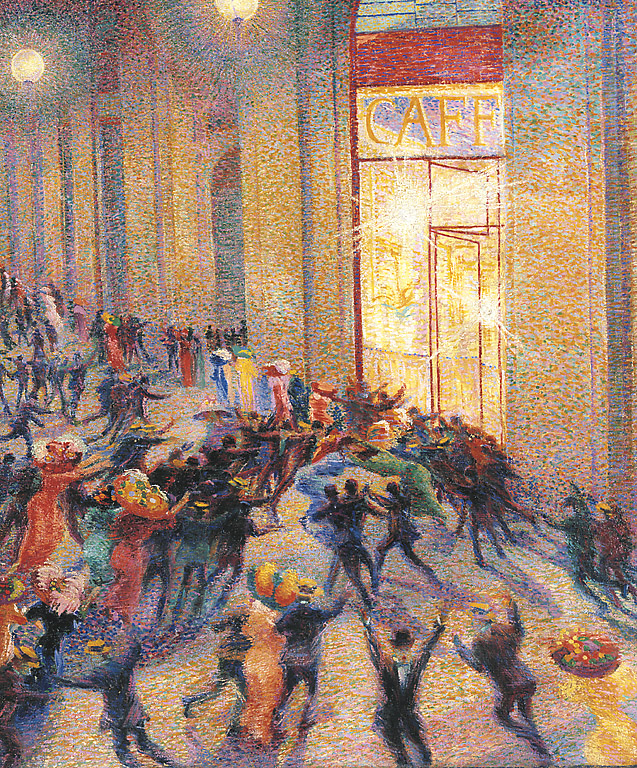 Tumulto na GaleriaUmberto Boccioni, 1910
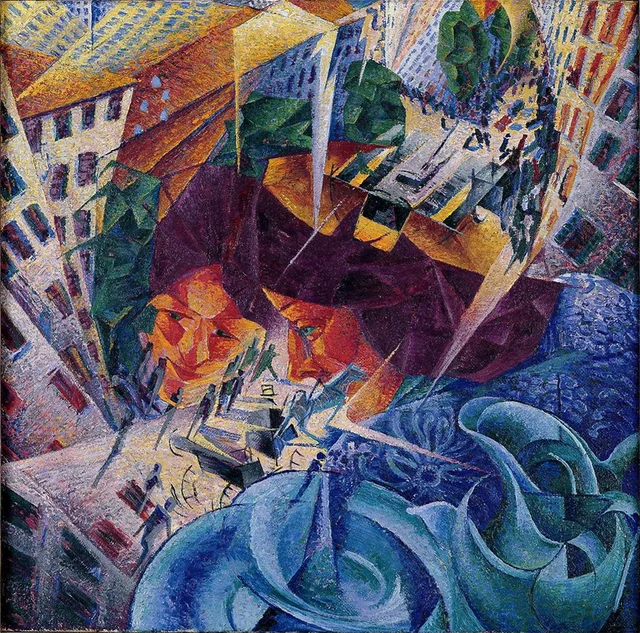 Visões simultâneasUmberto Boccioni, 1912