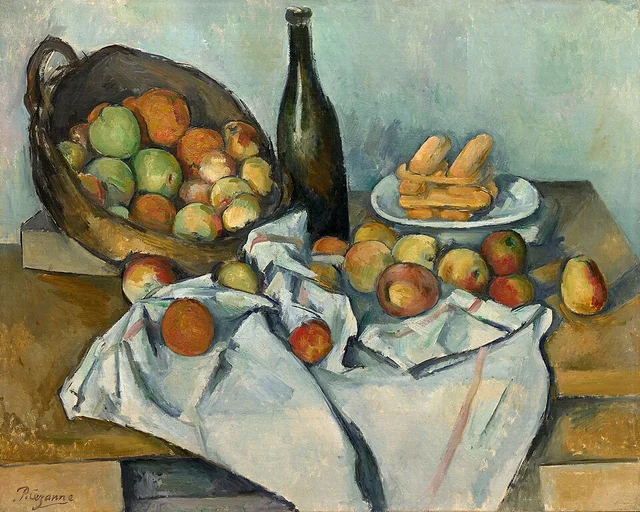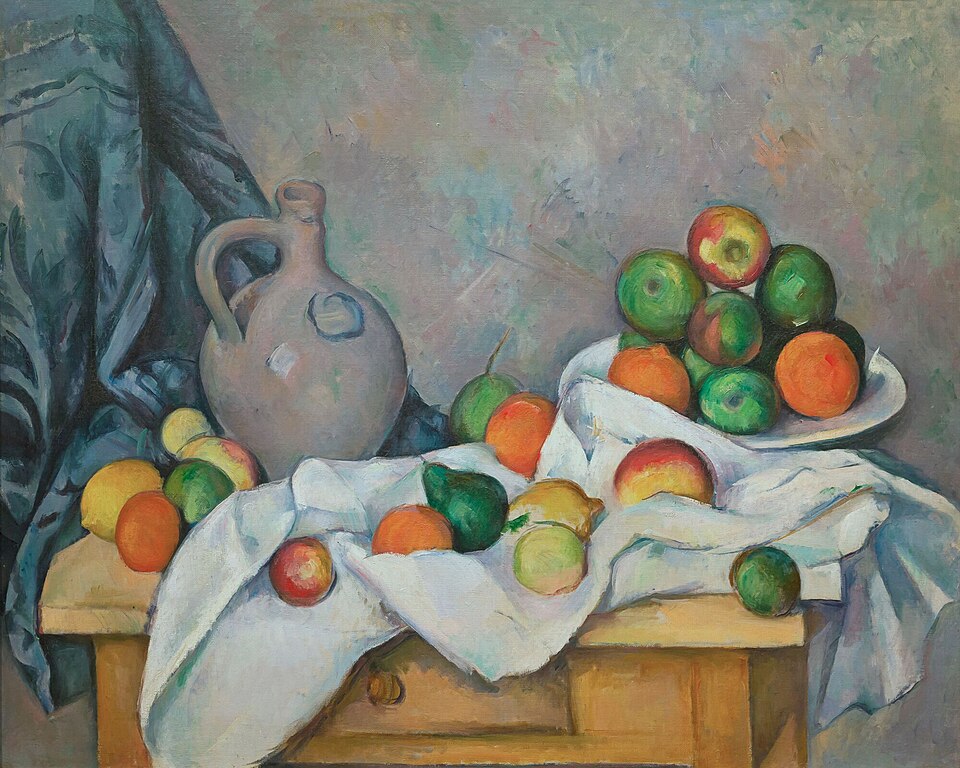
Paul Cézanne, Rideau, Cruchon et Compotier, 1893. Wikimedia Commons. · PD
Cortina, Jarro e Fruteira
Ficha técnica
A história
Por volta de 1893, Cézanne pintou esta natureza-morta e dedicou a um jarro, uma fruteira e uma toalha pesada um empenho que a maioria dos pintores gastaria numa tarde. Ele buscava algo mais difícil do que um arranjo bonito. Queria construir os objetos a partir da cor e de pequenos deslocamentos de plano. Por isso a mesa se inclina, a fruta fica um pouco fora do lugar, e ainda assim o conjunto se sustenta com um peso que se sente mais do que se vê. Foi justamente esse olhar paciente, quase arquitetônico, que a geração seguinte agarrou. Décadas depois de sua morte, em 1999, a tela foi arrematada em leilão por cerca de 60 milhões de dólares, na época o maior preço já pago por uma natureza-morta.