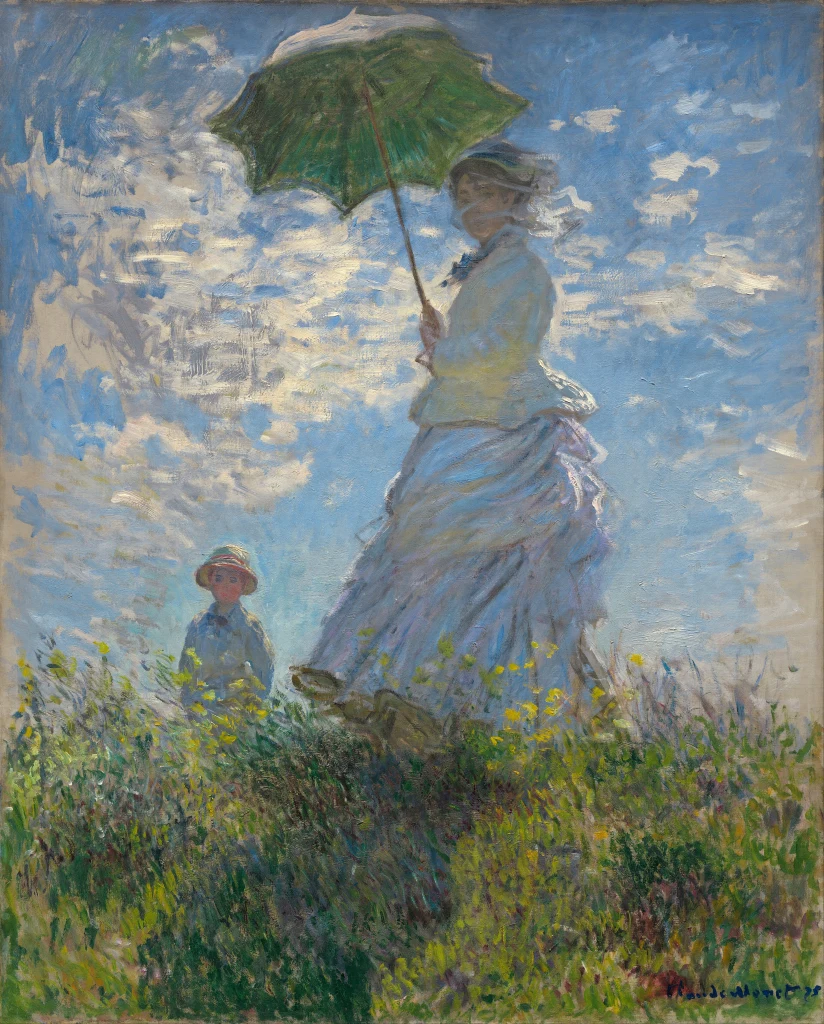
Claude Monet, Woman with a Parasol – Madame Monet and Her Son, 1886. Wikimedia Commons. · PD
Mulher com Sombrinha – Madame Monet e Seu Filho
Ficha técnica
A história
Este quadro é uma cena de família, não um retrato de pose. Monet pintou a mulher, Camille, e o filho pequeno, Jean, num dia de vento em Argenteuil, subúrbio às margens do Sena onde a família morava por volta de 1875. Tudo indica que ele o pintou ao ar livre e depressa, talvez numa única tarde de poucas horas. O vento levanta o véu e o vestido branco de Camille e faz ondular o capim do campo. Monet a viu de baixo, contra o céu azul e as nuvens, o que faz a figura parecer alta e leve. Jean está mais atrás, meio escondido atrás de uma elevação do terreno, visível só da cintura para cima. Camille tinha então uns 28 anos; morreria quatro anos depois, ainda jovem.