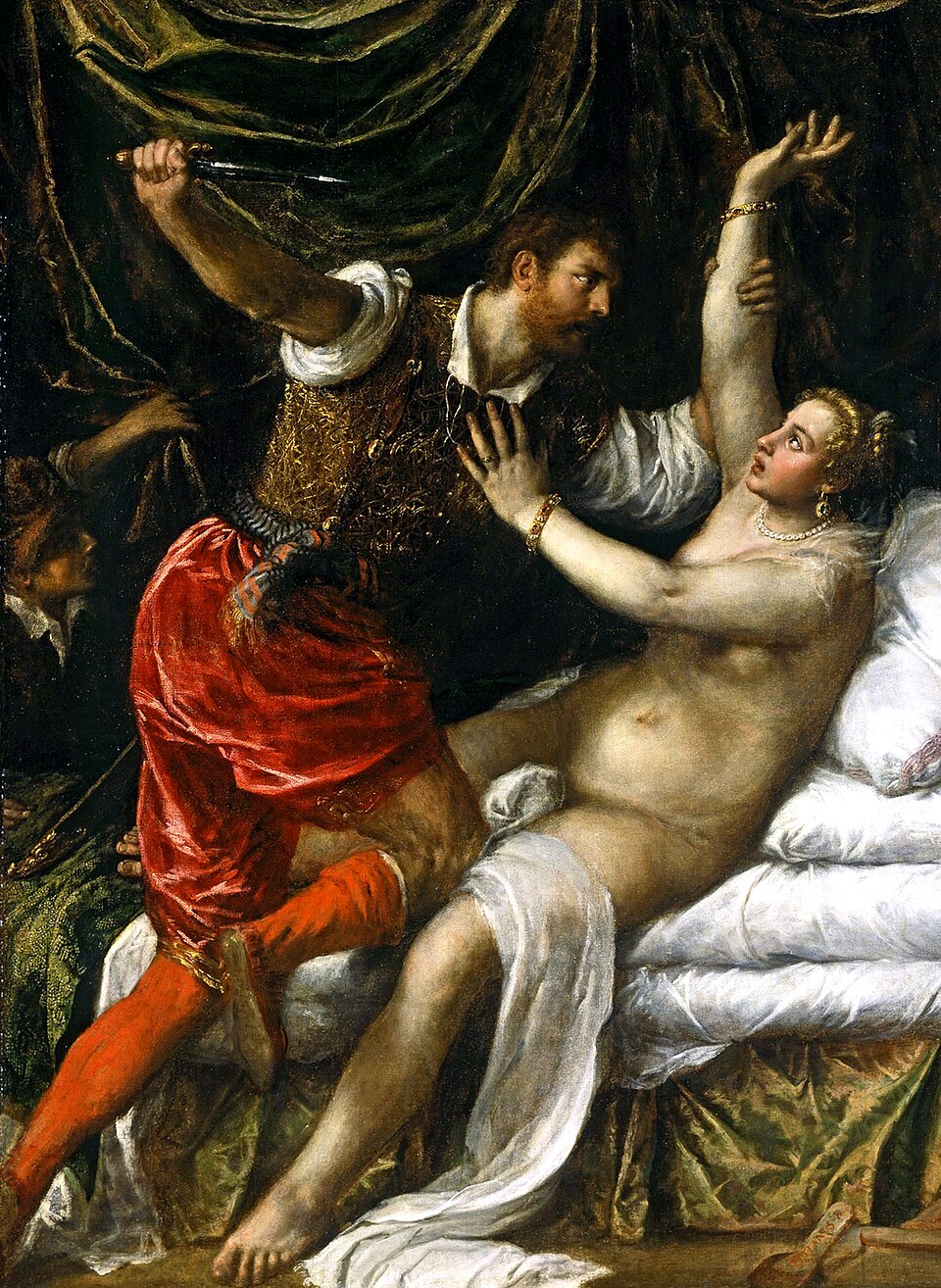
Titian, Tarquin and Lucretia, 1571. Wikimedia Commons. · PD
Тарквиний и Лукреция
Сведения
История
Тициан писал это уже глубоким стариком, около 1571 года, и отправил картину испанскому королю Филиппу Второму, своему давнему заказчику. Сюжет из римской истории: царский сын Секст Тарквиний врывается ночью к Лукреции, жене знатного римлянина, и под угрозой кинжала овладевает ею. Наутро она расскажет всё и заколется, а возмущённый Рим прогонит царей и станет республикой. Тициан не смягчает насилия: занесённый кинжал, отчаянно упёртая рука женщины, смятые простыни. Мазок здесь широкий, почти рваный, каким художник писал в последние годы, когда, по словам современников, работал уже больше пальцами, чем кистью.