阿尔丰斯·慕夏

阿尔丰斯·慕夏

1860–1939 · 奥地利帝国 · 新艺术运动


故事

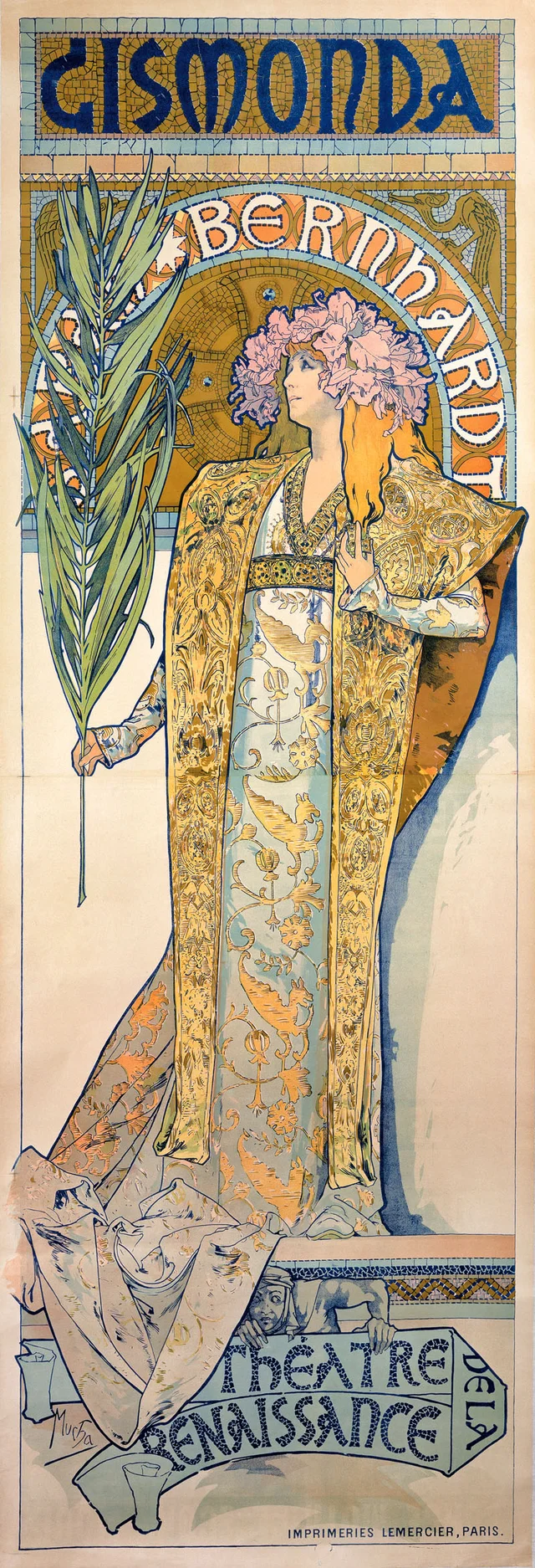
In December 1894, the Paris printer Lemercier needed a poster for Gismonda, a new play opening on New Year's Day starring Sarah Bernhardt, the most famous actress in France. Every regular illustrator was away for the holidays, so the job went to Alphonse Mucha, a Czech artist working there as a jobbing proofreader. He designed a tall, narrow poster of Bernhardt in Byzantine robes, printed in soft golds and mosaic patterns unlike anything on the Paris streets. Bernhardt loved it enough to sign him to a six-year contract covering her posters, sets, costumes and jewellery, and the elongated, flower-framed women of that poster became the template for what soon got called Art Nouveau.

Mucha spent the next two decades as the face of that decorative style, then largely walked away from it. From 1912 he devoted himself instead to The Slav Epic, a cycle of 20 huge history paintings tracing the story of the Slavic peoples, funded by the American industrialist Charles Crane, an admirer of Mucha's Pan-Slavist convictions. He considered it his real life's work and, once Czechoslovakia became independent in 1918, donated the whole cycle to the city of Prague.

Those same convictions caught up with him in March 1939. When German troops occupied Prague, the Gestapo arrested the 78-year-old Mucha as an early target, questioning him for days as a symbol of Czech nationalism. He was released but never recovered, and died of pneumonia that July, ten days before his 79th birthday.

作品

1 件作品