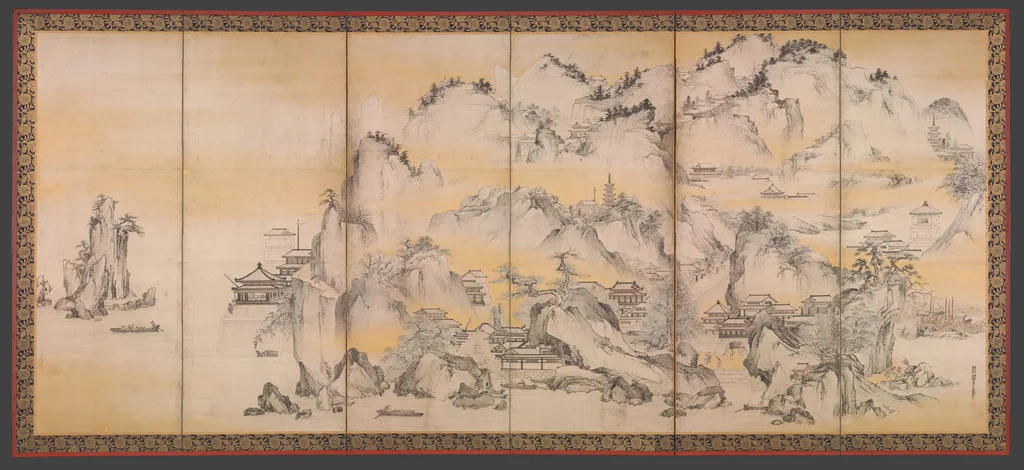
Kanō Sanraku · CC0
金山岛与西湖
作品信息
故事
These are Chinese places painted by a Japanese artist who almost certainly never saw them. Around 1630 Kano Sanraku, adopted heir of the great Momoyama master Eitoku, laid out two famous Chinese sites across a pair of six-panel gold screens. The right screen is Jinshan, an island in the Yangzi River crossed by bridges and busy with scholars, fishermen, and servants. The left is West Lake at Hangzhou, its city gate tucked into the lower corner, worked around the Ten Views of West Lake, a set of poetic scenes prized in China since the 12th century. Japan in these years was closing itself off from the outside world, and painters knew such landscapes only through older Chinese pictures and verse, which is what Sanraku reimagines here in ink and gold.