Nicolai Fechin · PD
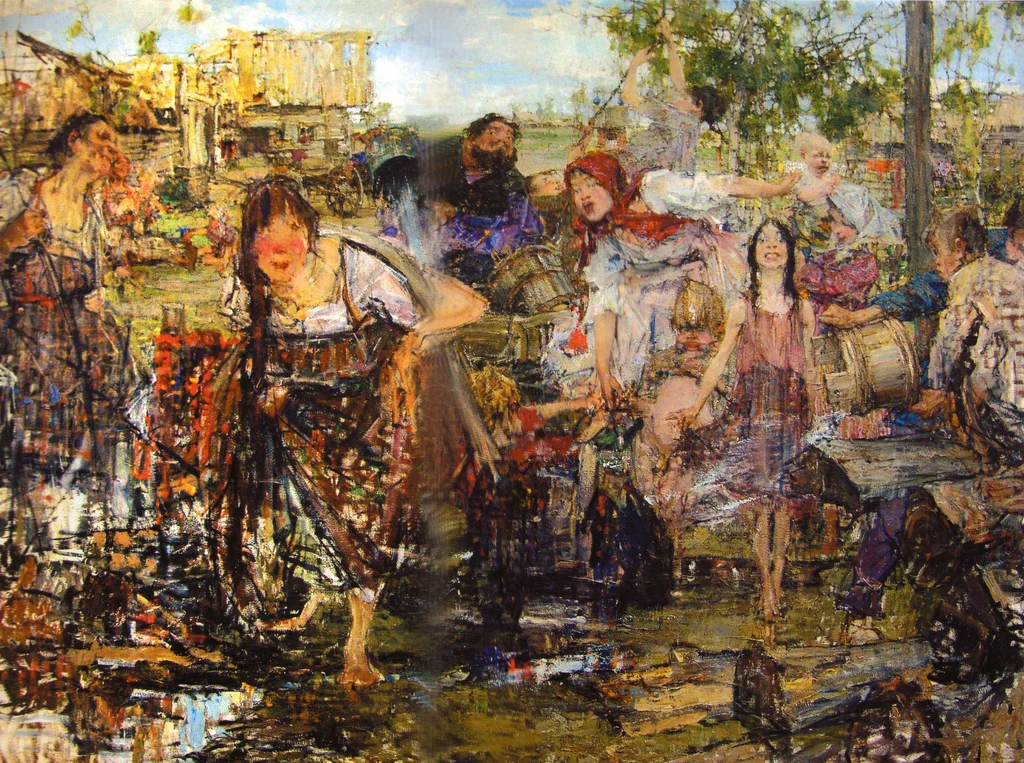
Der Wasserguss
Details
Die Geschichte
Fechin malte diese große Leinwand 1914 in Kasan und hielt einen Dorfbrauch fest, halb Spiel, halb alter Zauber. Die Idee kam ihm im Dorf Nadeschdino, wohin er zum Malen nach der Natur gefahren war. In der Sommerhitze übergossen die Bauern jeden mit Wasser, der am Brunnen vorbeikam, im Glauben, das Nasswerden halte die Dürre fern. Über diesen uralten heidnischen Brauch hatte sich später der christliche Gedanke gelegt, Sünden abzuwaschen. Fechin trägt die Farbe in dicken Schlägen auf und formt das nasse Tuch und die erschrockenen Gesichter fast heraus. Er malte es drei Jahre, bevor Revolution und Bürgerkrieg diese Welt umstürzten; er selbst verließ Russland später für immer und ließ sich in Amerika nieder.