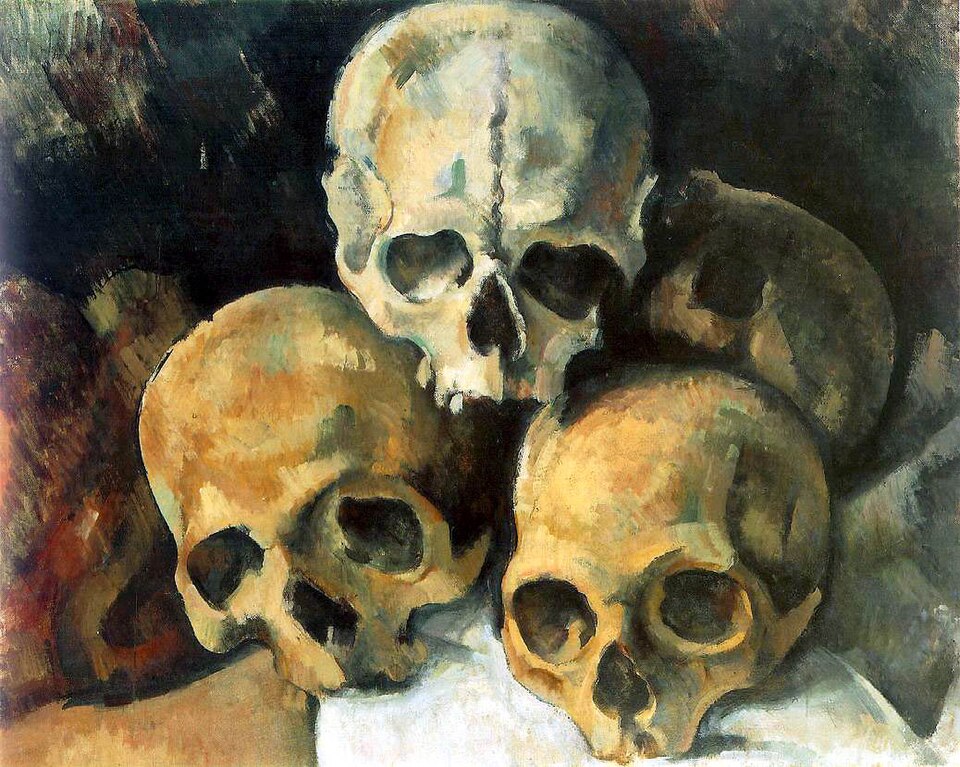
Paul Cézanne, Pyramid of Skulls, 1899. Wikimedia Commons. · PD
Pyramide aus Schädeln
Details
Die Geschichte
Am Ende von Cézannes Leben war der Tod kein fernes Thema mehr. Seine Mutter war wenige Jahre zuvor gestorben, seine eigene Gesundheit ließ nach, und in Briefen schrieb er offen über das Alter und über die knappe Zeit. Das prägt dieses Bild. Statt der üblichen Vanitas-Zeichen, keine Kerze, keine Sanduhr, bleiben nur vier menschliche Schädel, dicht zu einer Pyramide gestapelt. Besucher seines Ateliers in Aix erinnerten sich an echte Schädel auf einem Tisch neben einem kleinen Kruzifix. Im Gemälde sind drei Schädel nach vorn gerichtet, ein vierter bleibt dahinter nur teilweise sichtbar.