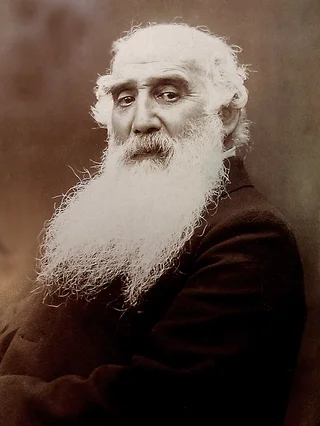
Camille Pissarro
1830–1903 · France · Impressionism
The story
Pissarro was the elder of the Impressionists, older than Monet or Degas, and the only one of the group to show in all eight of their exhibitions between 1874 and 1886. Younger painters treated him as a teacher. Cezanne said he was like a father to him, Gauguin studied under him, and his encouragement reached even Van Gogh.
The Franco-Prussian War caught him at his home in Louveciennes, a village west of Paris. He fled to London in 1870, and Prussian soldiers billeted in the house used his canvases as boards to cross the muddy garden and as aprons in the butchery they set up indoors. Of roughly 1,500 paintings from two decades of work, only about 40 came through. He returned and simply began again.
He stayed restless about method all his life. In 1885 he met the young Georges Seurat and took up his painstaking dotted technique, building pictures from tiny points of pure colour, before judging it too slow and drifting back to a looser Impressionist touch. In his 60s a chronic eye infection kept him from working outdoors, so he rented rooms above the boulevards of Paris and Rouen and painted the streets from the window, the same corners over and over as the light shifted through the day.
More articles
Works
218 works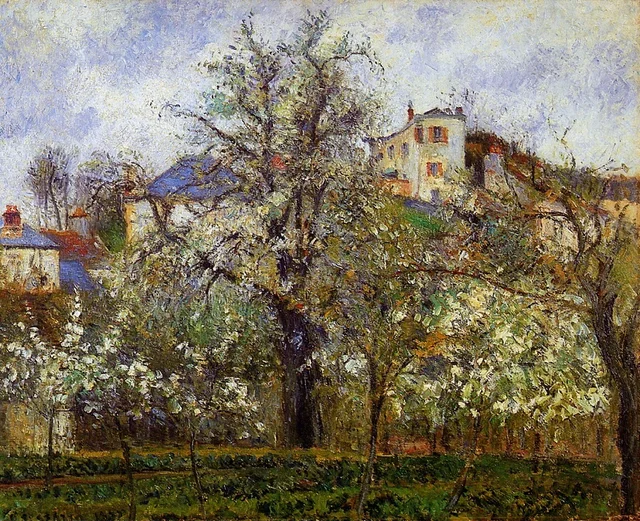 Orchard with Flowering Trees, Spring, PontoiseCamille Pissarro, 1877
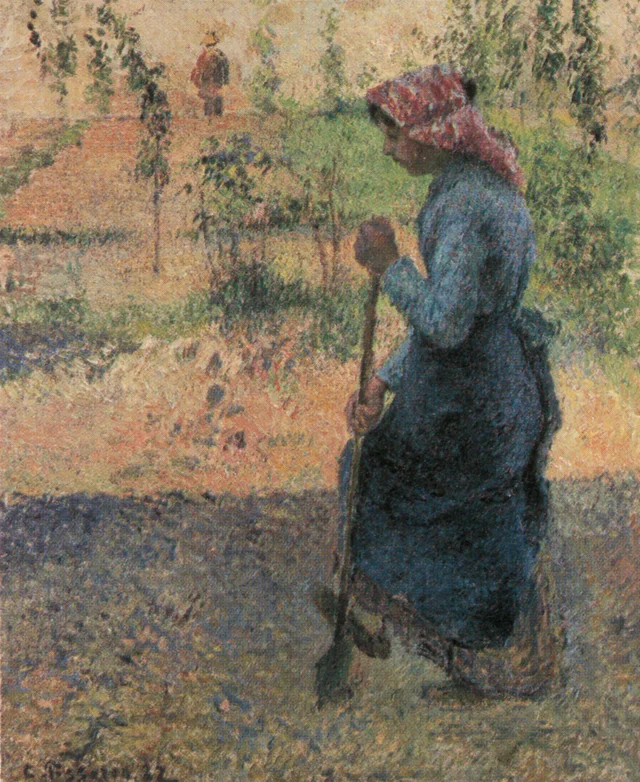 Peasant Woman DiggingCamille Pissarro, 1882
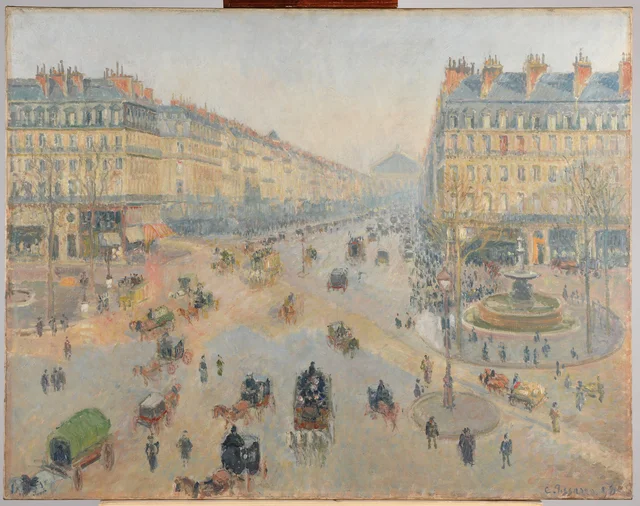 Place du Théâtre-Francais and the Avenue de l'Opéra, Sunlight, Winter MorningCamille Pissarro, 1898
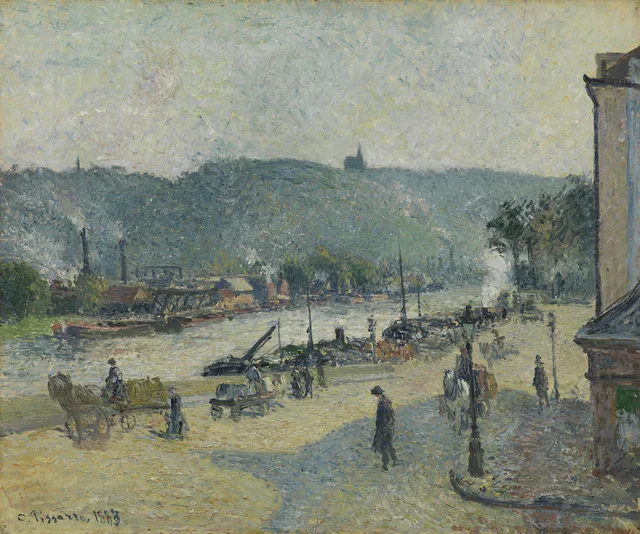 Place Lafayette, RouenCamille Pissarro, 1883
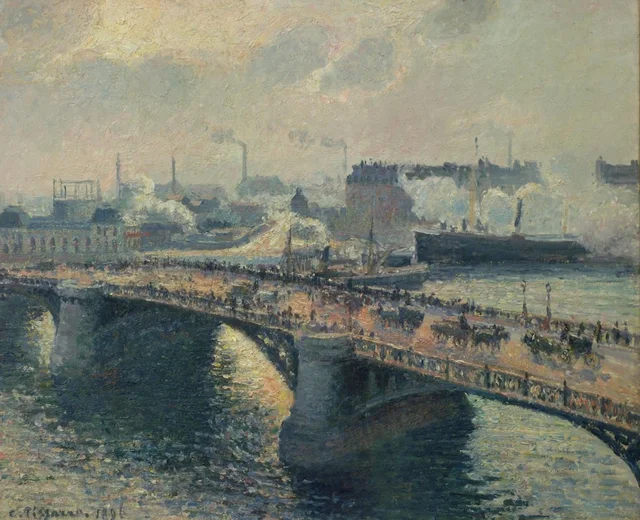 Pont Boieldieu, Rouen, Sunset, SmokeCamille Pissarro, 1896
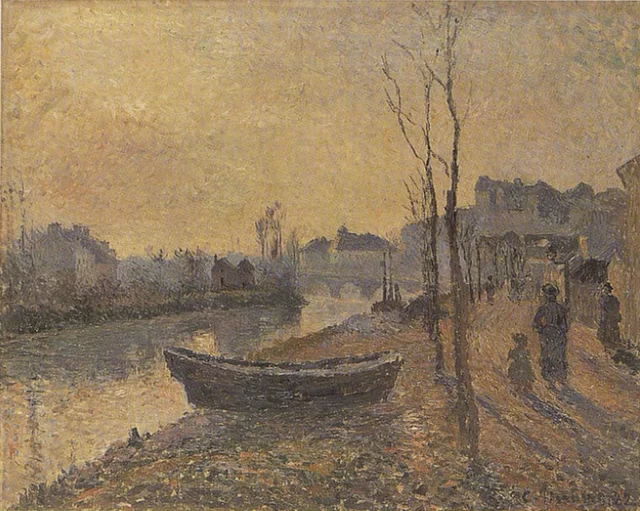 Quai du Pothuis, bords de l'OiseCamille Pissarro, 1882
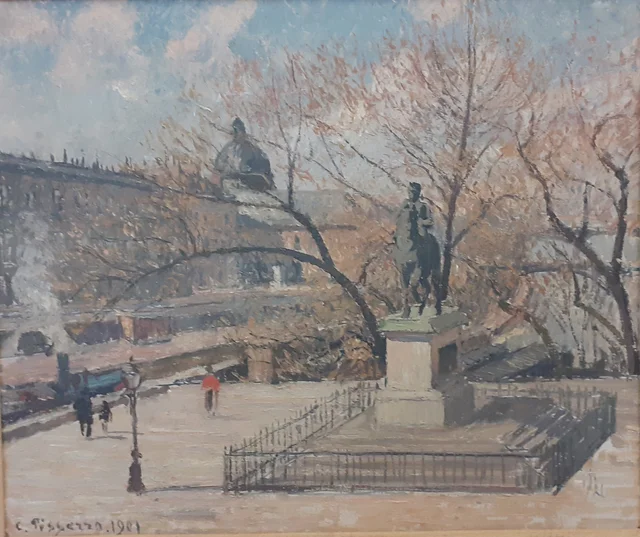 Statue of Henri IV and the Hotel de la Monnaie, Morning, SunCamille Pissarro, 1901
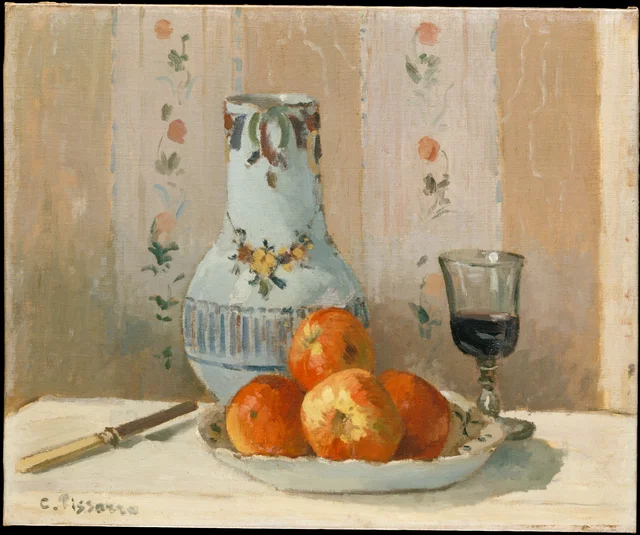 Still Life with Apples and PitcherCamille Pissarro, 1872
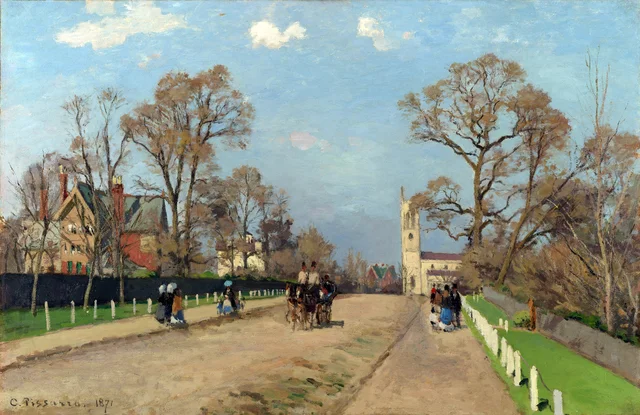 The Avenue, SydenhamCamille Pissarro, 1871
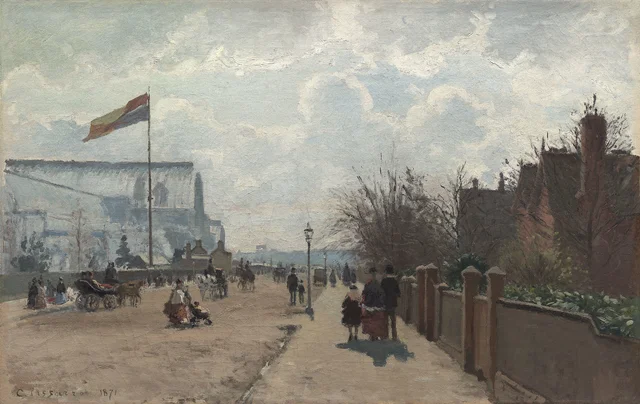 The Crystal PalaceCamille Pissarro, 1871
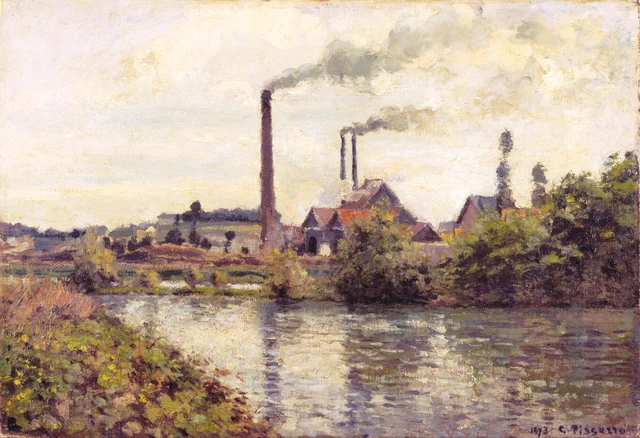 The Factory at PontoiseCamille Pissarro, 1873
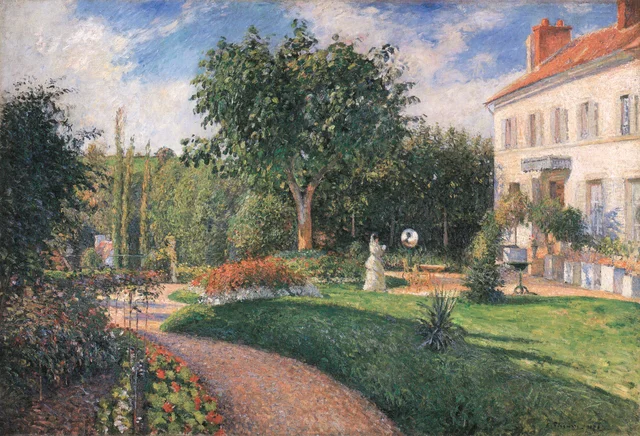 The Garden of Les Mathurins at PontoiseCamille Pissarro, 1876
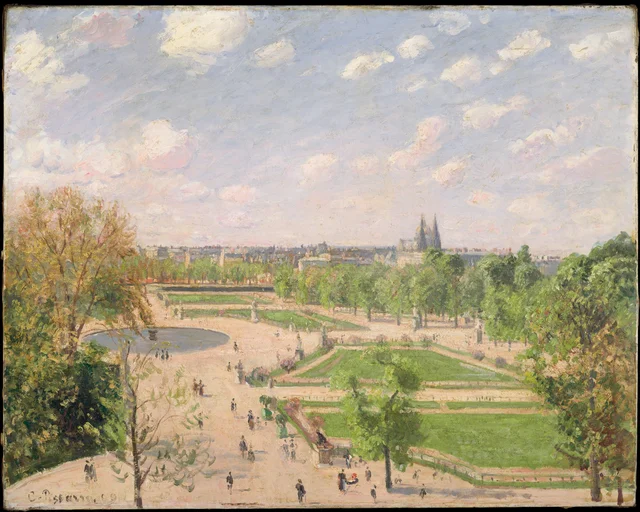 The Garden of the Tuileries on a Spring MorningCamille Pissarro, 1899
 The Marne at ChennevièresCamille Pissarro, 1865
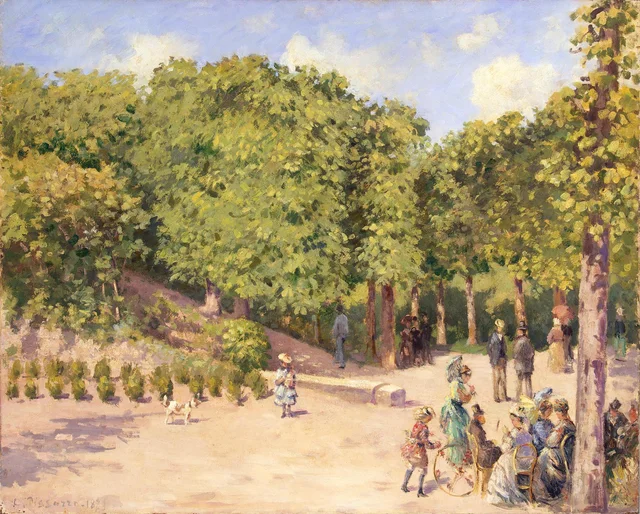 The Municipal Garden, PontoiseCamille Pissarro, 1873
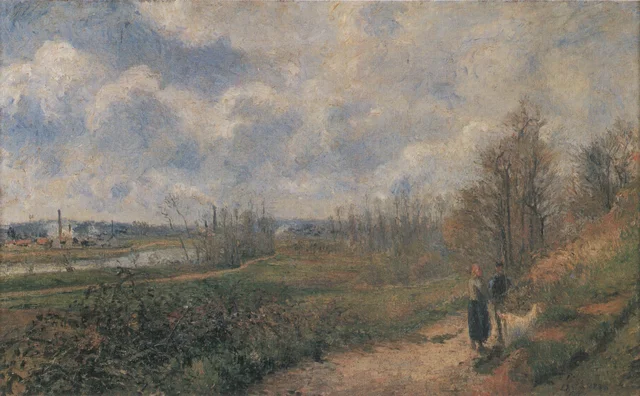 The Path to Le Chou, PontoiseCamille Pissarro, 1878
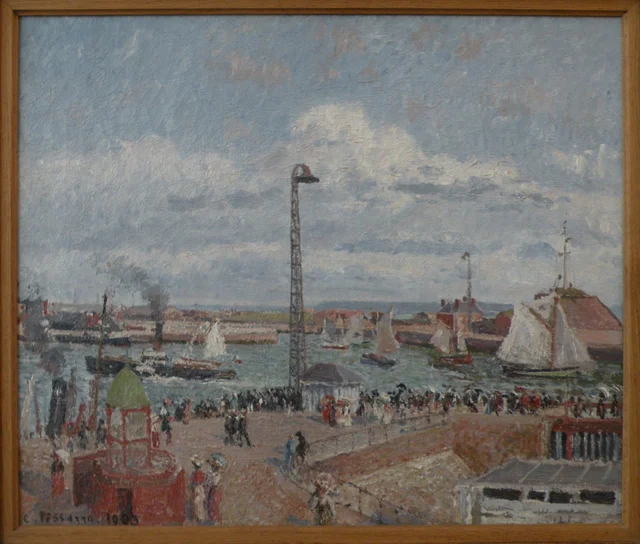 The Pilots' Cove at Le Havre. High Tide. Afternoon. Sun.Camille Pissarro, 1903
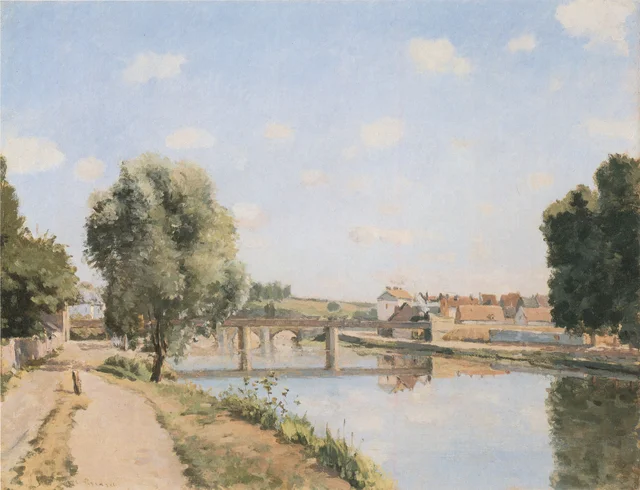 The Railway Bridge, PontoiseCamille Pissarro, 1873
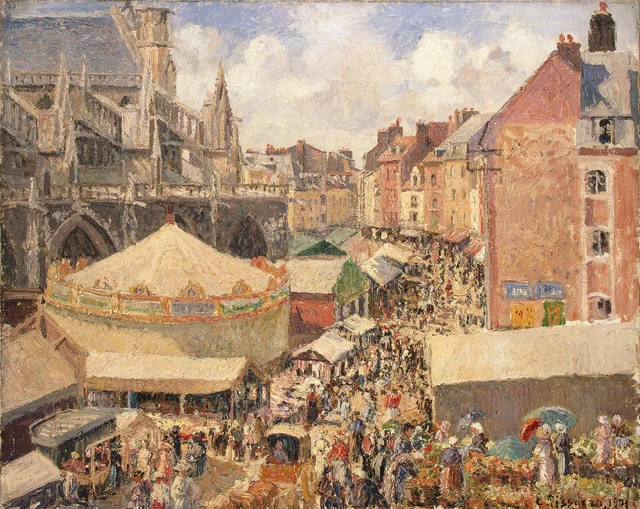 The Town Fair by the Church of Saint-Jacques in Dieppe, Morning, SunlightCamille Pissarro, 1901
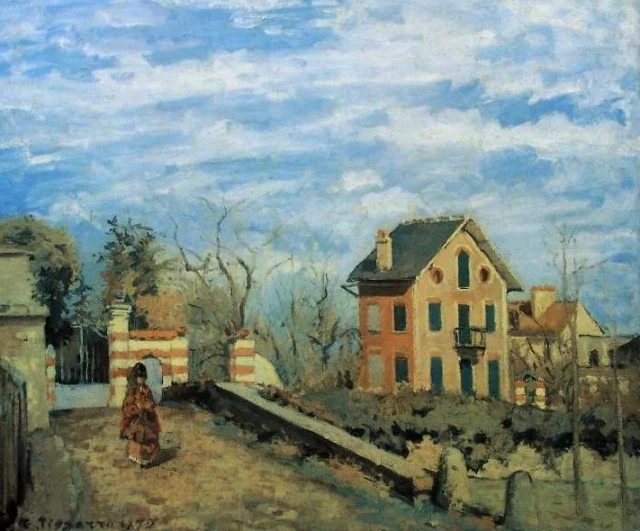 The Village of VoisinsCamille Pissarro, 1872
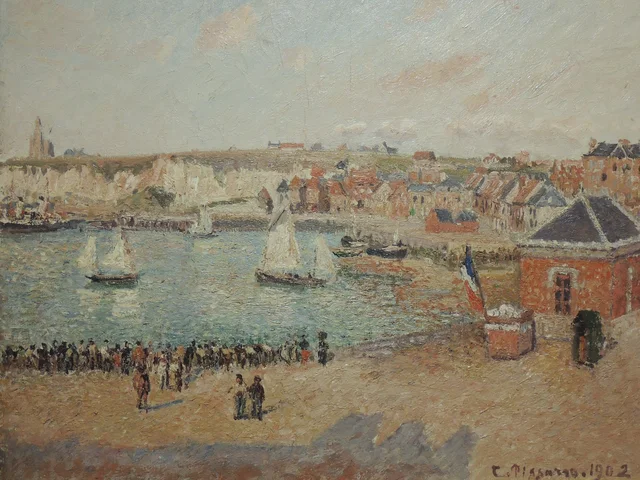 View from the Harbour in DieppeCamille Pissarro, 1902
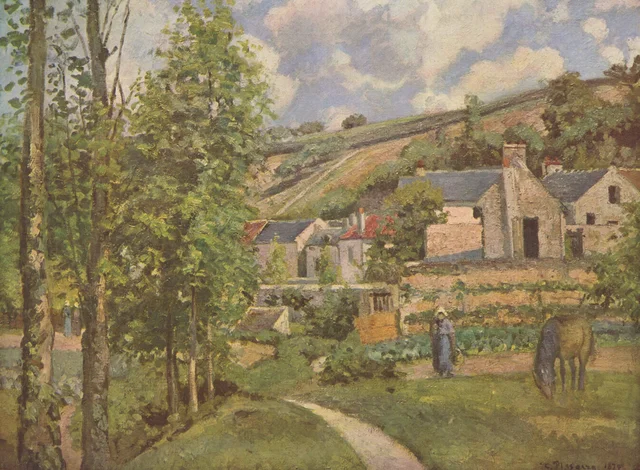 A Corner of L'Hermitage, PontoiseCamille Pissarro, 1874
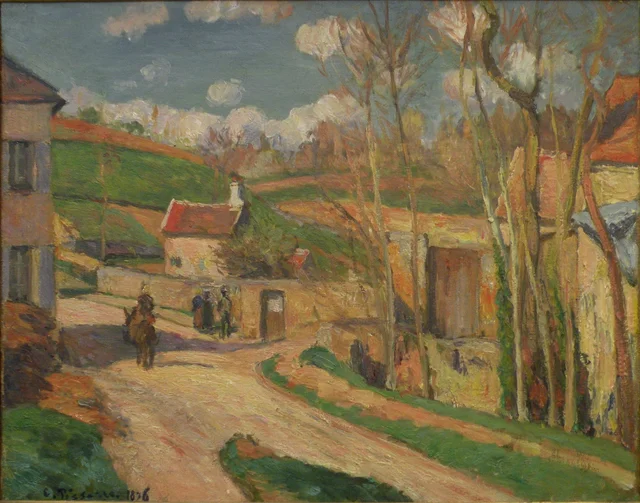 A Crossroads at L'Hermitage, PontoiseCamille Pissarro, 1876
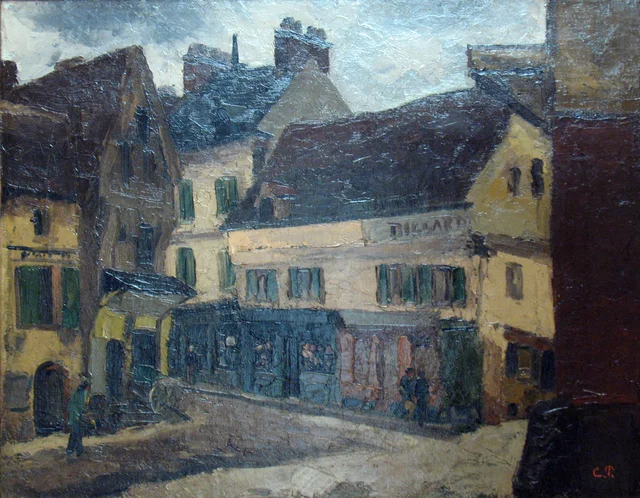 A Place in La Roche-GuyonCamille Pissarro, 1867
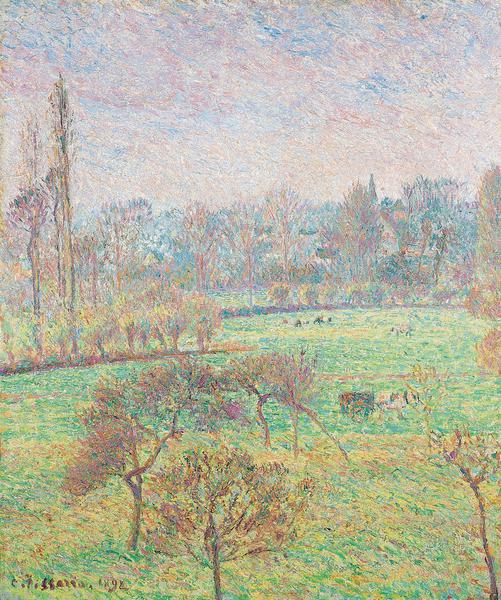 Apple Trees at Éragny, AutumnCamille Pissarro, 1892