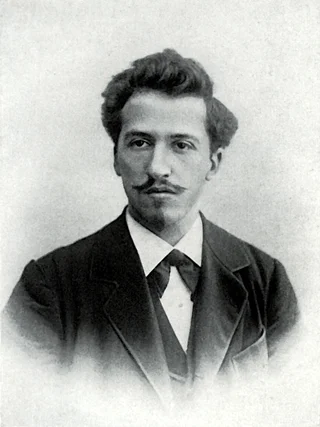
Piet Mondrian
1872–1944 · Kingdom of the Netherlands · De Stijl, Post-impressionism
The story
In 1912 Mondrian left Holland for Paris, then the capital of the new art, and walked straight into Cubism. Picasso and Braque were breaking objects into flat planes, and Mondrian took their grid of straight lines but pushed it further than either of them wanted to go. He kept flattening his trees and church facades until the subject fell away entirely and only horizontals, verticals, and blocks of colour were left.
By the early 1920s he had cut his palette down to three colours, red, yellow, and blue, plus black, white, and grey, and to two directions, upright and level. He called it Neoplasticism and built a whole philosophy around it with the Dutch group De Stijl, believing these bare elements could carry a universal harmony that pictures of real things could not. For 20 years he painted little else, adjusting the weight of a black line or the size of a red square across a white field.
Then the war chased him out. He spent two years in London and, in 1940, with the bombing closing in, sailed for New York at the age of 67. The city undid the severity: he fell for boogie-woogie jazz and the traffic-light rhythm of Manhattan, and replaced his heavy black grid with running chains of little coloured squares. He was still reworking that late style, on a canvas he called Victory Boogie Woogie, when he died of pneumonia in early 1944.
More articles
Works
112 works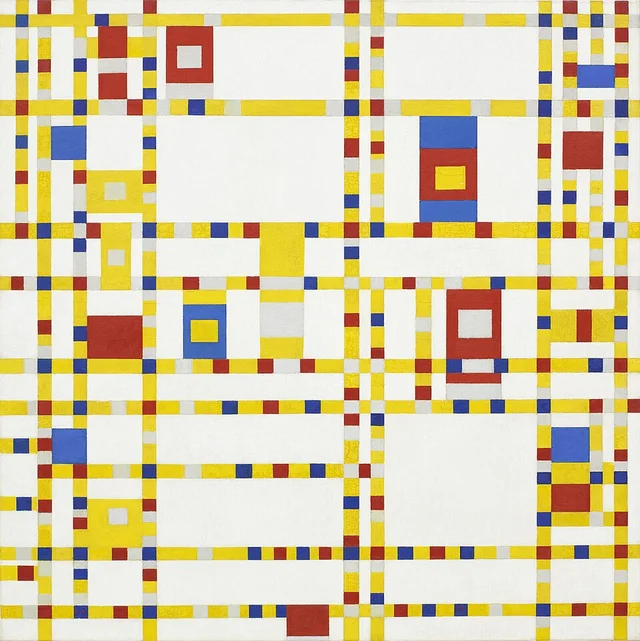 Broadway Boogie WoogiePiet Mondrian, 1942
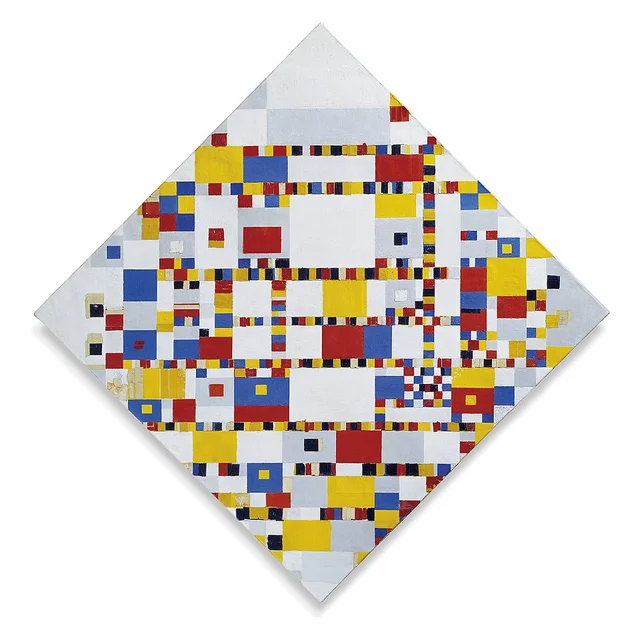 Victory Boogie WoogiePiet Mondrian, 1942
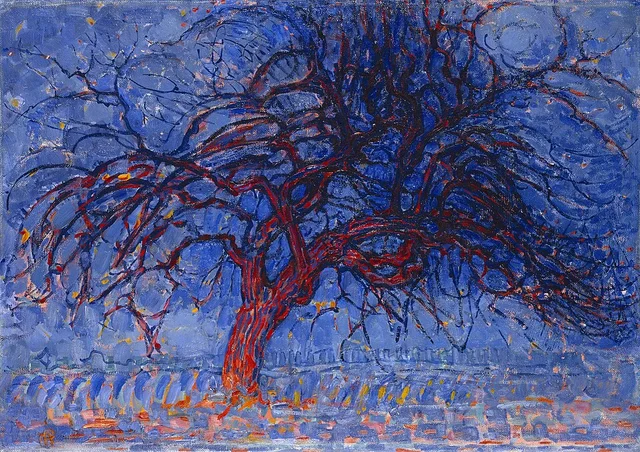 The Red TreePiet Mondrian, 1909
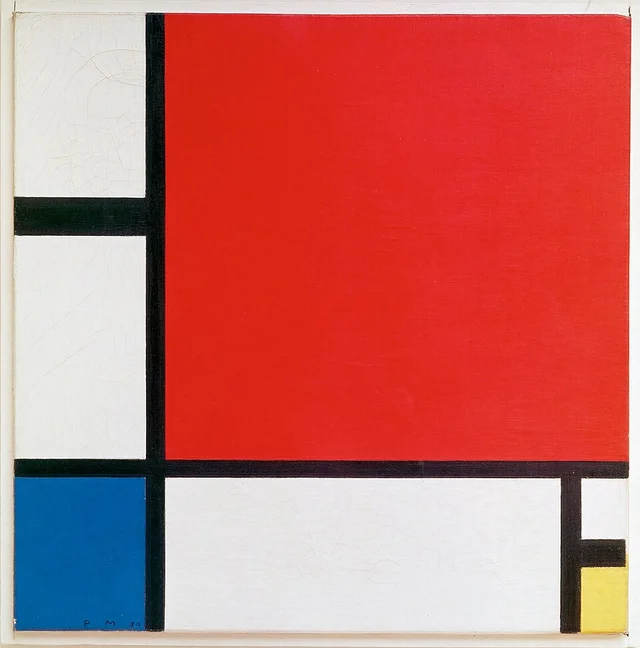 Composition II in Red, Blue, and YellowPiet Mondrian, 1930
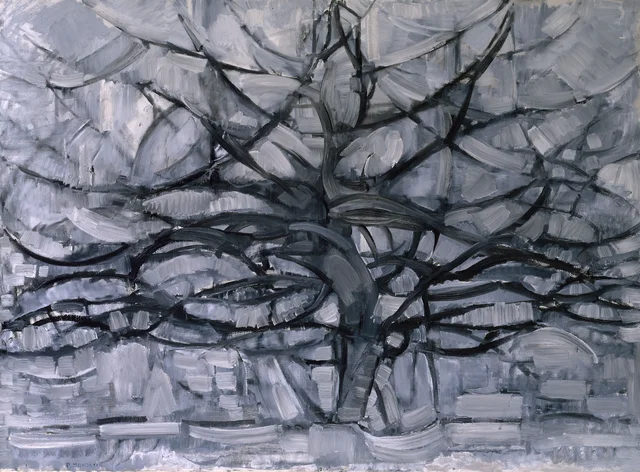 Gray TreePiet Mondrian, 1911
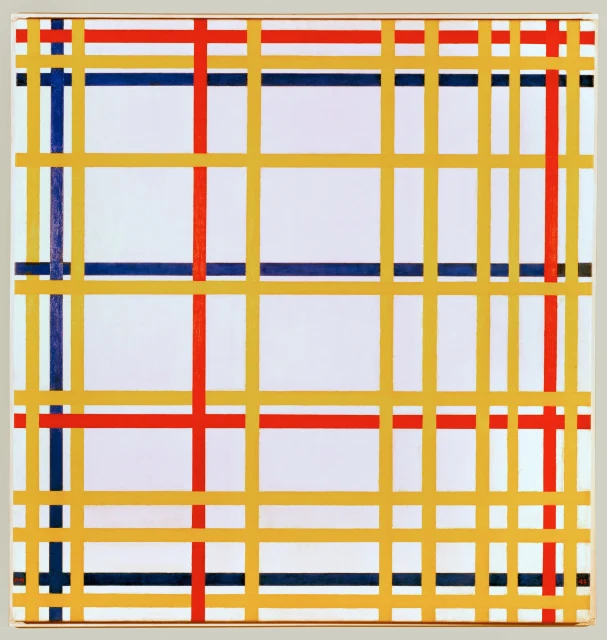 New York CityPiet Mondrian, 1942
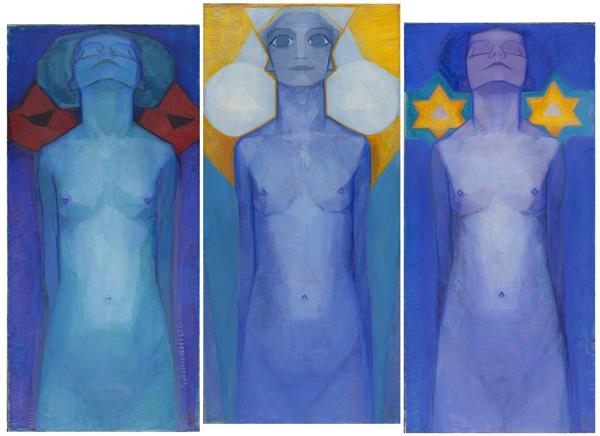 EvolutionPiet Mondrian, 1911
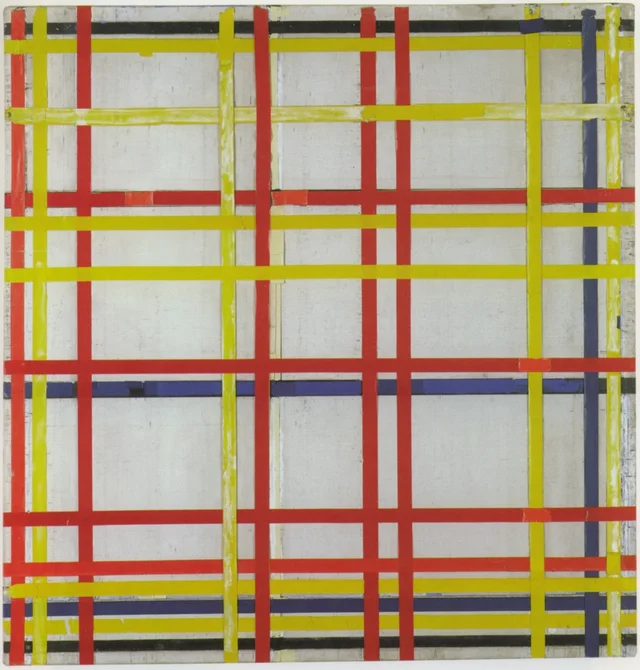 New York City IPiet Mondrian, 1941
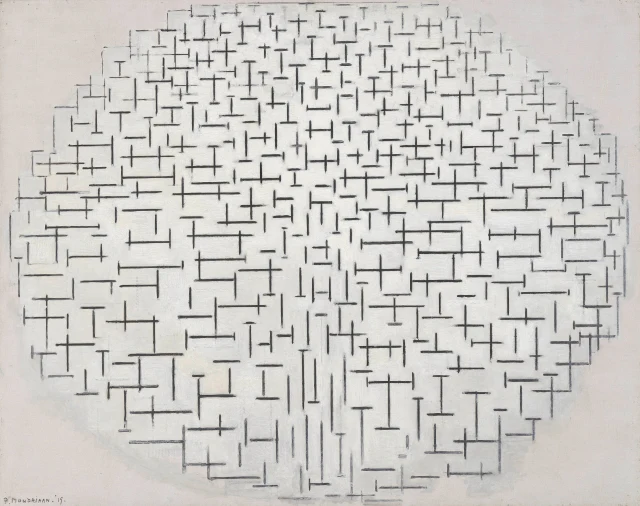 Composition 10 in Black and WhitePiet Mondrian, 1915
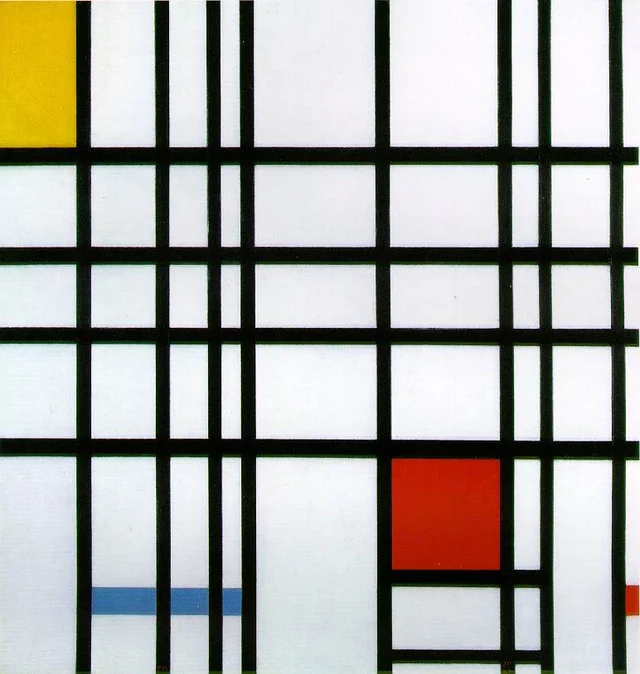 Composition with Red, Yellow and BluePiet Mondrian, 1937
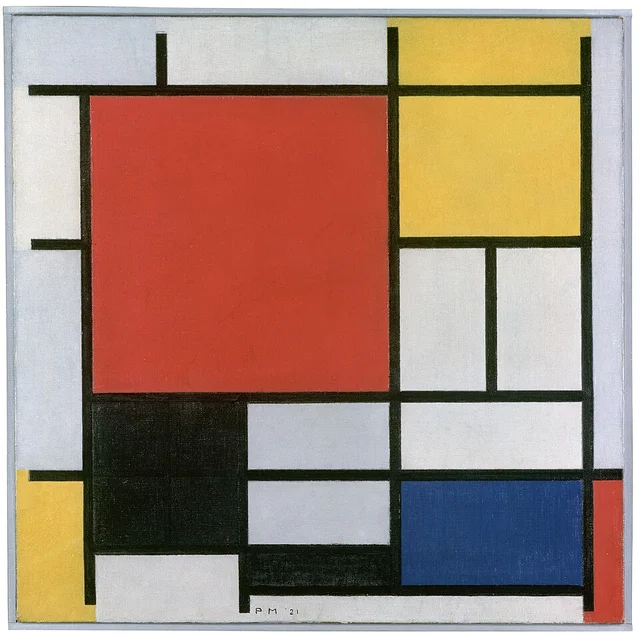 Composition with Large Red Plane, Yellow, Black, Grey and BluePiet Mondrian, 1921
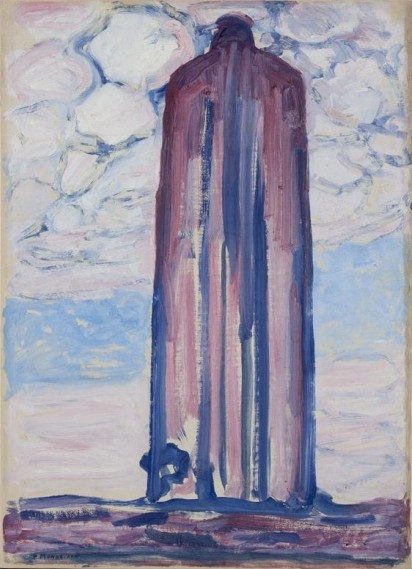 Lighthouse in WestkapellePiet Mondrian, 1908
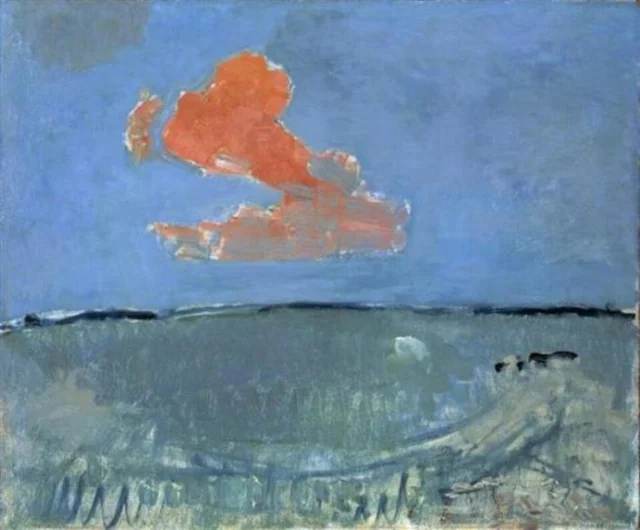 The red cloudPiet Mondrian, 1907
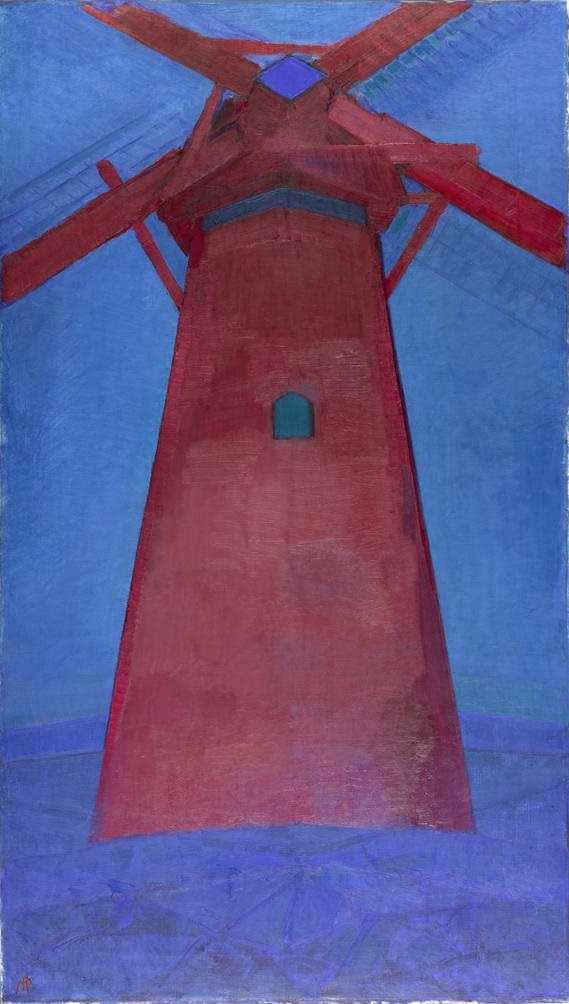 The Red MillPiet Mondrian, 1910
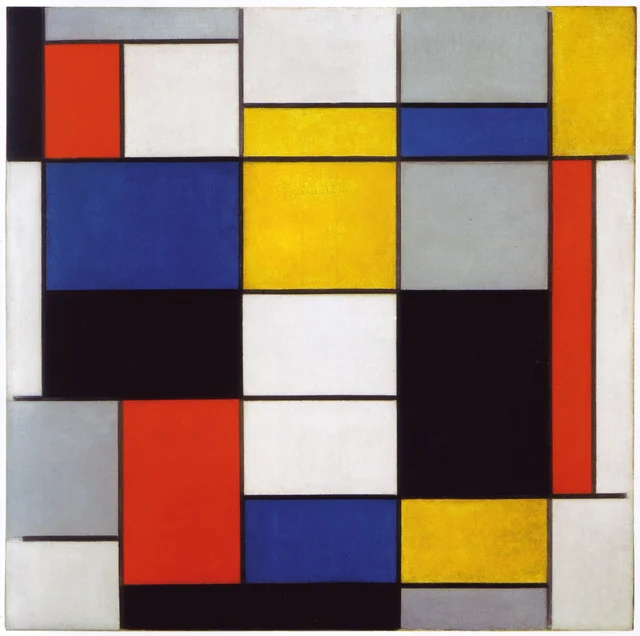 Composition A: Composition with Black, Red, Gray, Yellow, and BluePiet Mondrian, 1920
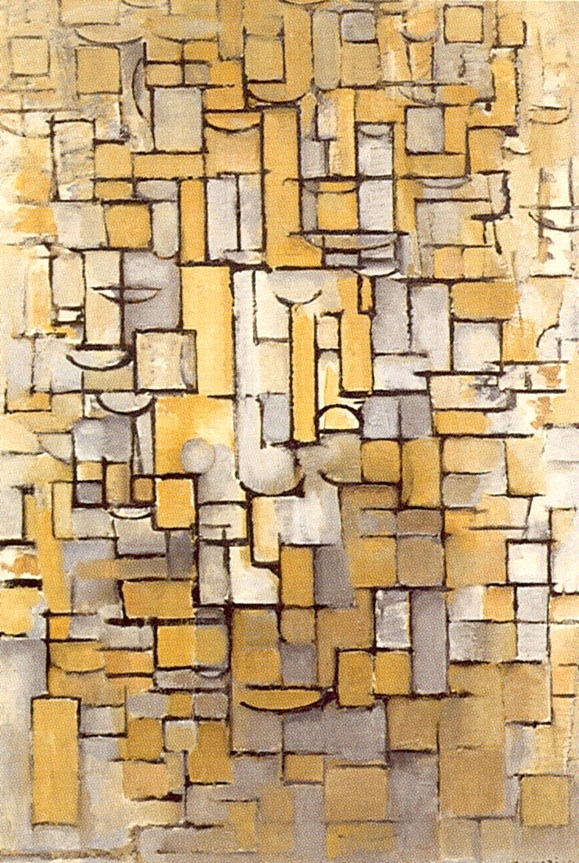 Composition XIVPiet Mondrian, 1913
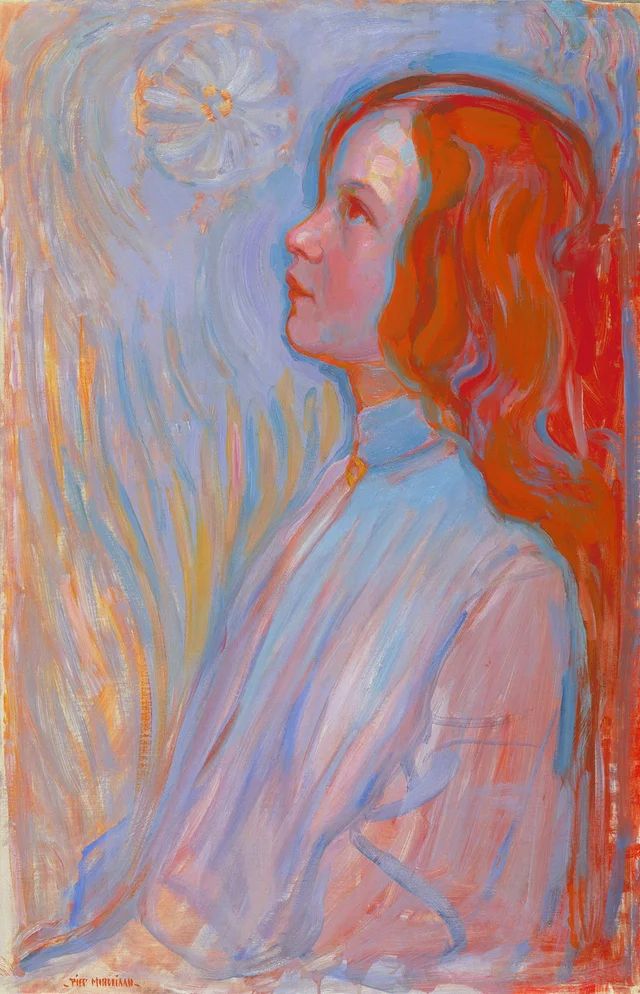 DevotionPiet Mondrian, 1908
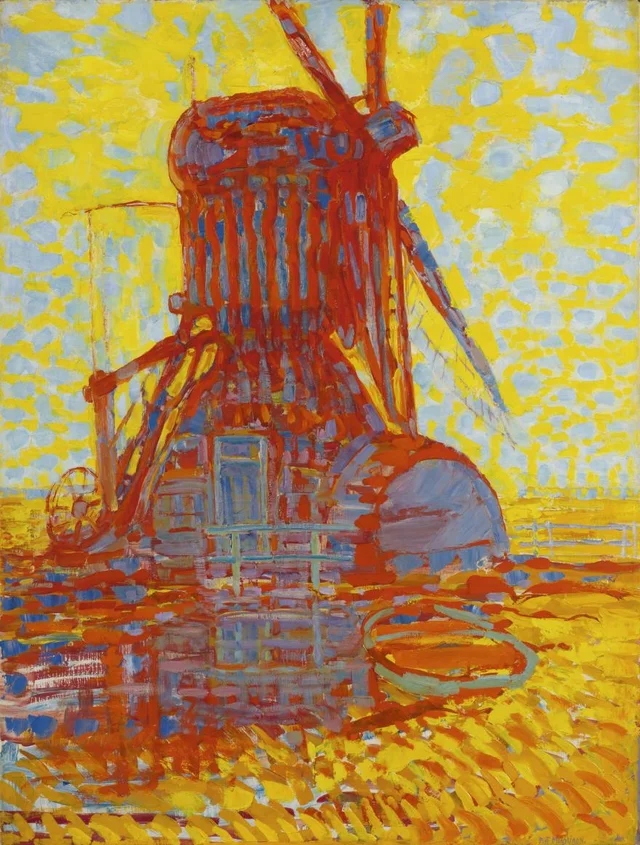 Mill in SunlightPiet Mondrian, 1908
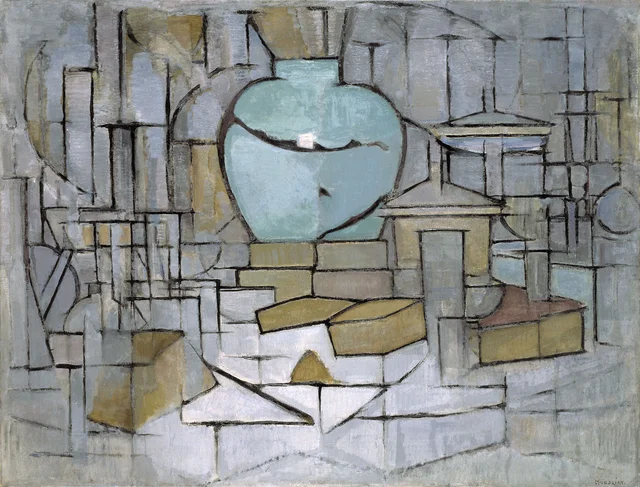 Still Life with Gingerpot 2Piet Mondrian, 1912
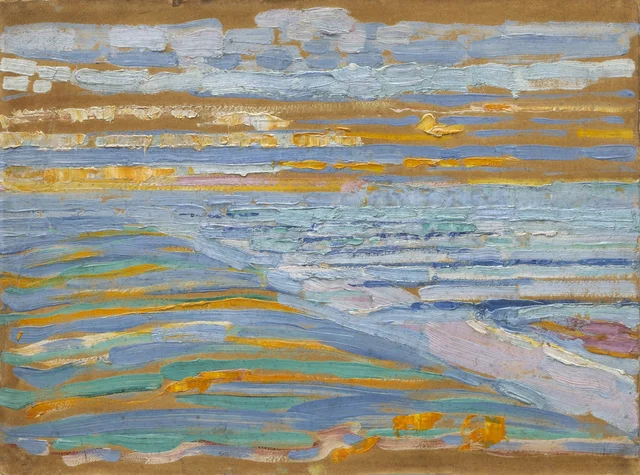 View from the Dunes with Beach and Piers, DomburgPiet Mondrian, 1909
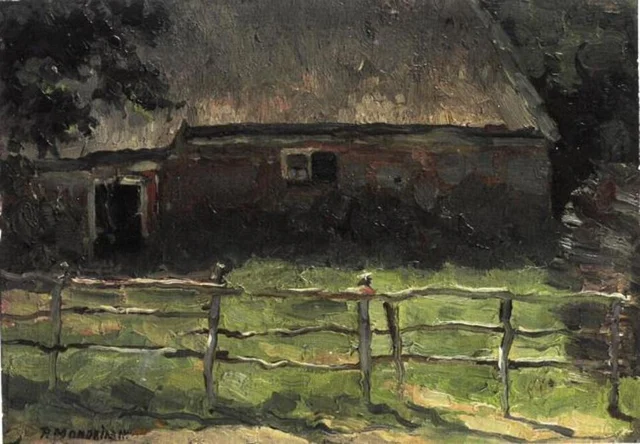 A Farmhouse Behind a FencePiet Mondrian, 1904
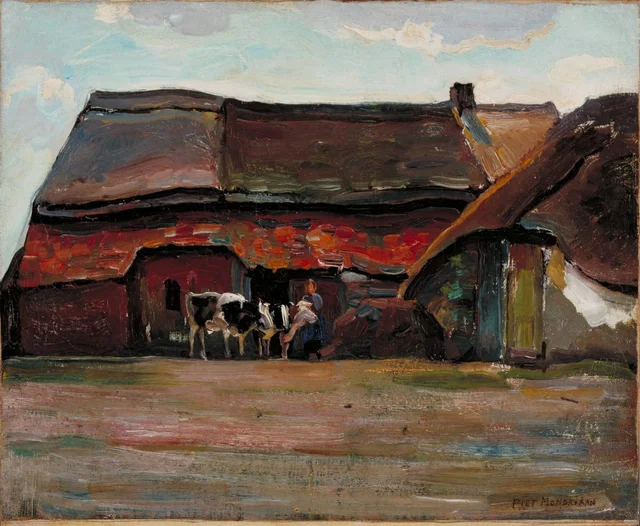 Brabant FarmyardPiet Mondrian, 1904
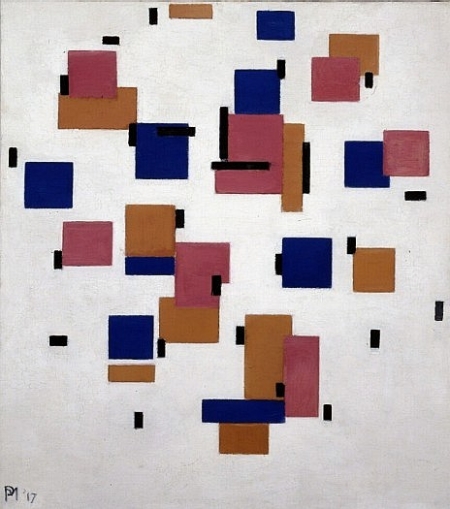 Composition in Color BPiet Mondrian, 1917
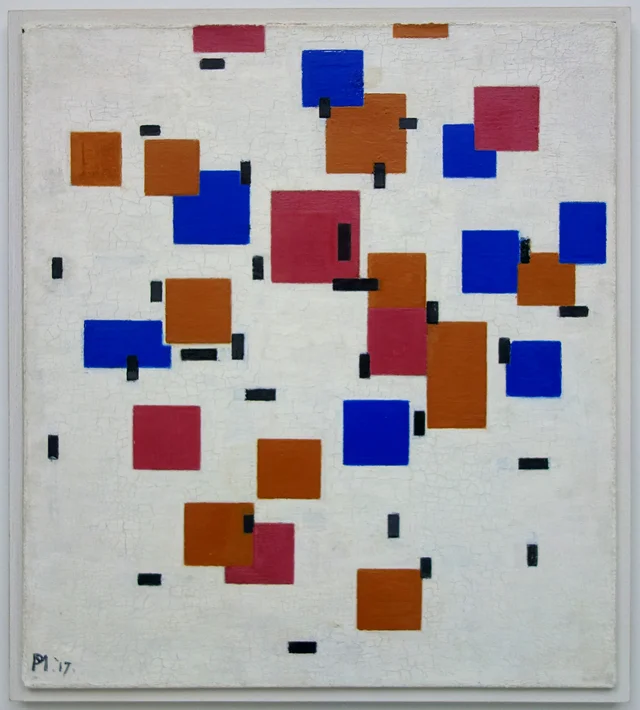 Composition in colour APiet Mondrian, 1917
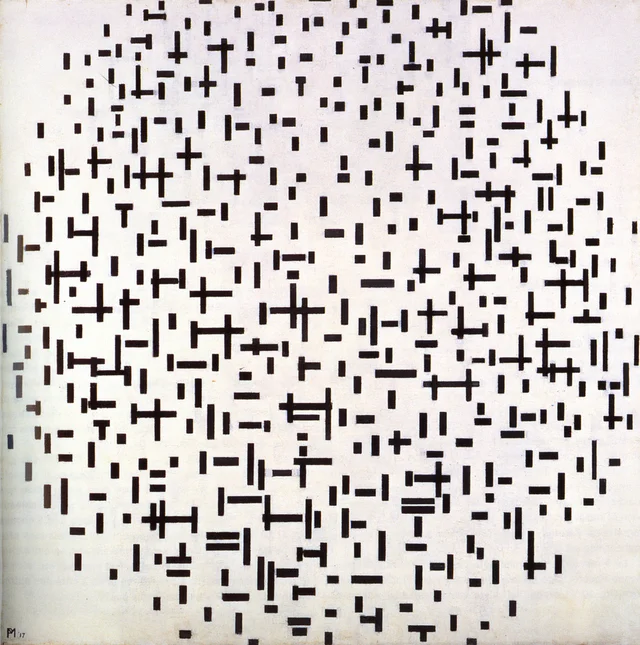 Composition in line, second statePiet Mondrian, 1916