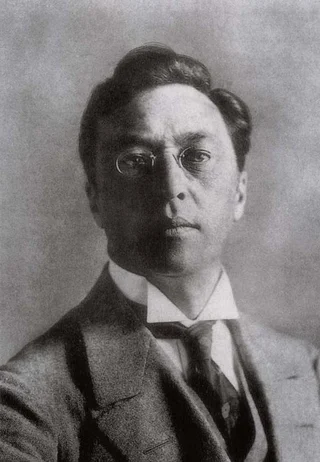
Wassily Kandinsky
1866–1944 · Russian Empire · Expressionism
The story
Wassily Kandinsky came to painting late and by choice. He was born in Moscow in 1866, trained as a lawyer, did well enough to be offered a university professorship in Roman law, and then at 30 turned it all down to move to Munich and learn to paint. He later pointed to two jolts that pushed him: a Monet haystack he could barely read as a haystack, and a Wagner opera that filled his head with colours while he listened.
That last part was no figure of speech. Kandinsky seems genuinely to have experienced sound as colour and colour as sound, and he came to believe a painting could work on a viewer the way music does, without needing to show any recognisable object at all. Around 1910 he began making some of the first purely abstract pictures in European art, canvases of floating patches and lines with titles borrowed from music, like Composition and Improvisation.
In 1911, with the painter Franz Marc, he founded a Munich circle called the Blue Rider, loosely bound by the idea that art should reach for the spiritual. The First World War scattered it and sent Kandinsky back to Russia. He returned to Germany in the 1920s to teach at the Bauhaus, the famous design school, where his shapes grew tighter and more geometric, full of circles and hard angles. When the Nazis closed the Bauhaus and branded his work degenerate, he left for Paris. He died just outside it, in Neuilly, in 1944.
More articles
Works
312 works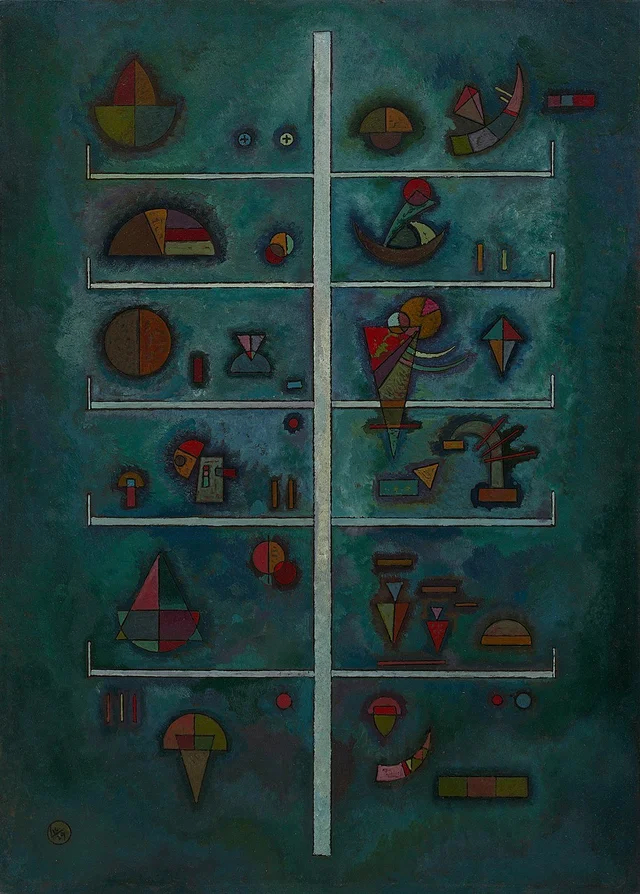 LevelsWassily Kandinsky, 1929
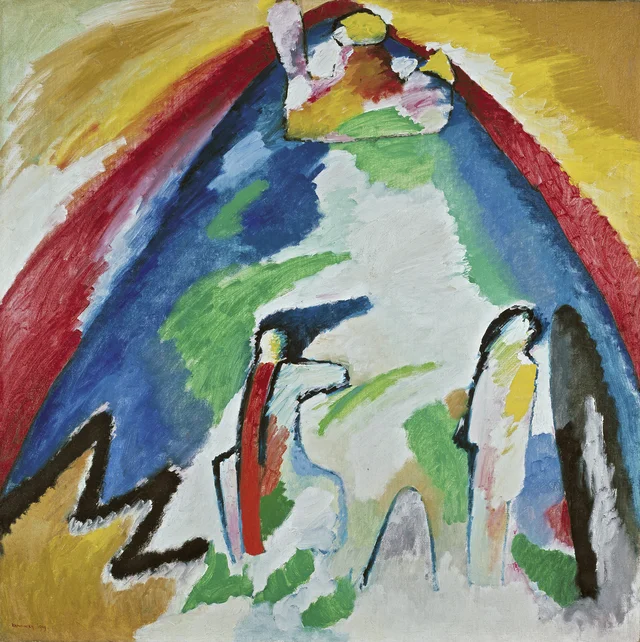 MountainWassily Kandinsky, 1909
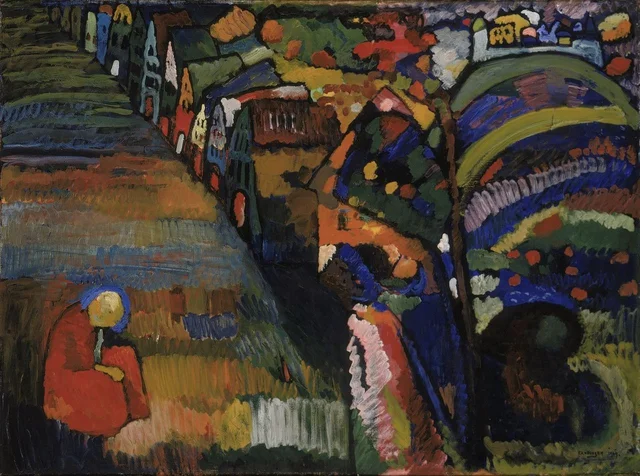 Painting with HousesWassily Kandinsky, 1909
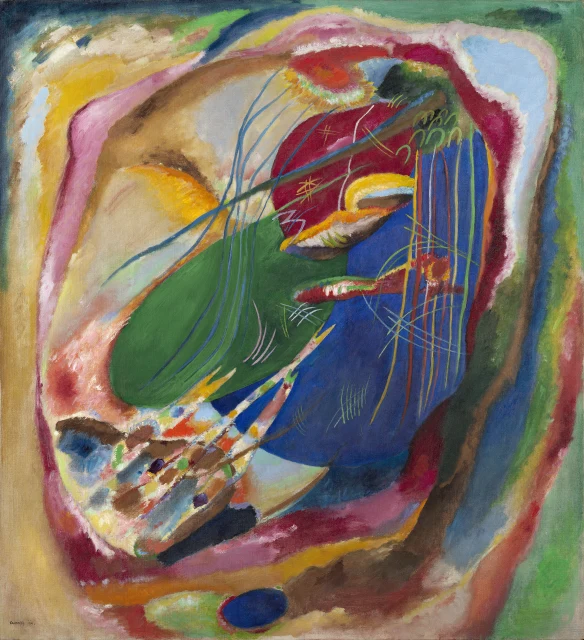 Painting with Three SpotsWassily Kandinsky, 1914
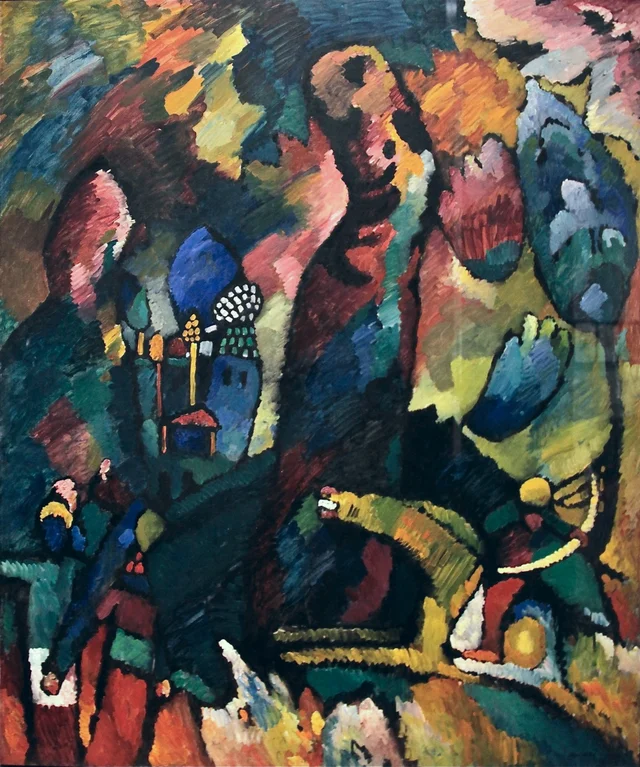 Picture with an ArcherWassily Kandinsky, 1909
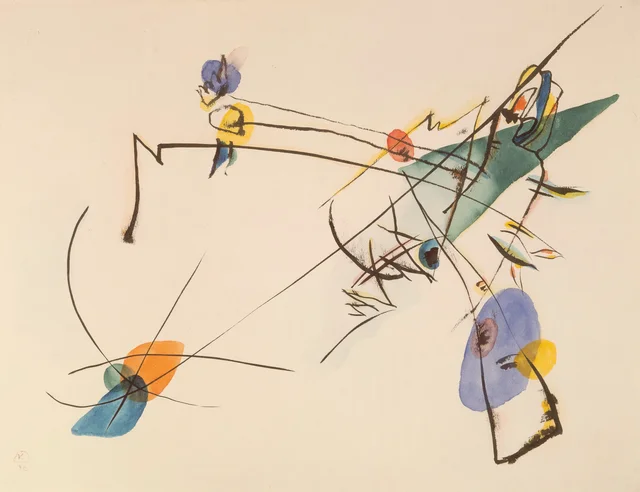 SimpleWassily Kandinsky, 1916
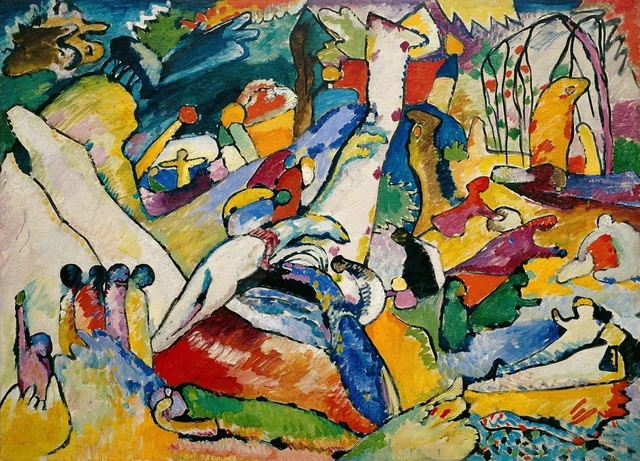 Sketch for "Composition II"Wassily Kandinsky, 1910
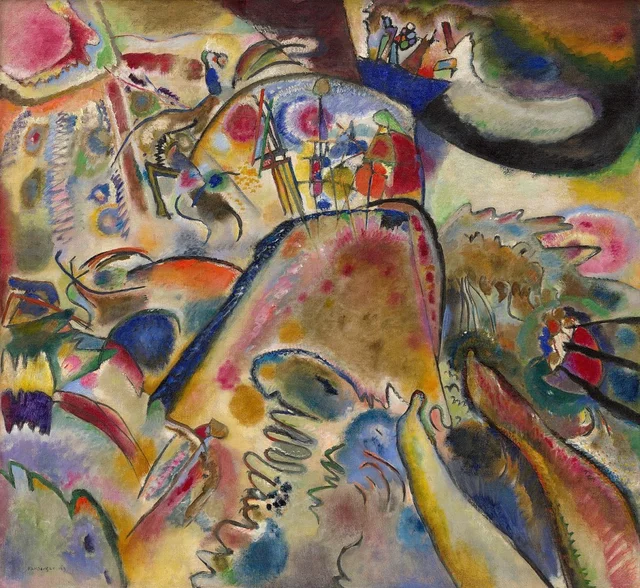 Small PleasuresWassily Kandinsky, 1913
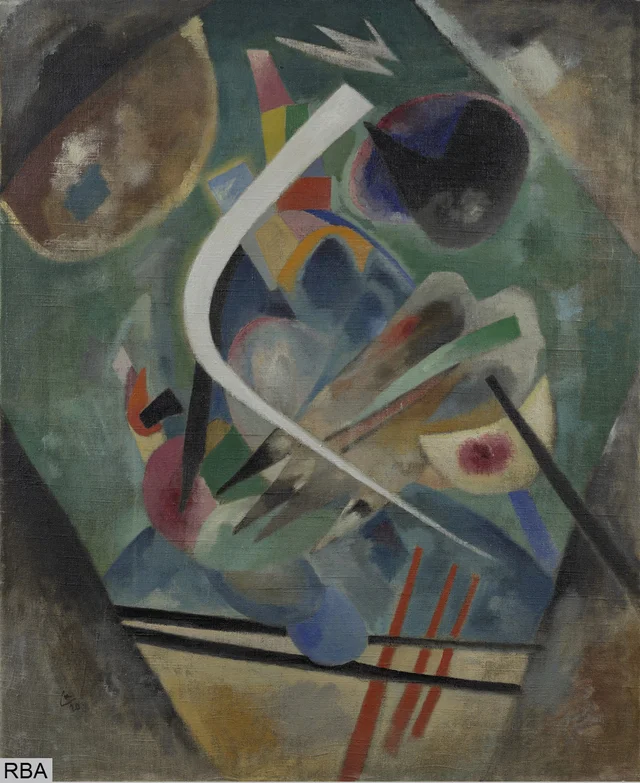 White LineWassily Kandinsky, 1920
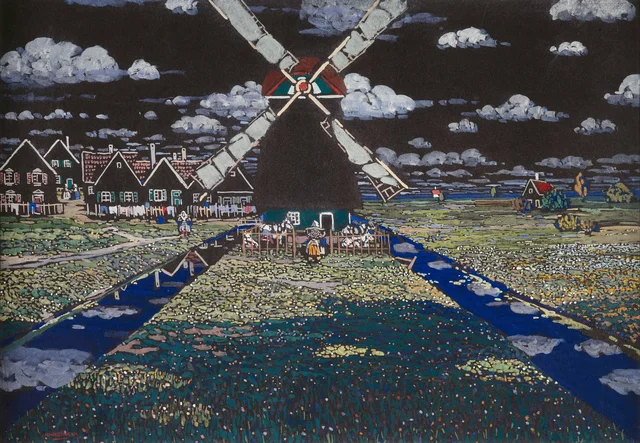 Windmill in HollandWassily Kandinsky, 1904
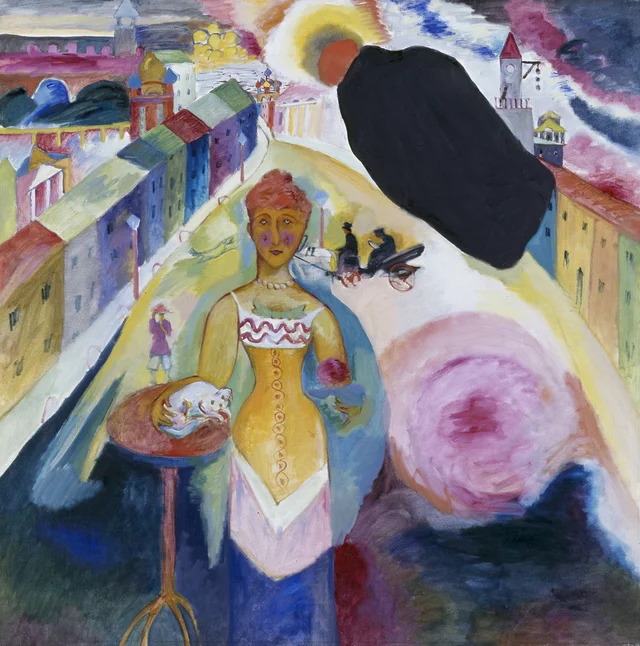 Woman in MoscowWassily Kandinsky, 1912
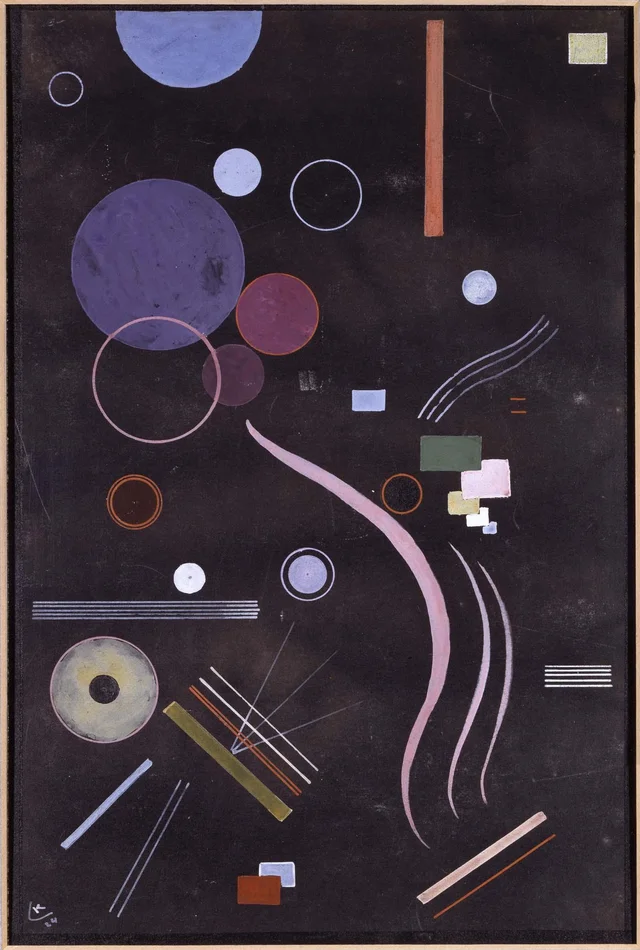 AcentricWassily Kandinsky, 1924
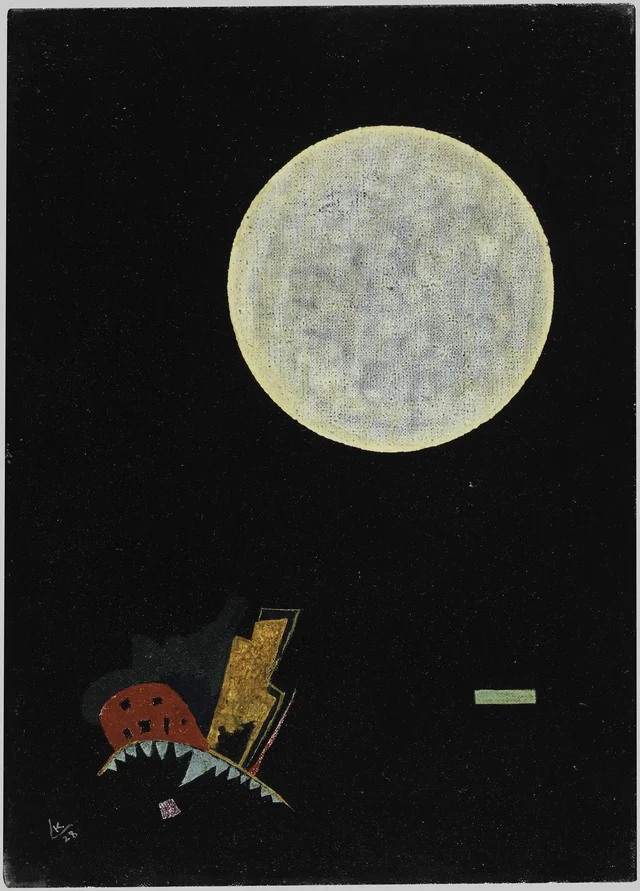 A Circle (A)Wassily Kandinsky, 1928
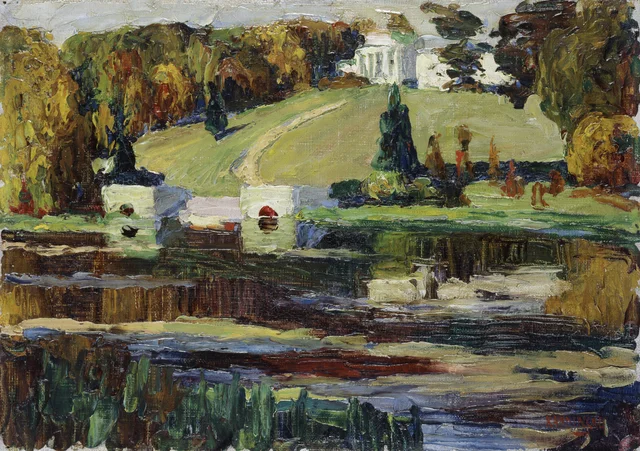 Akhtyrka, AutumnWassily Kandinsky, 1901
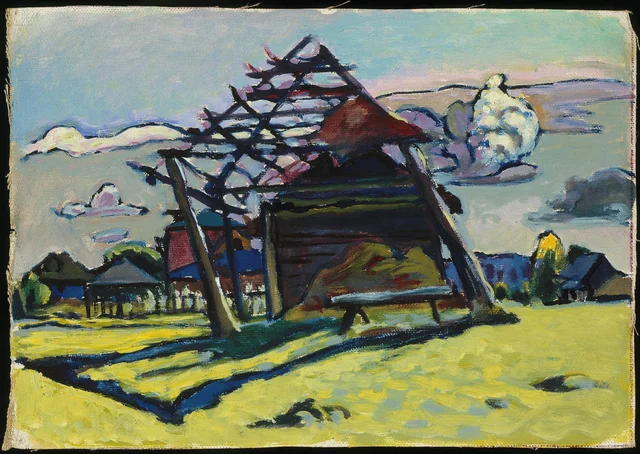 Akhtyrka, Framework for a Pile of Hay and FarmWassily Kandinsky, 1917
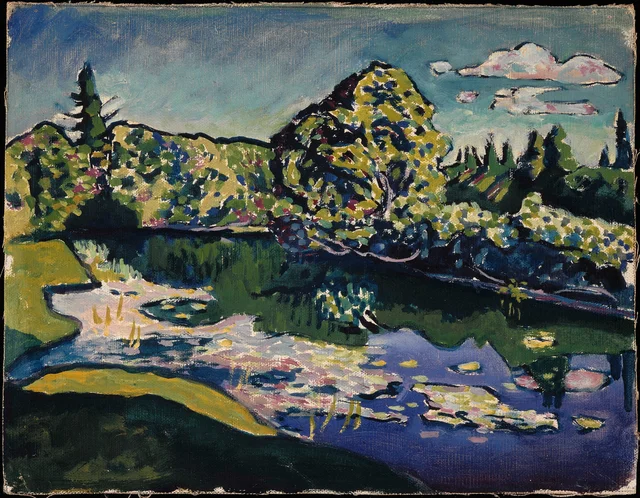 Akhtyrka, Pond in the ParkWassily Kandinsky, 1917
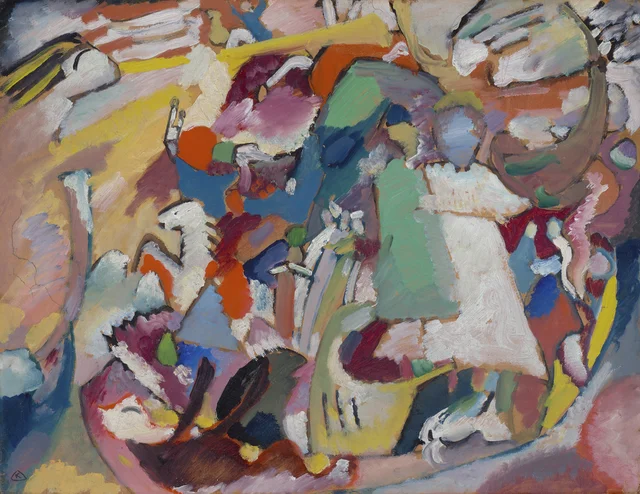 All Saints Day IWassily Kandinsky, 1911
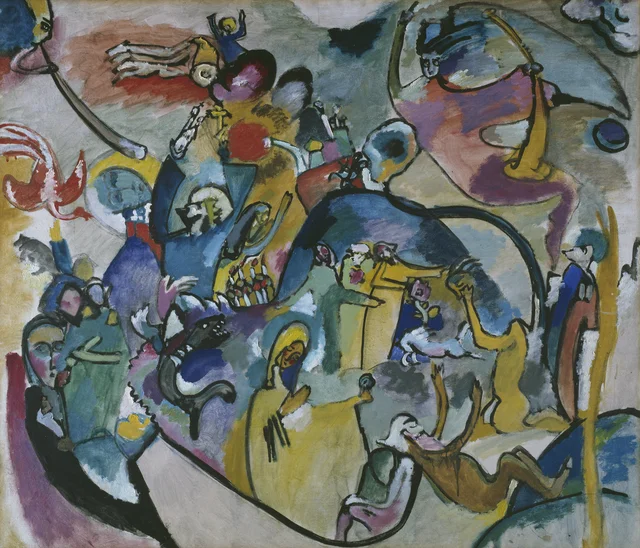 All Saints Day IIWassily Kandinsky, 1911
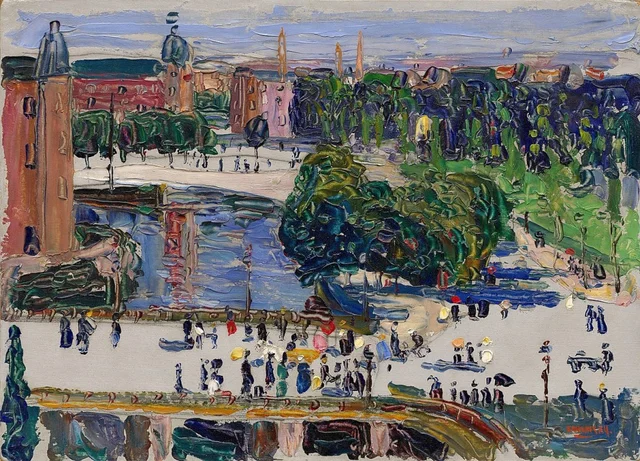 Amsterdam—View from the WindowWassily Kandinsky, 1904
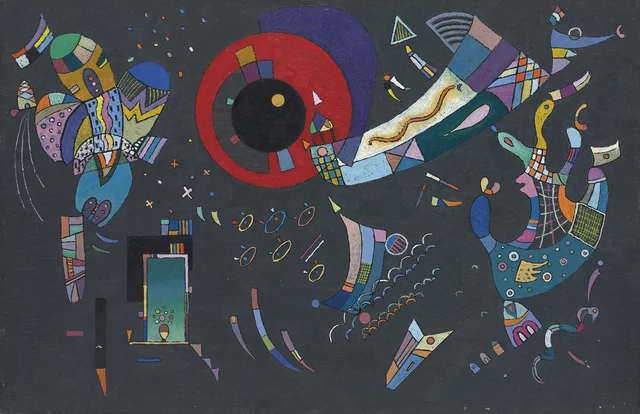 Around the CircleWassily Kandinsky, 1940
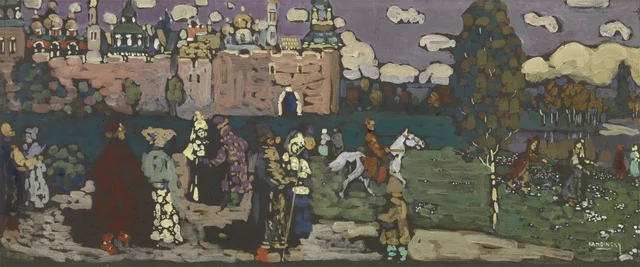 A Russian SceneWassily Kandinsky, 1904
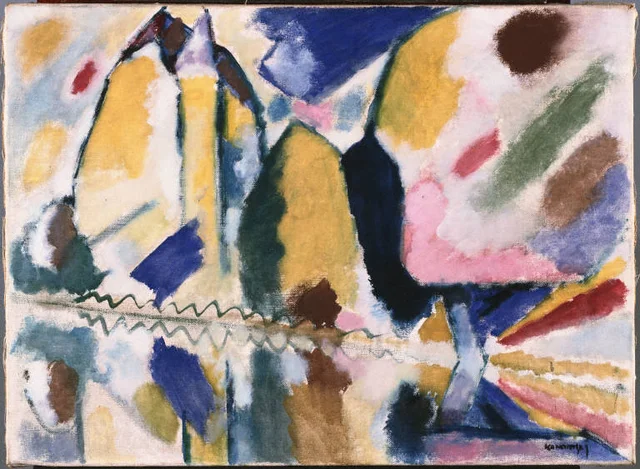 Autumn IIWassily Kandinsky, 1912
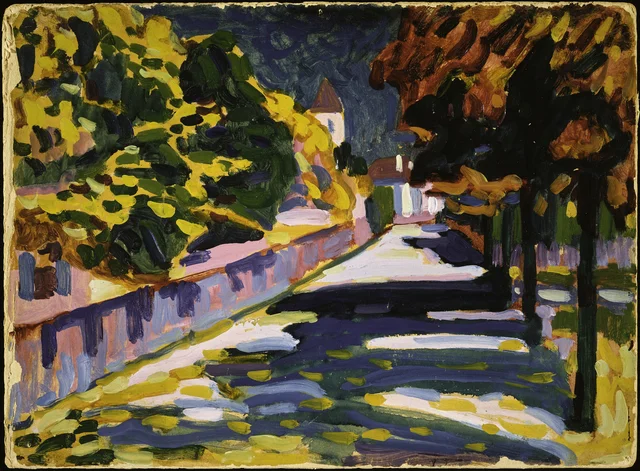 Autumn in BavariaWassily Kandinsky, 1908
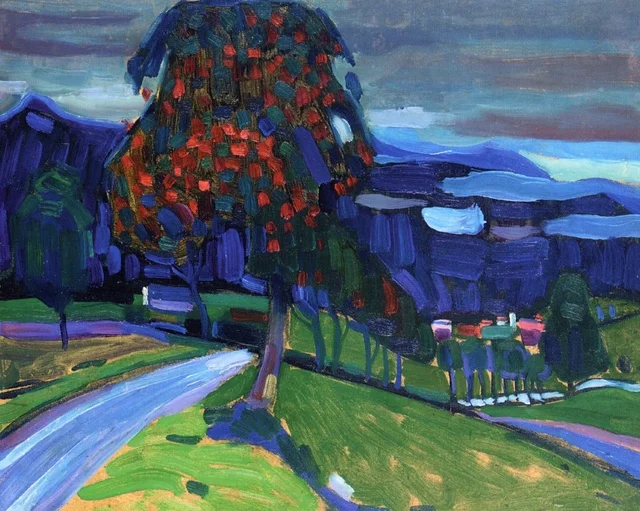 Autumn in MurnauWassily Kandinsky, 1908
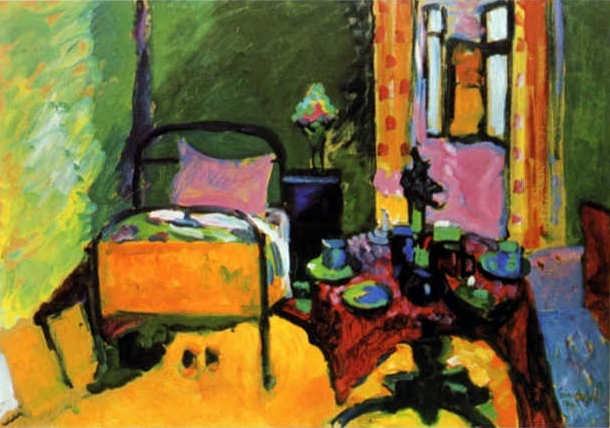 Bedroom in AinmillerstrasseWassily Kandinsky, 1909