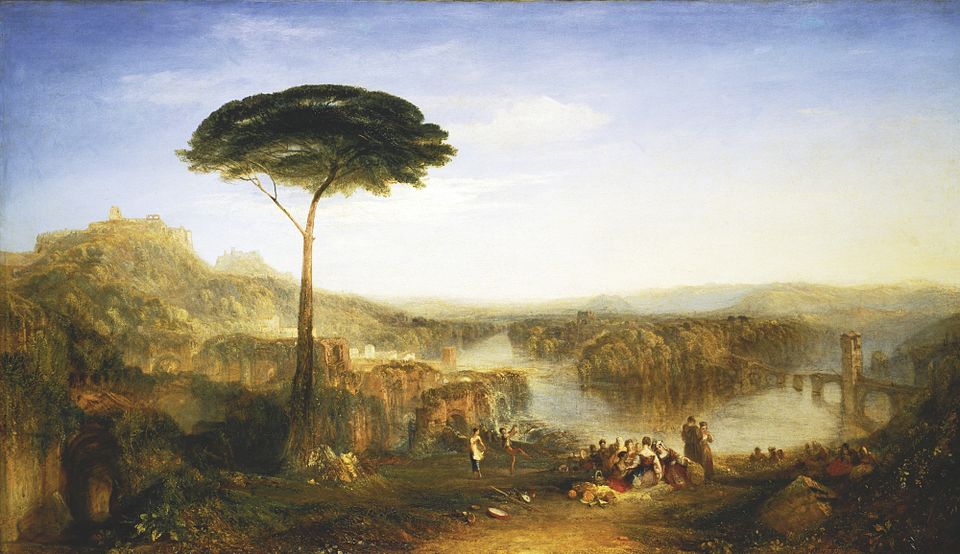
J. M. W. Turner, Childe Harold’s Pilgrimage - Italy, 1832. Wikimedia Commons. · PD
Childe Harold’s Pilgrimage - Italy
Details
The story
Byron had been dead eight years when Turner exhibited this in 1832. The poet died in 1824 in Greece, where he had gone to join the fight for independence, and his long poem about a wandering traveller through a faded, sunlit Italy was still hugely read. Turner takes a moment from it and builds a whole valley, golden light, broken columns, umbrella pines, small figures dancing in front while the ruins of empire glow in the distance. The staging owes a great deal to Claude Lorrain, the 17th-century landscape painter Turner measured himself against all his life. Crowds at the Royal Academy loved it. The critics complained about the colour, which by then they did almost every year.