Caravaggio · PD
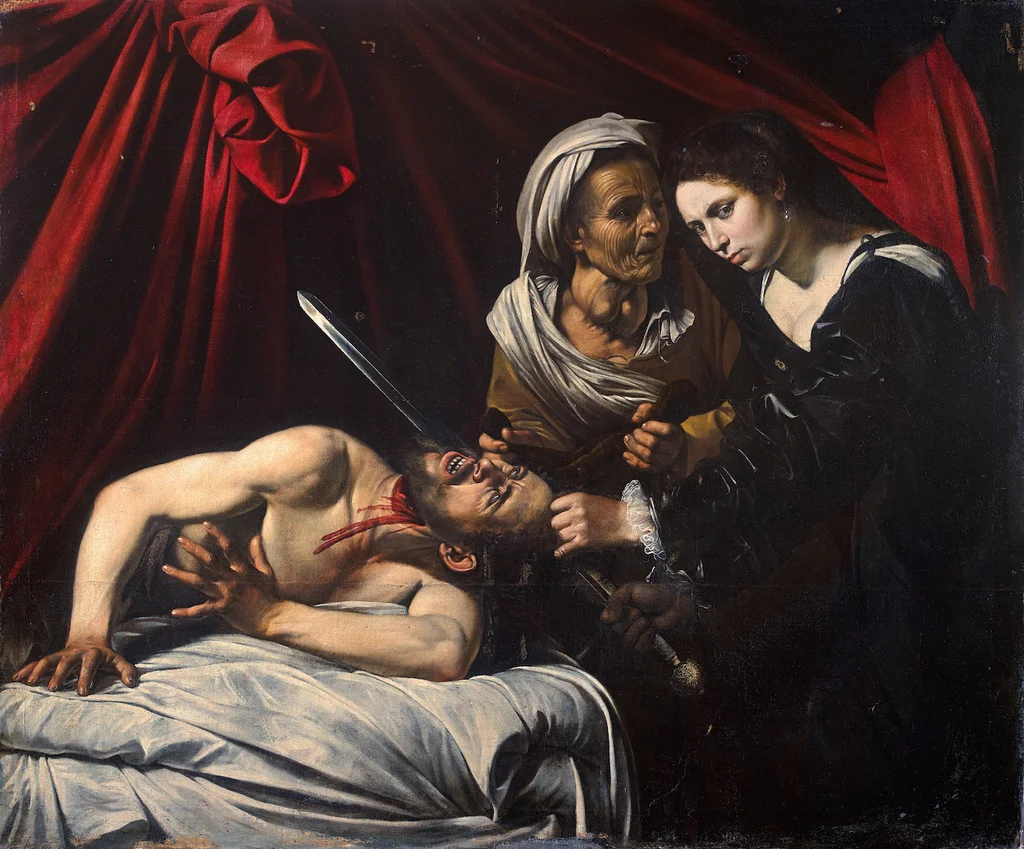
Judith Beheading Holofernes
Details
The story
In June 1607 Caravaggio left Naples in a hurry, a wanted man, and left two paintings behind in a studio run by two Flemish dealers. One showed Judith cutting the throat of the Assyrian general Holofernes. It then dropped out of the record for centuries. In 2014 a family in Toulouse climbed to their attic to trace a leak and found this canvas behind old mattresses. Experts have argued over it ever since: some see the lost Naples Caravaggio, others the hand of one of those Flemish dealers, Louis Finson, who is known to have copied him closely. France declared it a national treasure and then let the export bar lapse, and the Louvre chose not to buy it. It was sold privately in 2019, its author still unsettled.