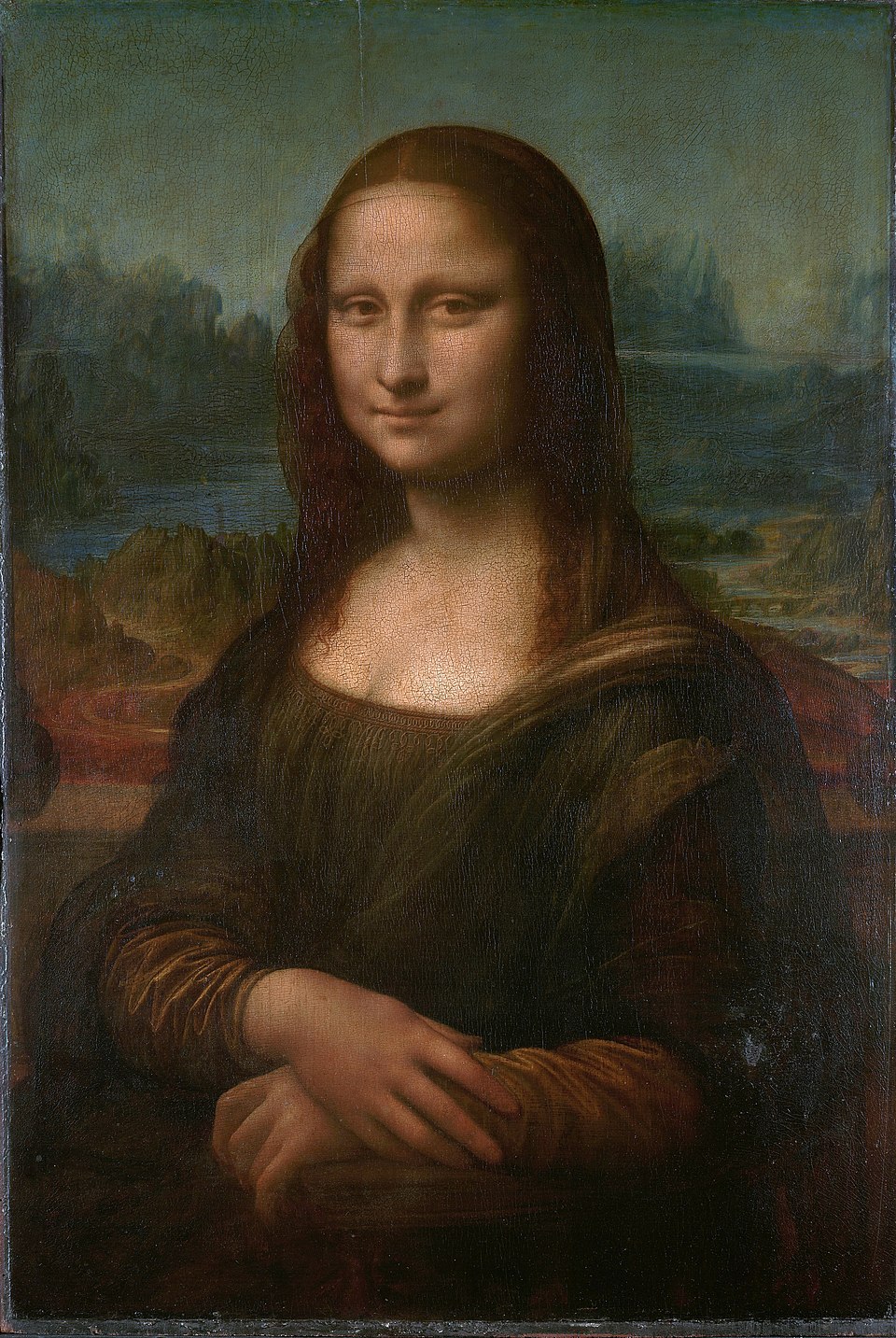
Leonardo da Vinci, Mona Lisa, 1503. Wikimedia Commons. · PD
Mona Lisa
Details
The story
On a Monday morning in August 1911, when the Louvre was closed to visitors, an Italian handyman named Vincenzo Peruggia lifted this small poplar panel off the wall, slipped it under his smock, and walked out. He had helped build the protective case around it, so he knew exactly how to free it. For two years the most recognisable face in Europe sat in a trunk in his Paris apartment. That theft is a large part of why you have heard of it at all. The picture was already admired before 1911, but the manhunt put it on front pages around the world, and crowds lined up at the Louvre just to stare at the empty hooks where it had hung. When Peruggia was finally caught in Florence in 1913, trying to sell it to a local dealer, he claimed he was returning a national treasure that Napoleon had stolen from Italy. He was wrong about the history. Leonardo carried this portrait of Lisa Gherardini, a Florentine merchant's wife, with him to France himself, and the French king Francis I acquired it in the 1510s. It came back to the Louvre in January 1914, and it has hung behind glass ever since.