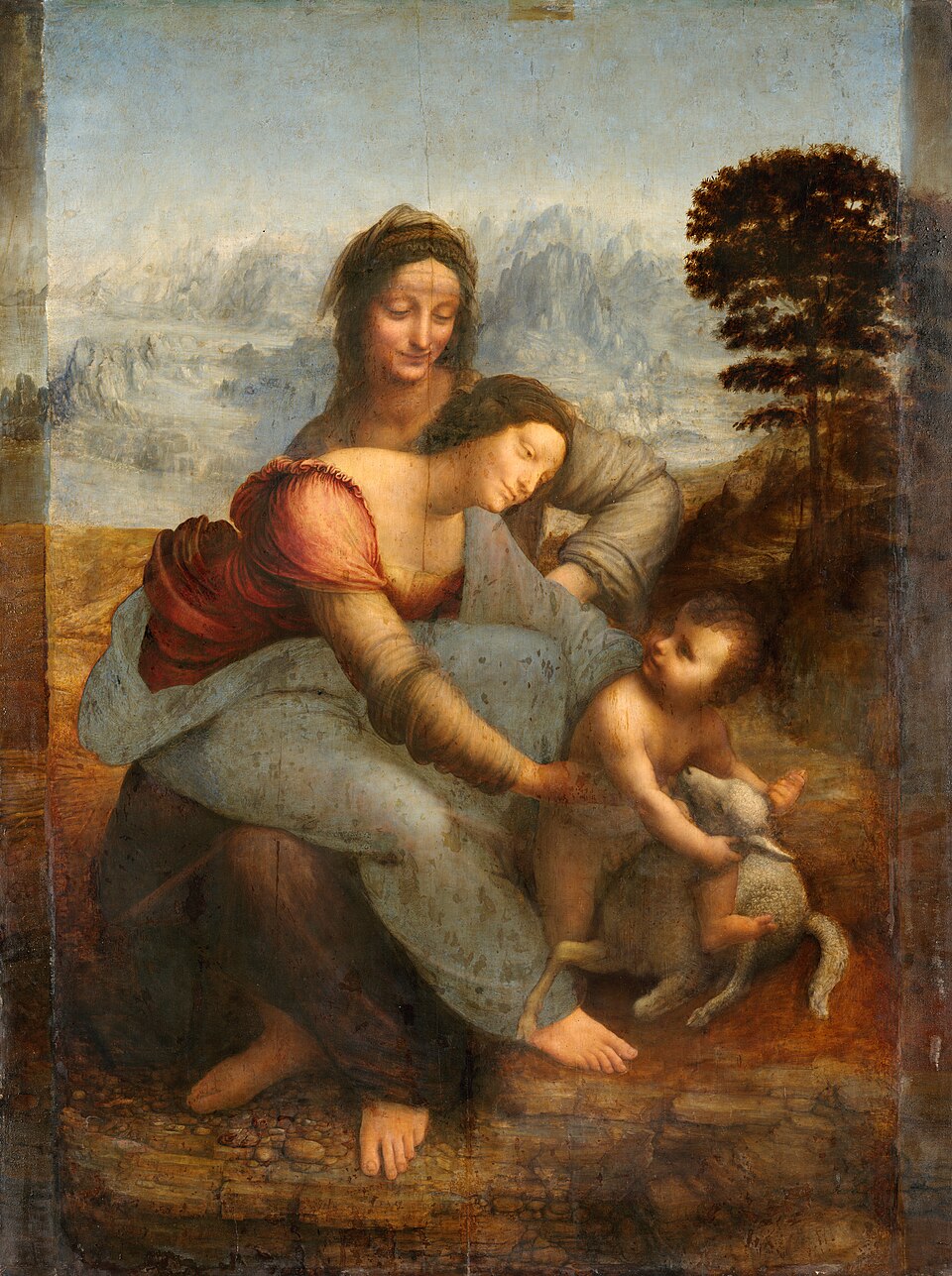
Leonardo da Vinci, The Virgin and Child with Saint Anne, 1511. Wikimedia Commons. · PD
The Virgin and Child with Saint Anne
Details
The story
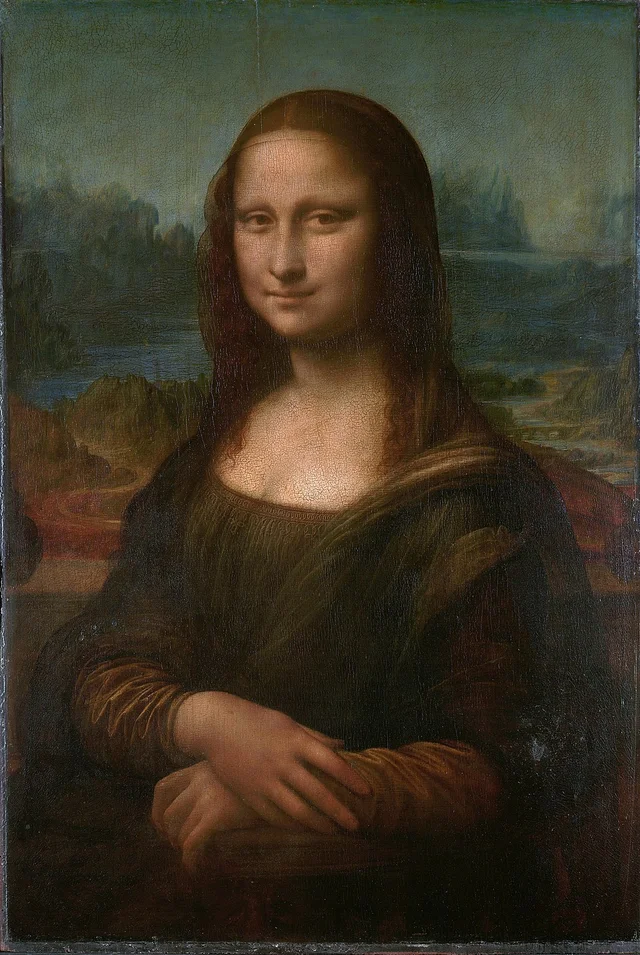
Leonardo da Vinci worked at this panel on and off for well over a decade, from around 1503 into the 1510s, and he never fully finished it. He carried it with him, along with the Mona Lisa, and it was still in his rooms in France when he died in 1519. It sets three generations in one pyramid of bodies. Saint Anne sits at the back, her grown daughter Mary perched on her lap, and Mary leans down to hold the Christ child, who has twisted round to grab a lamb. The lamb is the quiet point of the whole thing. It is the animal of sacrifice, and the mother reaches to draw the child back from it while he pulls toward it, so the picture holds his future in a single gesture of tug and restraint. Behind them Leonardo painted a wall of cold blue mountains fading into mist, the softened distance he was famous for. The panel later drew the attention of another artist entirely. Sigmund Freud wrote a long essay reading Leonardo's own childhood into the two mothers, a theory that leaned partly on a mistranslation. Today it hangs in the Louvre, a few rooms from the small portrait Leonardo kept beside it to the end.