Bartolomé Esteban Murillo · PD
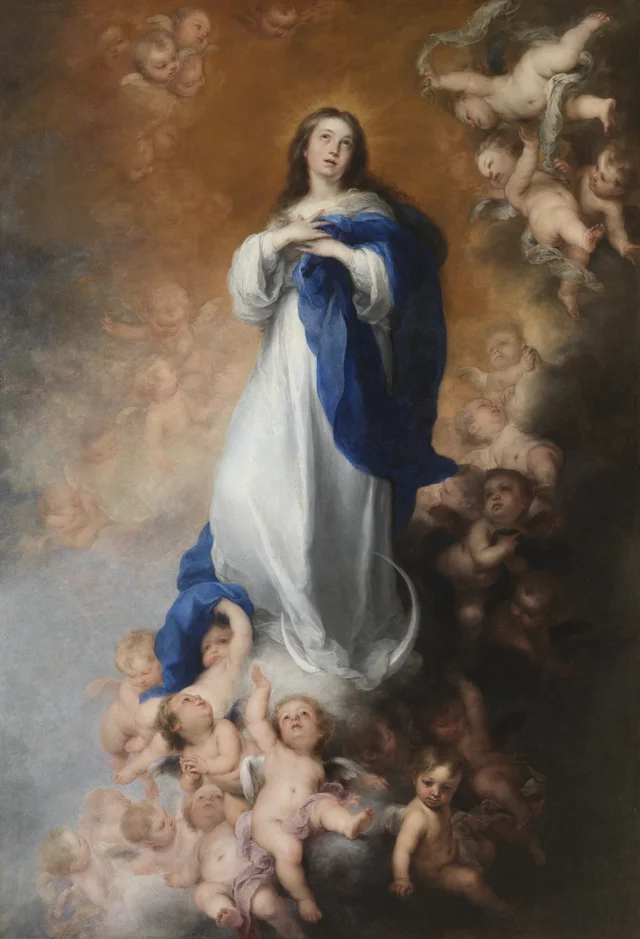
The Immaculate Conception
Details
The story
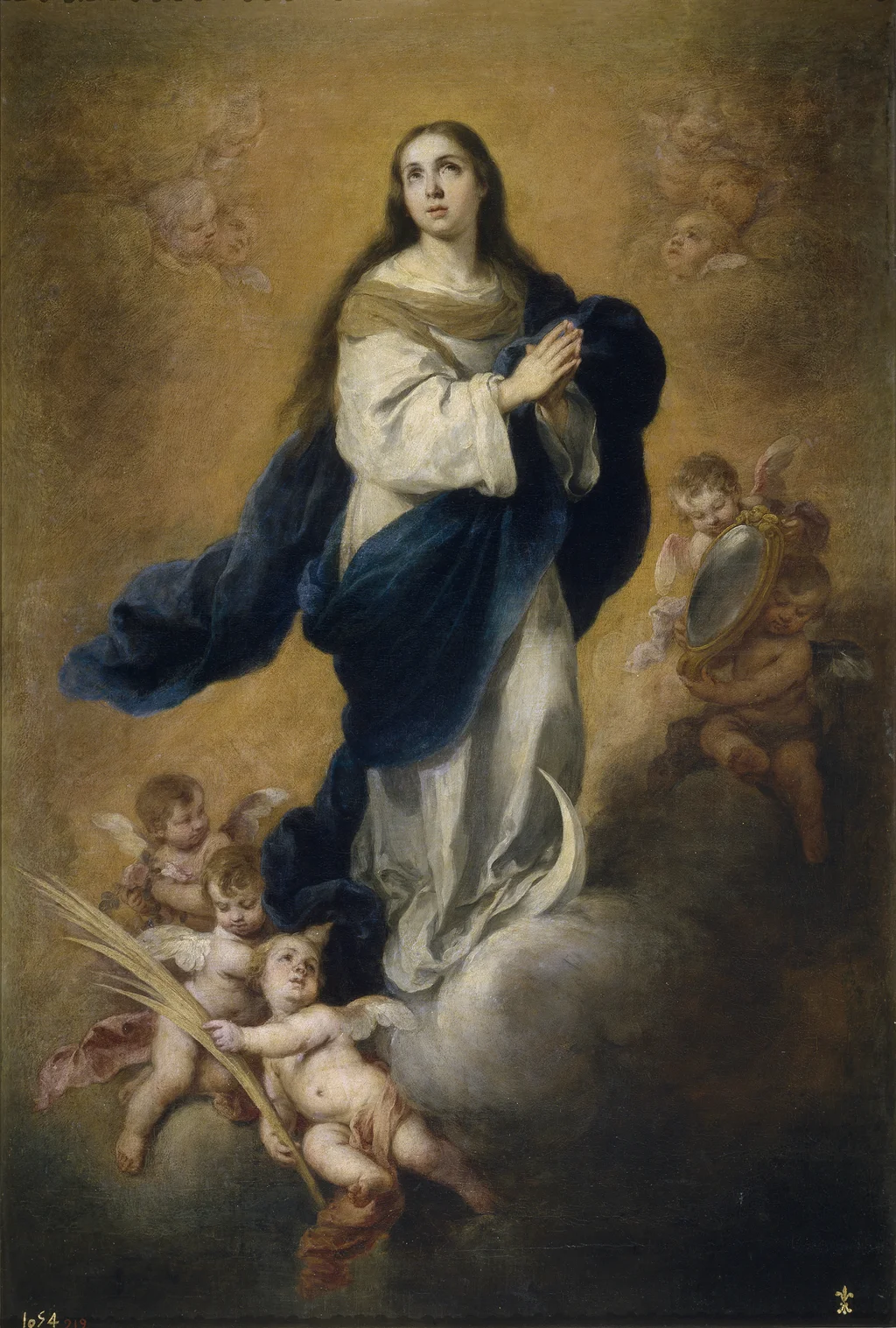
In Murillo's Seville the Immaculate Conception was more than a doctrine, it was a civic passion. The belief that Mary was conceived free of original sin had deep popular devotion in 17th-century Spain, and Seville pressed Rome for decades to make it official Church teaching, which would not happen until 1854. Painters were asked for the image again and again, and Murillo supplied it more memorably than anyone, returning to the subject some 20 times. He settled on a young woman in white and blue, borne up on cloud and cherubs, hands folded, eyes raised. The museum dates this canvas between 1665 and 1675, the years when he was the most sought-after painter in the city, and this rising, weightless figure is the type that spread from his workshop across Spain and its colonies.