Andrea Mantegna · PD
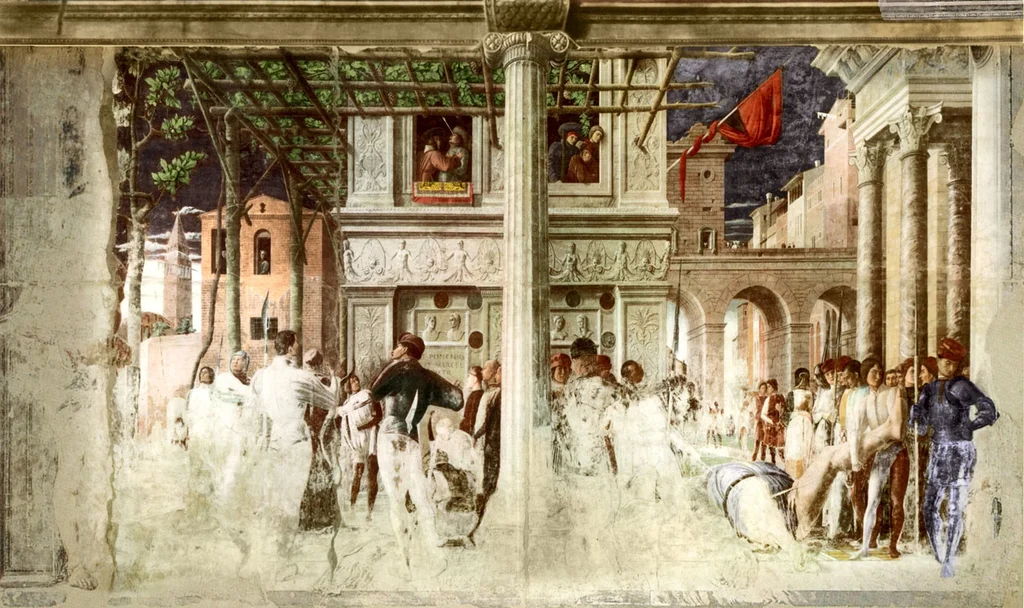
Martirio y transporte del cuerpo decapitado de San Cristóbal
Ficha
La historia
Andrea Mantegna was barely into his twenties when he painted this around 1454, on the wall of a chapel in the Eremitani church in Padua. It already shows the things that would make his name: figures seen from sharply below as if you stood at their feet, and armour, ruins and inscriptions studied like a Roman antiquarian rather than merely imagined. Saint Christopher is put to death and his headless body dragged away, all of it staged along a deep, measured street. Then the modern history. In March 1944 Allied bombs struck the church and shattered most of the fresco cycle into tens of thousands of fragments. This scene is among the little that survived, because it had been detached from the wall and taken down before the war ever reached Padua.