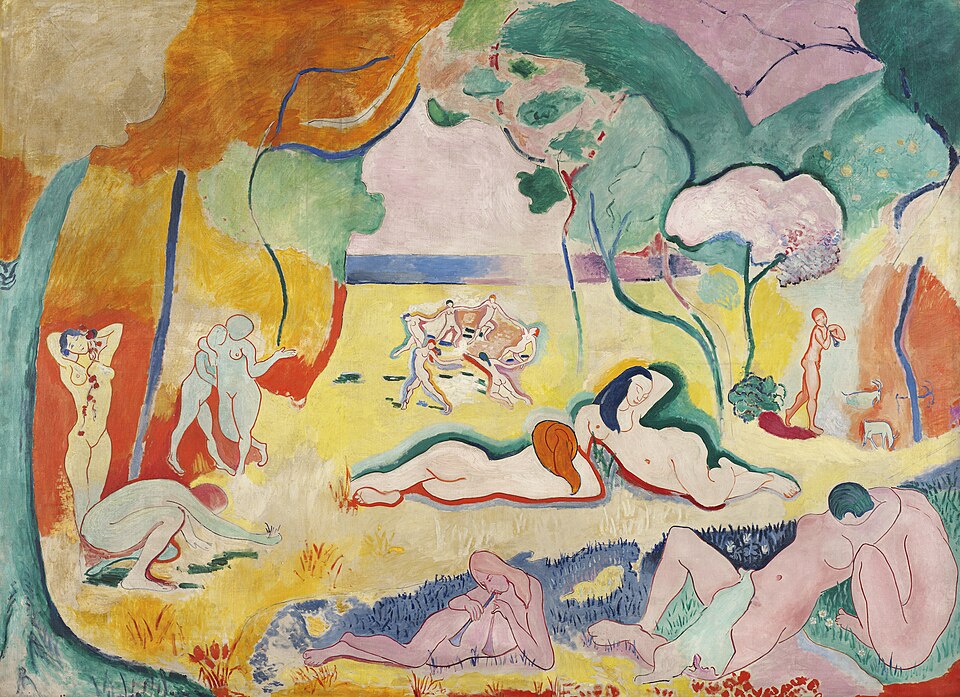
Henri Matisse, The Joy of Life, 1906. Wikimedia Commons.
La alegría de vivir
Ficha
La historia
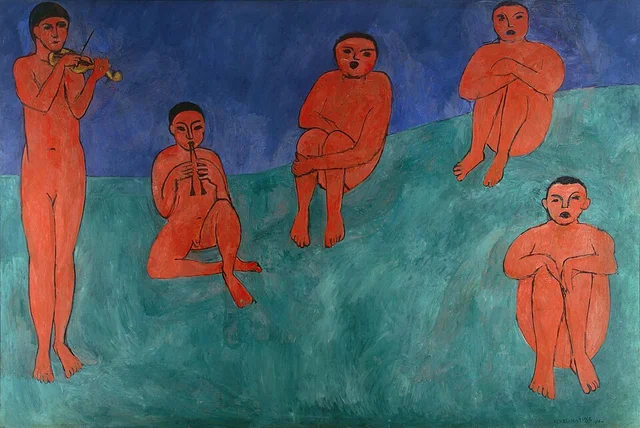
En el otoño de 1905 un crítico había llamado fauves, fieras, a Matisse y a sus amigos por los colores estridentes que usaban. Al año siguiente Matisse respondió con este gran cuadro y lo colgó en el Salón de los Independientes de 1906, donde volvió a escandalizar. Es una arcadia inventada: cuerpos desnudos que bailan, se abrazan, tocan la flauta o descansan sobre un prado de rosas, naranjas y verdes que no imitan a la naturaleza. En el fondo, un corro de figuras baila en círculo, un motivo que Matisse retomaría años después en La danza. Leo y Gertrude Stein lo compraron pronto; hoy cuelga en la Fundación Barnes, cerca de Filadelfia, donde su dueño prohibió durante décadas prestarlo.