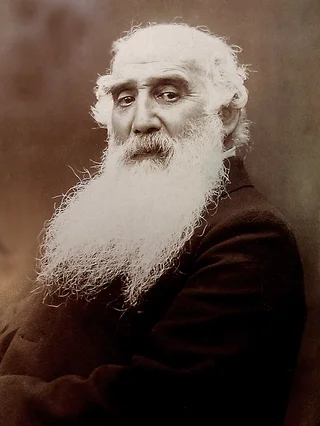
Camille Pissarro
1830–1903 · France · Impressionnisme
L'histoire
Pissarro était le doyen des impressionnistes, plus âgé que Monet ou Degas, et le seul du groupe à avoir exposé aux huit expositions organisées entre 1874 et 1886. Les peintres plus jeunes le considéraient comme un maître. Cézanne disait qu'il était pour lui comme un père, Gauguin étudia sous sa direction, et ses encouragements touchèrent jusqu'à Van Gogh.
La guerre franco-prussienne le surprit chez lui, à Louveciennes, un village à l'ouest de Paris. Il se réfugia à Londres en 1870, et les soldats prussiens logés dans la maison utilisèrent ses toiles comme planches pour traverser le jardin boueux et comme tabliers dans la boucherie qu'ils installèrent à l'intérieur. Sur environ 1 500 tableaux réalisés en deux décennies de travail, une quarantaine seulement survécurent. Il revint et recommença simplement à zéro.
Il resta toute sa vie inquiet quant à sa méthode. En 1885, il rencontra le jeune Georges Seurat et adopta sa minutieuse technique du pointillé, construisant les tableaux à partir de minuscules points de couleur pure, avant de la juger trop lente et de revenir à une touche impressionniste plus libre. Dans sa soixantaine, une infection oculaire chronique l'empêcha de travailler en extérieur ; il loua alors des chambres au-dessus des boulevards de Paris et de Rouen et peignit les rues depuis sa fenêtre, les mêmes coins de rue encore et encore, à mesure que la lumière changeait au fil de la journée.
Autres articles
Œuvres
218 œuvres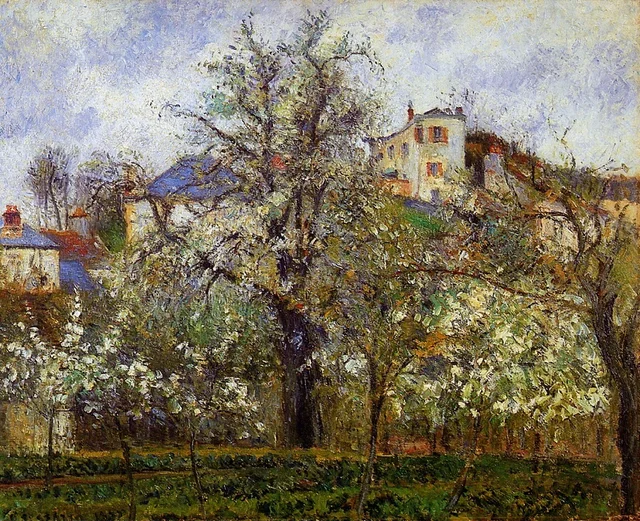 Verger avec arbres en fleurs, printemps, PontoiseCamille Pissarro, 1877
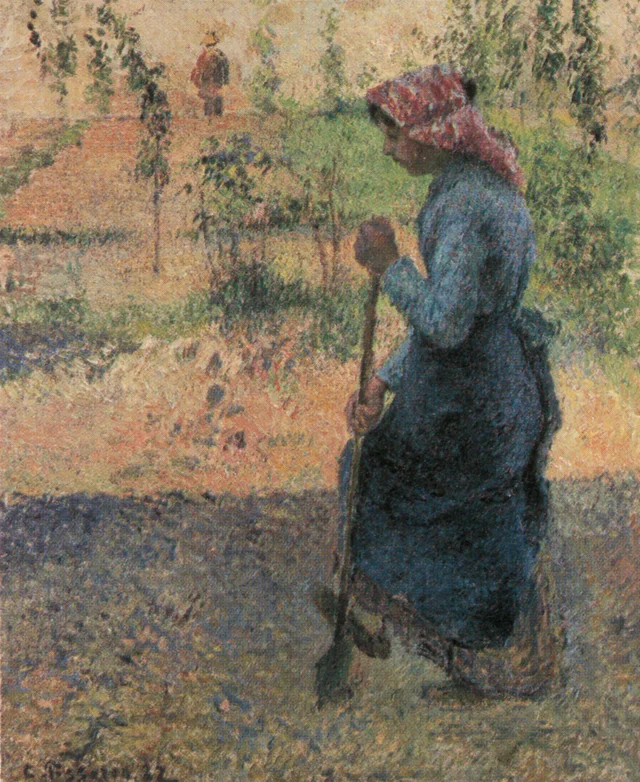 Paysanne bêchantCamille Pissarro, 1882
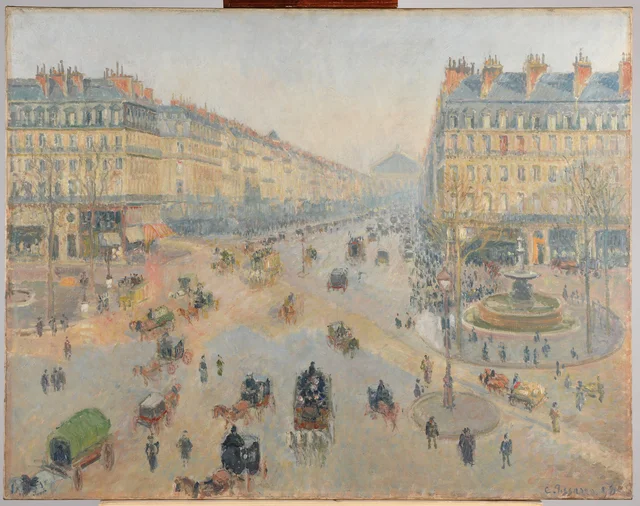 Place du Théâtre-Français et avenue de l'Opéra, soleil, matinée d'hiverCamille Pissarro, 1898
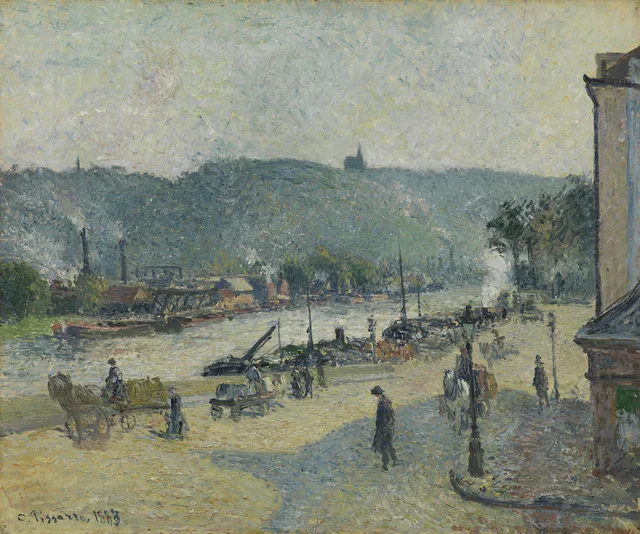 Place Lafayette, RouenCamille Pissarro, 1883
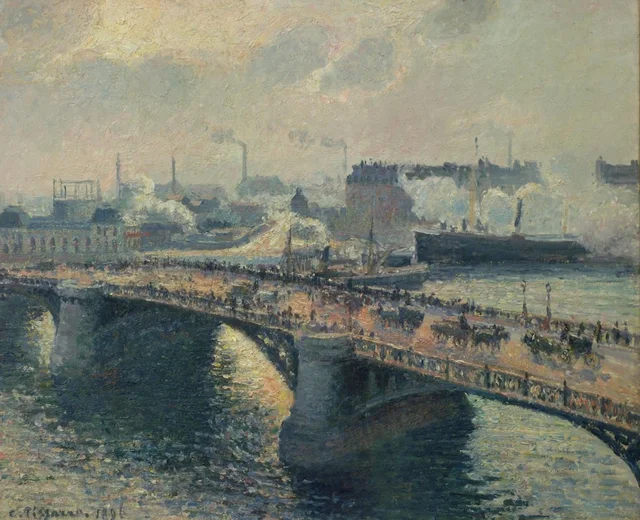 Pont Boieldieu, Rouen, soleil couchant, temps brumeuxCamille Pissarro, 1896
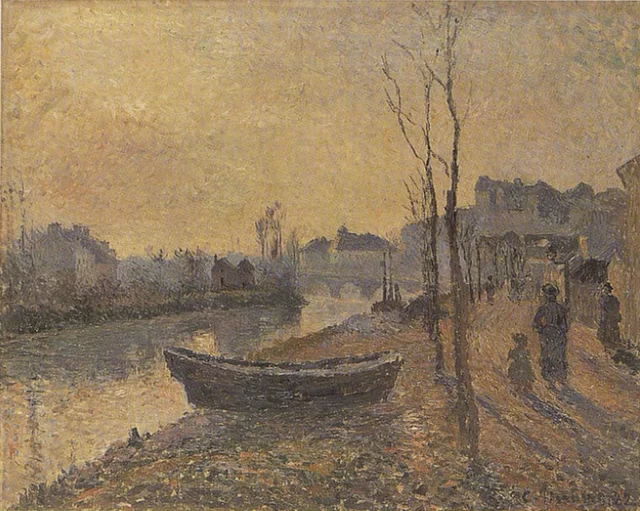 Quai du Pothuis, bords de l'OiseCamille Pissarro, 1882
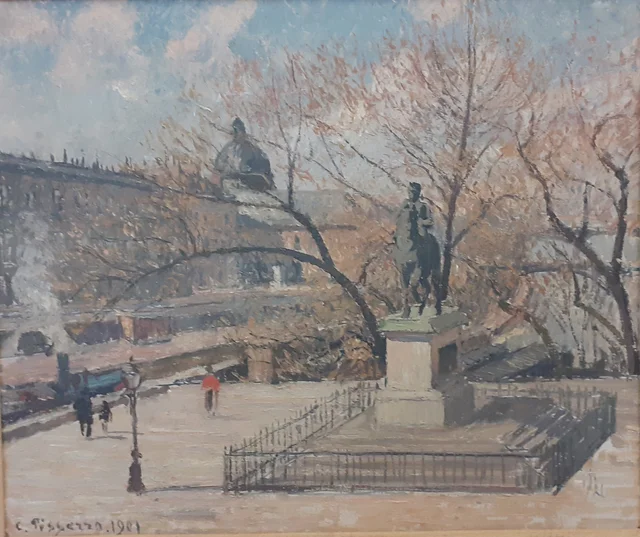 Statue d'Henri IV et hôtel de la Monnaie, matin, soleilCamille Pissarro, 1901
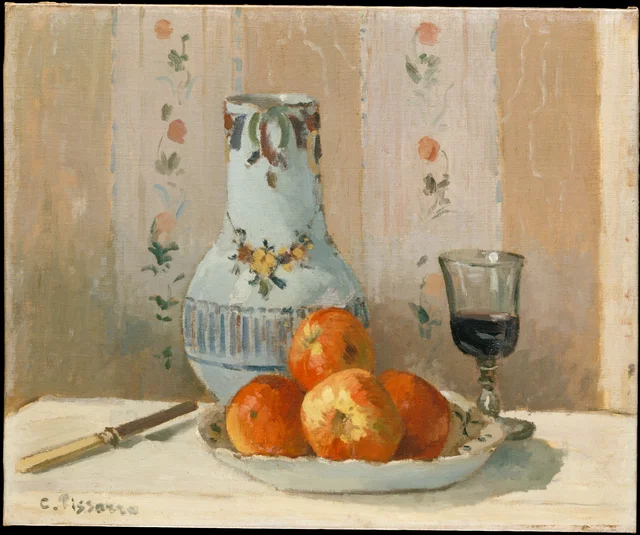 Nature morte aux pommes et au pichetCamille Pissarro, 1872
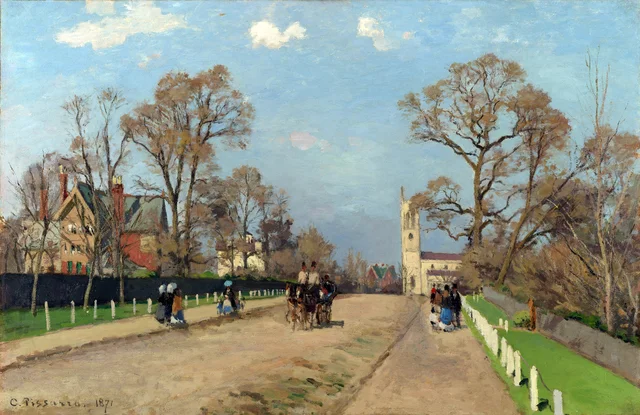 L'Avenue, SydenhamCamille Pissarro, 1871
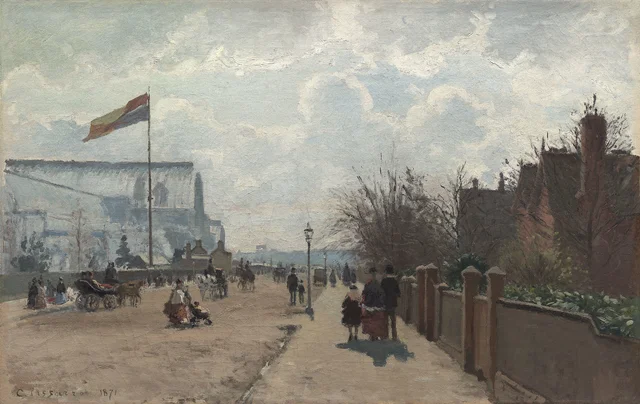 Le Crystal PalaceCamille Pissarro, 1871
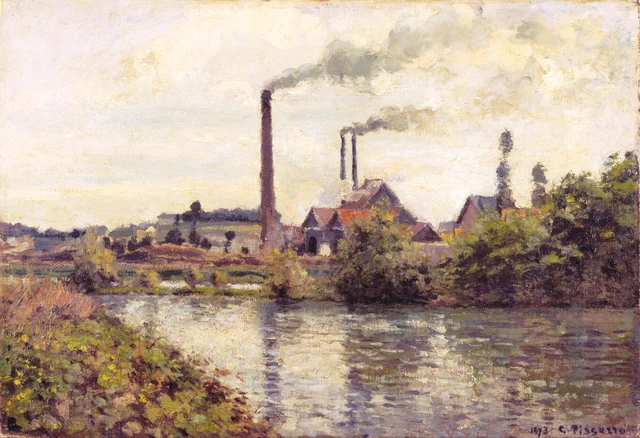 L'Usine à PontoiseCamille Pissarro, 1873
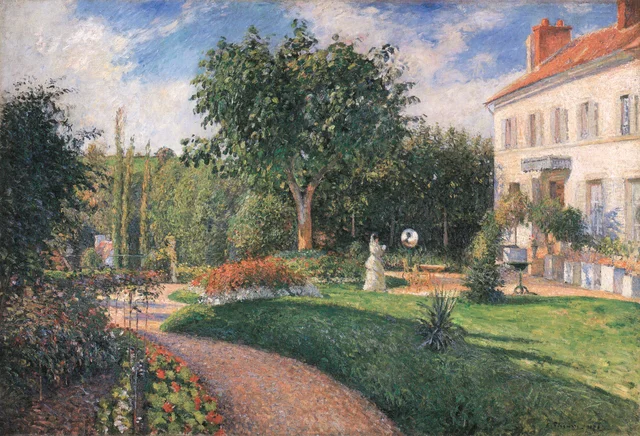 Le Jardin des Mathurins à PontoiseCamille Pissarro, 1876
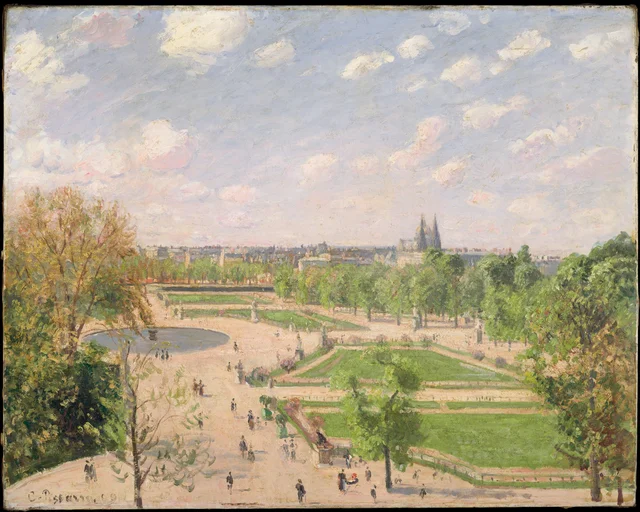 Le Jardin des Tuileries, matinée de printempsCamille Pissarro, 1899
 La Marne à ChennevièresCamille Pissarro, 1865
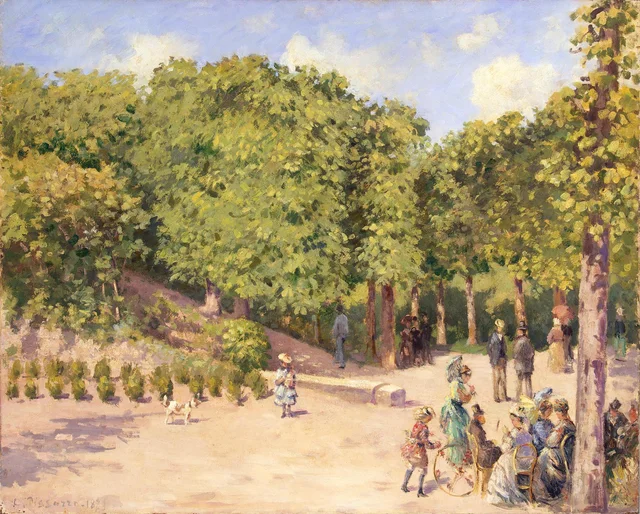 Le Jardin municipal, PontoiseCamille Pissarro, 1873
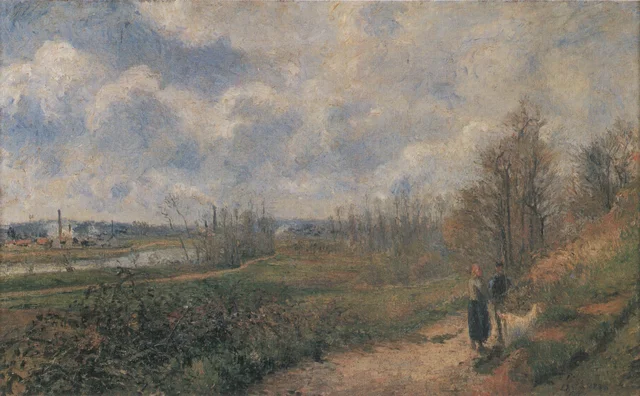 Le Chemin du Chou, PontoiseCamille Pissarro, 1878
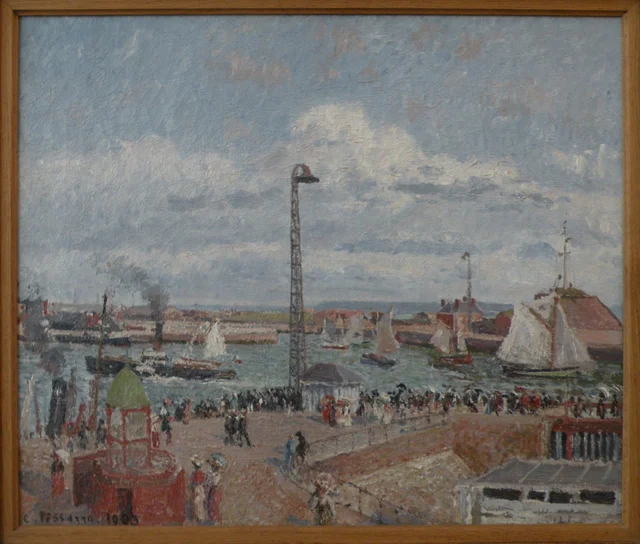 L'Anse des pilotes au Havre. Haute mer. Après-midi. SoleilCamille Pissarro, 1903
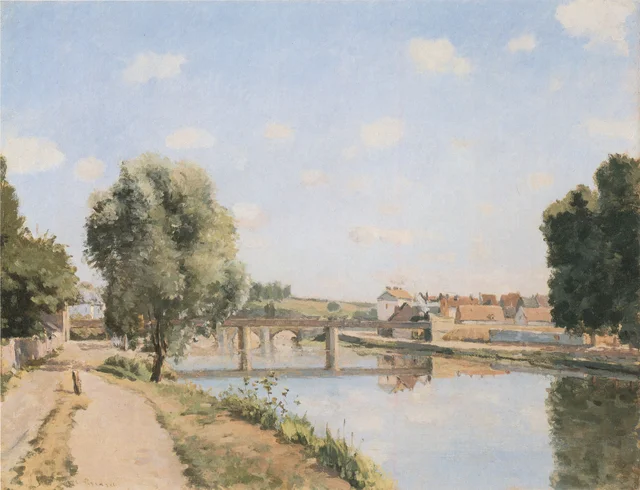 Le Pont du chemin de fer, PontoiseCamille Pissarro, 1873
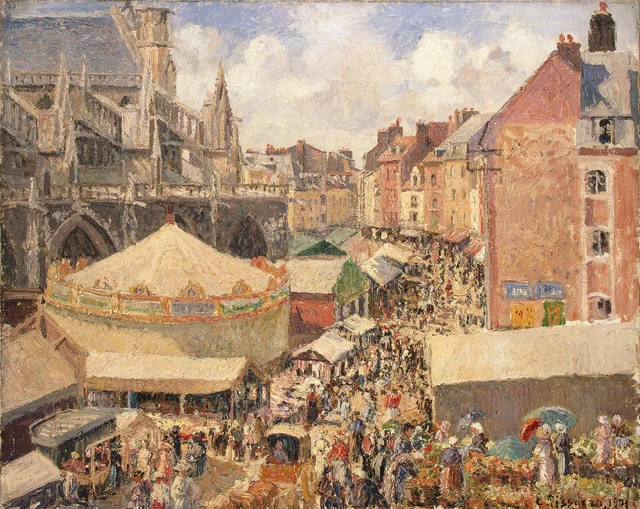 La Foire de la ville près de l'église Saint-Jacques à Dieppe, matin, soleilCamille Pissarro, 1901
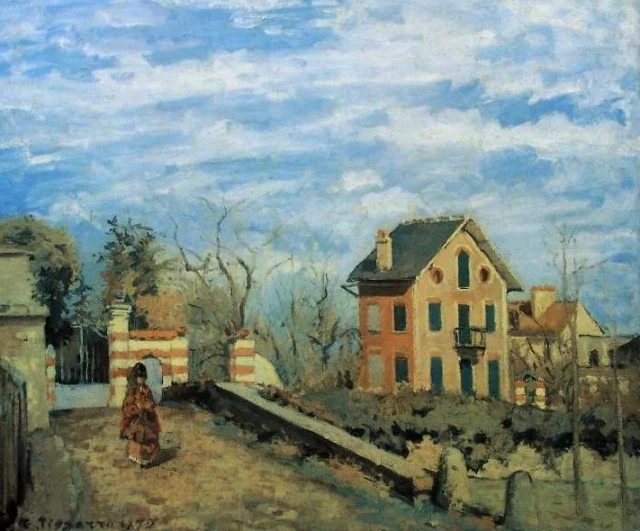 Le Village de VoisinsCamille Pissarro, 1872
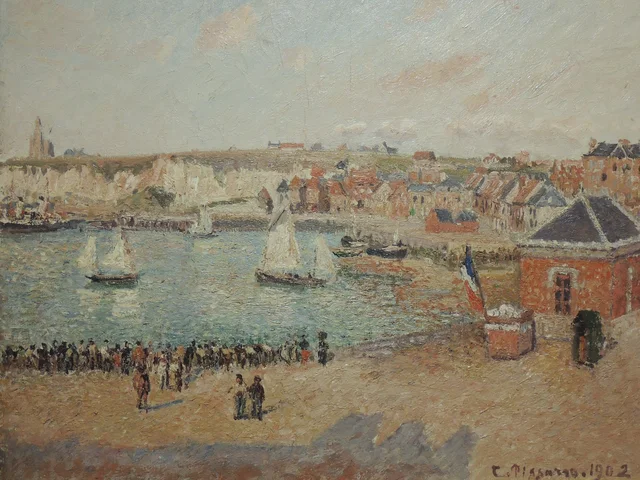 Vue depuis le port de DieppeCamille Pissarro, 1902
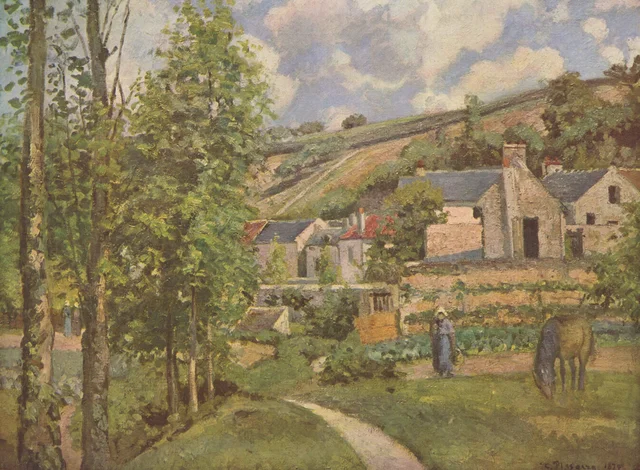 Un coin de l'Hermitage, PontoiseCamille Pissarro, 1874
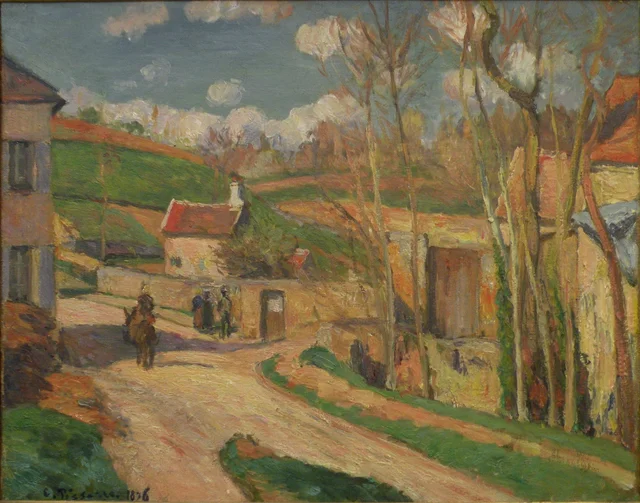 Un carrefour à L'Hermitage, PontoiseCamille Pissarro, 1876
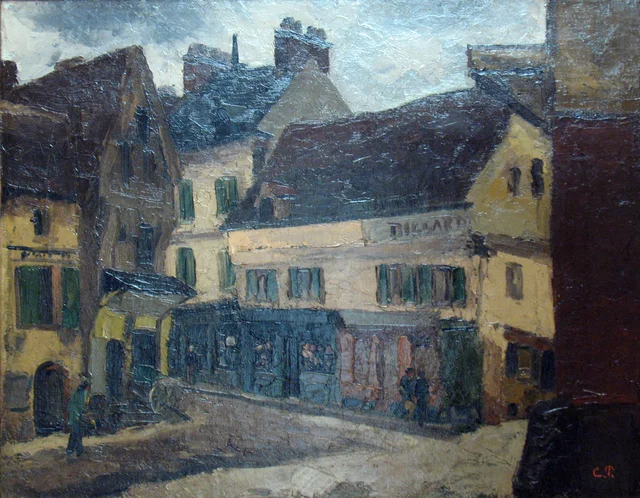 Un coin à La Roche-GuyonCamille Pissarro, 1867
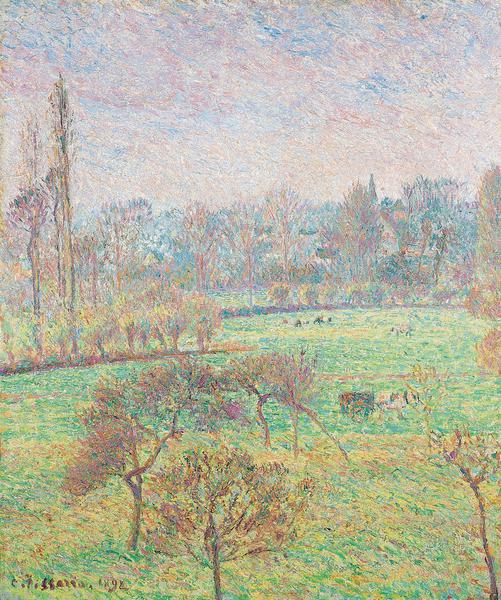 Matin, automne, ÉragnyCamille Pissarro, 1892