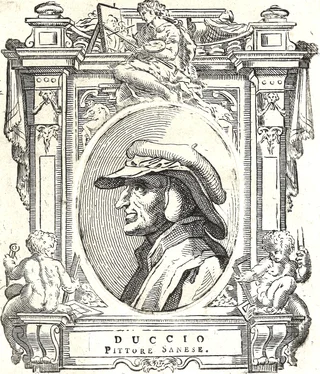
Duccio di Buoninsegna
1255–1319 · République de Sienne · École siennoise
L'histoire
Le 9 juin 1311, la ville de Sienne, en Toscane au centre de l'Italie, ferma ses boutiques et organisa une procession. Les prêtres, le conseil qui gouvernait la cité et de simples citoyens marchèrent, cierges à la main, de l'atelier de Duccio di Buoninsegna jusqu'à la cathédrale, escortant un unique retable vers sa place sur le maître-autel. On l'appelait la Maestà, la Vierge en majesté, et Duccio et son atelier avaient mis environ trois ans à l'achever.
Le panneau était immense pour son temps et peint des deux côtés, une Vierge à l'Enfant trônant sur fond d'or, face aux fidèles, à l'avers, et au revers, hors de la vue du public, 43 petites scènes de la vie du Christ et de la Vierge disposées comme un livre d'images. Duccio était déjà le premier peintre de l'école siennoise, travaillant dans la tradition byzantine à fond d'or mais adoucissant ses figures rigides par des gestes et des drapés plus naturels, une évolution sur laquelle les peintres siennois bâtirent pendant une génération.
Le retable fut plus tard démembré et vendu par morceaux au XVIIIe siècle. L'essentiel se trouve aujourd'hui au musée de la cathédrale de Sienne, même si certains panneaux ont fini aussi loin qu'à New York et à Fort Worth, au Texas.
Autres articles
Œuvres
10 œuvres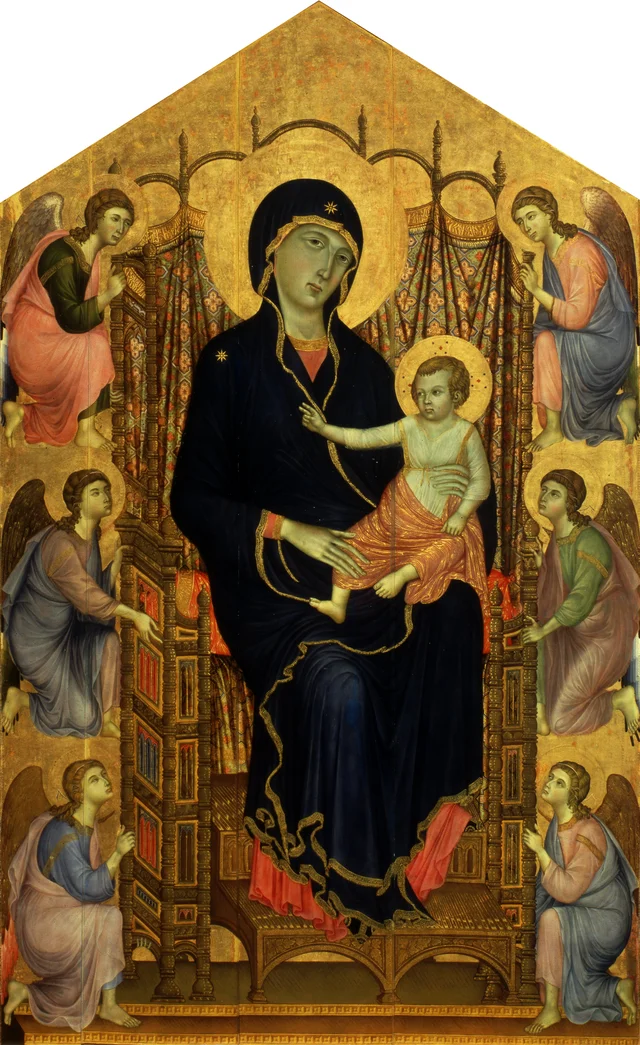 La Madone RucellaiDuccio di Buoninsegna, 1285
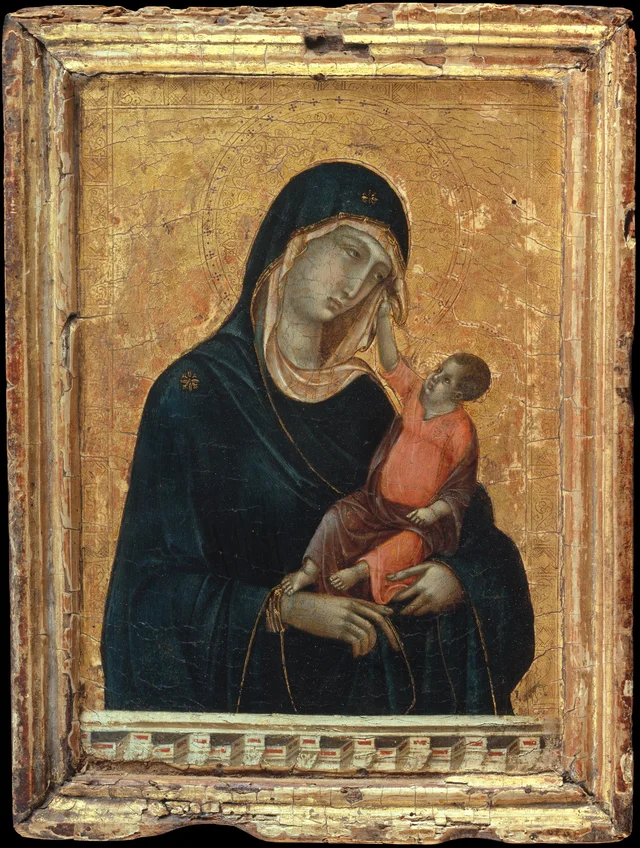 La Vierge à l'EnfantDuccio di Buoninsegna, 1300
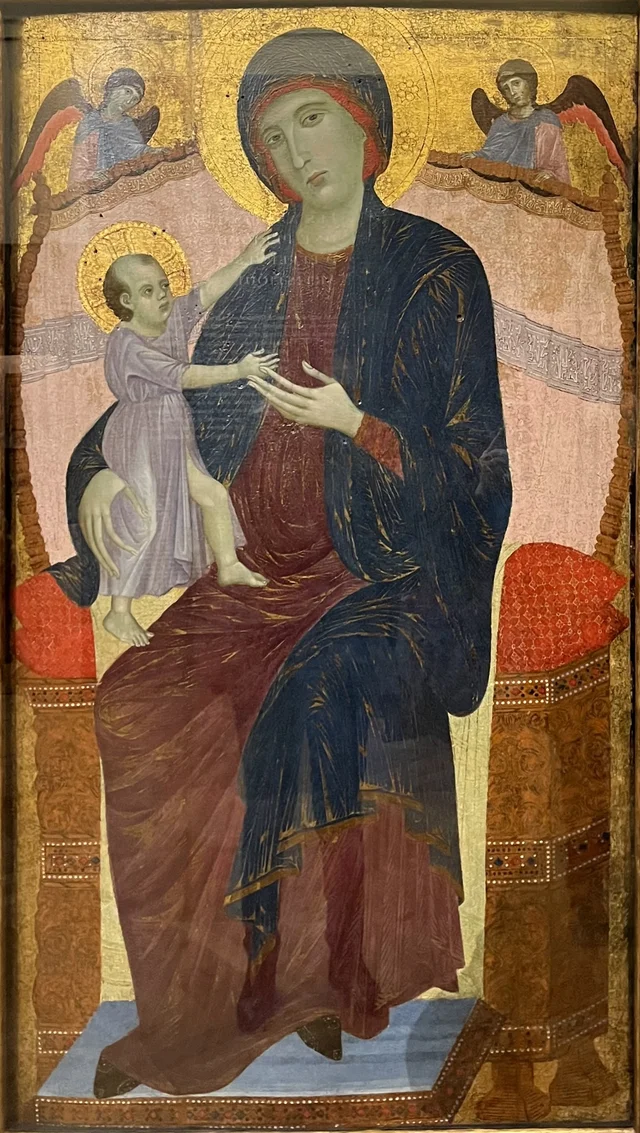 Madone GualinoDuccio di Buoninsegna, 1280
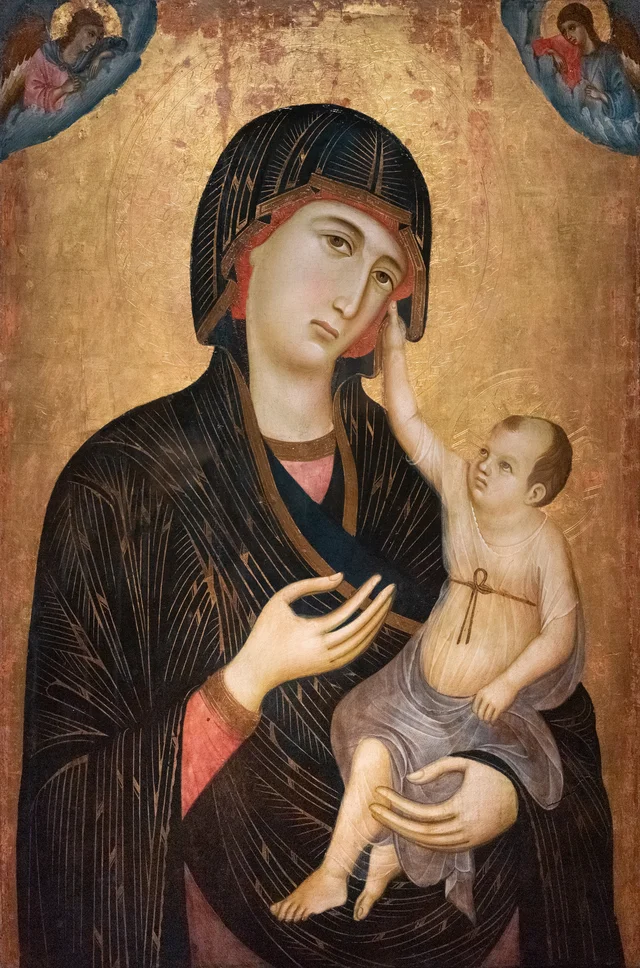 Madone de CrevoleDuccio di Buoninsegna, 1283
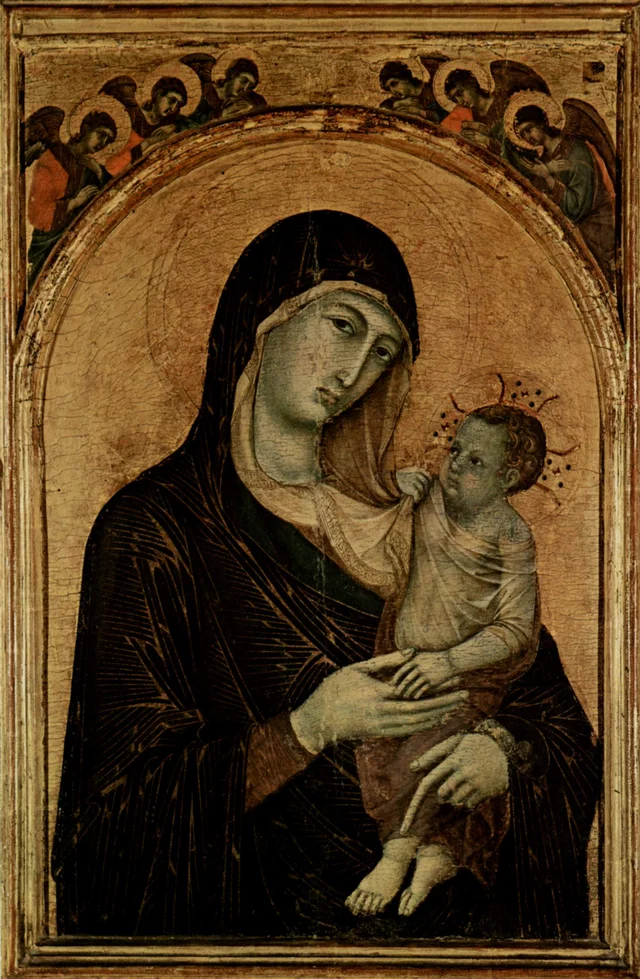 Vierge à l'Enfant et six angesDuccio di Buoninsegna, 1300
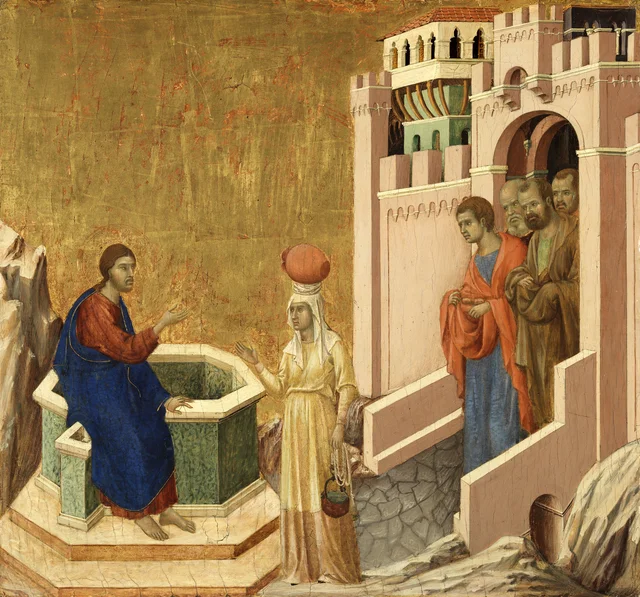 Le Christ et la SamaritaineDuccio di Buoninsegna, 1311
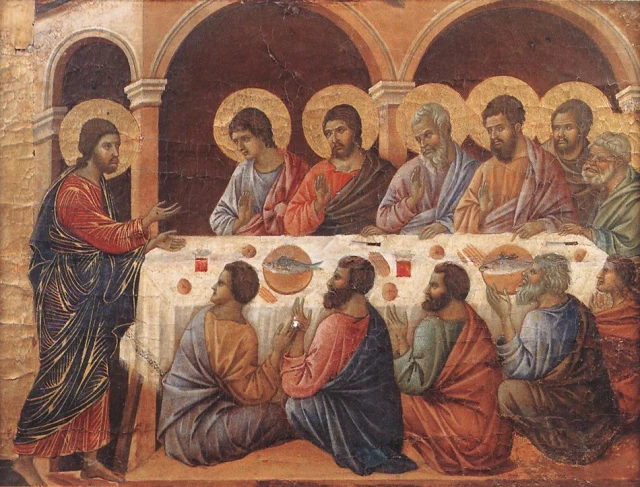 Apparition du Christ aux apôtres à tableDuccio di Buoninsegna, 1311
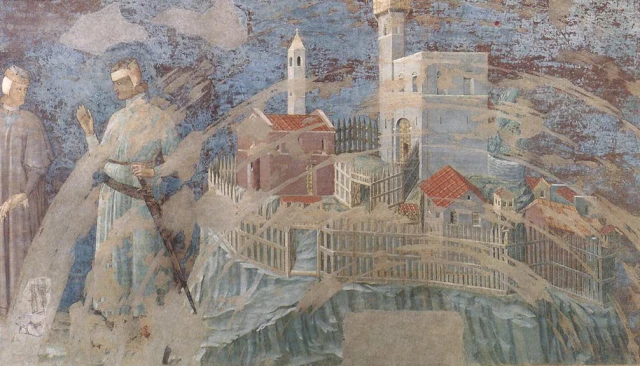 La Soumission du château de GiuncaricoDuccio di Buoninsegna, 1314
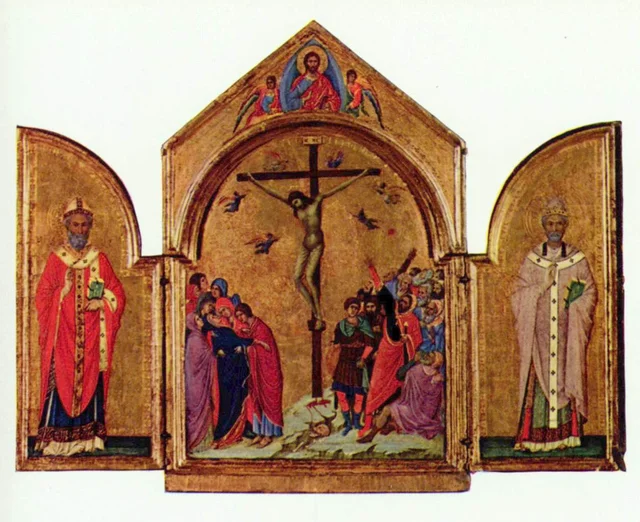 Triptyque : la Crucifixion ; le Rédempteur entre des anges ; saint Nicolas ; saint GrégoireDuccio di Buoninsegna, 1311
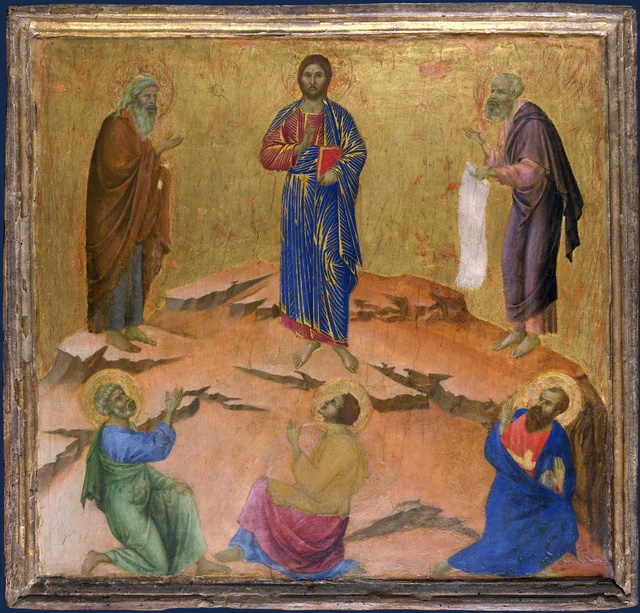 La TransfigurationDuccio di Buoninsegna, 1311