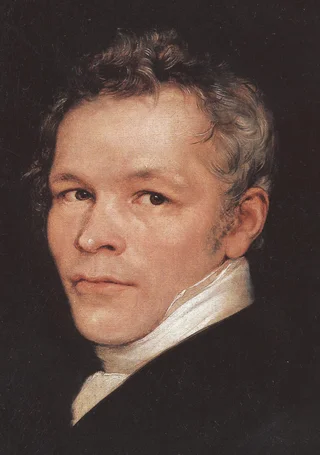
Karl Friedrich Schinkel
1781–1841 · Royaume de Prusse · Architecture néo-grecque
L'histoire
Karl Friedrich Schinkel reste dans les mémoires comme le plus grand architecte de la Prusse, l'homme derrière des monuments berlinois comme l'Altes Museum et la Neue Wache, mais l'architecture faillit ne jamais être sa carrière. En 1806, l'armée de Napoléon écrase la Prusse à la bataille d'Iéna, interrompant presque tous les chantiers du royaume, et Schinkel, fraîchement formé et sans rien à bâtir, se tourne vers la peinture pour gagner sa vie.
Pendant une dizaine d'années, il vit de paysages romantiques et, plus rare, de panoramas et de dioramas, de grandes peintures illusionnistes sur un support translucide éclairé par-derrière pour imiter les changements de lumière et le mouvement. Son diorama de 1812, L'Incendie de Moscou, recréait l'embrasement de la ville pendant la retraite de l'armée napoléonienne, avec des flammes simulées et des foules fuyant à travers une fumée peinte. Un autre projet, un panorama de Palerme en Sicile d'après ses propres croquis de voyage, lui demanda quatre mois de travail et fut présenté au public berlinois dans une rotonde construite pour l'occasion sur la place Sainte-Hedwige.
Une fois l'économie du bâtiment prussienne rétablie après 1815, Schinkel revint à l'architecture à plein temps, tout en gardant un pied dans l'univers de la scène. En 1816, il conçut les décors d'une production berlinoise de l'opéra de Mozart La Flûte enchantée, dont un ciel nocturne en coupole étoilée imaginé pour l'air de la Reine de la Nuit, un décor que les maisons d'opéra continuèrent d'emprunter pendant le siècle suivant.
Œuvres
6 œuvres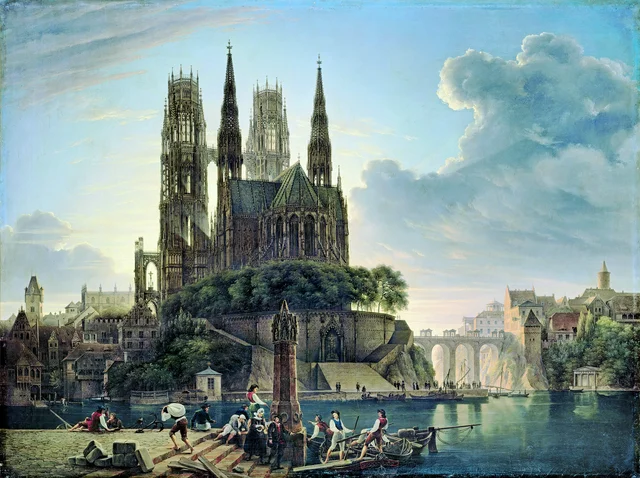 Cathédrale gothique au bord de l'eauKarl Friedrich Schinkel, 1813
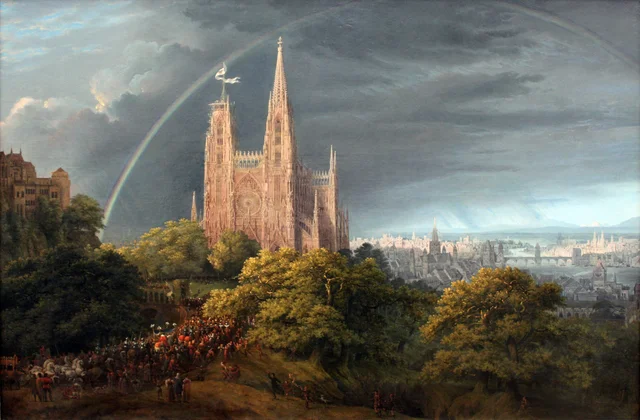 Ville médiévale au bord d'une rivièreKarl Friedrich Schinkel, 1815
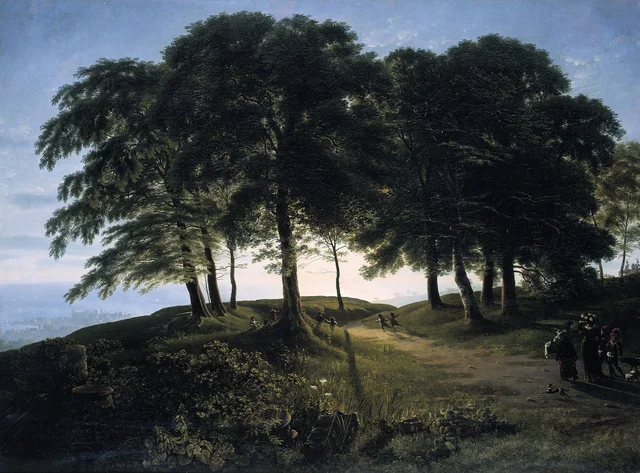 Le MatinKarl Friedrich Schinkel, 1813
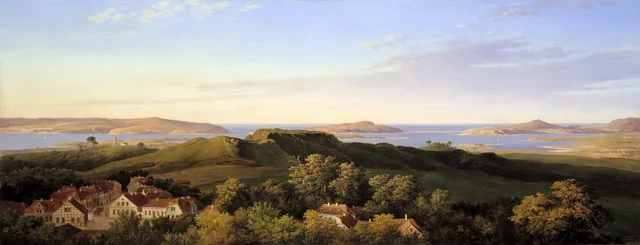 Le Rugard sur l'île de RügenKarl Friedrich Schinkel, 1821
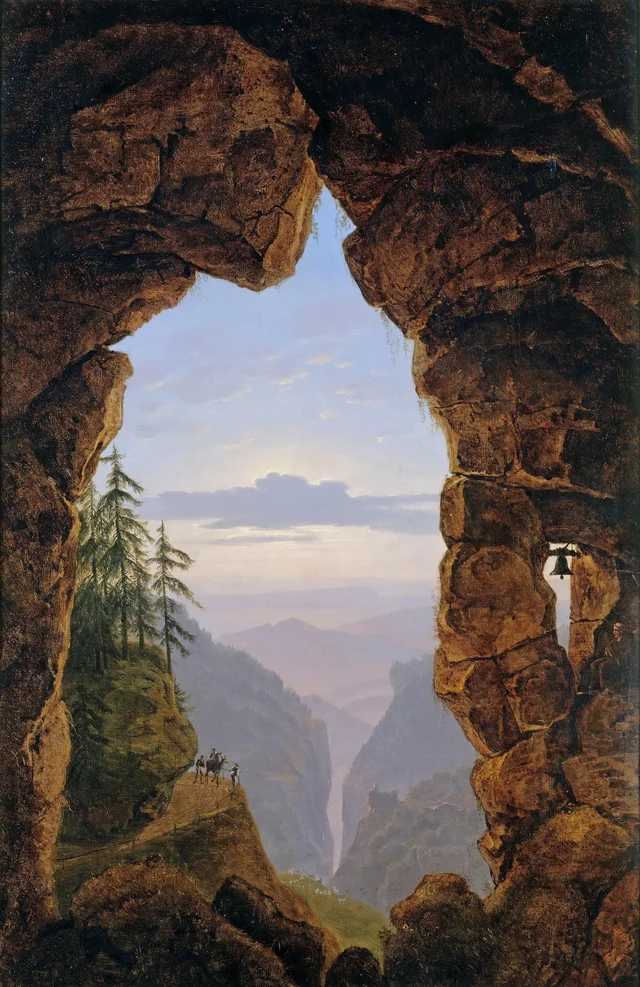 Porte dans les rochersKarl Friedrich Schinkel, 1818
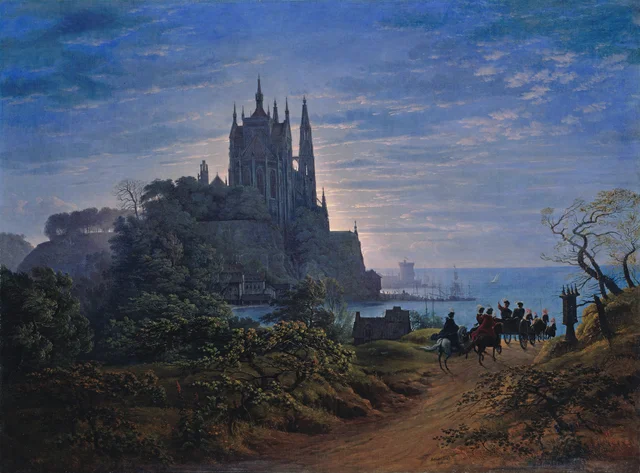 Église gothique sur un rocher au bord de la merKarl Friedrich Schinkel, 1815