Masaccio
1401–1428 · République de Florence · Renaissance italienne
L'histoire
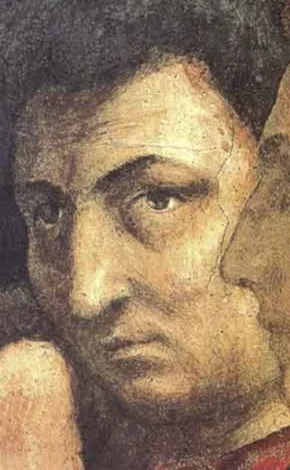
Masaccio n'eut à peine que six années de carrière active, et pourtant il changea l'orientation de l'art florentin avant même d'avoir vingt-sept ans. Né Tommaso di Ser Giovanni en 1401 près de Florence, il donna à ses figures un poids solide, tridimensionnel, et utilisa la lumière et l'ombre pour construire un espace crédible d'une façon que la peinture florentine n'avait jamais montrée avant lui.
Son œuvre majeure est le cycle de fresques de la chapelle Brancacci de Santa Maria del Carmine, commencé vers 1424 aux côtés du peintre plus âgé Masolino et laissé inachevé lorsque Masaccio fut appelé à Rome. Des scènes comme Le Denier de César et L'Expulsion du jardin d'Éden emploient une source de lumière unique et cohérente ainsi qu'une perspective linéaire rigoureuse, pour donner l'impression que saints et pécheurs partagent le même espace physique que le spectateur — une rupture nette avec le style gothique plus plat et décoratif alors encore courant.
Masaccio mourut à Rome à l'automne 1428, pas encore âgé de vingt-sept ans ; la cause exacte reste inconnue, même si la peste demeure l'explication la plus probable. Pendant des décennies par la suite, de jeunes peintres, dont Léonard de Vinci et Michel-Ange, se rendirent spécifiquement à la chapelle Brancacci pour étudier et copier ses fresques, les traitant comme un véritable manuel pour peindre le corps humain.
Autres articles
Œuvres
21 œuvres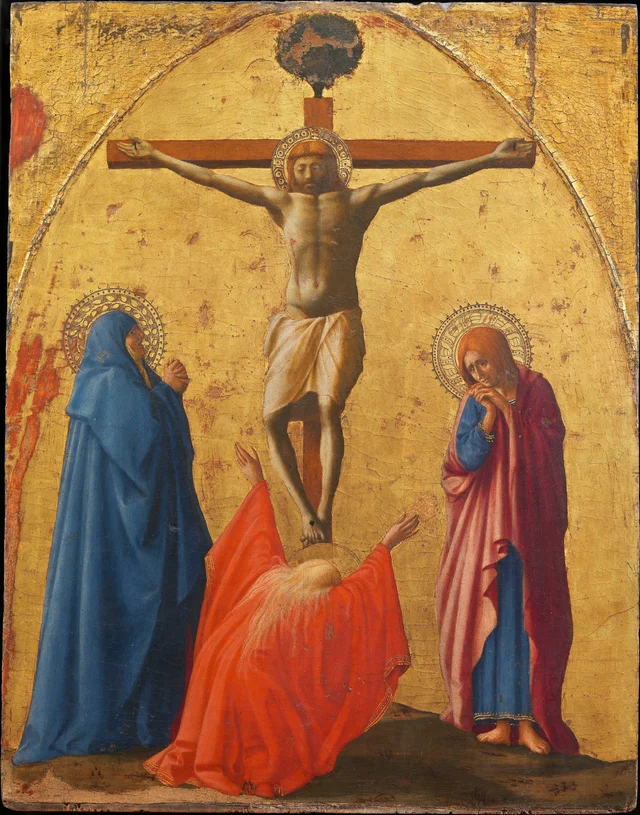 CrucifixionMasaccio, 1426
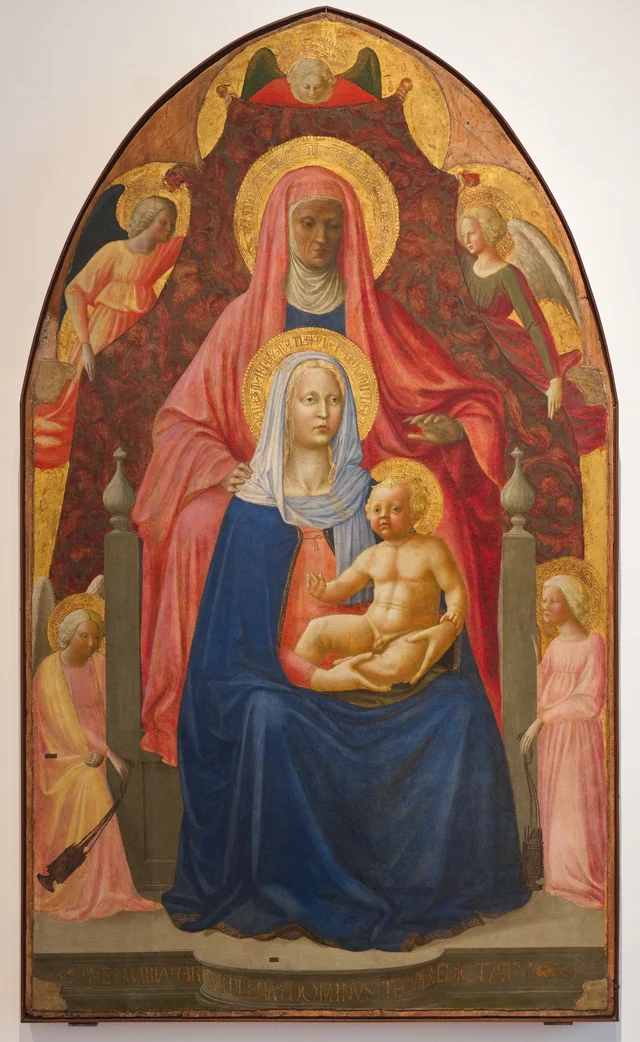 La Vierge à l'Enfant avec sainte AnneMasaccio, 1424
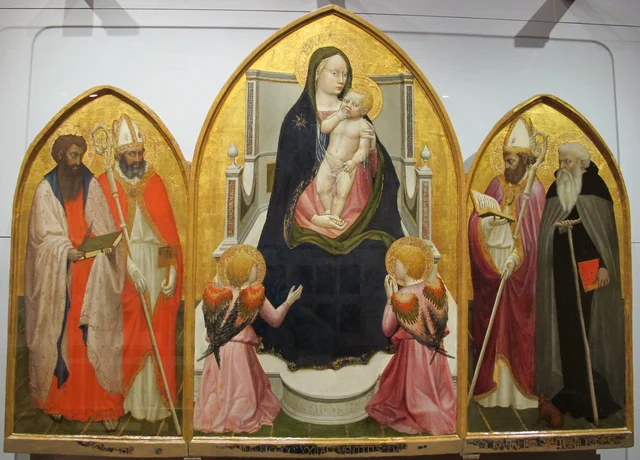 Triptyque de San GiovenaleMasaccio, 1422
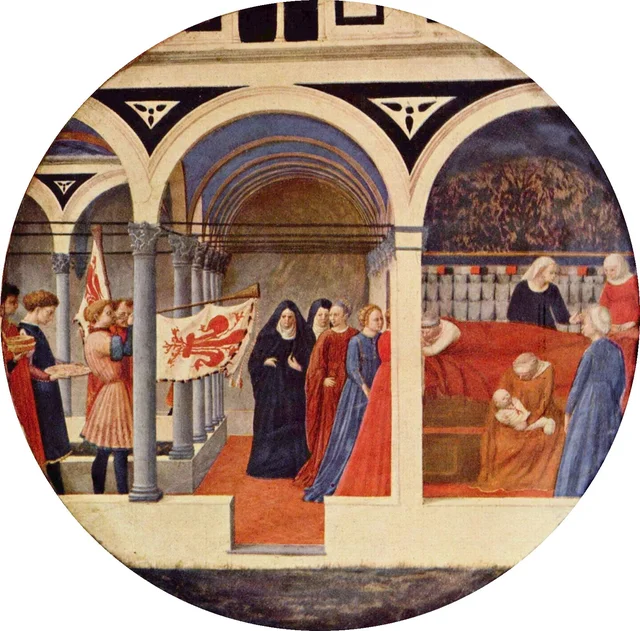 Desco da partoMasaccio, 1427
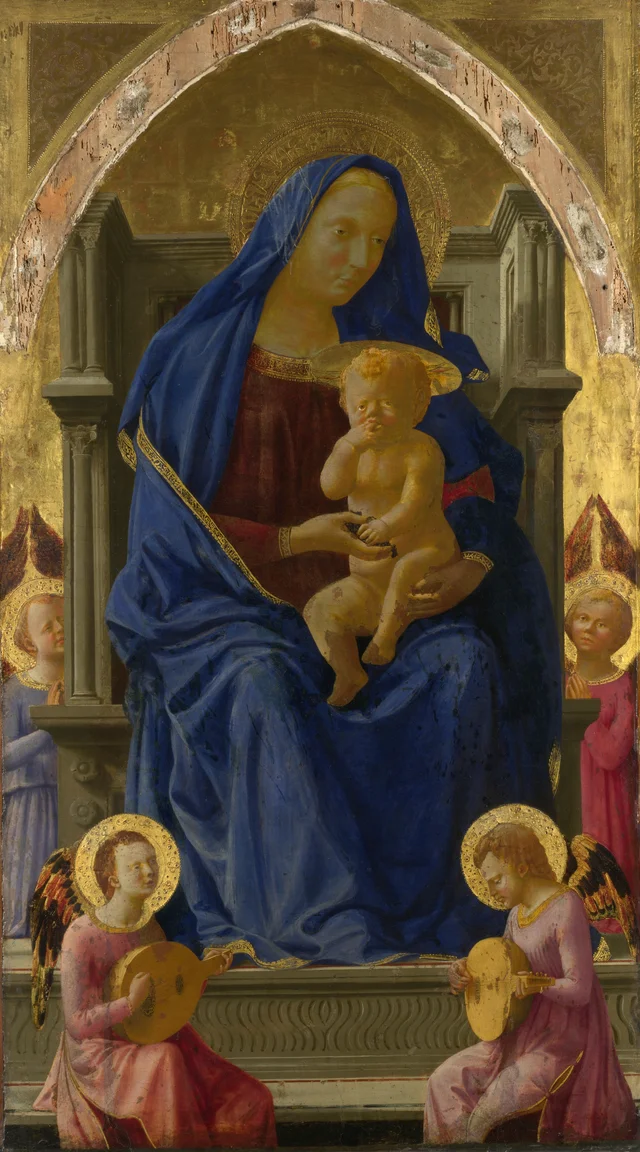 Vierge à l'EnfantMasaccio, 1426
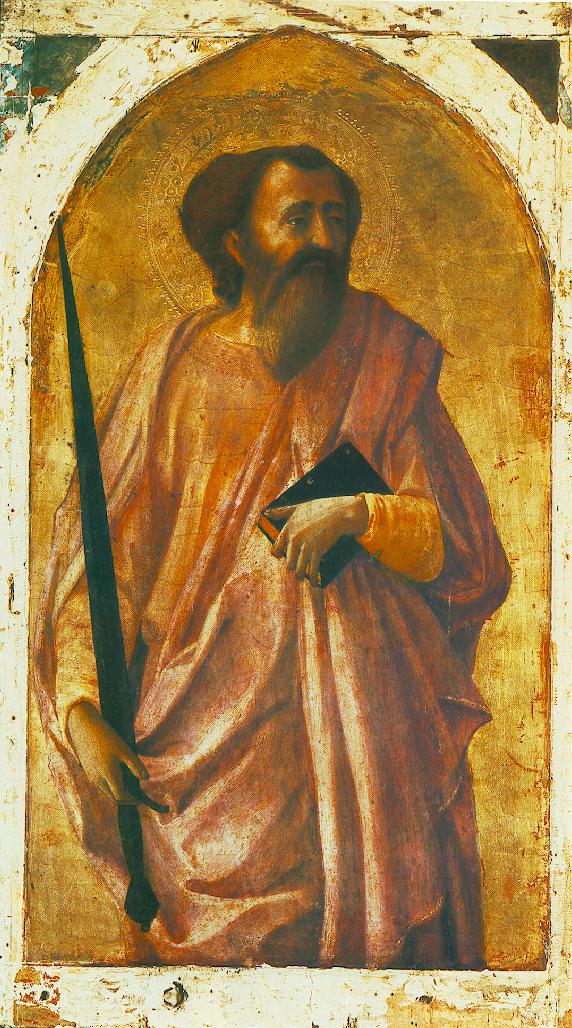 Saint PaulMasaccio, 1426
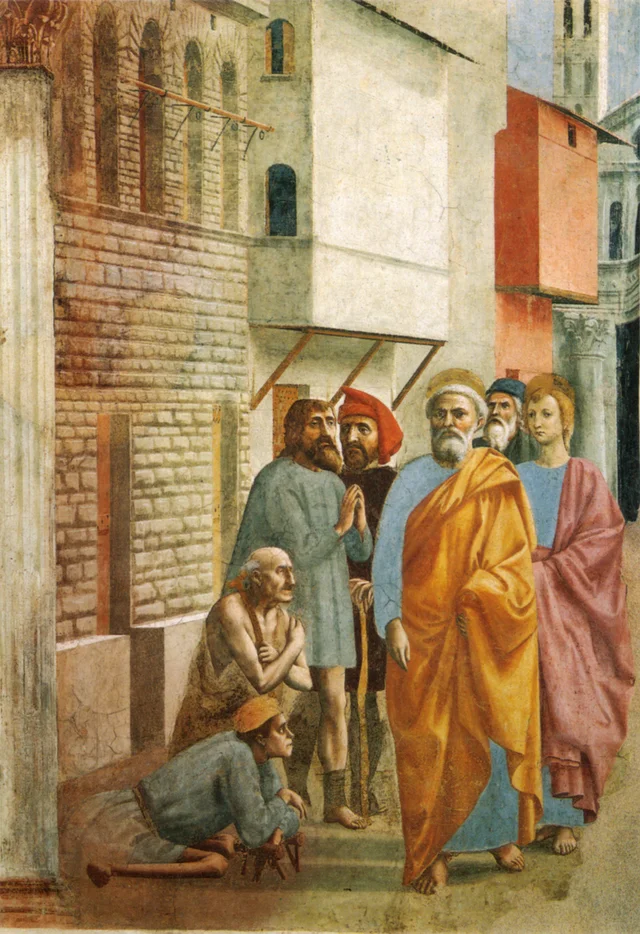 Saint Pierre guérissant les malades de son ombreMasaccio, 1425
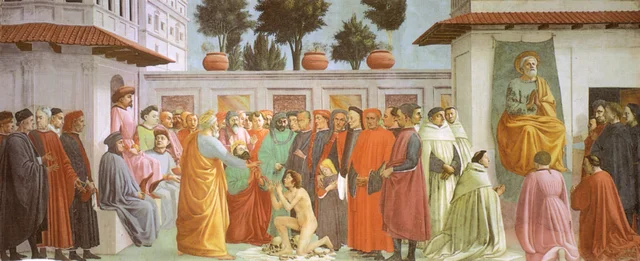 La Résurrection du fils de Théophile et saint Pierre en majestéMasaccio, 1427
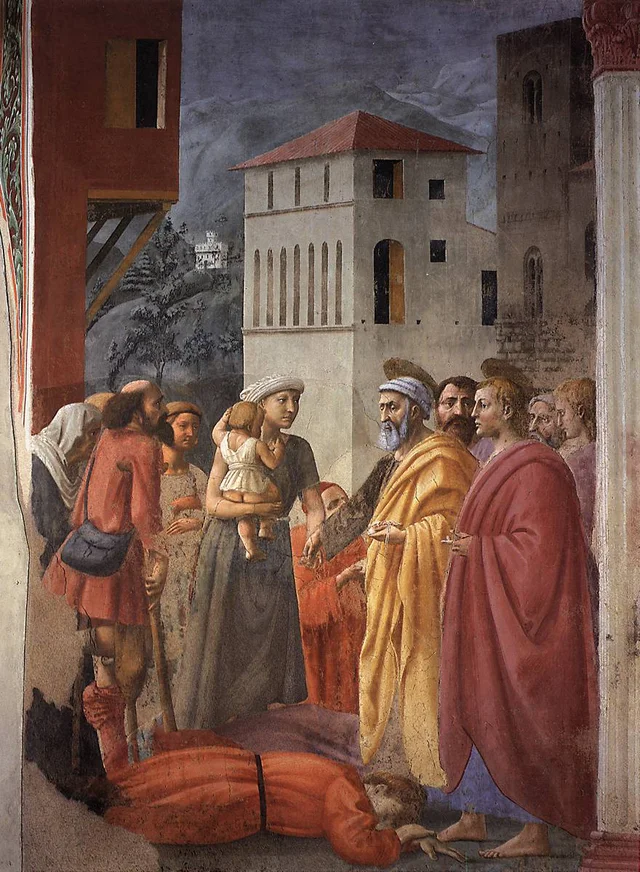 La Distribution des aumônes et la mort d'AnaniasMasaccio, 1425
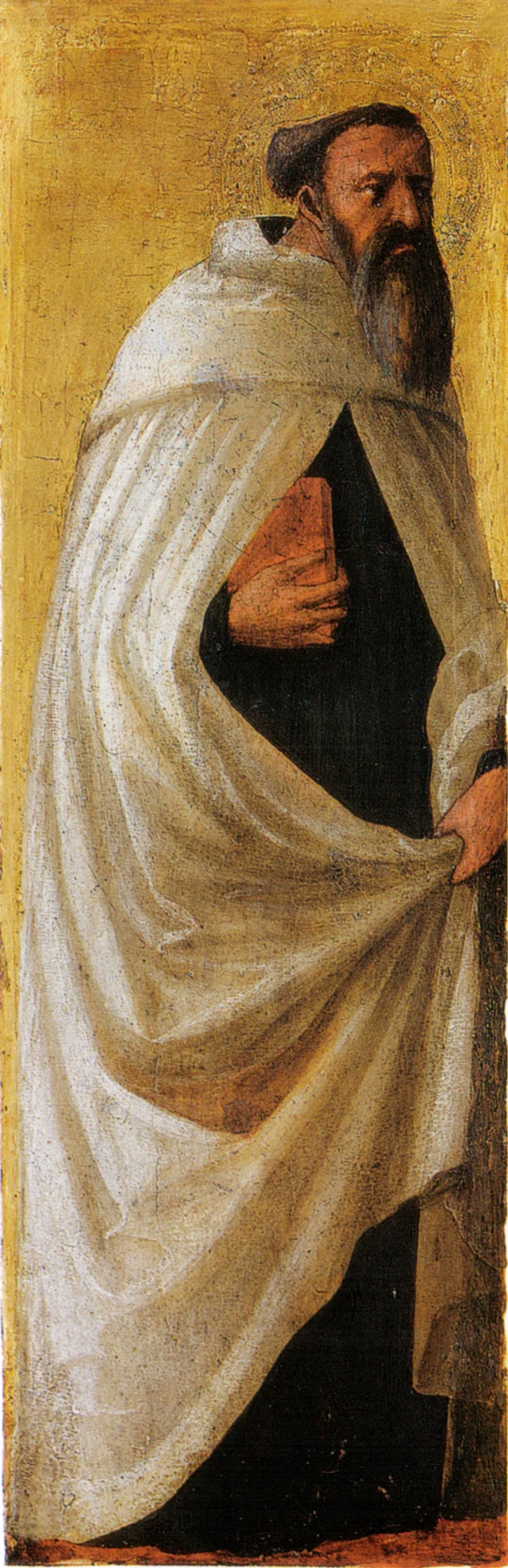 Un saint carme barbuMasaccio, 1426
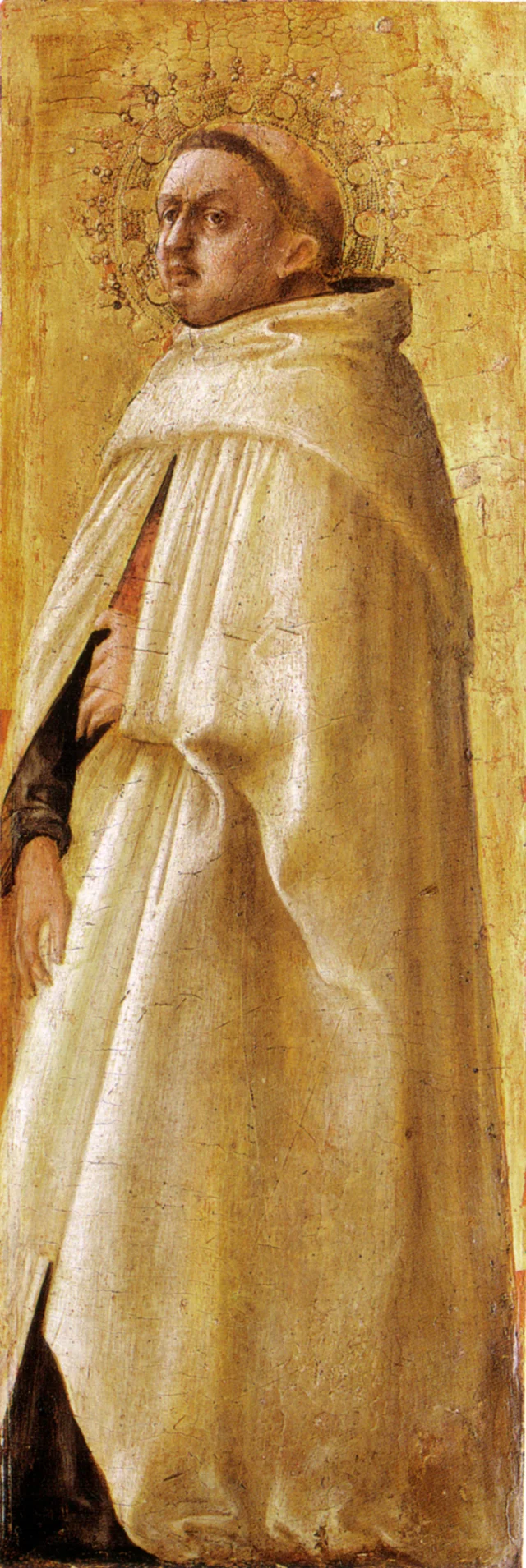 Saint carme imberbeMasaccio, 1426
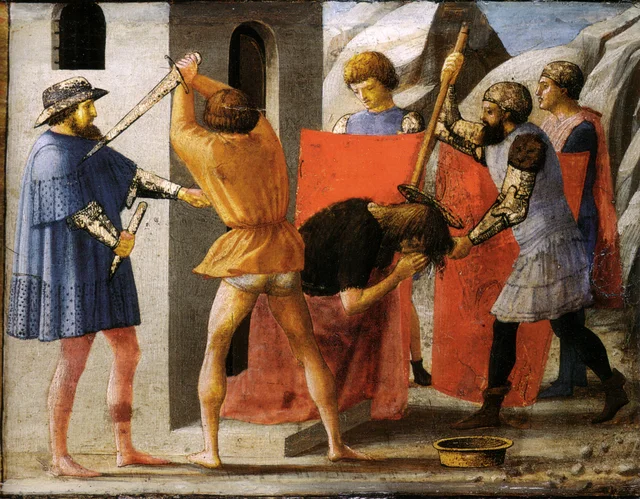 La Décapitation de saint Jean-BaptisteMasaccio, 1426
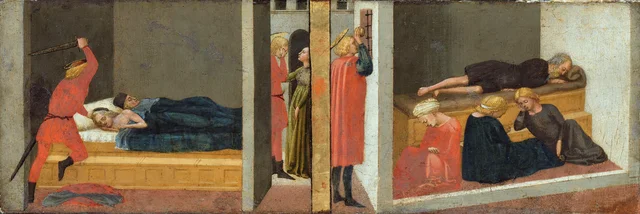 Prédelle de l'autel ; panneau de droite : Le parricide de saint Julien - Le miracle de saint Nicolas de BariMasaccio, 1426
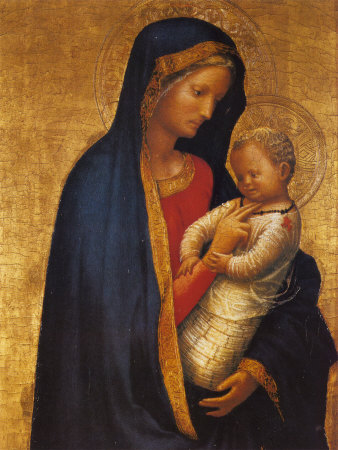 Madone CasiniMasaccio, 1426
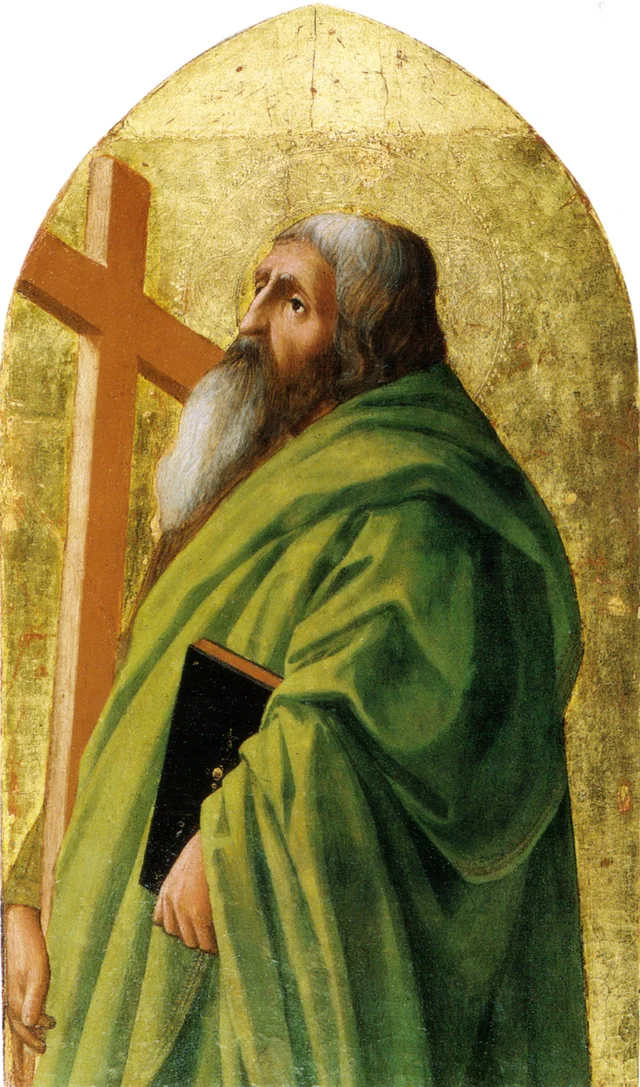 Saint AndréMasaccio, 1426
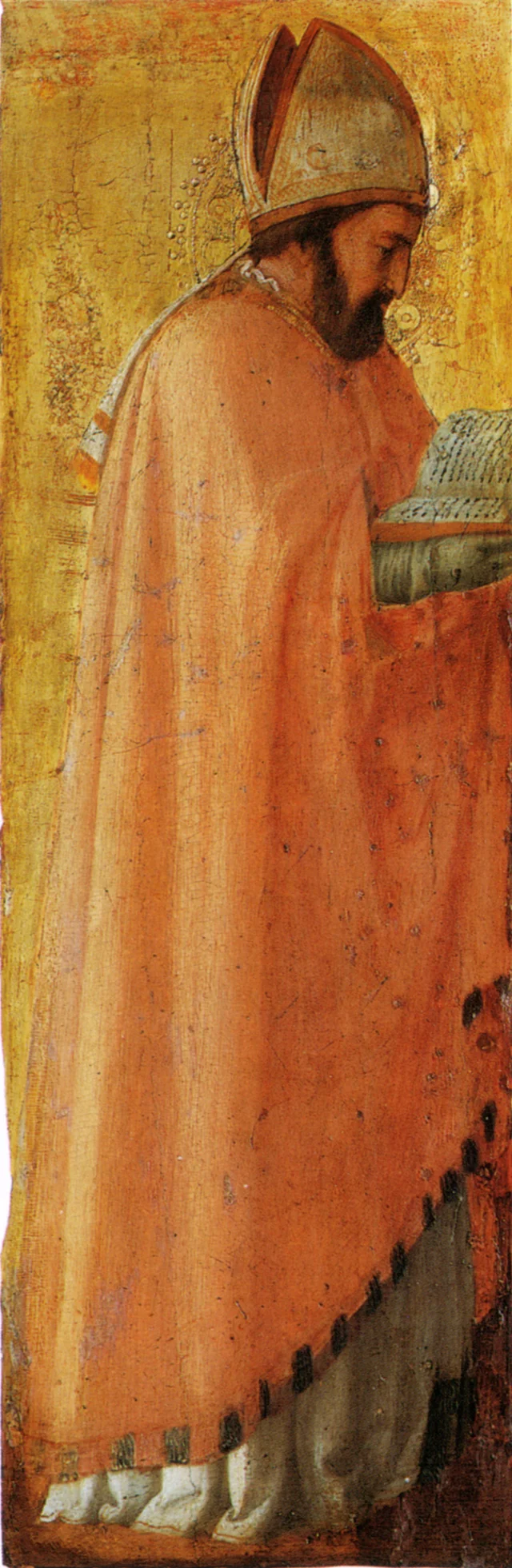 Saint AugustinMasaccio, 1426
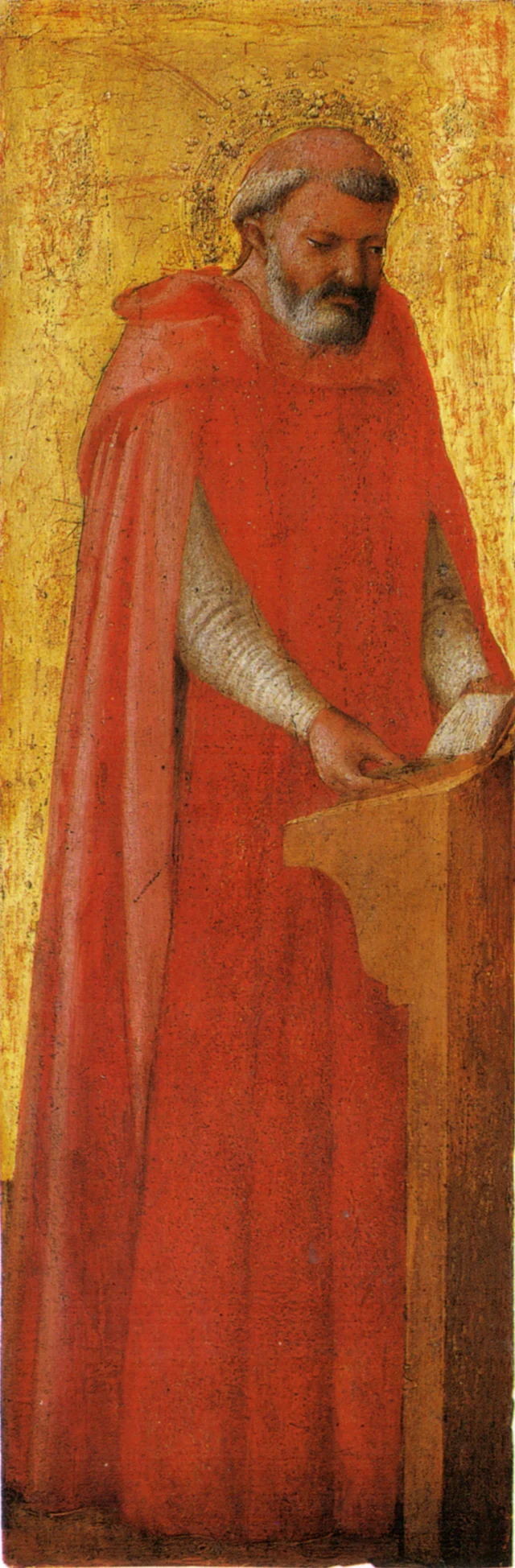 Saint JérômeMasaccio, 1426
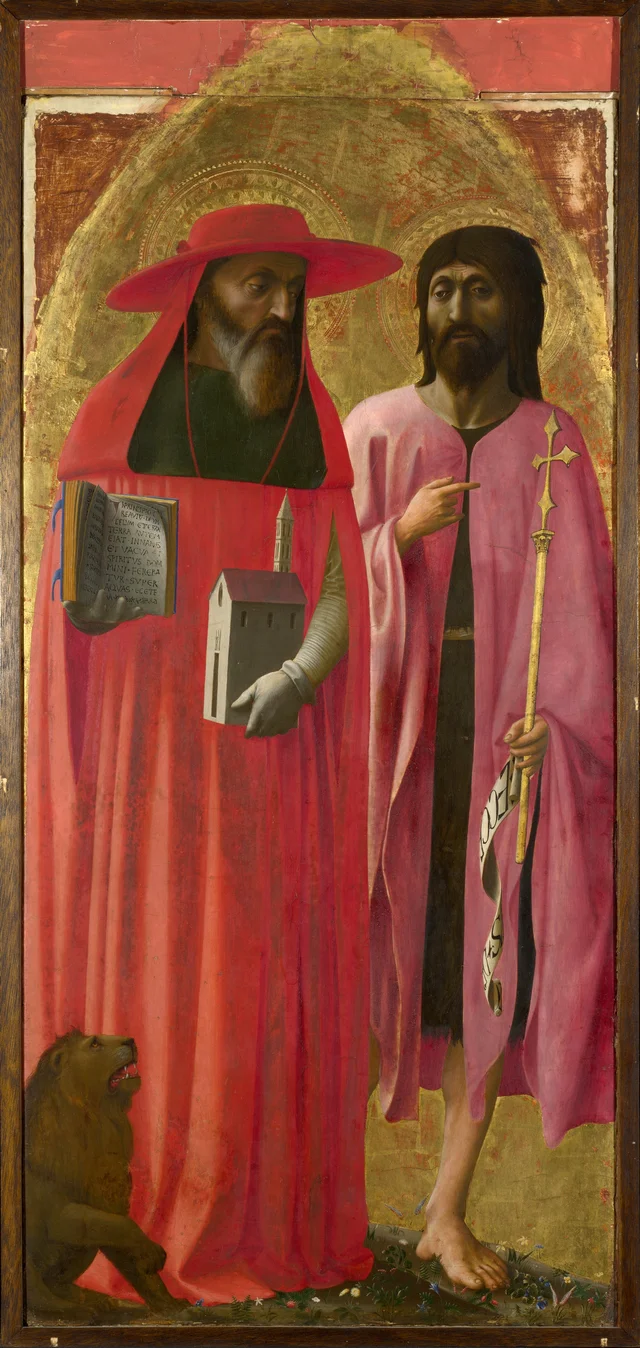 Saint Jérôme et saint Jean-BaptisteMasaccio, 1428
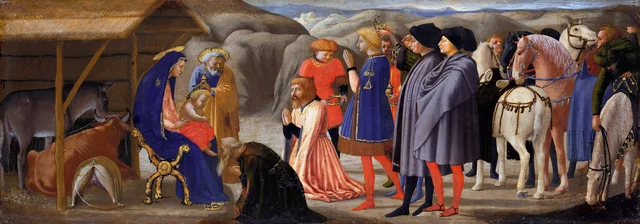 L'Adoration des MagesMasaccio, 1426
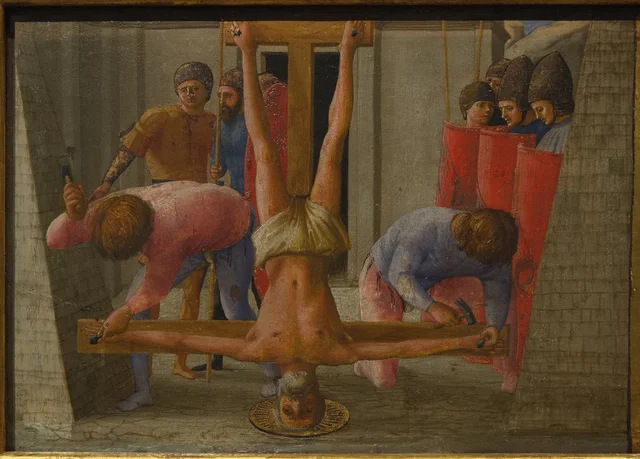 La Crucifixion de saint PierreMasaccio, 1426
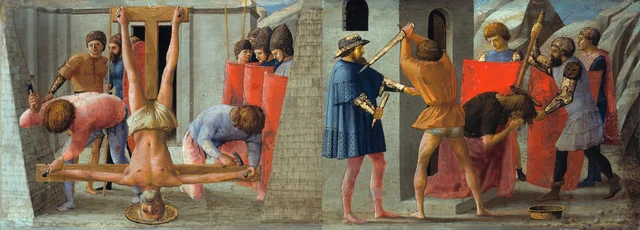 La Crucifixion de saint Pierre et la Décollation de saint Jean-BaptisteMasaccio, 1426