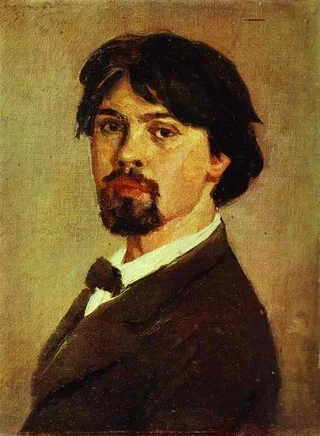
Vassili Sourikov
1848–1916 · Empire russe · Réalisme
L'histoire
Vassili Sourikov grandit à Krasnoïarsk, au fin fond de la Sibérie, dans une famille cosaque qui vivait encore au plus près des coutumes d'avant les réformes de Pierre le Grand, et enfant il vit des flagellations publiques exécutées sur la place de la ville. Pour rejoindre l'Académie des arts de Saint-Pétersbourg en 1868, il parcourut des milliers de kilomètres vers l'ouest avec la caravane d'un marchand transportant du poisson gelé jusqu'à la capitale, faute d'un moyen plus rapide d'y parvenir.
Cette Russie sibérienne et pré-pétrinienne resta son vrai sujet une fois formé. Ses trois grands tableaux d'histoire, Le Matin de l'exécution des Streltsy en 1881, Menchikov à Berezovo en 1883, et La Boyarine Morozova en 1887, reviennent tous à la même période, la brutale transition de la vieille Russie moscovite vers l'empire moderne de Pierre. La Boyarine Morozova montre une noble arrêtée pour avoir refusé les réformes ecclésiastiques du patriarche Nikon, traînée dans une rue de Moscou sur un traîneau, deux doigts levés, le signe de croix interdit des vieux-croyants.
La toile fait plus de cinq mètres de large, et Sourikov passa des années à étudier de vrais visages dans les marchés et les monastères de Moscou pour la remplir. Pavel Tretiakov l'acheta pour sa galerie moscovite l'année de son achèvement, avec le reste des grandes peintures historiques de Sourikov.
Œuvres
6 œuvres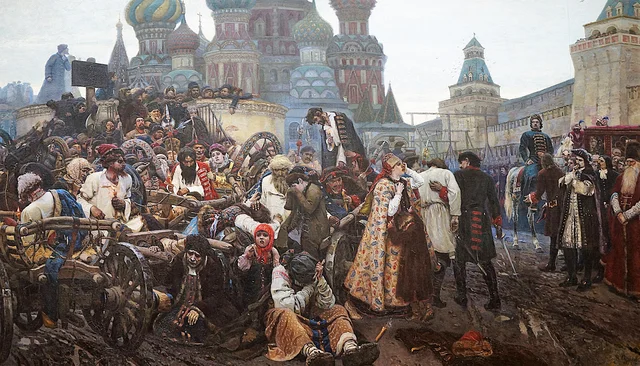 Le Matin de l'exécution des streltsyVassili Sourikov, 1881
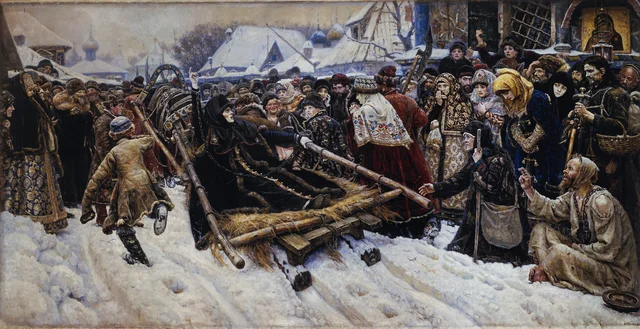 La Boyarine MorozovaVassili Sourikov, 1887
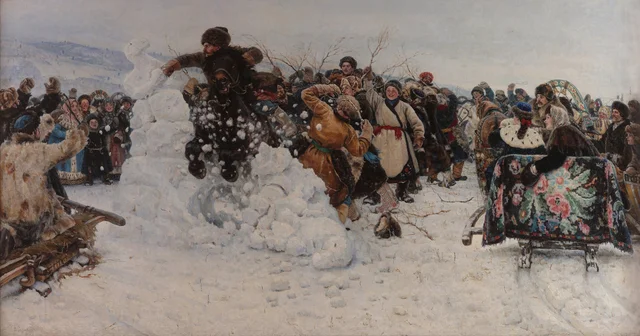 La Prise de la ville de neigeVassili Sourikov, 1891
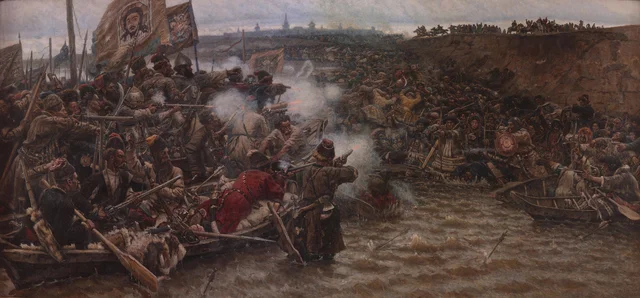 La Conquête de la Sibérie par ErmakVassili Sourikov, 1895
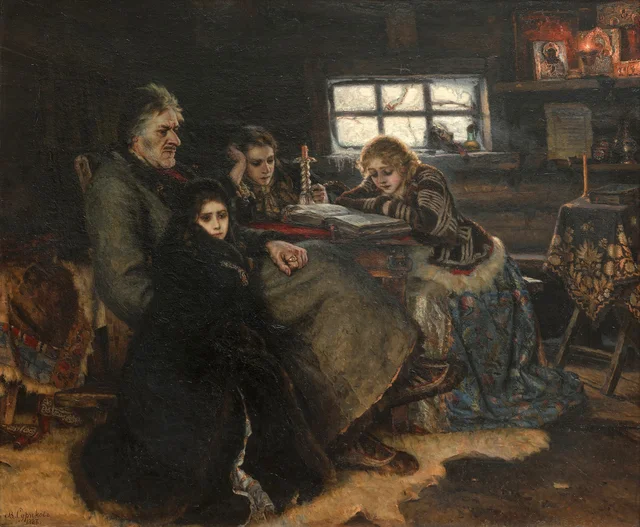 Menchikov à BerezovoVassili Sourikov, 1883
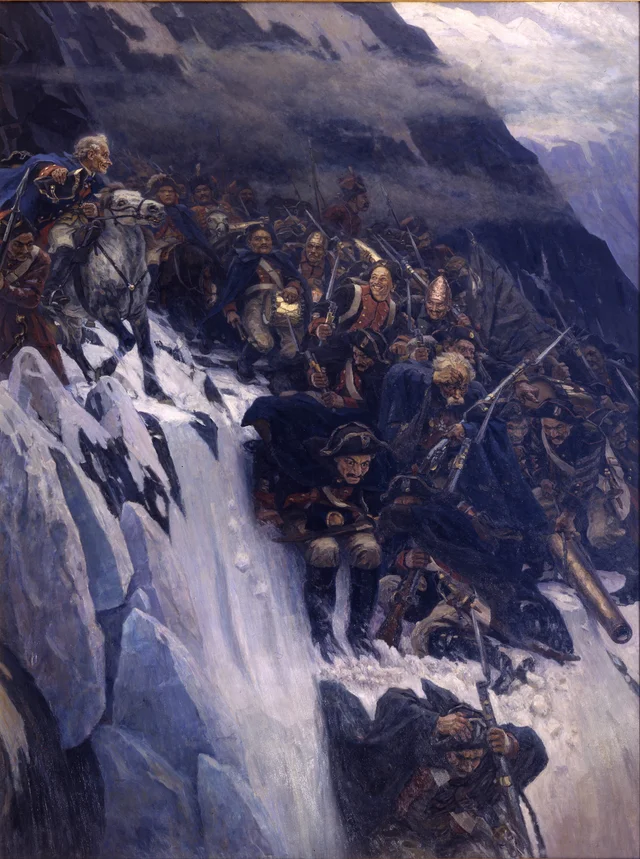 Souvorov franchissant les Alpes en 1799Vassili Sourikov, 1899