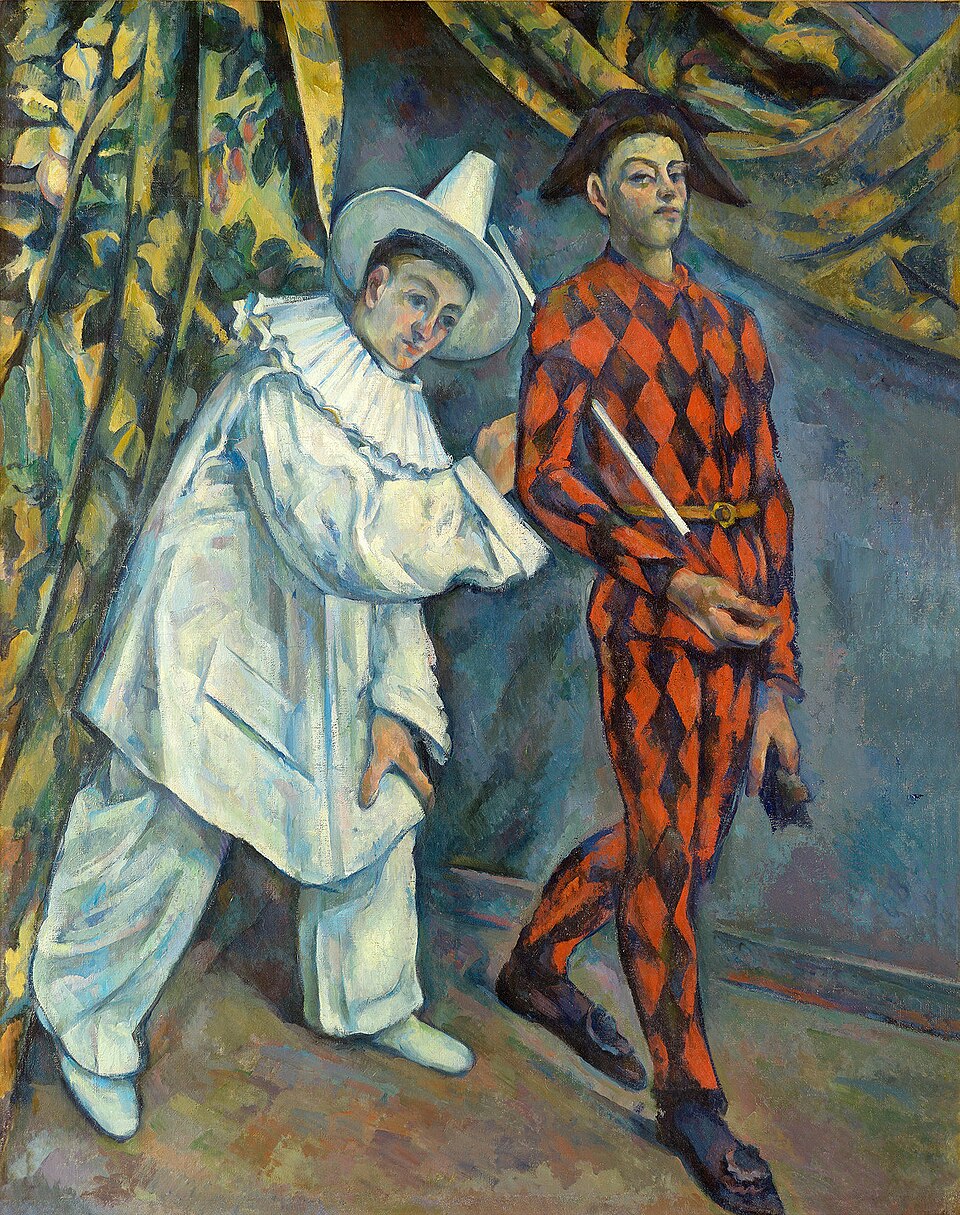
Paul Cézanne, Mardi Gras, 1888. Wikimedia Commons. · PD
Mardi gras
Détails
L'histoire
Vers 1888, Cézanne, installé un temps à Paris, s'attaque à un sujet rare chez lui: des personnages costumés en pied. Le Pierrot en blanc et l'Arlequin en losanges rouges ne sont pas des modèles de métier. L'Arlequin est son fils Paul, âgé d'une quinzaine d'années, et le Pierrot son ami Louis Guillaume. Cézanne, qui peignait surtout des pommes et la montagne Sainte-Victoire, leur a imposé de longues séances de pose, au point que le carnaval a tout d'une nature morte immobile. On sent l'effort de construction dans la démarche raide de l'Arlequin qui traverse la scène. Le tableau est passé dans la collection de Chtchoukine, puis au musée Pouchkine de Moscou.