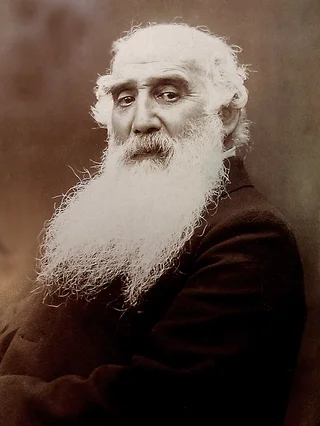
Camille Pissarro
1830–1903 · Francia · Impressionismo
La storia
Pissarro fu il decano degli Impressionisti, più anziano di Monet o di Degas, e l'unico del gruppo a esporre in tutte le otto mostre organizzate tra il 1874 e il 1886. I pittori più giovani lo trattavano come un maestro. Cézanne disse che per lui era stato come un padre, Gauguin studiò sotto la sua guida, e il suo incoraggiamento arrivò perfino a Van Gogh.
La guerra franco-prussiana lo colse nella sua casa di Louveciennes, un villaggio a ovest di Parigi. Fuggì a Londra nel 1870, e i soldati prussiani alloggiati nella casa usarono le sue tele come assi per attraversare il giardino fangoso e come grembiuli nella macelleria improvvisata che avevano allestito all'interno. Di circa 1.500 dipinti frutto di vent'anni di lavoro, ne sopravvissero solo una quarantina. Tornò e semplicemente ricominciò da capo.
Restò inquieto riguardo al metodo per tutta la vita. Nel 1885 conobbe il giovane Georges Seurat e adottò la sua meticolosa tecnica a puntini, costruendo le immagini con minuscoli punti di colore puro, prima di giudicarla troppo lenta e tornare a un tocco impressionista più libero. Verso i sessant'anni un'infezione cronica agli occhi gli impedì di lavorare all'aperto, così affittò stanze sopra i boulevard di Parigi e Rouen e dipinse le strade dalla finestra, gli stessi angoli più e più volte mentre la luce cambiava nel corso della giornata.
Altri articoli
Opere
218 opere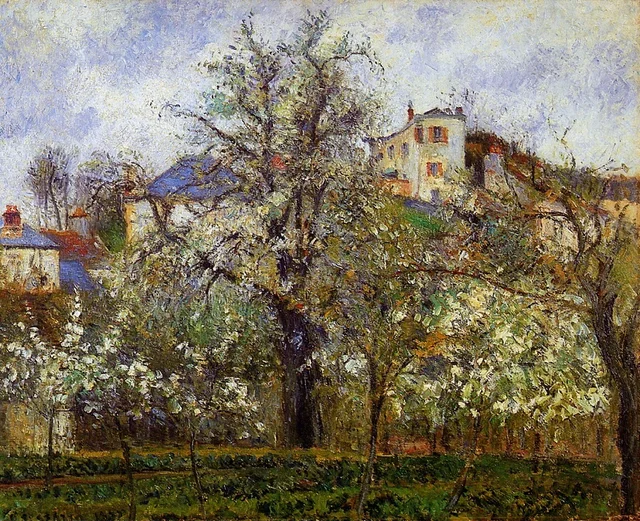 Frutteto con alberi in fiore, primavera, PontoiseCamille Pissarro, 1877
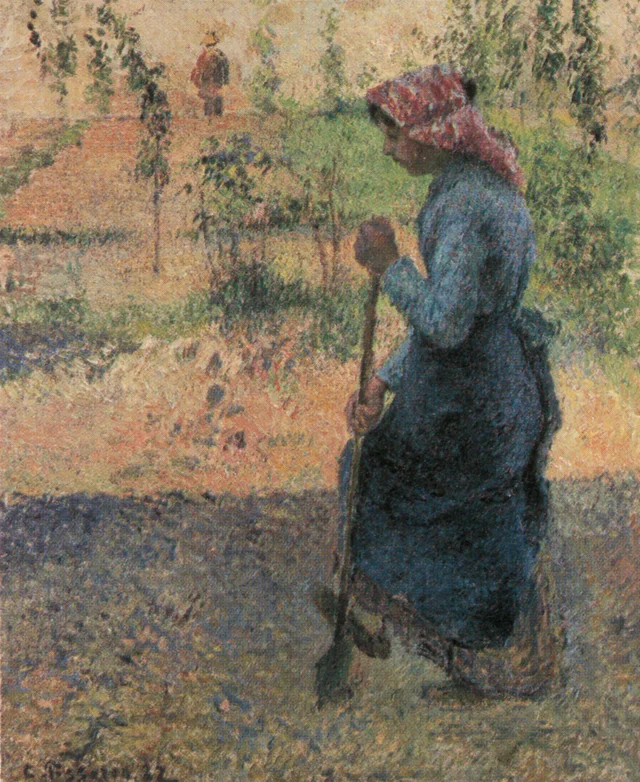 Contadina che scavaCamille Pissarro, 1882
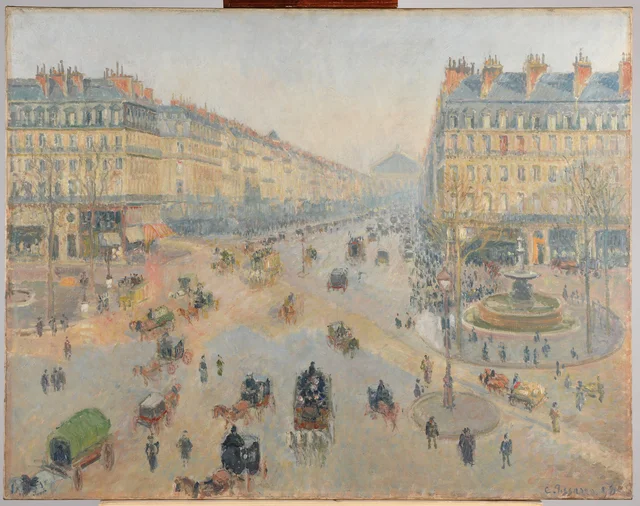 Place du Théâtre-Français e l'Avenue de l'Opéra, sole, mattina d'invernoCamille Pissarro, 1898
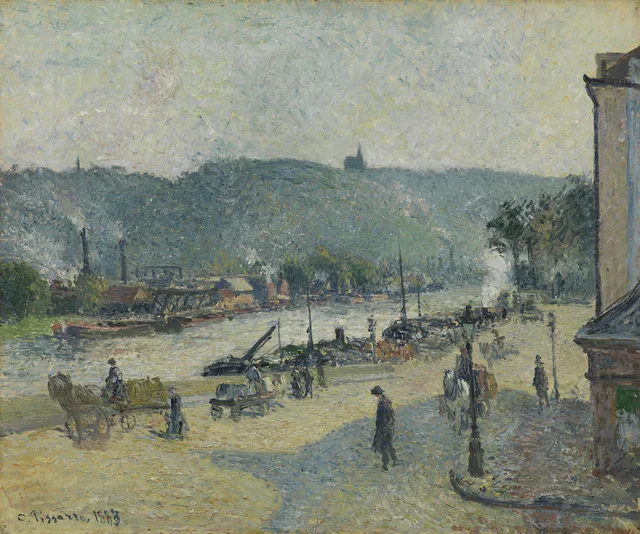 Place Lafayette, RouenCamille Pissarro, 1883
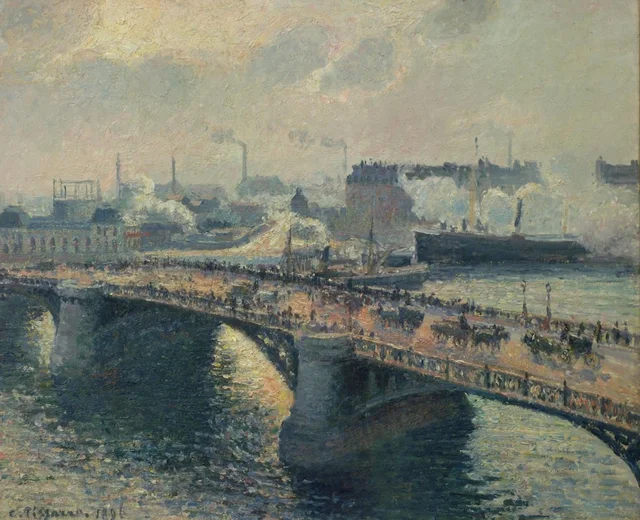 Ponte Boieldieu, Rouen, tramonto, foschiaCamille Pissarro, 1896
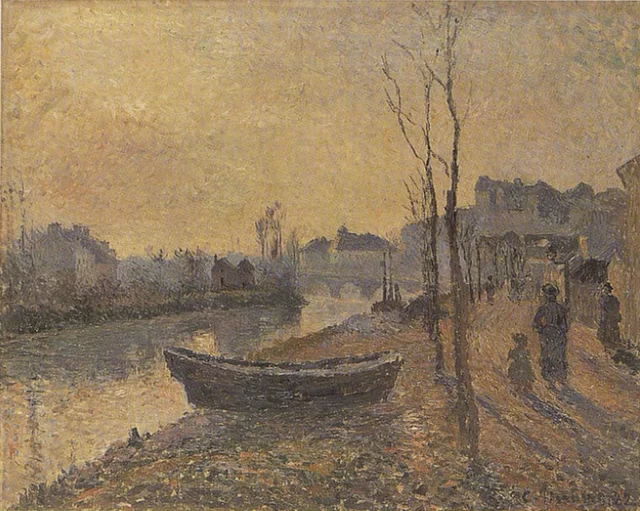 Quai du Pothuis, rive dell'OiseCamille Pissarro, 1882
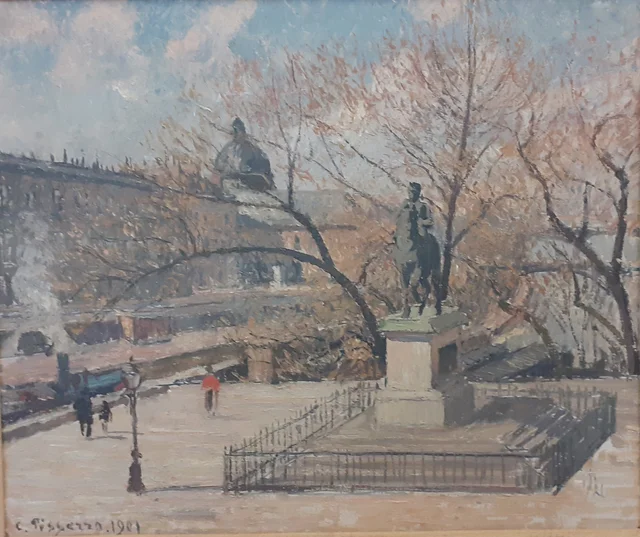 La statua di Enrico IV e l'Hôtel de la Monnaie, mattina, soleCamille Pissarro, 1901
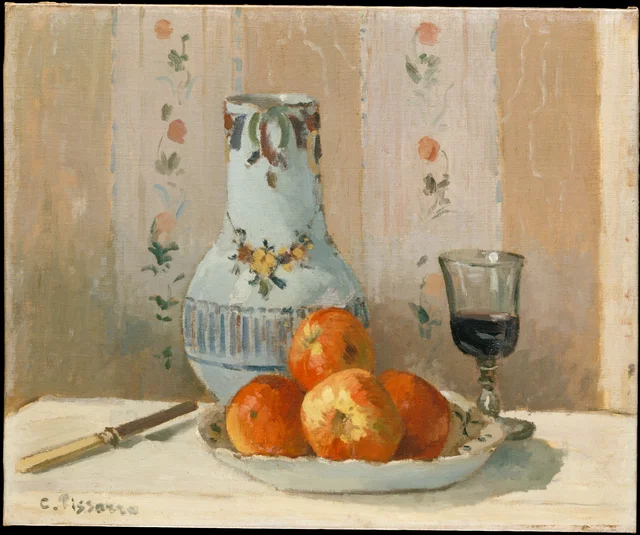 Natura morta con mele e broccaCamille Pissarro, 1872
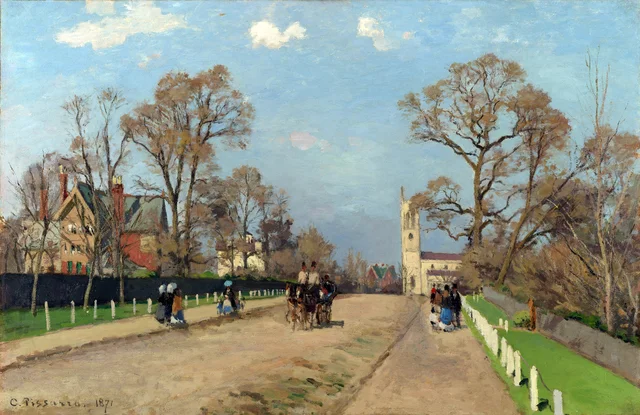 Il viale, SydenhamCamille Pissarro, 1871
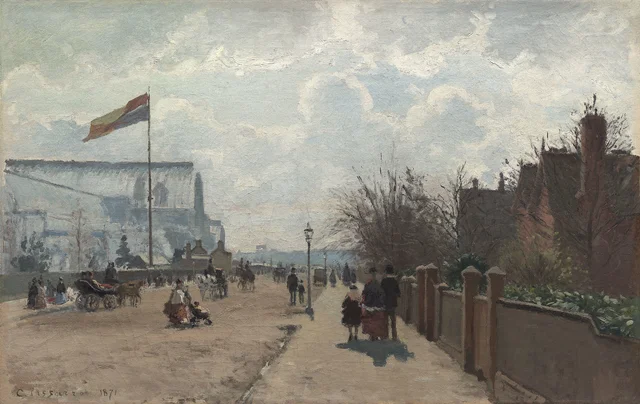 Il Crystal PalaceCamille Pissarro, 1871
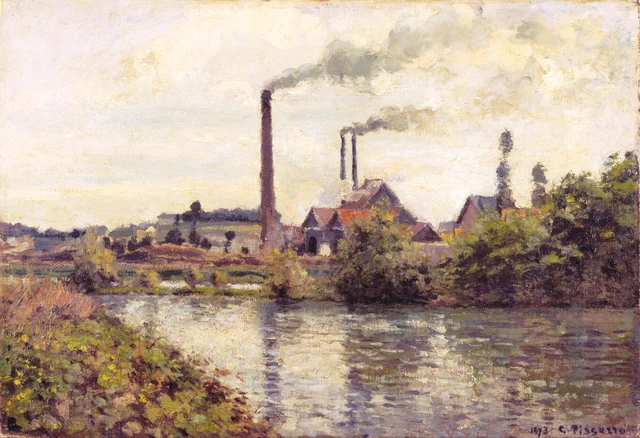 La fabbrica a PontoiseCamille Pissarro, 1873
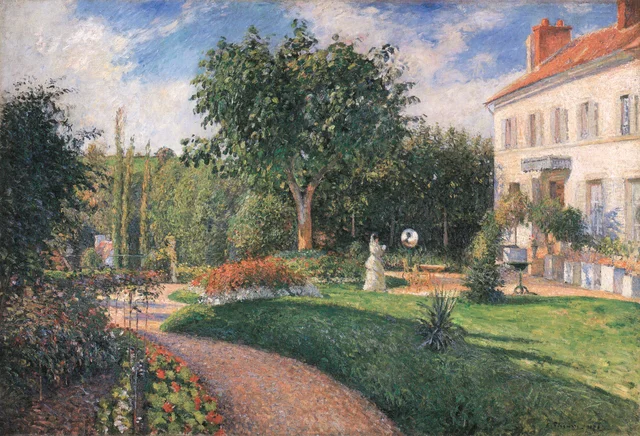 Il giardino dei Mathurins a PontoiseCamille Pissarro, 1876
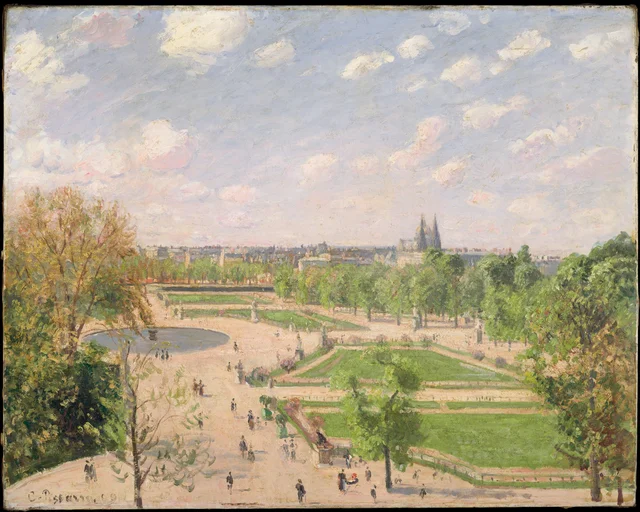 Il giardino delle Tuileries in una mattina di primaveraCamille Pissarro, 1899
 La Marna a ChennevièresCamille Pissarro, 1865
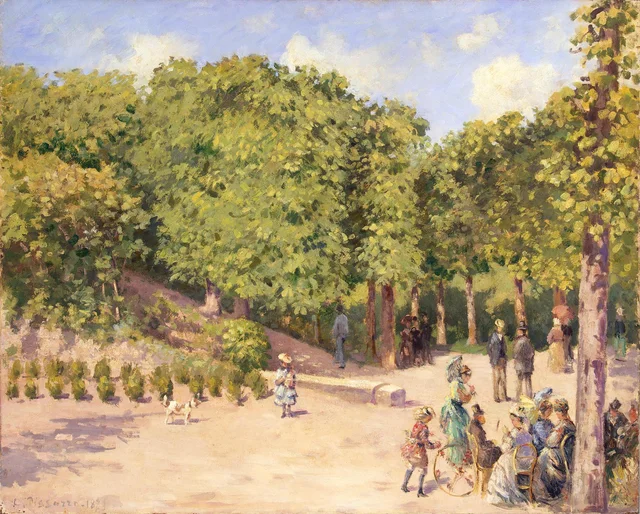 Il giardino comunale, PontoiseCamille Pissarro, 1873
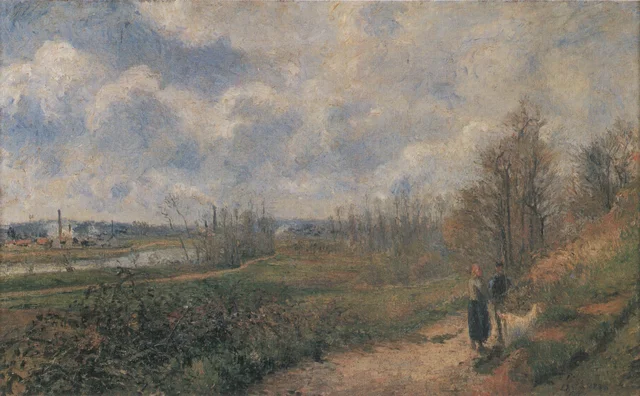 Il sentiero per Le Chou, PontoiseCamille Pissarro, 1878
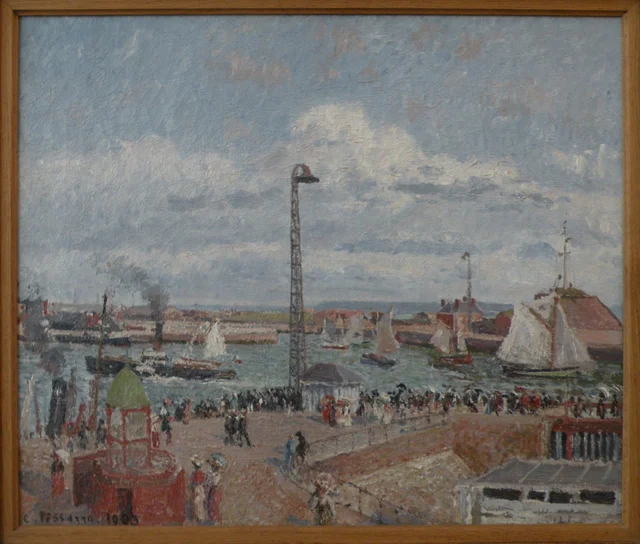 L'insenatura dei piloti a Le Havre. Alta marea. Pomeriggio. SoleCamille Pissarro, 1903
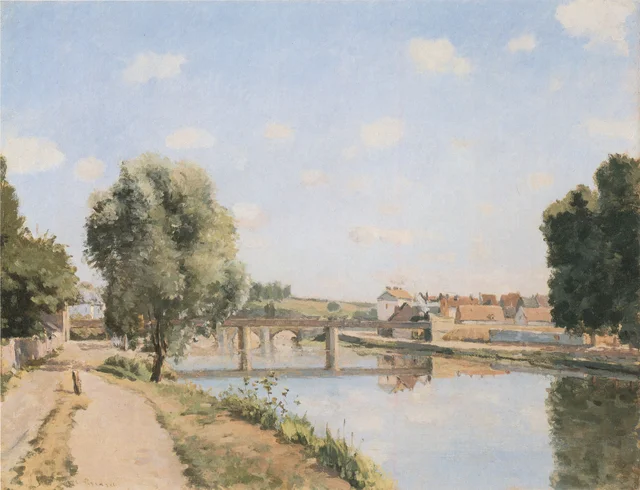 Il ponte della ferrovia, PontoiseCamille Pissarro, 1873
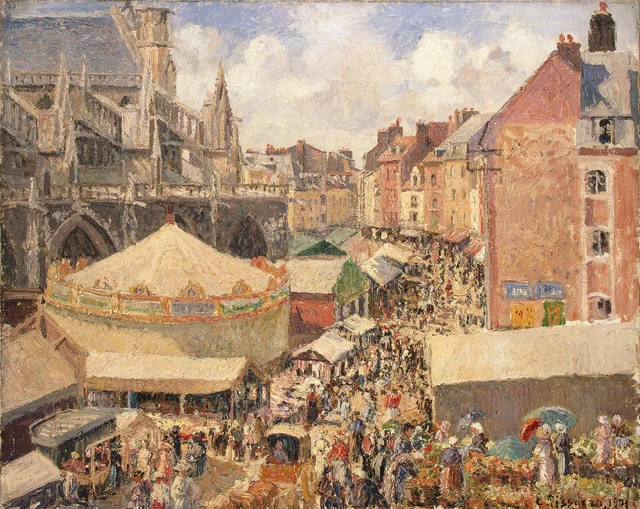 La fiera cittadina presso la chiesa di Saint-Jacques a Dieppe, mattina, soleCamille Pissarro, 1901
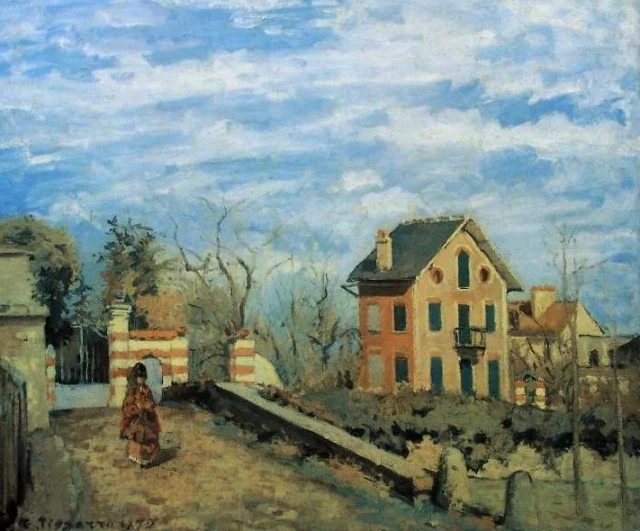 Il villaggio di VoisinsCamille Pissarro, 1872
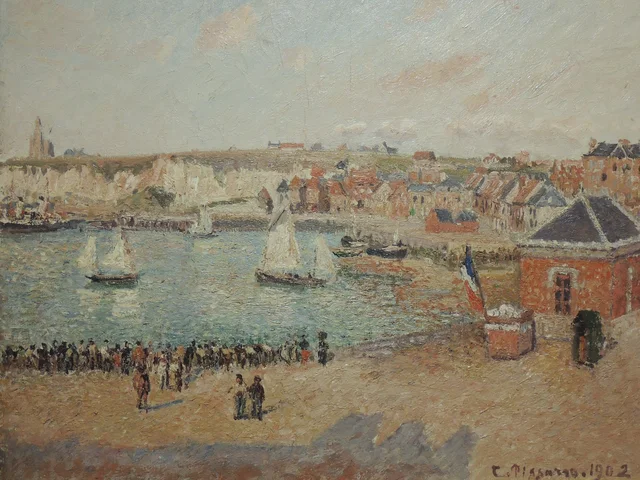 Veduta dal porto di DieppeCamille Pissarro, 1902
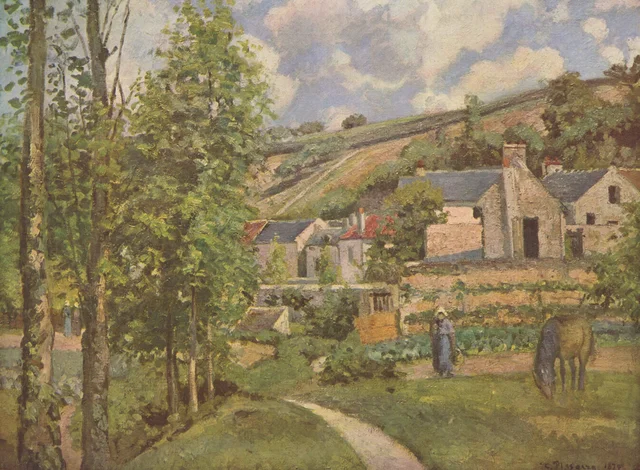 Un angolo dell'Hermitage, PontoiseCamille Pissarro, 1874
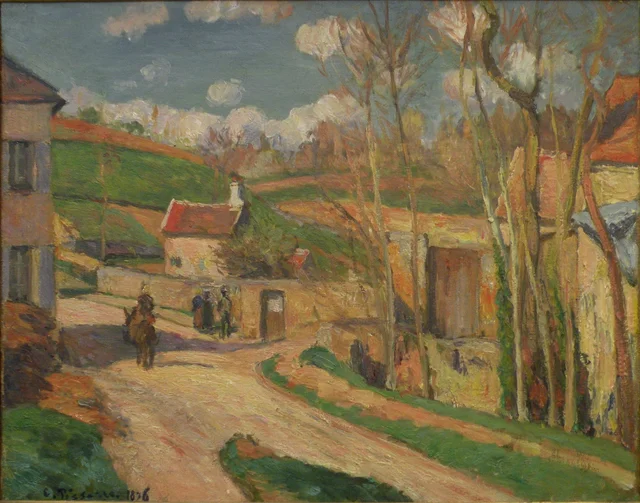 Un incrocio a L'Hermitage, PontoiseCamille Pissarro, 1876
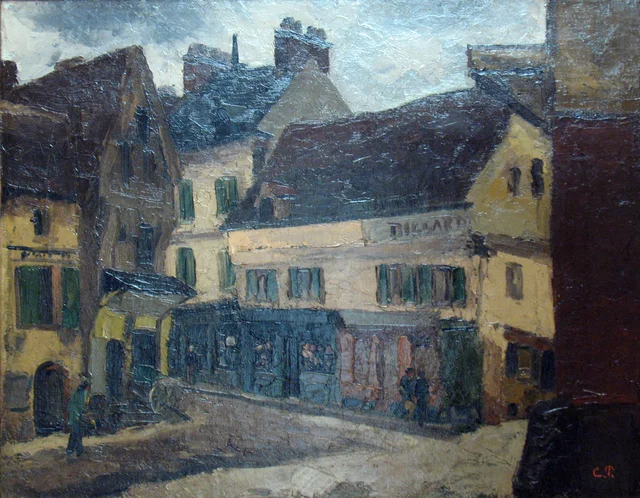 Un angolo a La Roche-GuyonCamille Pissarro, 1867
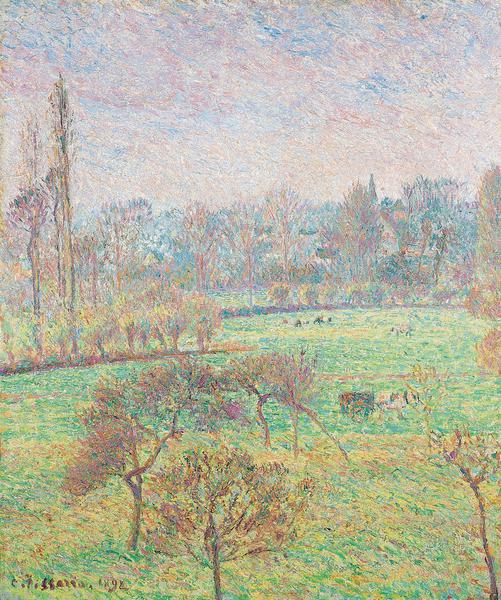 Mattino, autunno, ÉragnyCamille Pissarro, 1892