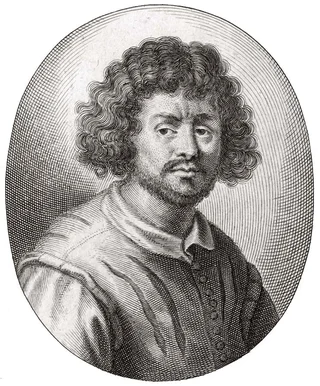
Claude Lorrain
1600–1682 · Ducato di Lorena · Classicismo
La storia
Nella Roma della metà del Seicento un pittore del ducato di Lorena era diventato così ricercato che altri falsificavano le sue opere per farci soldi. Claude Gellée, noto semplicemente come Claude Lorrain, dipingeva porti luminosi e paesaggi pastorali immersi in un morbido sole nascente o calante, e i cardinali e gli aristocratici d'Europa li pagavano a caro prezzo.
La sua risposta ai falsari fu un libro. Dal 1635 circa tenne il 'Liber Veritatis', il Libro della verità, un album rilegato in cui disegnava una copia accurata di quasi ogni dipinto finito nel momento in cui lasciava lo studio, annotando spesso il nome dell'acquirente e la data. Arrivò a circa 200 disegni, e permetteva di distinguere un vero Claude da un falso.
Era davvero più un pittore della luce che dei luoghi. Le figure mitologiche o bibliche nelle sue scene sono spesso piccole, rannicchiate in un angolo, mentre l'occhio corre indietro verso un sole velato all'orizzonte. Quell'effetto fissò l'idea europea del paesaggio ideale per quasi due secoli, e il pittore inglese Turner, più di cent'anni dopo, chiese nel testamento che due sue tele fossero appese accanto a quelle di Claude a Londra.
Opere
34 opere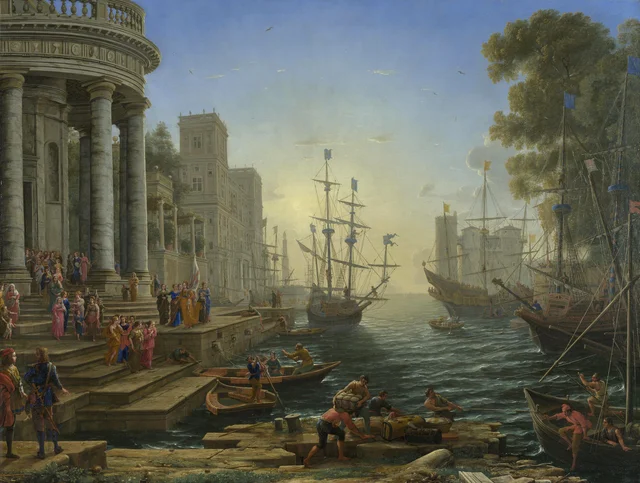 Porto di mare con l'imbarco di sant'OrsolaClaude Lorrain, 1641
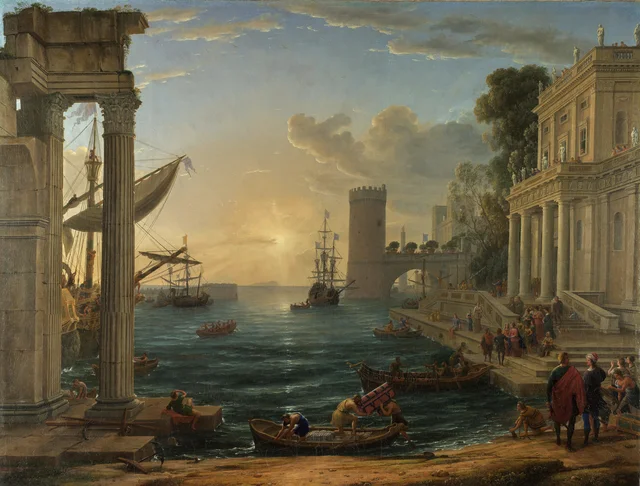 L'imbarco della regina di SabaClaude Lorrain, 1648
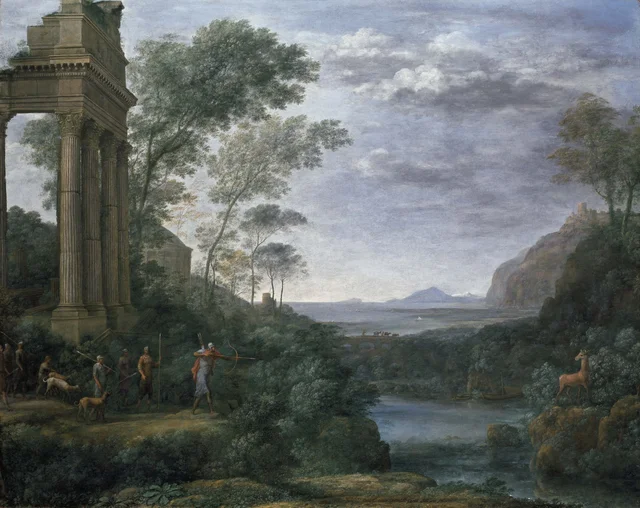 Ascanio che uccide il cervo di SilviaClaude Lorrain, 1682
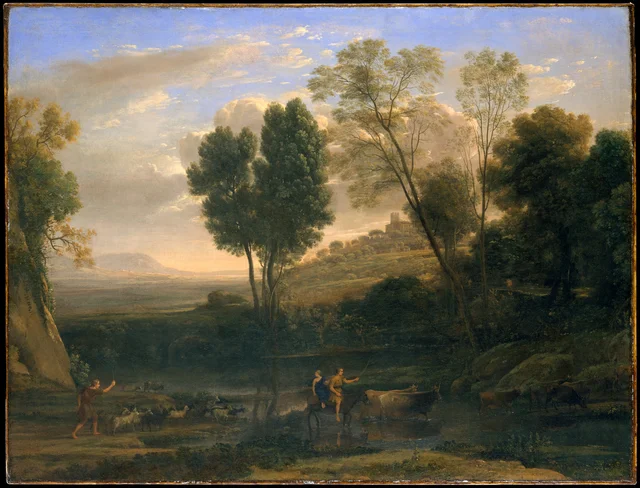 Il sorgere del soleClaude Lorrain, 1646
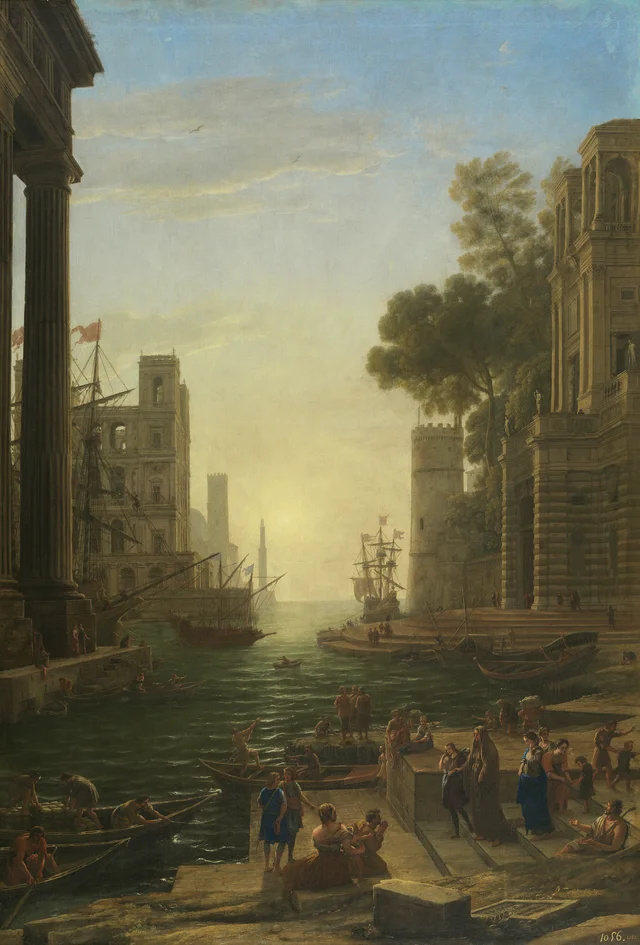 Paesaggio con l'imbarco di santa Paola Romana a OstiaClaude Lorrain, 1639
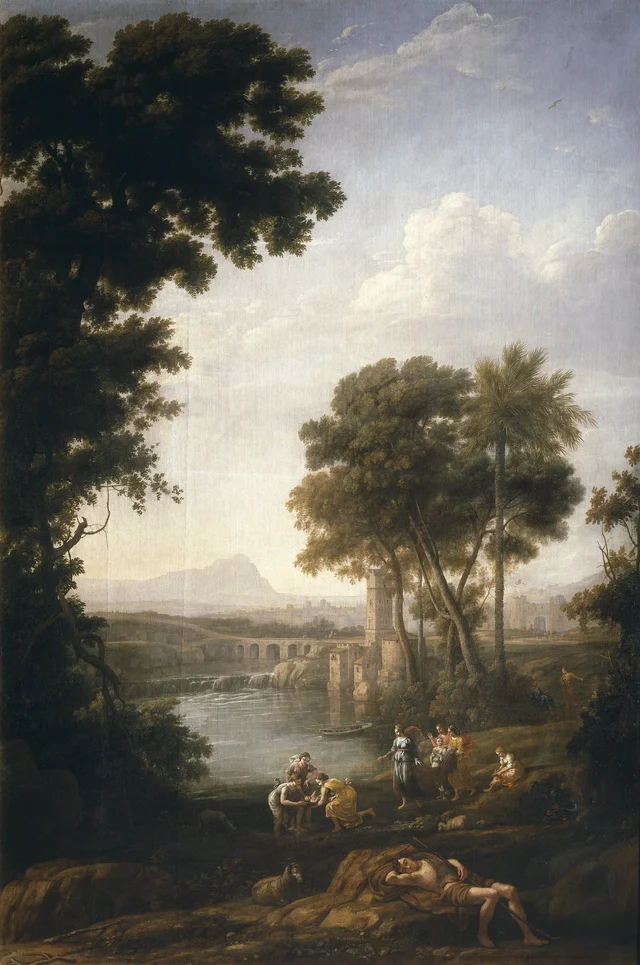 Paesaggio con il ritrovamento di MosèClaude Lorrain, 1639
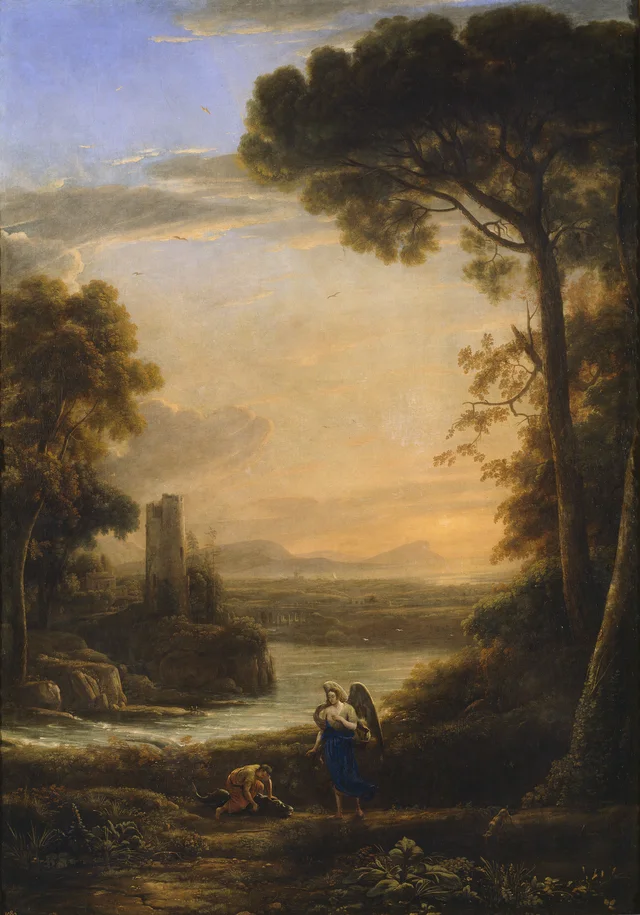 Paesaggio con Tobia e l'angeloClaude Lorrain, 1639
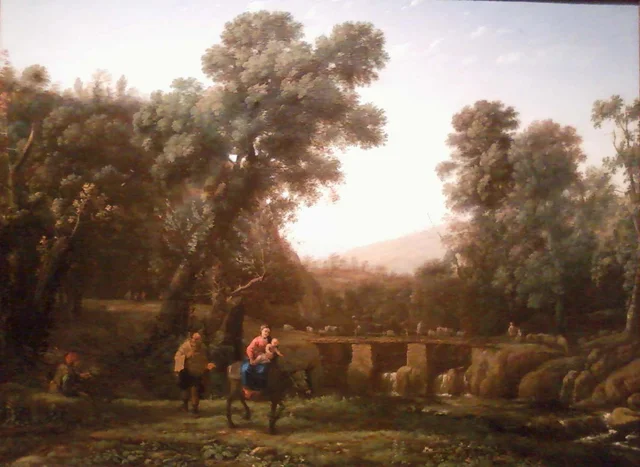 Fuga in EgittoClaude Lorrain, 1635
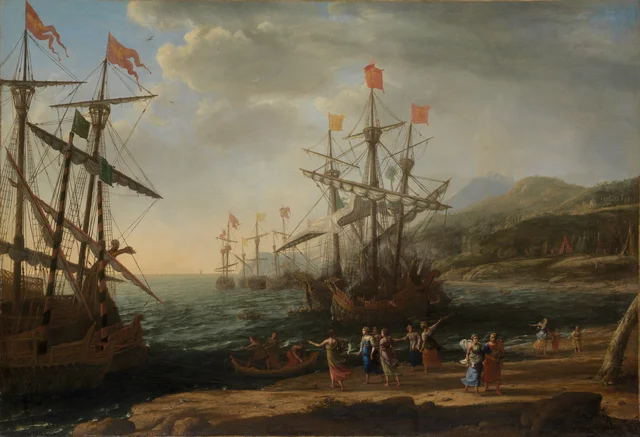 Le troiane danno fuoco alla flottaClaude Lorrain, 1643
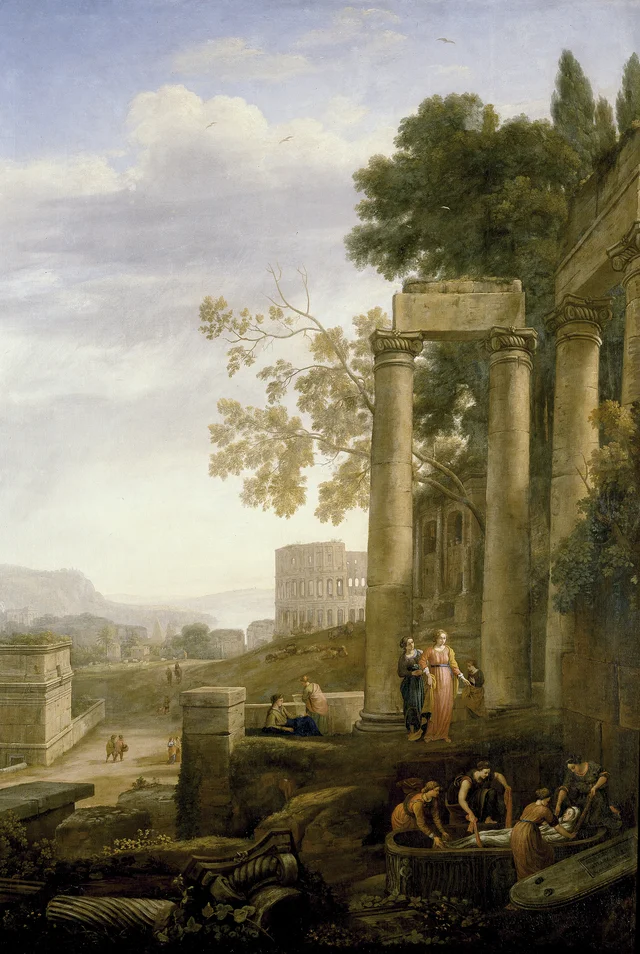 Paesaggio con la sepoltura di santa SerapiaClaude Lorrain, 1639
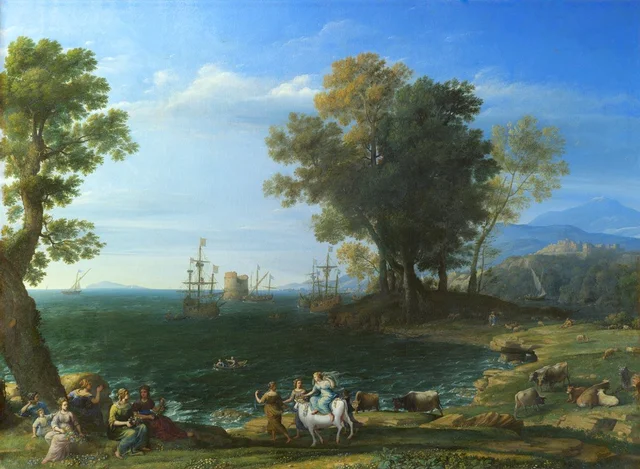 Il ratto di EuropaClaude Lorrain, 1655
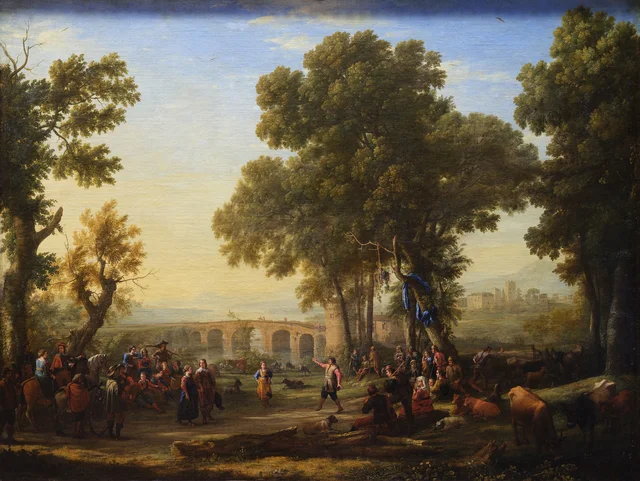 Festa di villaggioClaude Lorrain, 1639
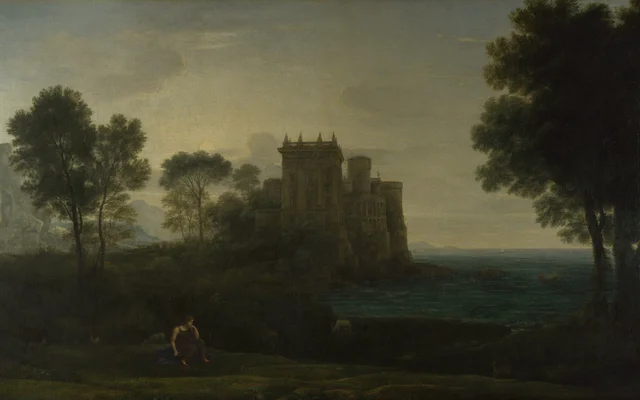 Paesaggio con Psiche davanti al palazzo di CupidoClaude Lorrain, 1664
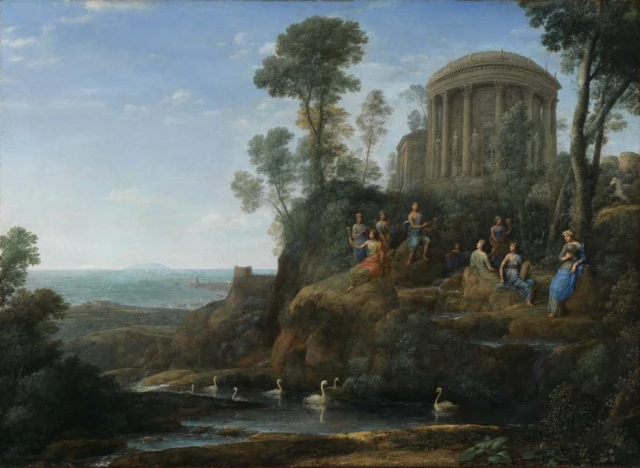 Apollo e le Muse sul monte EliconaClaude Lorrain, 1680
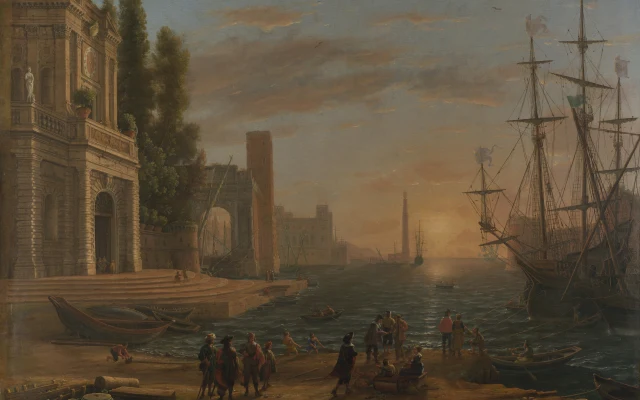 Un porto di mareClaude Lorrain, 1644
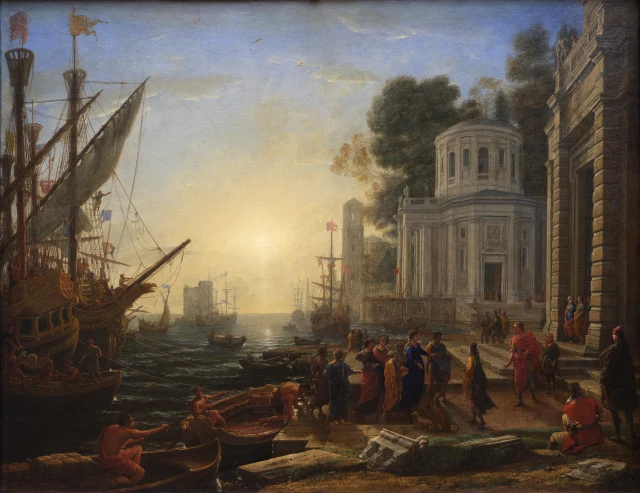 Sbarco di Cleopatra a TarsoClaude Lorrain, 1642
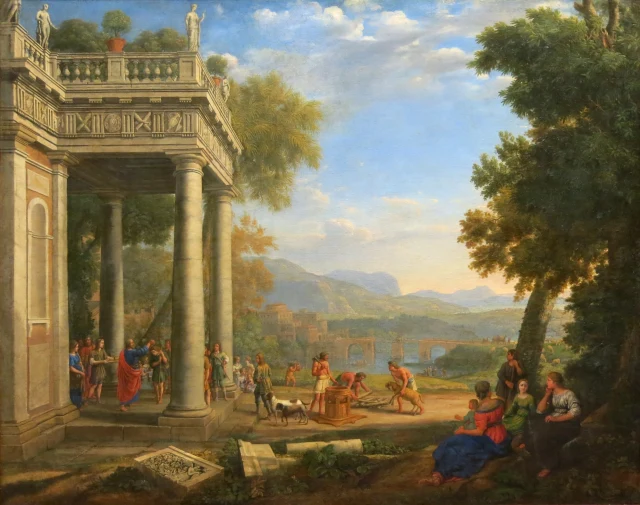 Davide unto re da SamueleClaude Lorrain, 1647
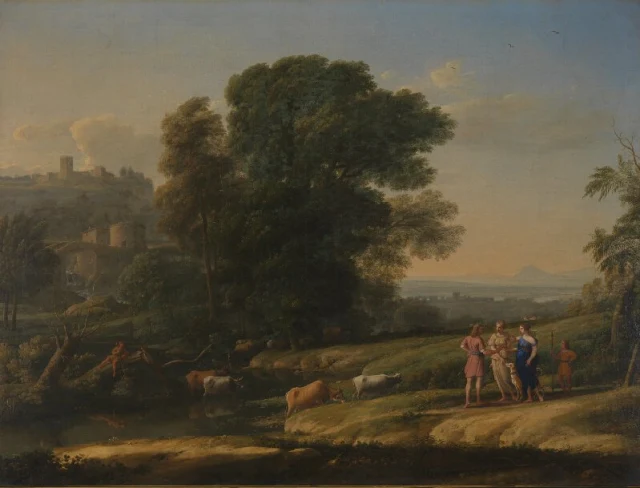 Paesaggio con Cefalo e Procri riuniti da DianaClaude Lorrain, 1645
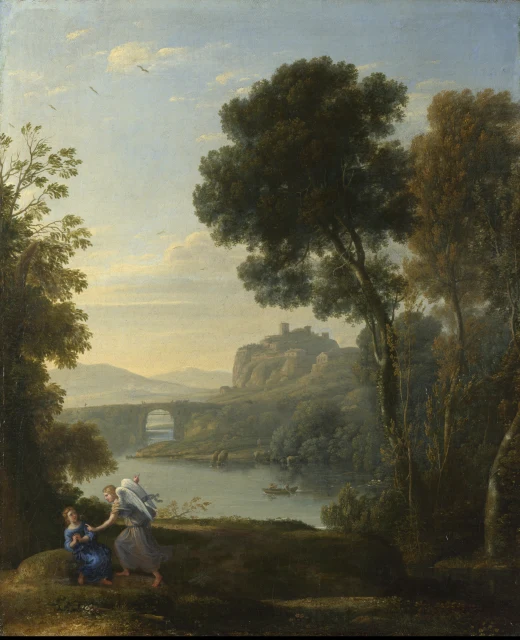 Paesaggio con Agar e l'angeloClaude Lorrain, 1646
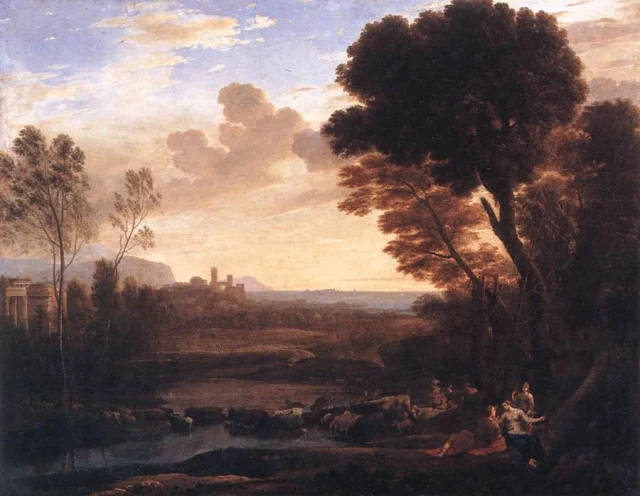 Paesaggio con Paride ed Enone («Il guado»)Claude Lorrain, 1648
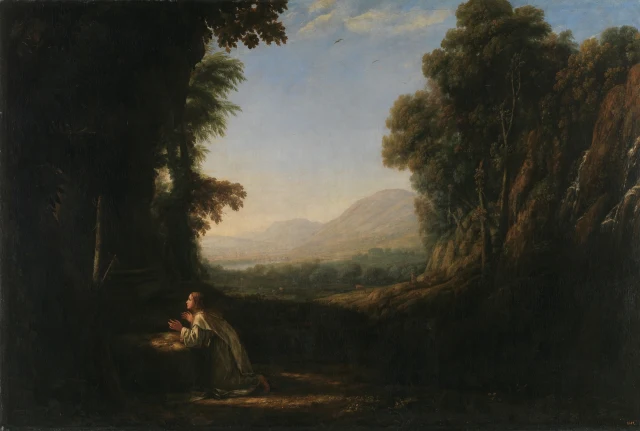 Paesaggio con santa Maria di CervellónClaude Lorrain, 1637
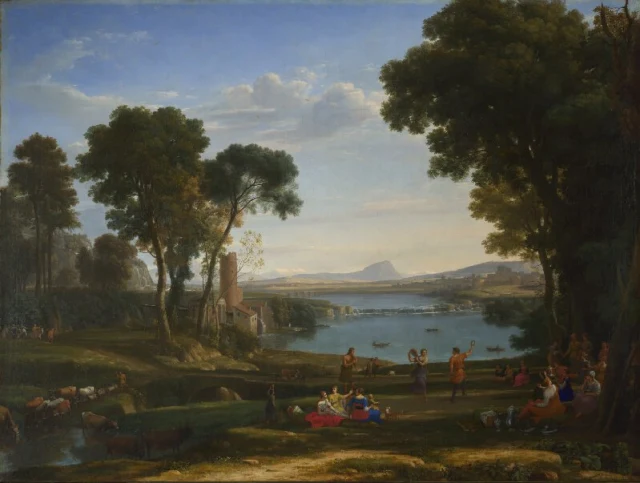 Paesaggio con le nozze di Isacco e Rebecca («Il mulino»)Claude Lorrain, 1648
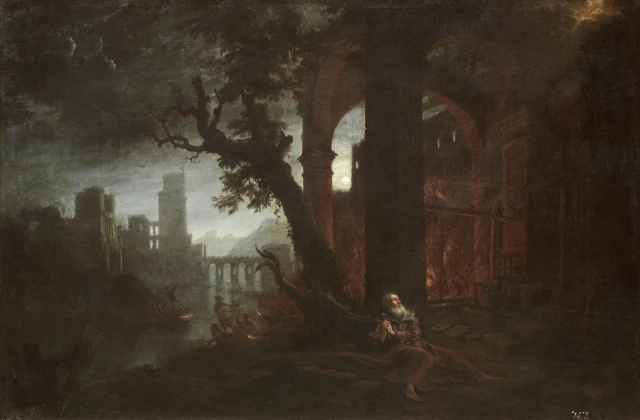 Paesaggio con le tentazioni di sant'AntonioClaude Lorrain, 1638
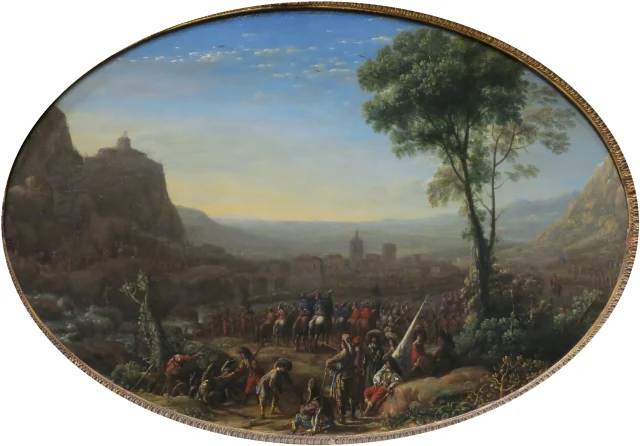 Luigi XIII forza il passo di SusaClaude Lorrain, 1632