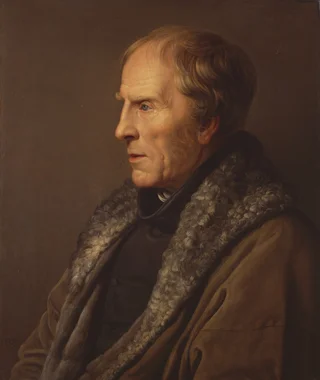
カスパー・ダーヴィト・フリードリヒ
1774–1840 · スウェーデン領ポメラニア, ザクセン王国 · ロマン主義, ドイツ・ロマン主義
音声ガイド
ストーリー
カスパー・ダーヴィト・フリードリヒは、ヨーロッパ絵画で最も孤独な風景を描いた画家である。霧や海、あるいは人間を小さく見せてしまうほどの山々を前に、後ろ姿でぽつんと立つ、たった一人の人物。この背を向けた人物像、いわゆる「リュッケンフィグーア(後ろ向きの人物)」は彼の代名詞となり、見る者を同じ場所に引き込んで、とても捉えきれないほど広大な何かを一緒に見つめさせる。
彼はドレスデンで、ナポレオンによるドイツ諸邦占領の時代にあたる1800年代初頭に制作活動を行い、霧に霞む廃墟や孤立した十字架には、当時の人々が敏感に感じ取った、静かな愛国的・宗教的な含意が込められていた。最もよく知られる作品、緑のコートを着た男が雲海の上の岩場に立つ絵は、1818年頃に描かれたものである。一時期彼は高く評価され、ロシアやプロイセンの王侯にまで作品が収集されるほどだった。
しかし時代の好みは移ろっていった。ロマン主義は流行から外れ、1835年の脳卒中で半身が麻痺し、彼は1840年、貧しく、ほとんど忘れられた存在として世を去った。その作品は数十年にわたって顧みられなかったが、1900年頃、象徴主義の画家たちと、アンドレアス・オーベルトというノルウェー人研究者によって再び日の目を見ることになった。1906年にベルリンで開かれた展覧会には彼の作品が90点以上集められ、それは当時としては彼の作品の最大規模の展示であった。
作品
105点の作品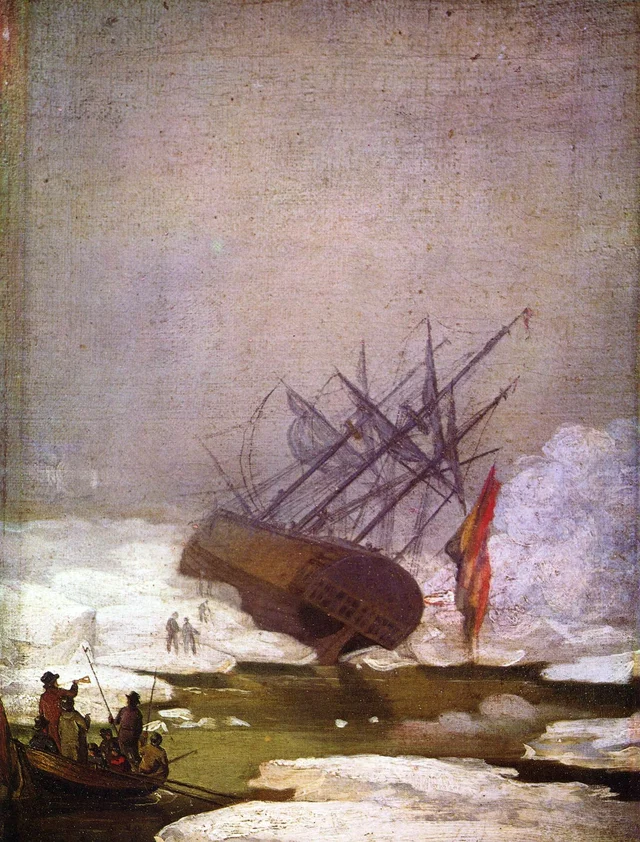 氷海の難破船カスパー・ダーヴィト・フリードリヒ, 1798
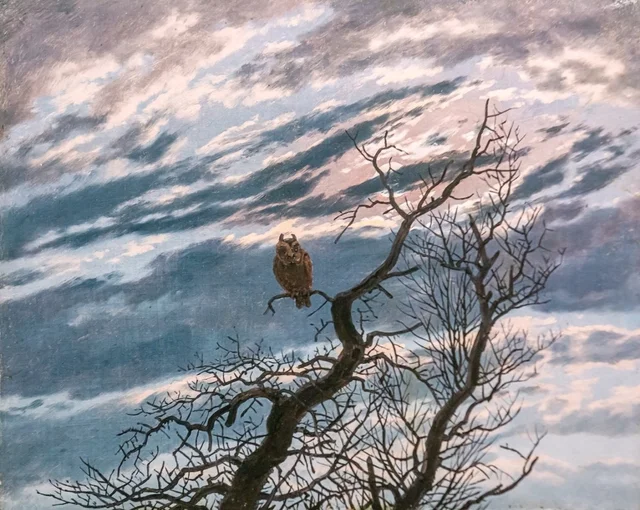 裸木のフクロウカスパー・ダーヴィト・フリードリヒ, 1834
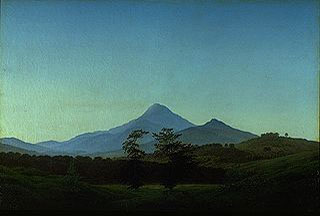 ボヘミアの風景カスパー・ダーヴィト・フリードリヒ, 1808
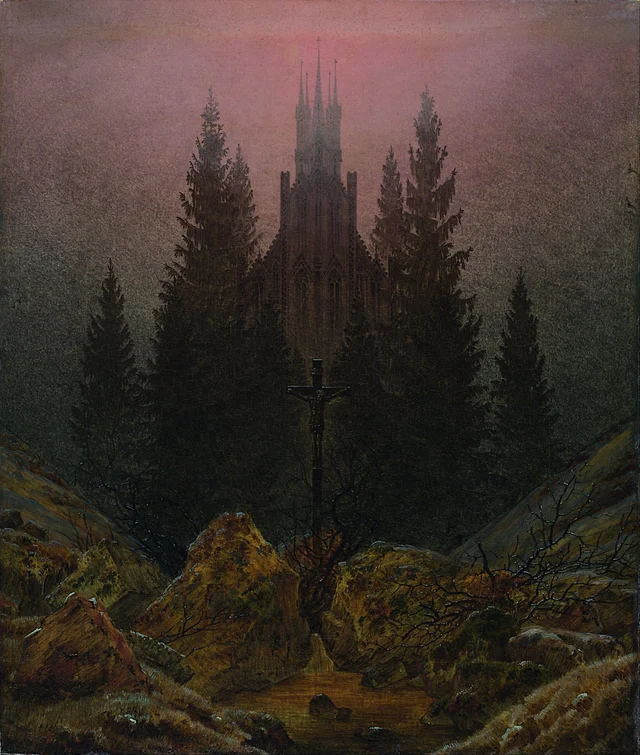 山中の十字架と大聖堂カスパー・ダーヴィト・フリードリヒ, 1812
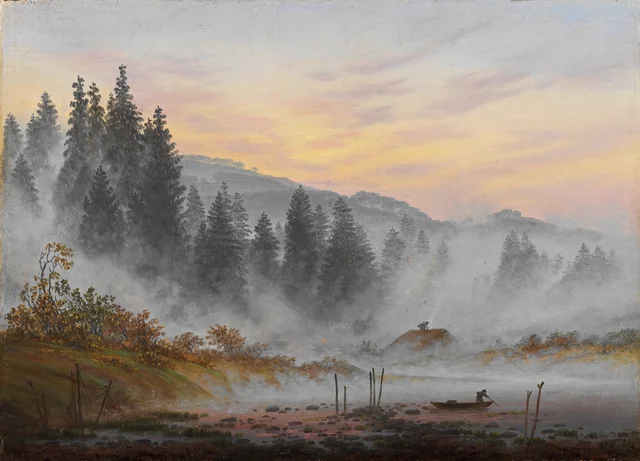 一日の時刻:朝カスパー・ダーヴィト・フリードリヒ, 1821
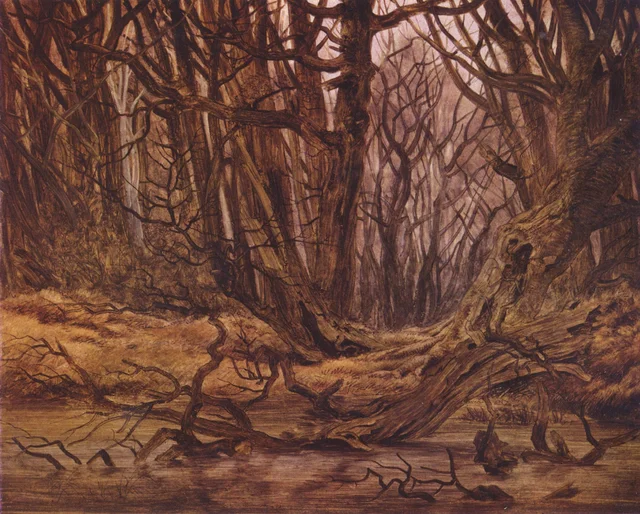 晩秋の森カスパー・ダーヴィト・フリードリヒ, 1835
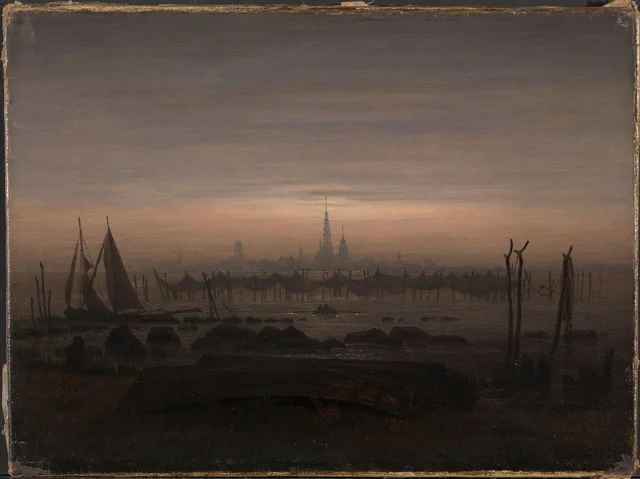 月光のグライフスヴァルトカスパー・ダーヴィト・フリードリヒ, 1817
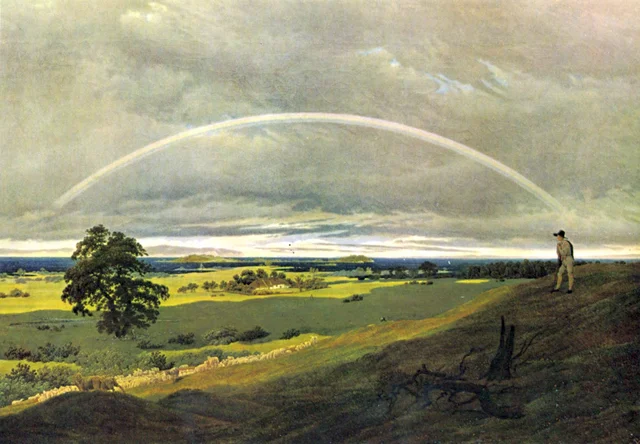 虹のあるリューゲン島の風景カスパー・ダーヴィト・フリードリヒ, 1809
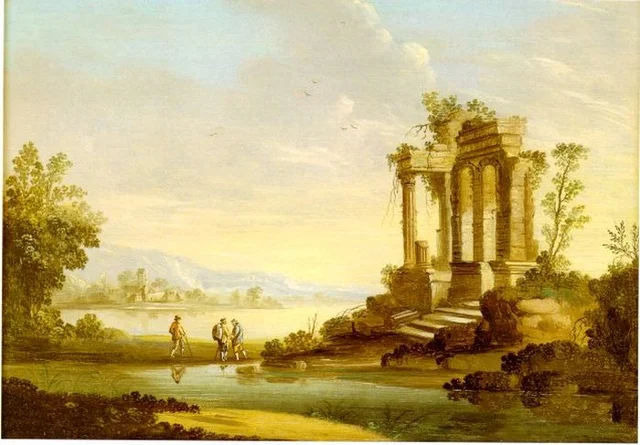 廃墟の神殿がある風景カスパー・ダーヴィト・フリードリヒ, 1797
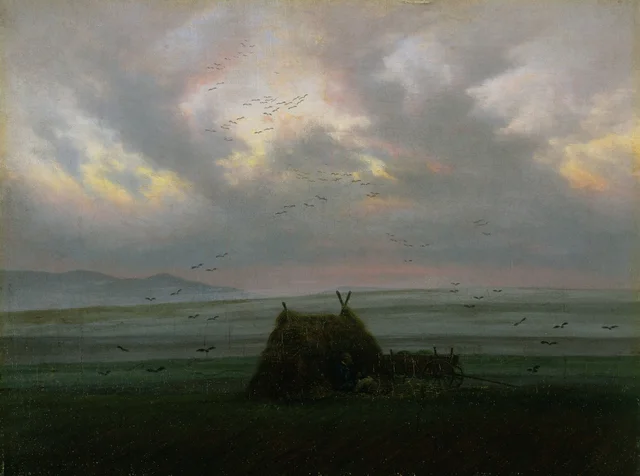 霧カスパー・ダーヴィト・フリードリヒ, 1820
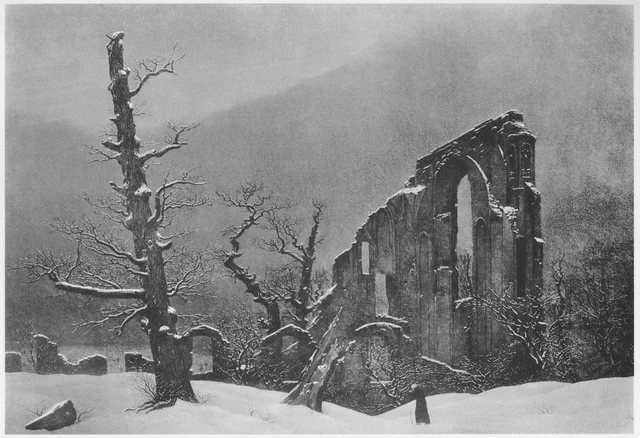 雪の中の修道士カスパー・ダーヴィト・フリードリヒ, 1808
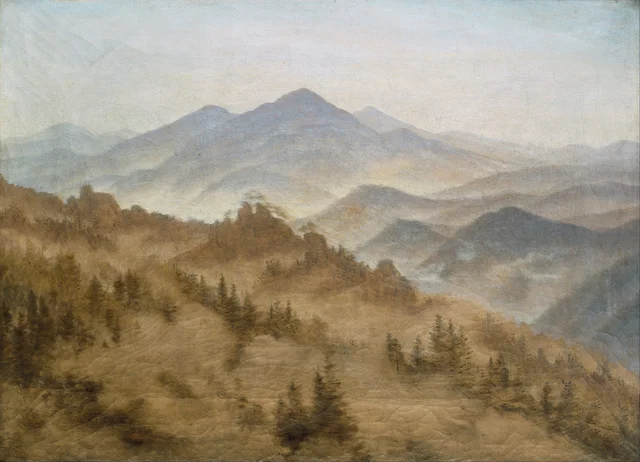 立ち昇る霧の中の山々カスパー・ダーヴィト・フリードリヒ, 1835
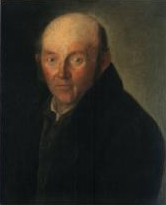 年配の男性の肖像カスパー・ダーヴィト・フリードリヒ, 1809
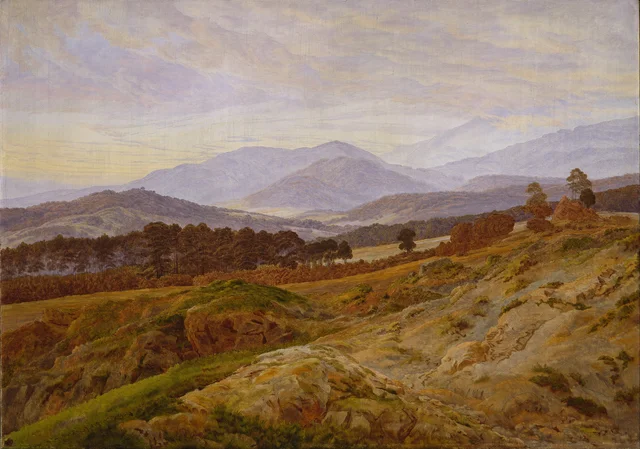 リーゼンゲビルゲの風景カスパー・ダーヴィト・フリードリヒ, 1835
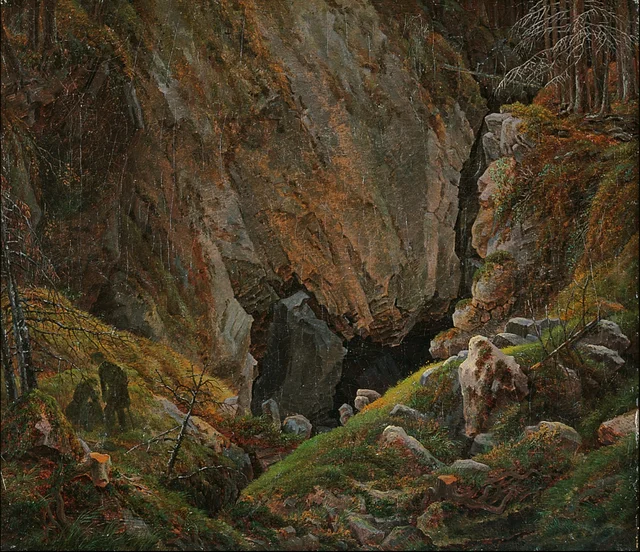 ハルツ山地の岩の峡谷カスパー・ダーヴィト・フリードリヒ, 1811
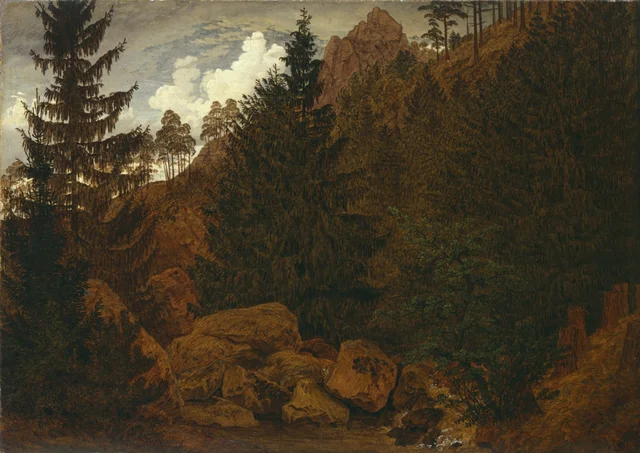 岩カスパー・ダーヴィト・フリードリヒ, 1811
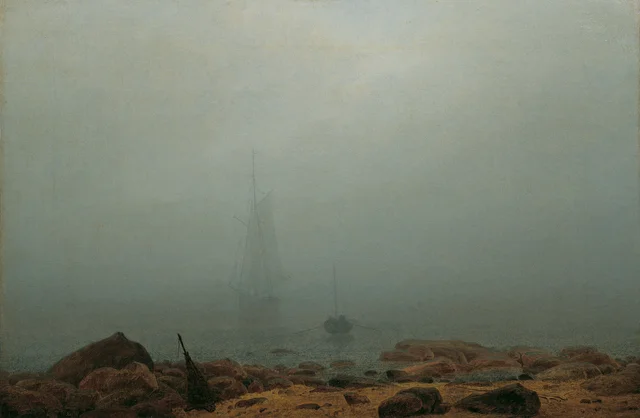 霧の中の海岸カスパー・ダーヴィト・フリードリヒ, 1807
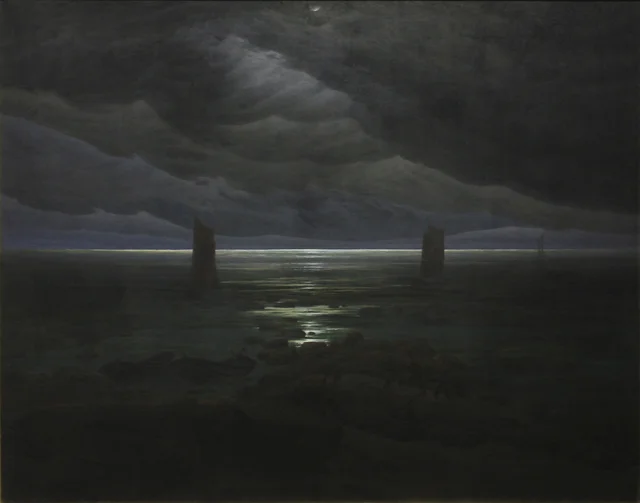 月明かりの海岸カスパー・ダーヴィト・フリードリヒ, 1835
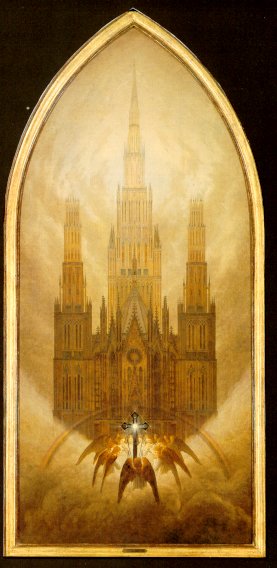 大聖堂カスパー・ダーヴィト・フリードリヒ, 1818
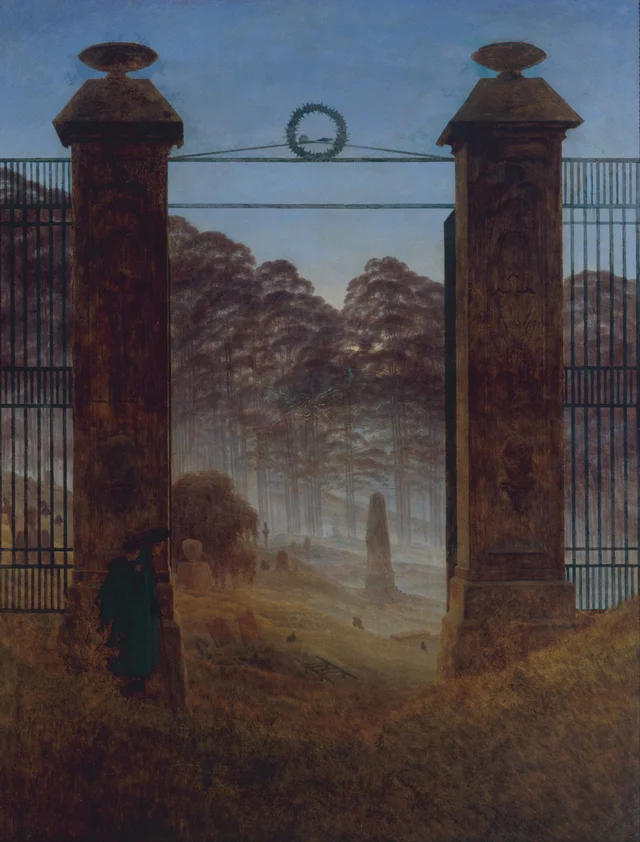 墓地の入り口カスパー・ダーヴィト・フリードリヒ, 1825
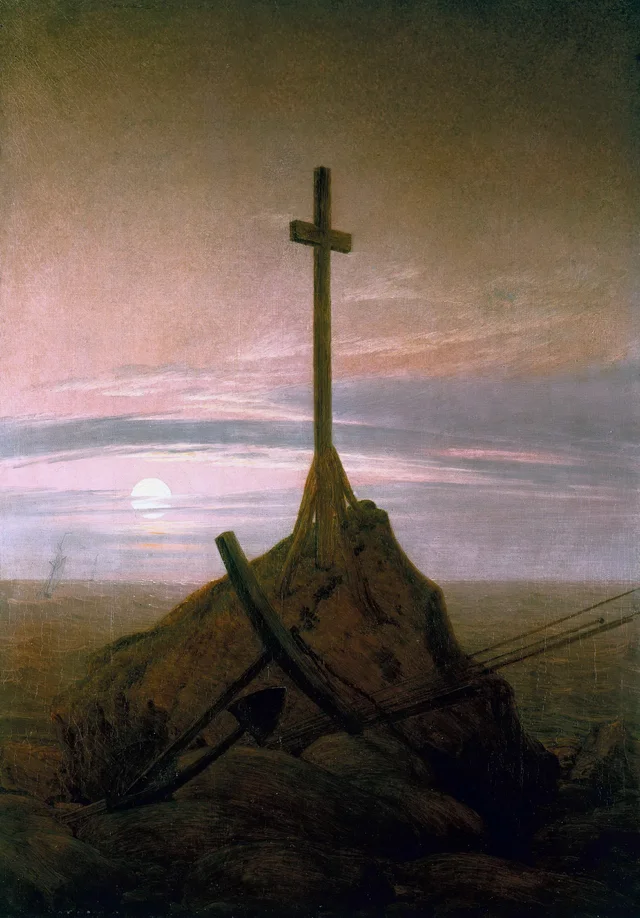 バルト海のほとりの十字架カスパー・ダーヴィト・フリードリヒ, 1815
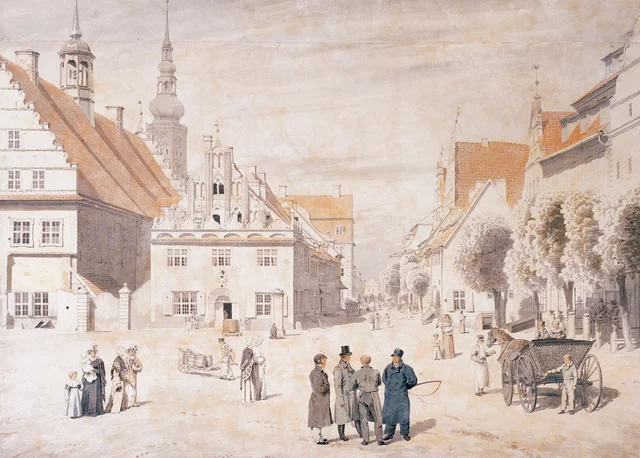 グライフスヴァルトの市場カスパー・ダーヴィト・フリードリヒ, 1818
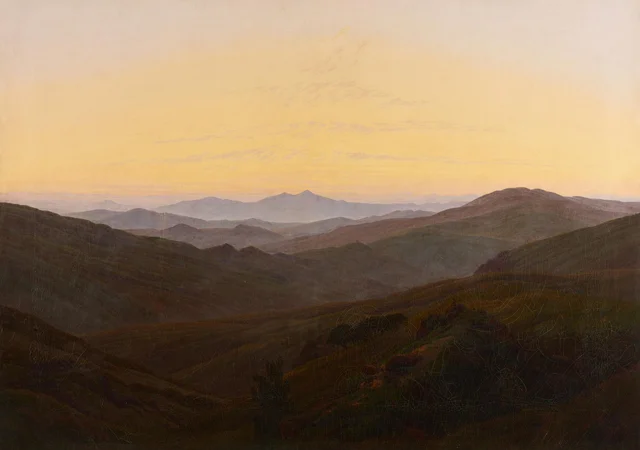 リーゼンゲビルゲ山脈(巨人山脈)カスパー・ダーヴィト・フリードリヒ, 1830
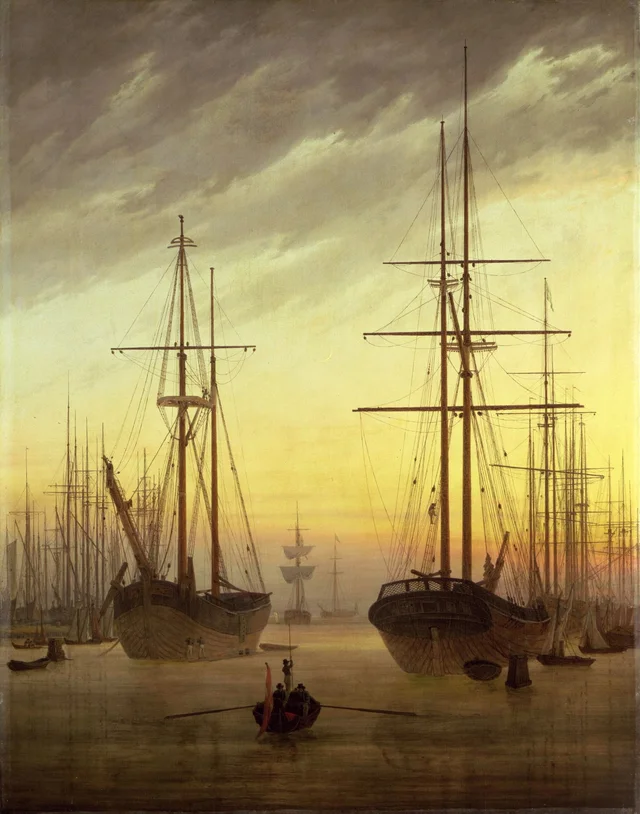 港の眺めカスパー・ダーヴィト・フリードリヒ, 1814
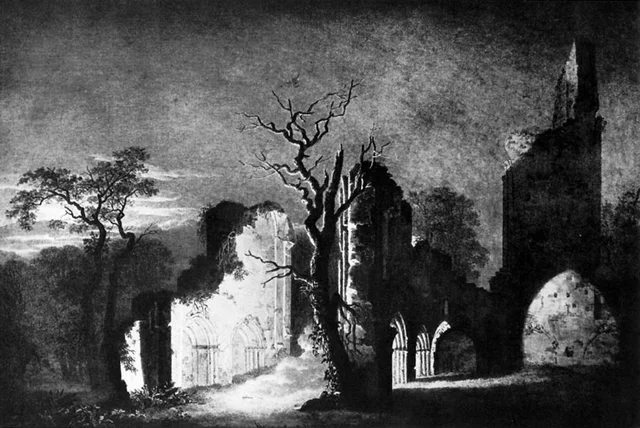 エルデナ廃墟の西側正面カスパー・ダーヴィト・フリードリヒ, 1806