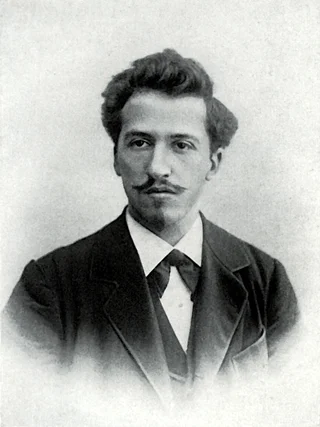
Piet Mondrian
1872–1944 · Reino dos Países Baixos · De Stijl, Pós-impressionismo
A história
Em 1912, Mondrian deixou a Holanda rumo a Paris, então a capital da nova arte, e mergulhou de cabeça no Cubismo. Picasso e Braque estavam fragmentando objetos em planos achatados, e Mondrian tomou emprestada essa grade de linhas retas, mas a levou mais longe do que qualquer um dos dois pretendia. Foi achatando cada vez mais suas árvores e fachadas de igrejas até que o próprio tema desaparecesse por completo, restando apenas horizontais, verticais e blocos de cor.
No início da década de 1920, ele havia reduzido sua paleta a três cores — vermelho, amarelo e azul —, além de preto, branco e cinza, e a duas direções, vertical e horizontal. Chamou isso de Neoplasticismo e construiu em torno dele toda uma filosofia junto ao grupo holandês De Stijl, acreditando que esses elementos despidos podiam carregar uma harmonia universal que quadros de coisas reais jamais alcançariam. Por 20 anos, pintou pouco mais que isso, ajustando o peso de uma linha preta ou o tamanho de um quadrado vermelho sobre um campo branco.
Depois a guerra o expulsou. Passou dois anos em Londres e, em 1940, com os bombardeios se aproximando, embarcou para Nova York aos 67 anos. A cidade desfez sua severidade: ele se apaixonou pelo jazz boogie-woogie e pelo ritmo de semáforos de Manhattan, e trocou sua pesada grade preta por correntes de pequenos quadrados coloridos em movimento. Ainda retrabalhava esse estilo tardio, numa tela que chamou de Victory Boogie Woogie, quando morreu de pneumonia no início de 1944.
Mais artigos
Obras
112 obras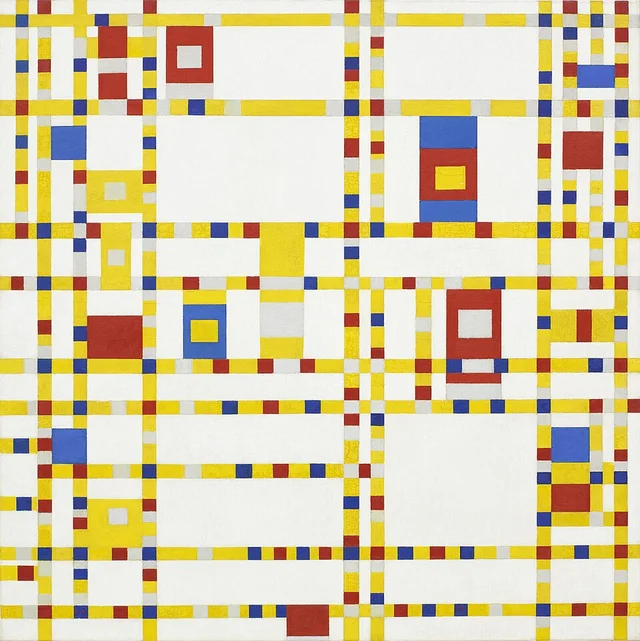 Broadway Boogie-WoogiePiet Mondrian, 1942
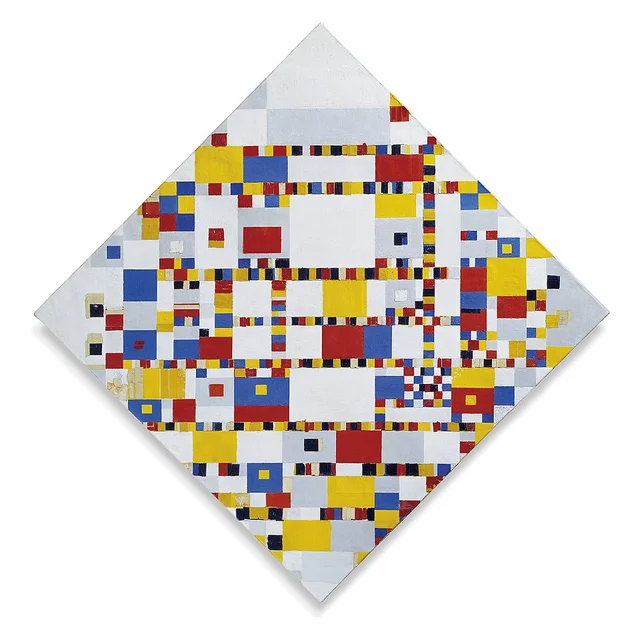 Victory Boogie WoogiePiet Mondrian, 1942
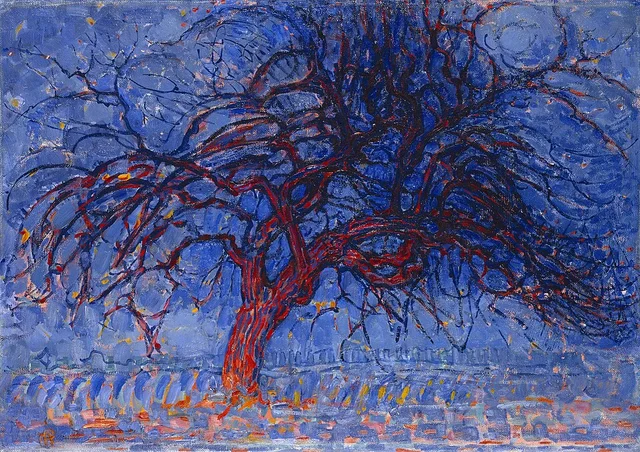 A Árvore VermelhaPiet Mondrian, 1909
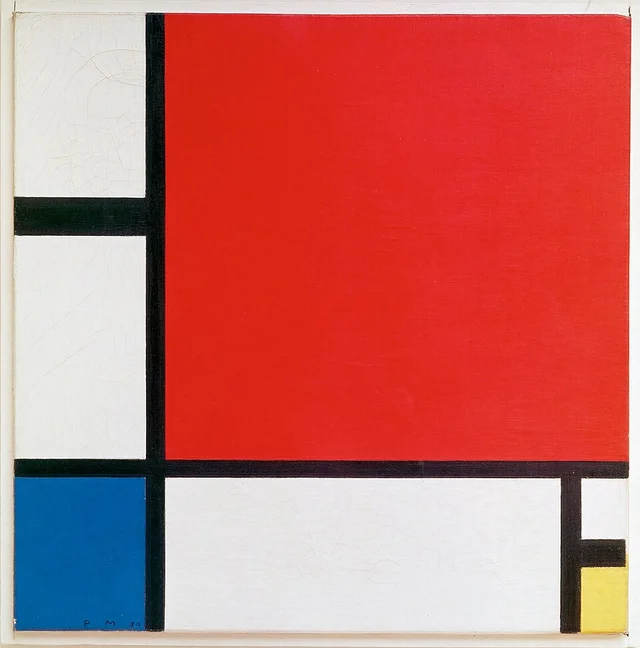 Composição II em Vermelho, Azul e AmareloPiet Mondrian, 1930
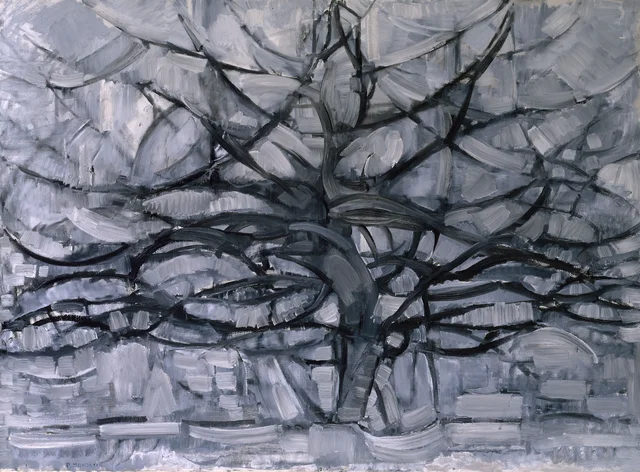 Árvore CinzaPiet Mondrian, 1911
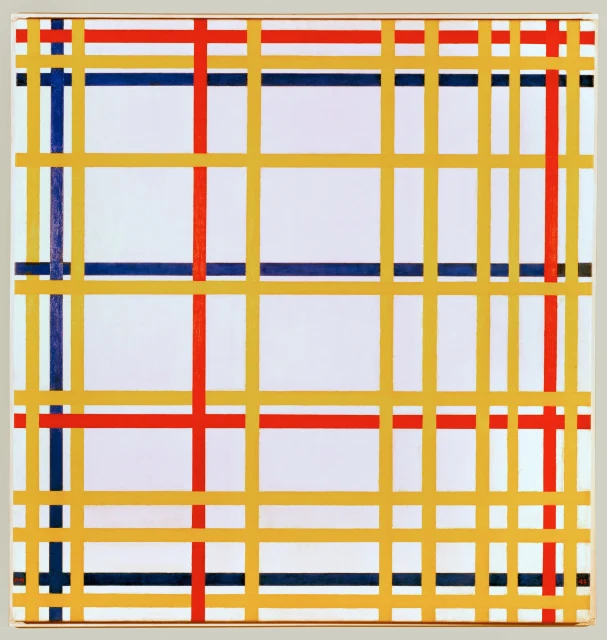 Nova YorkPiet Mondrian, 1942
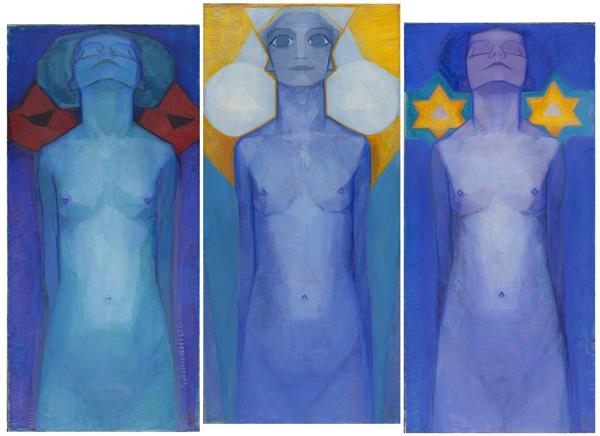 EvoluçãoPiet Mondrian, 1911
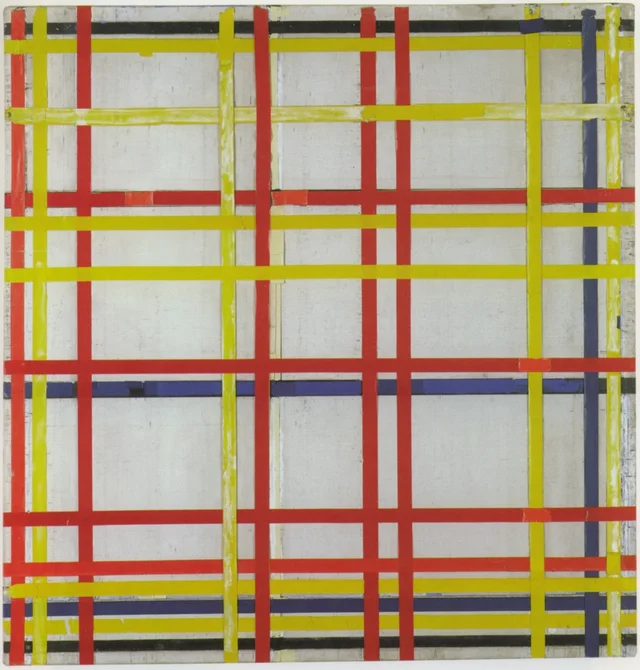 New York City IPiet Mondrian, 1941
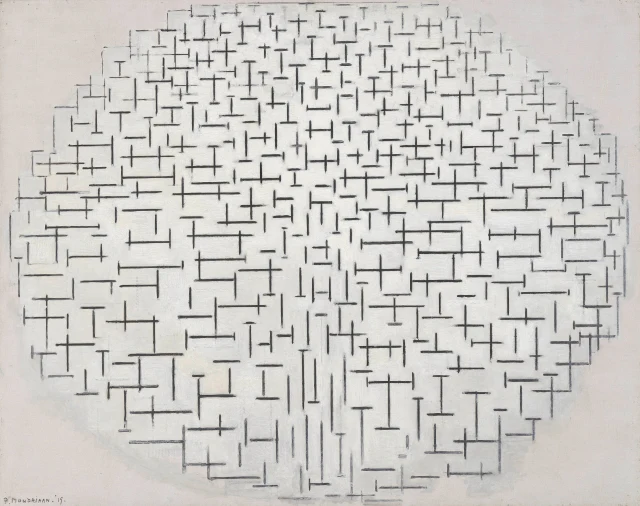 Composição 10 em Preto e BrancoPiet Mondrian, 1915
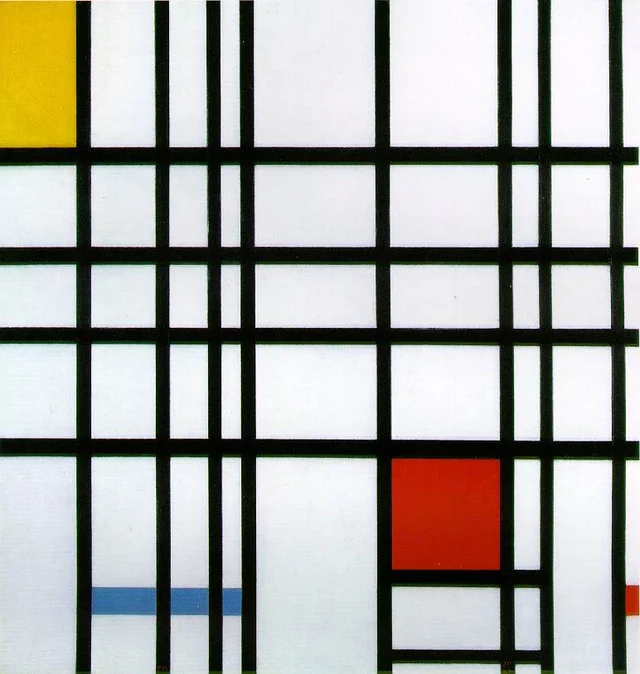 Composição com Vermelho, Amarelo e AzulPiet Mondrian, 1937
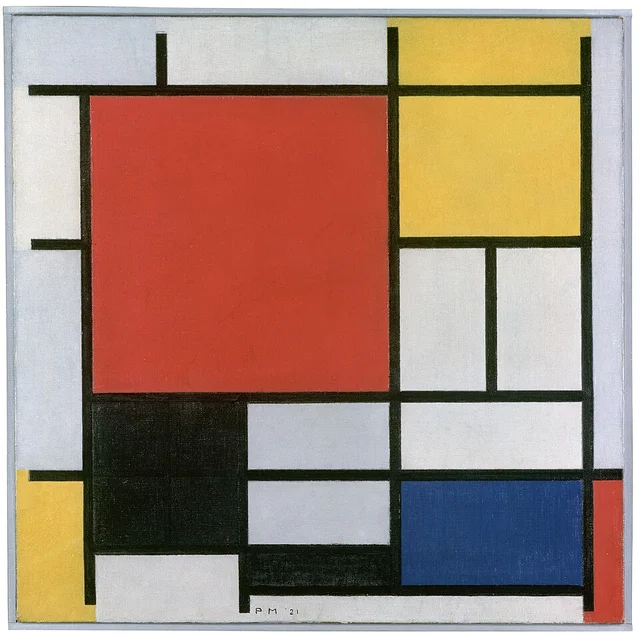 Composição com grande plano vermelho, amarelo, preto, cinza e azulPiet Mondrian, 1921
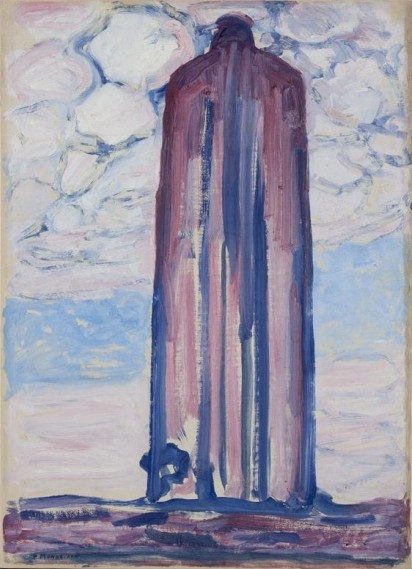 Farol em WestkapellePiet Mondrian, 1908
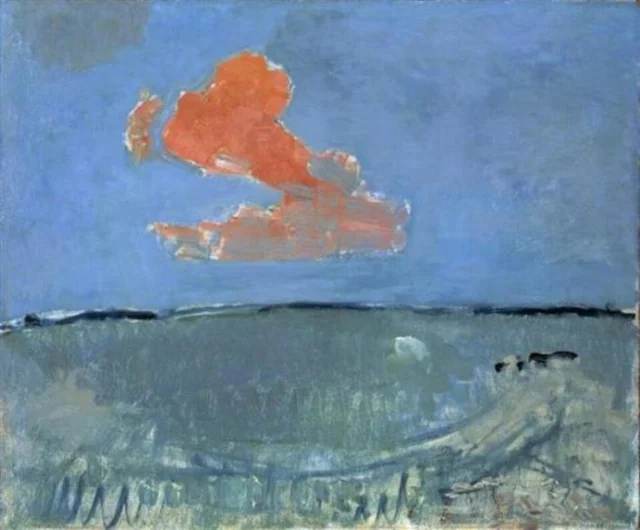 A nuvem vermelhaPiet Mondrian, 1907
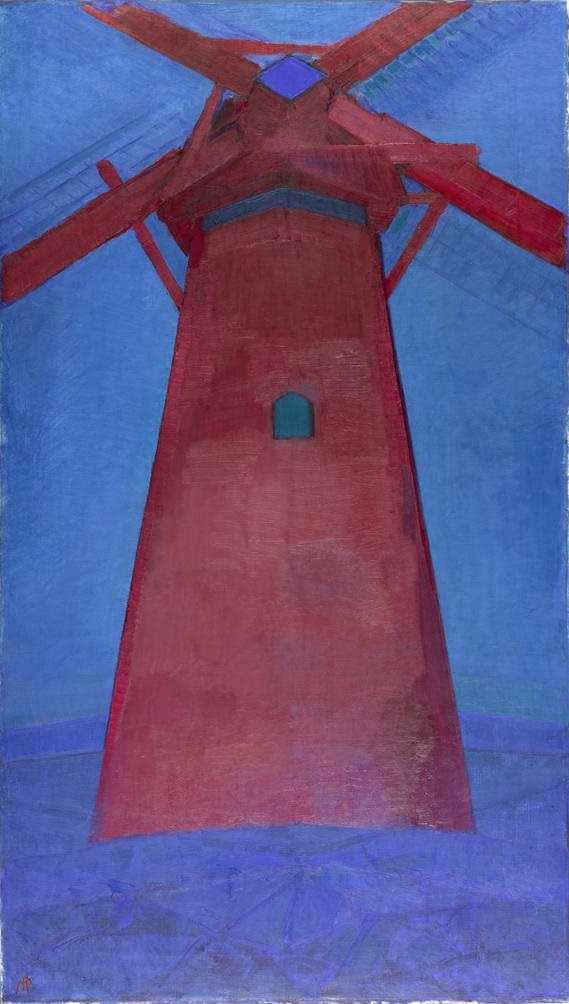 O Moinho VermelhoPiet Mondrian, 1910
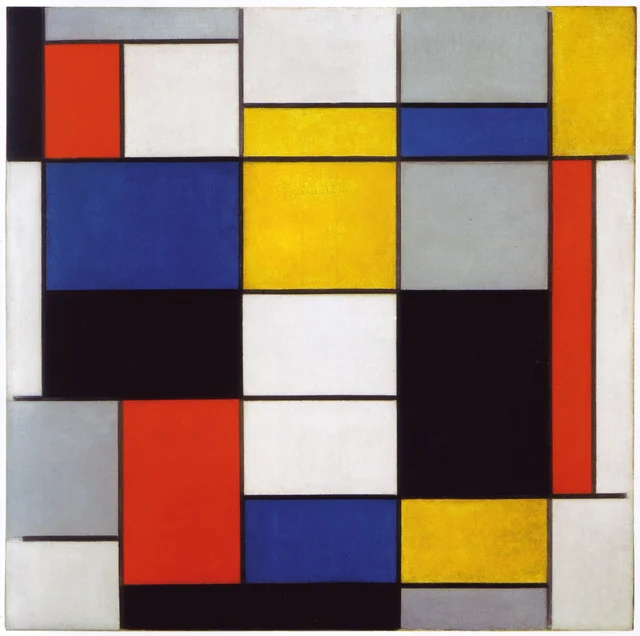 Composição A: composição com preto, vermelho, cinza, amarelo e azulPiet Mondrian, 1920
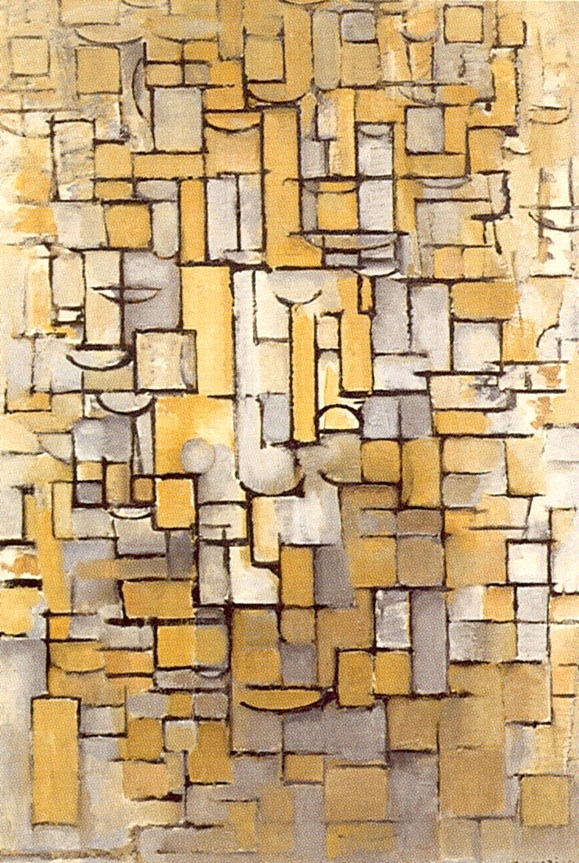 Composição XIVPiet Mondrian, 1913
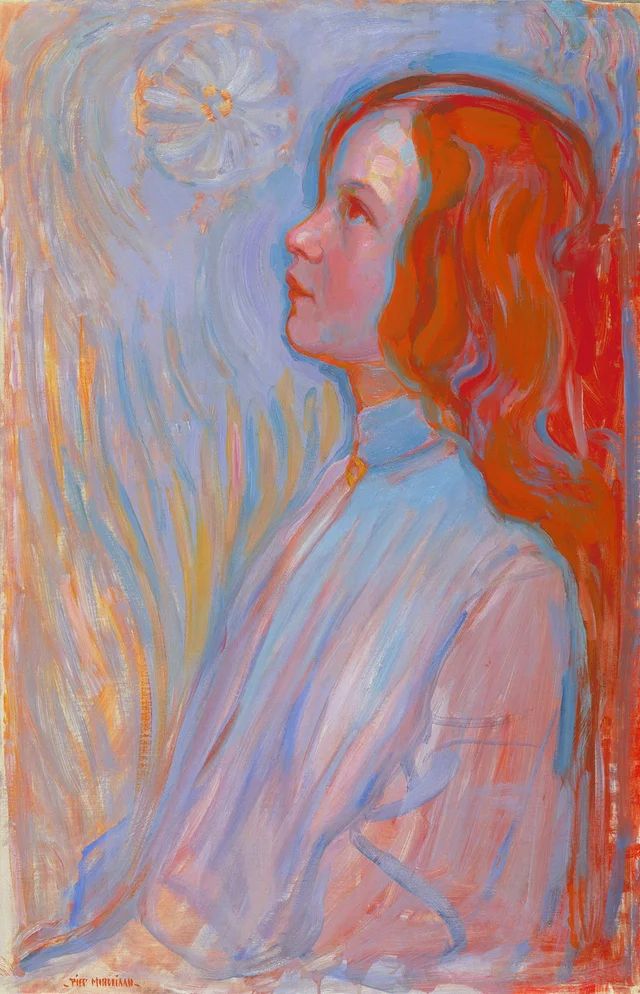 DevoçãoPiet Mondrian, 1908
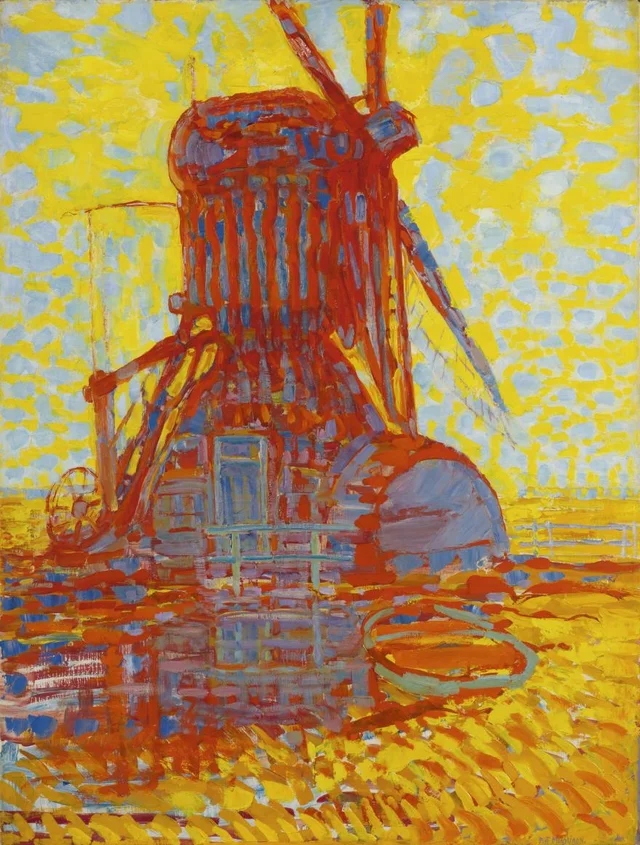 Moinho ao solPiet Mondrian, 1908
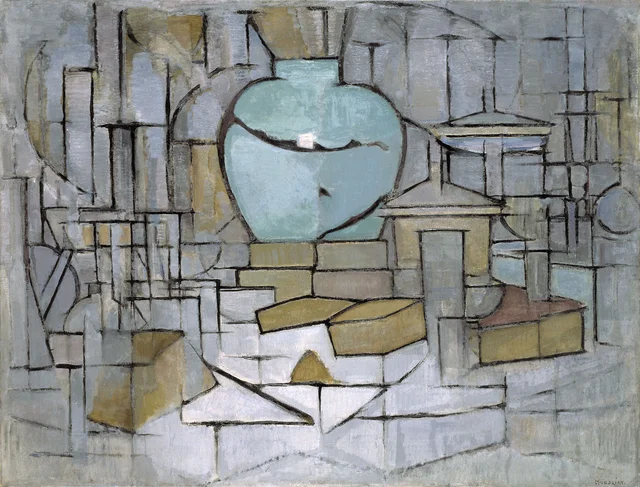 Natureza-Morta com Pote de Gengibre 2Piet Mondrian, 1912
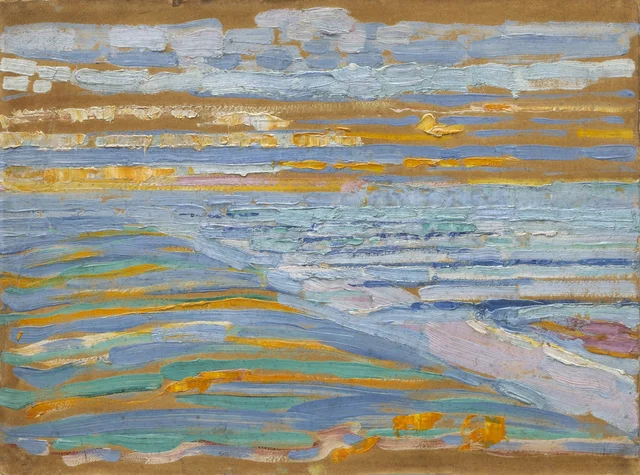 Vista das dunas com praia e molhes, DomburgPiet Mondrian, 1909
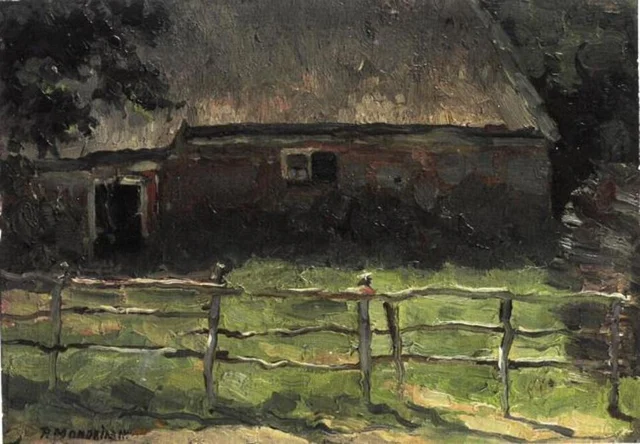 Fazenda atrás de uma cercaPiet Mondrian, 1904
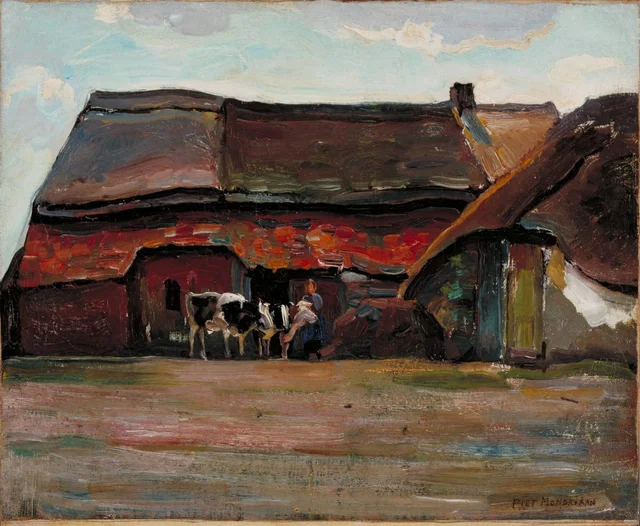 Quintal de Fazenda BrabantePiet Mondrian, 1904
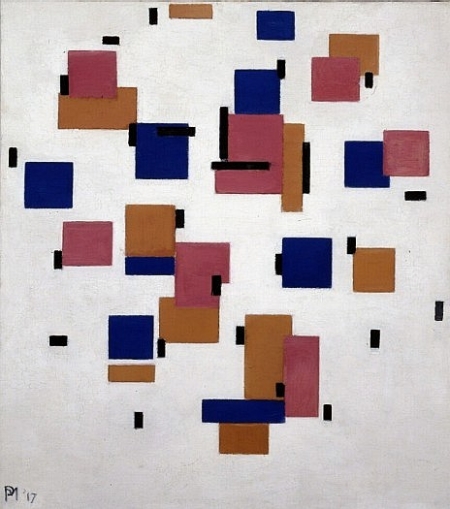 Composição em Cor BPiet Mondrian, 1917
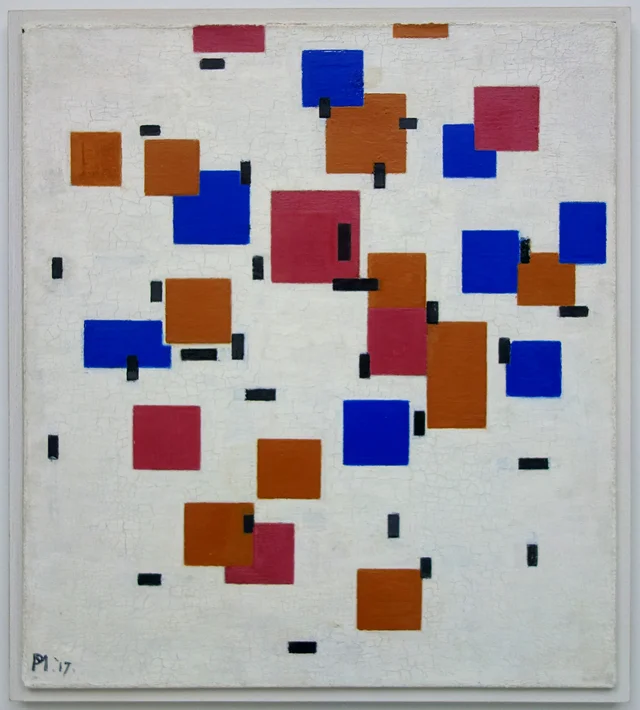 Composição em Cor APiet Mondrian, 1917
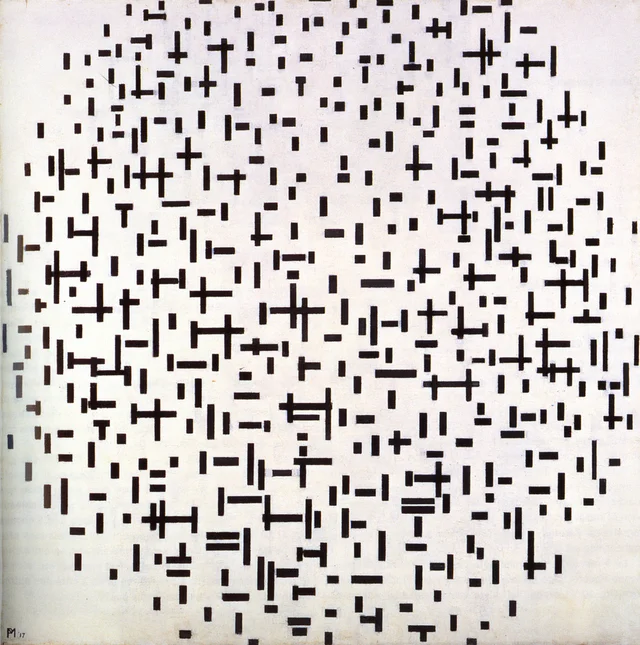 Composição em linha, segundo estadoPiet Mondrian, 1916