Raja Ravi Varma
1848–1906 · Reino de Travancore · Arte acadêmica, Modernismo indiano, Romantismo
A história
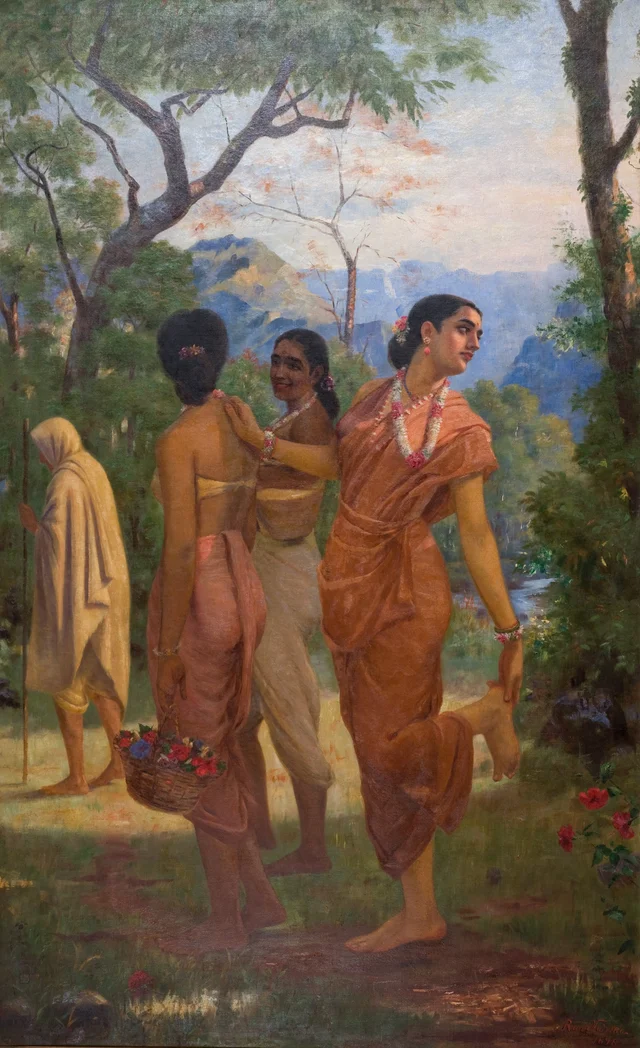
Varma aprendeu pintura a óleo com um retratista britânico no estado principesco de Travancore, e usou essa técnica bem europeia, luz modelada, anatomia correta, profundidade real, para pintar algo que nenhum pintor europeu pintaria: Saraswati, Lakshmi e cenas do Mahabharata e do Ramayana, com deuses e deusas dotados dos rostos e das poses de modelos reais.
Em 1894, ele montou sua própria gráfica litográfica perto de Mumbai, justamente para que essas pinturas pudessem ser reproduzidas de forma barata como oleografias e vendidas a lares comuns, em vez de guardadas como originais para patronos principescos. Funcionou numa escala que quase nenhum artista plástico alcança, suas estampas de Lakshmi e Saraswati foram compradas aos milhares e ainda são, em cópias e imitações, muito próximas do modo como a maioria das pessoas na Índia imagina essas divindades hoje.
Ele morreu em 1906, dois anos depois de o vice-rei Lorde Curzon lhe conceder a medalha de ouro Kaisar-i-Hind em nome do rei-imperador britânico, um dos primeiros pintores indianos a receber essa honraria.