Kazimir Malevich · PD
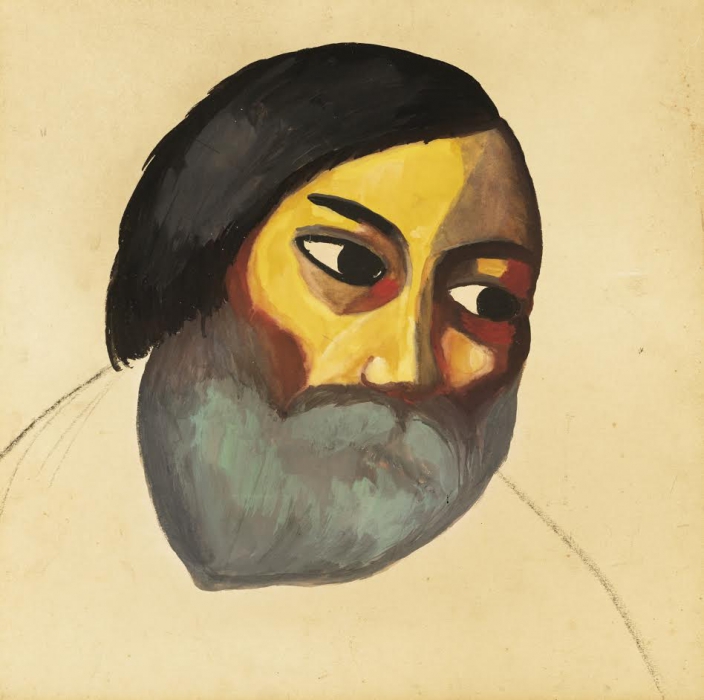
Cabeça de Camponês
Ficha técnica
A história
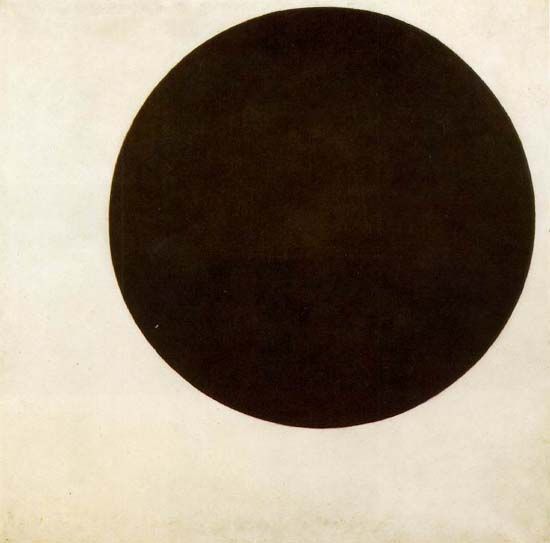
In 1911 Malevich was still years away from the black square and the pure abstraction that would make his name. He was painting peasants. Across 1911 and 1912 he made a run of works like this one, heads and figures of Russian country people built from heavy, rounded, almost metallic forms in bright gouache. It was a deliberate turn away from polished Western art toward things closer to home: the flat gold saints of old Russian icons and the cheap woodblock prints, the lubok, that were sold at country fairs. Malevich said later that he had come to understand peasants through icons, seeing their ordinary faces look back at him with the same directness. He showed pictures from this group in Moscow in 1912, at an exhibition provocatively named the Donkey's Tail. The peasant stayed with him for decades. He returned to these same broad country figures again at the very end of his life, once abstraction had run its course.