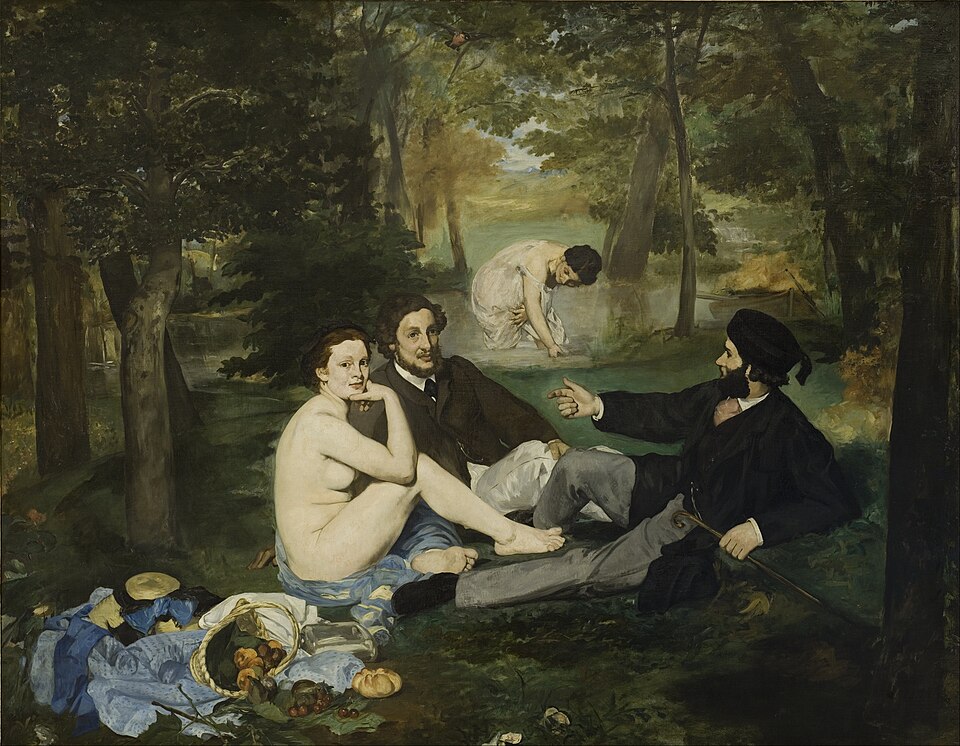
Édouard Manet, Luncheon on the Grass, 1863. Wikimedia Commons. · PD
O Almoço sobre a Erva
Ficha técnica
A história
Na primavera de 1863, o júri do Salão oficial de Paris rejeitou tantas obras que os artistas recusados protestaram, e Napoleão III mandou abrir uma exposição paralela, o chamado Salão dos Recusados, para que o público julgasse por conta própria. Foi ali que Manet apresentou esta cena. O que chocou não foi a nudez em si, comum na pintura mitológica, mas o fato de a mulher nua estar sentada ao lado de dois homens vestidos com roupas modernas da época, num piquenique qualquer, encarando quem observa sem nenhum pudor. Não havia deusa nem alegoria para justificar aquele corpo. Os visitantes riram e se escandalizaram. Manet tomara emprestada a disposição das figuras de uma antiga gravura baseada em Rafael, o que tornava a provocação ainda mais deliberada. A modelo do primeiro plano é Victorine Meurent, que voltaria a posar para ele. Ao fundo, uma segunda mulher de camisola se inclina sobre a água, numa escala que desafia de propósito as regras de perspectiva. Hoje o quadro está no Museu d'Orsay, em Paris.